
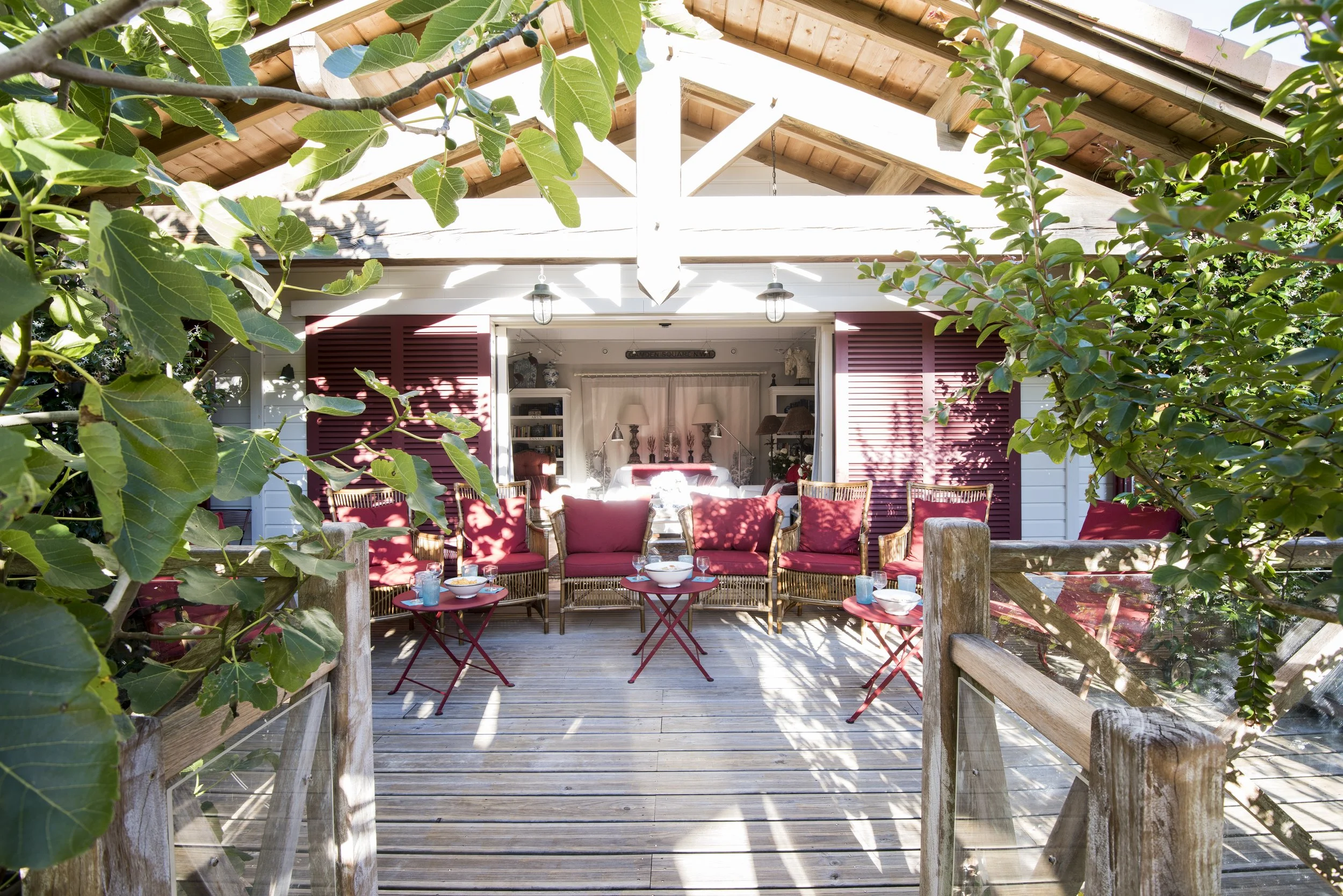
Surf Paradise
Interior Architecture
Surf | Basque Coast,
Southwest France

A four-bedroom family home on one of Europe's great surf coasts, designed for the way a barefoot life is actually lived.
LOCATION: Basque Coast, Southwest France
PROJECT TYPE: Interior Architecture & Design
SCOPE: New Build · Interior Design · Spatial Planning · Material and Finish Specification · Bespoke Joinery (Wardrobes, Vanities, Storage) · Lighting Design · Furniture Sourcing and Curation · Art and Object Curation · Window and Door Specification (Shutter System)
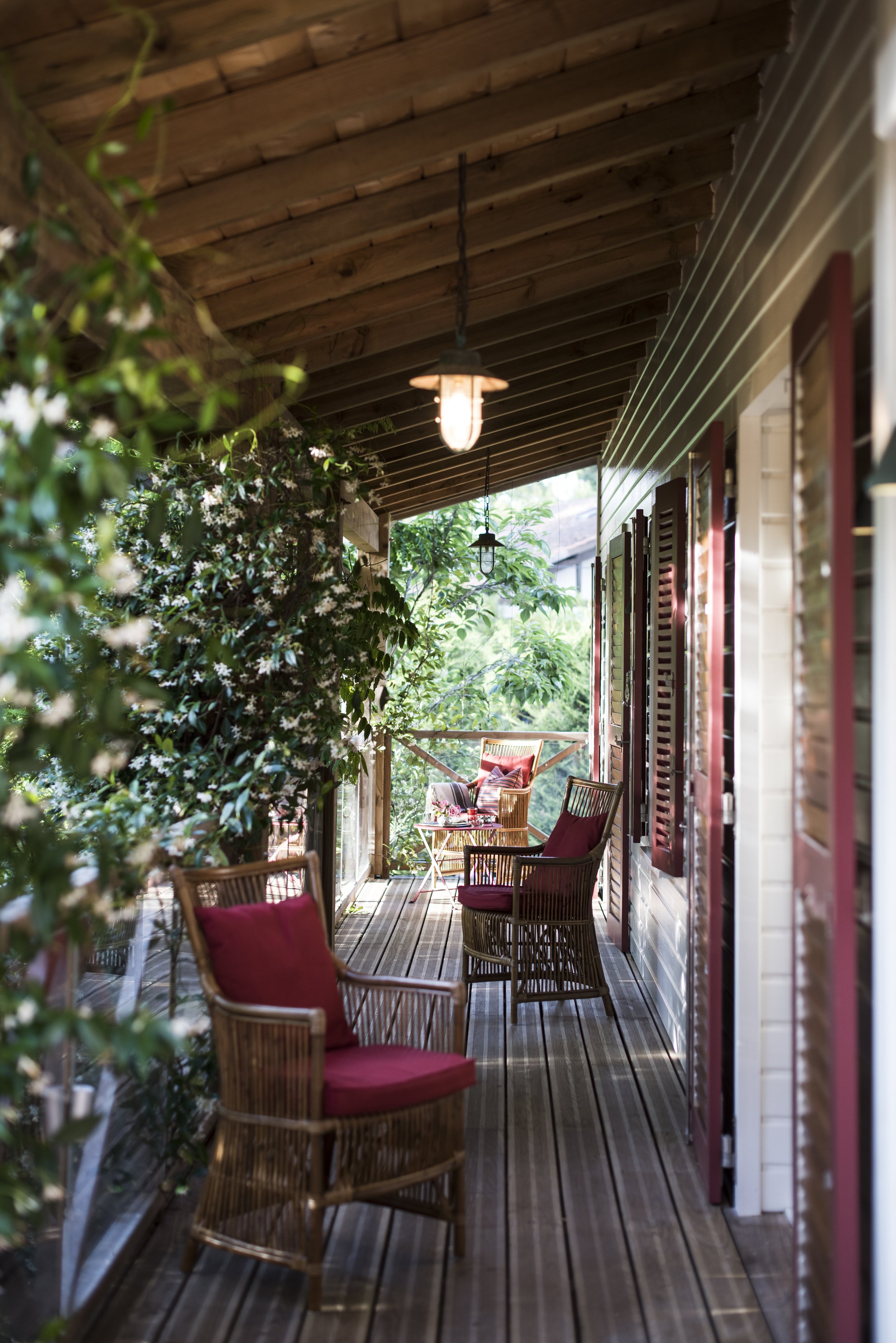
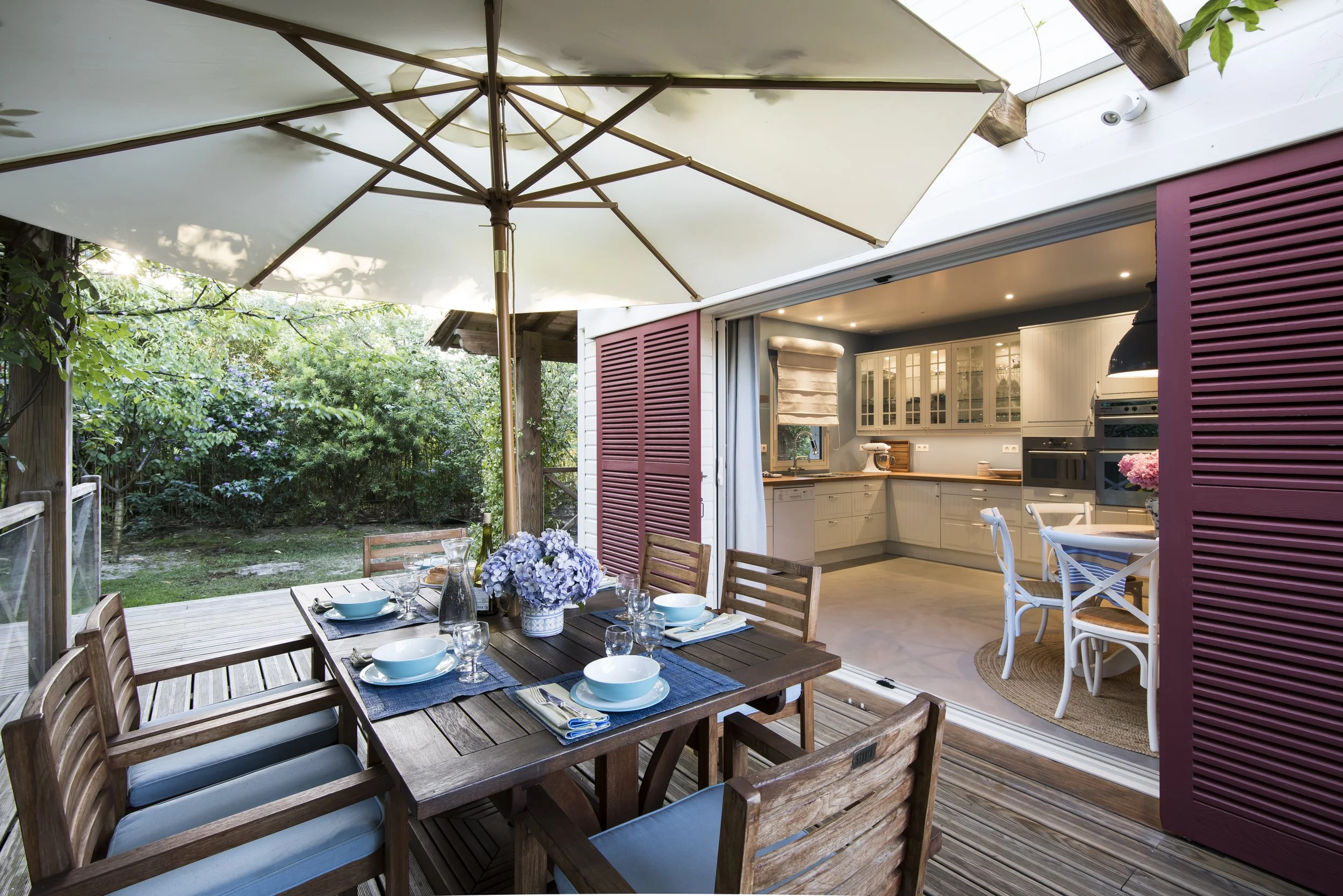
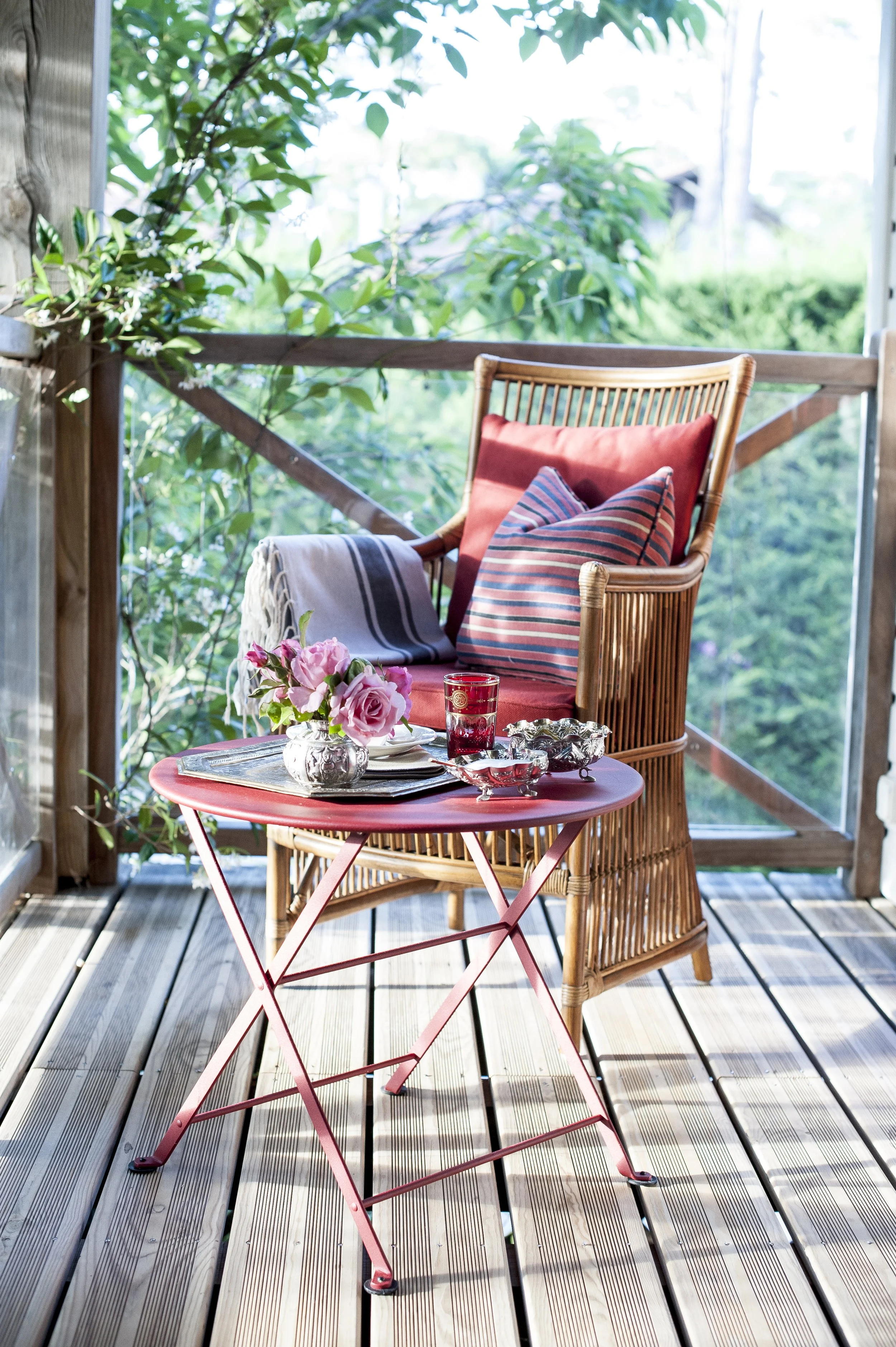
This new-build family home sits on one of Europe's best surf breaks, on the Basque coast of southwest France. A stretch of coastline that has long attracted a particular kind of crowd. Down-to-earth. Sporty. Happy. Unpretentious. Our clients are part of that crowd, and the brief they came to us with was the most specific kind of luxury brief: a house designed entirely around the way a barefoot surf life is actually lived, with none of the convention and none of the gloss that conventional luxury beach houses tend to insist on.
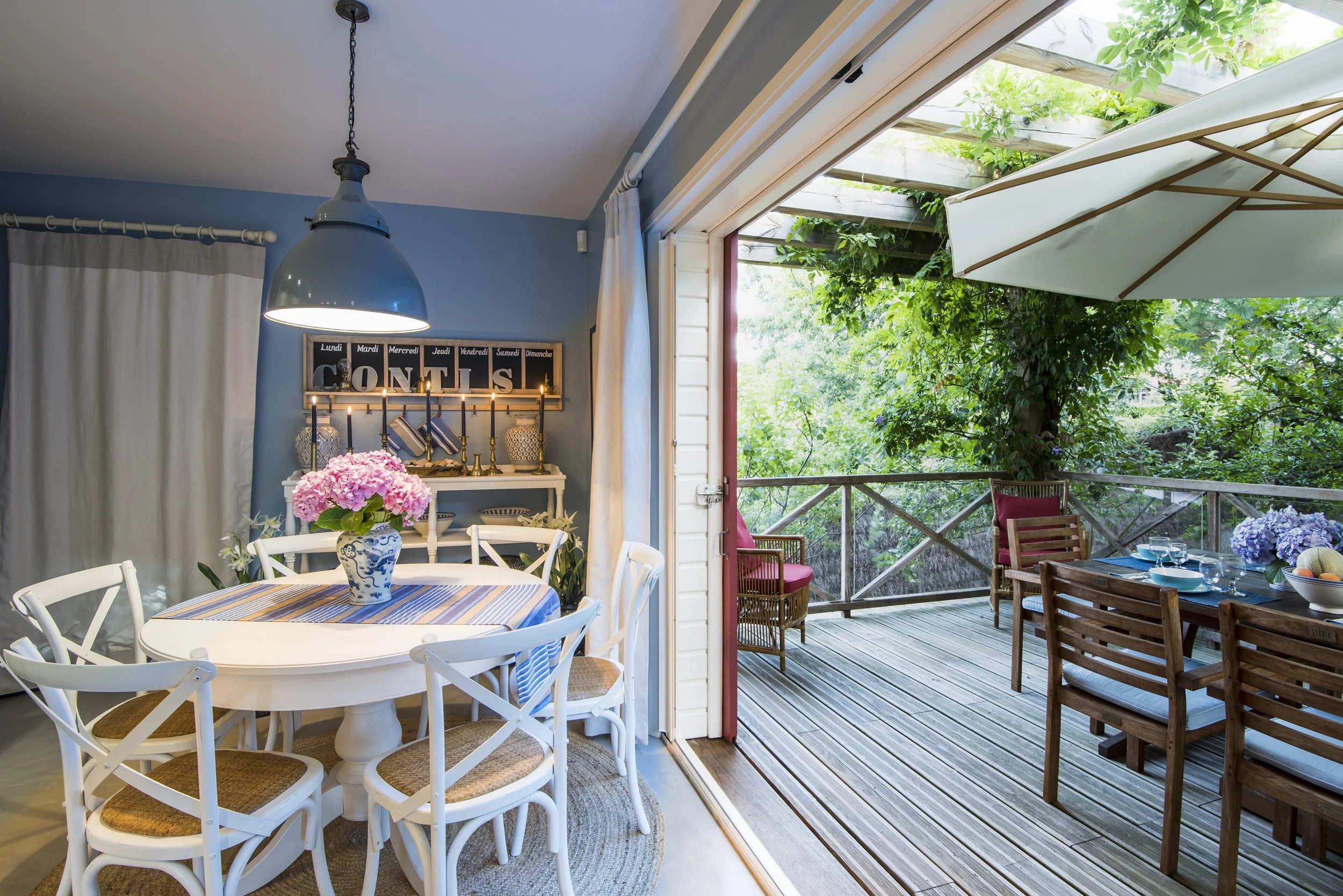
The plot was bought with planning permission. Together with a local architect we designed a house with four ensuite bedrooms, generous living, dining and kitchen spaces, a garage, a laundry, storage and a deck for the bikes and the boards. The clients' vision was simple and specific: a breezy Caribbean-style bungalow where circulation is easy, where indoor and outdoor life merge fluidly, and where ten people can come and go through the house all weekend without ever feeling like they are in each other's way. The building was to sit against the property boundary on a sloping section, with the natural fall of the land bringing daylight into the lower ground floor.
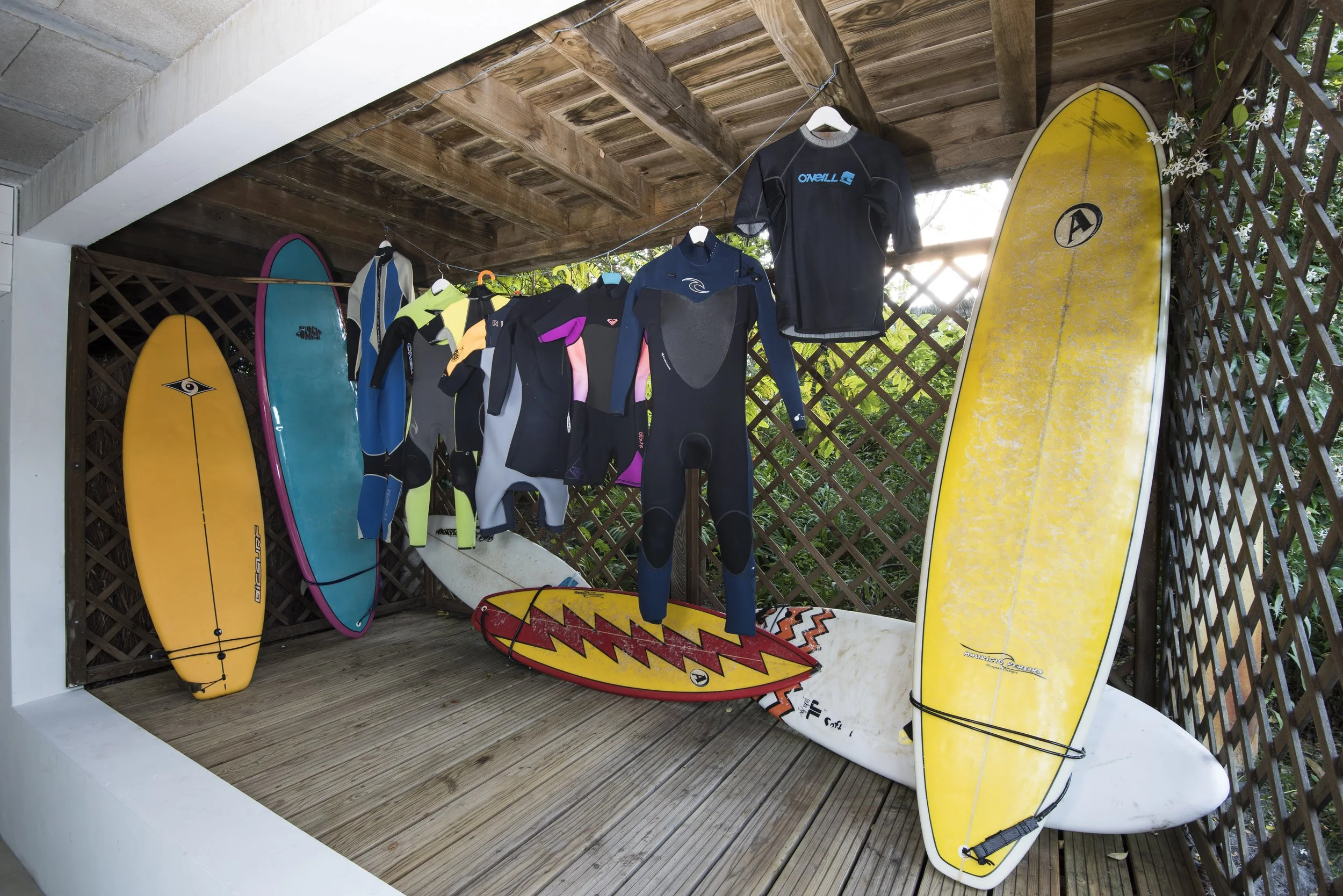
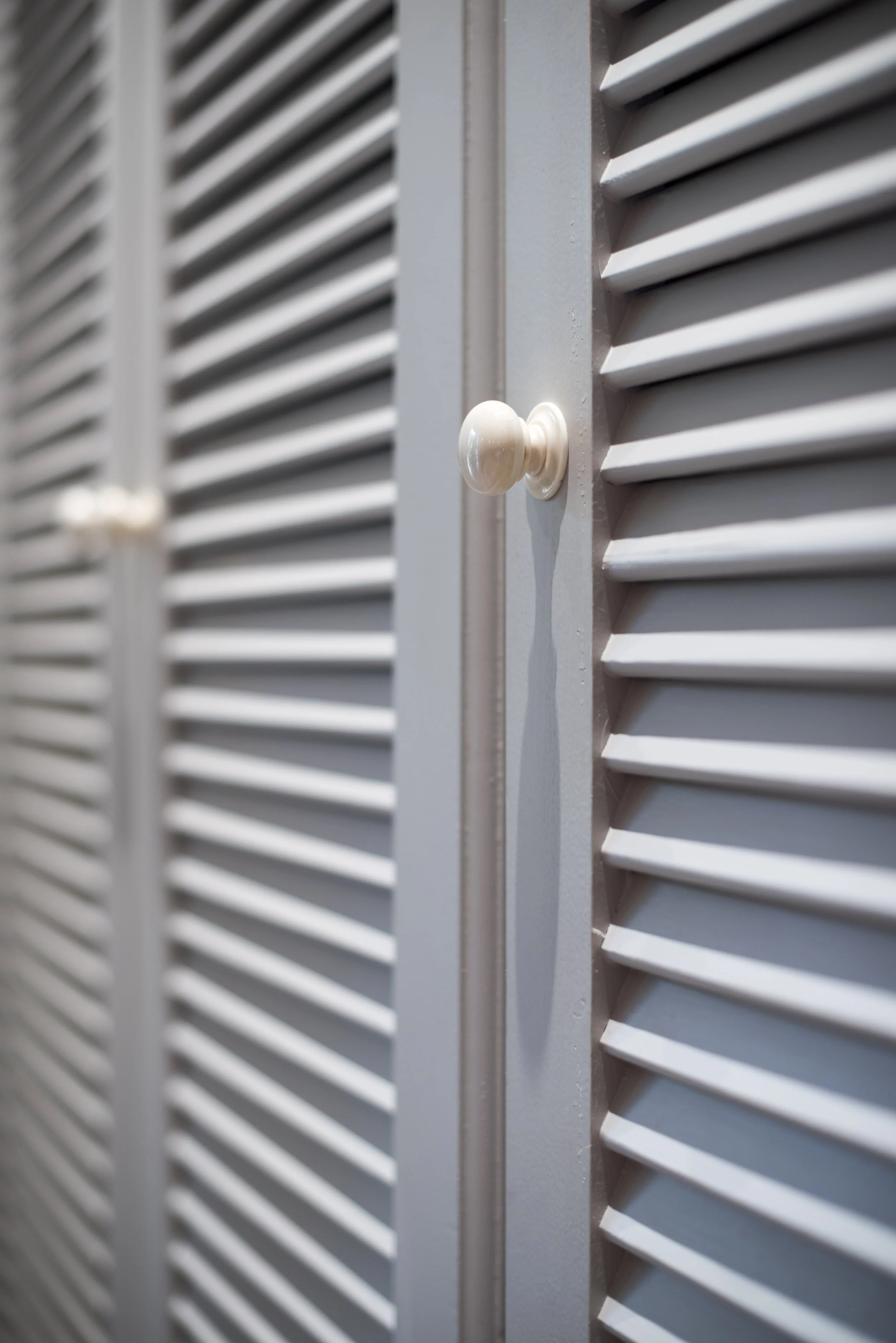
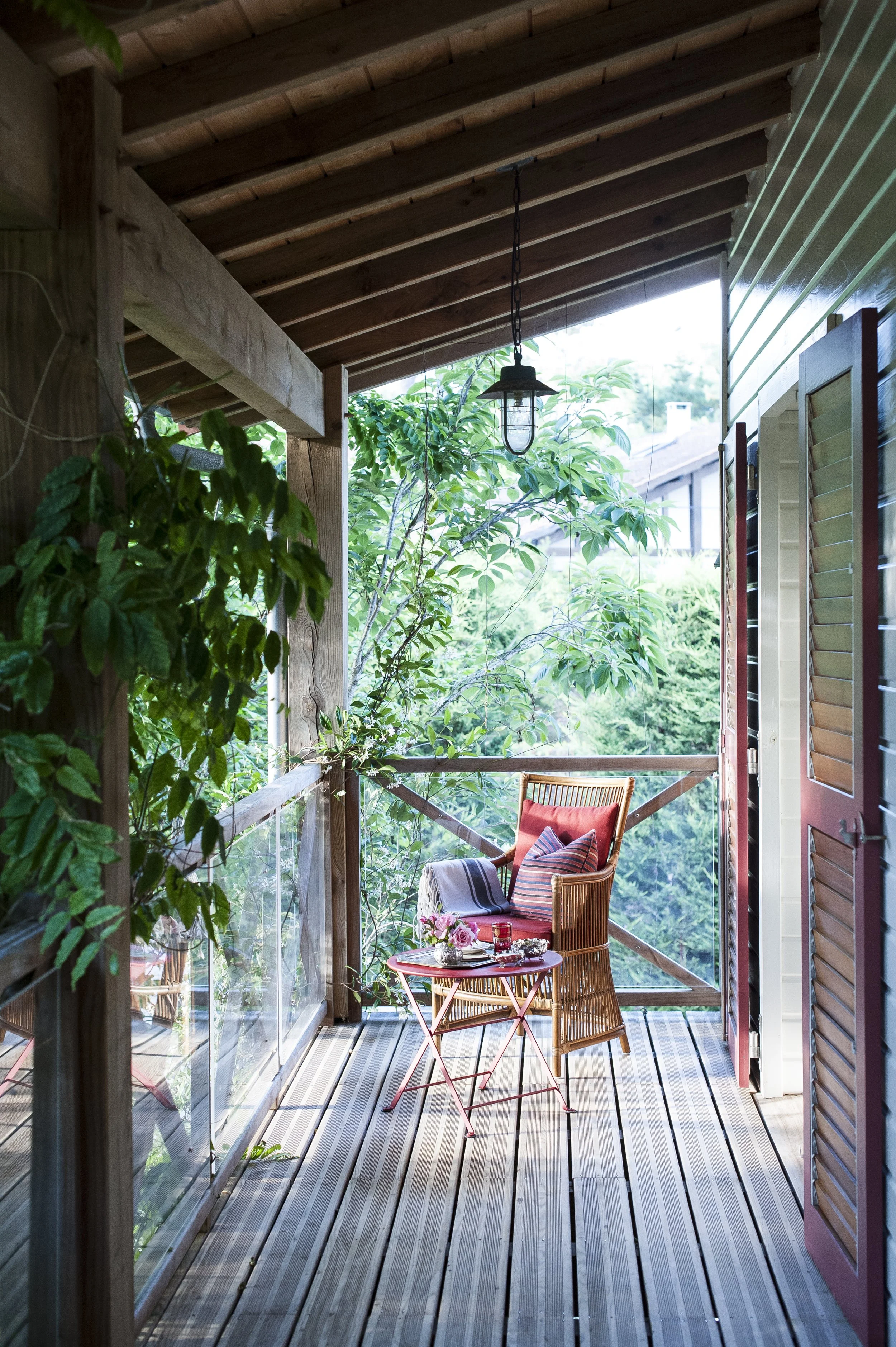
Our response was a house drawn from the colonial architecture of the great tropical coastlines: a covered verandah running the full length of the building, every window a full-height door with folding painted shutters, two large communal balcony terraces that stretch deep into the wild planting around the house, a pale pastel palette reminiscent of faded beach shacks. A coastal home that ignores its climate is designed for a photograph, not a life. This one was designed, from the first decision, for the way the family actually arrives home from the beach, from rinsing surfboards and wetsuits to picking raspberries from the bushes outside the kitchen.
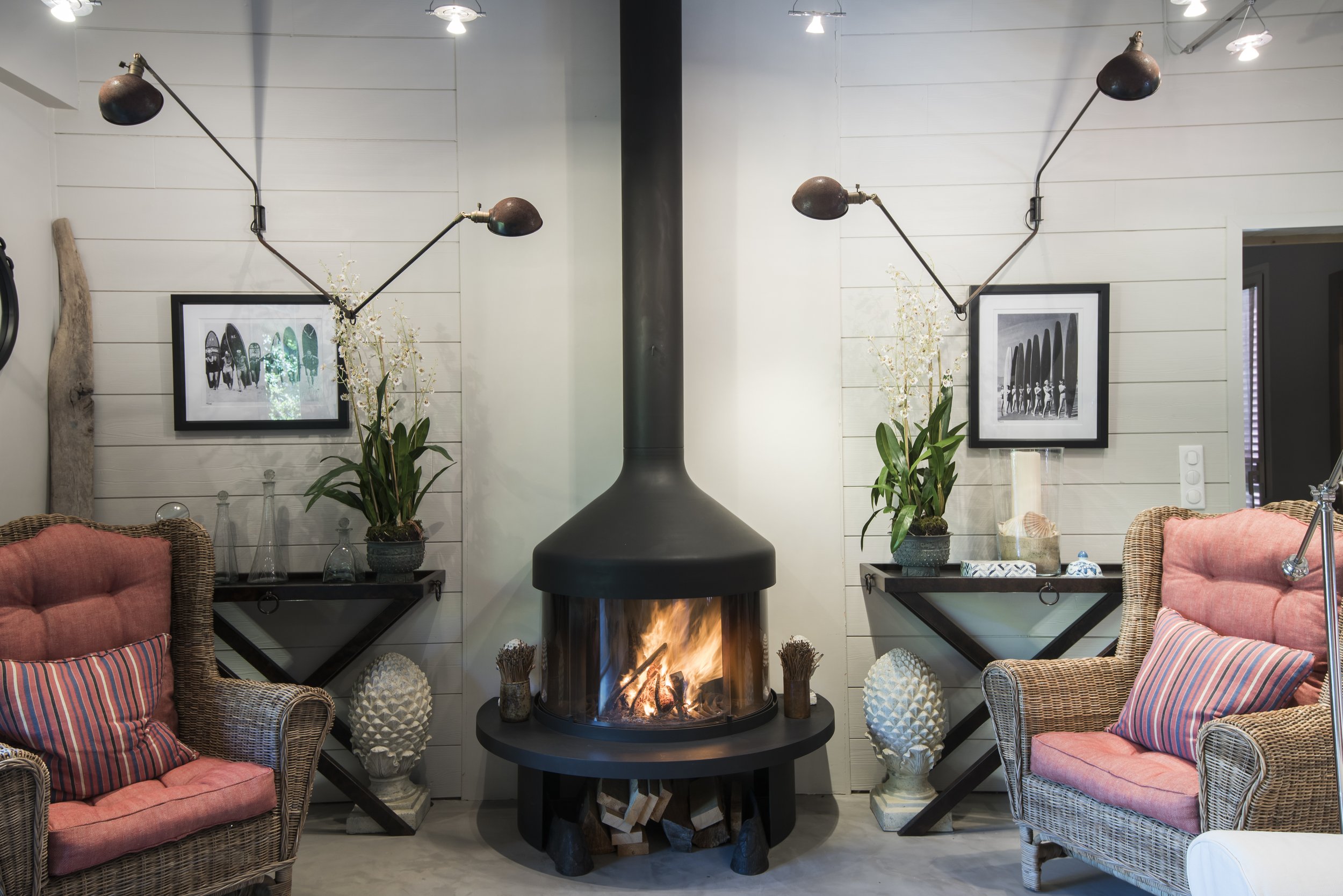
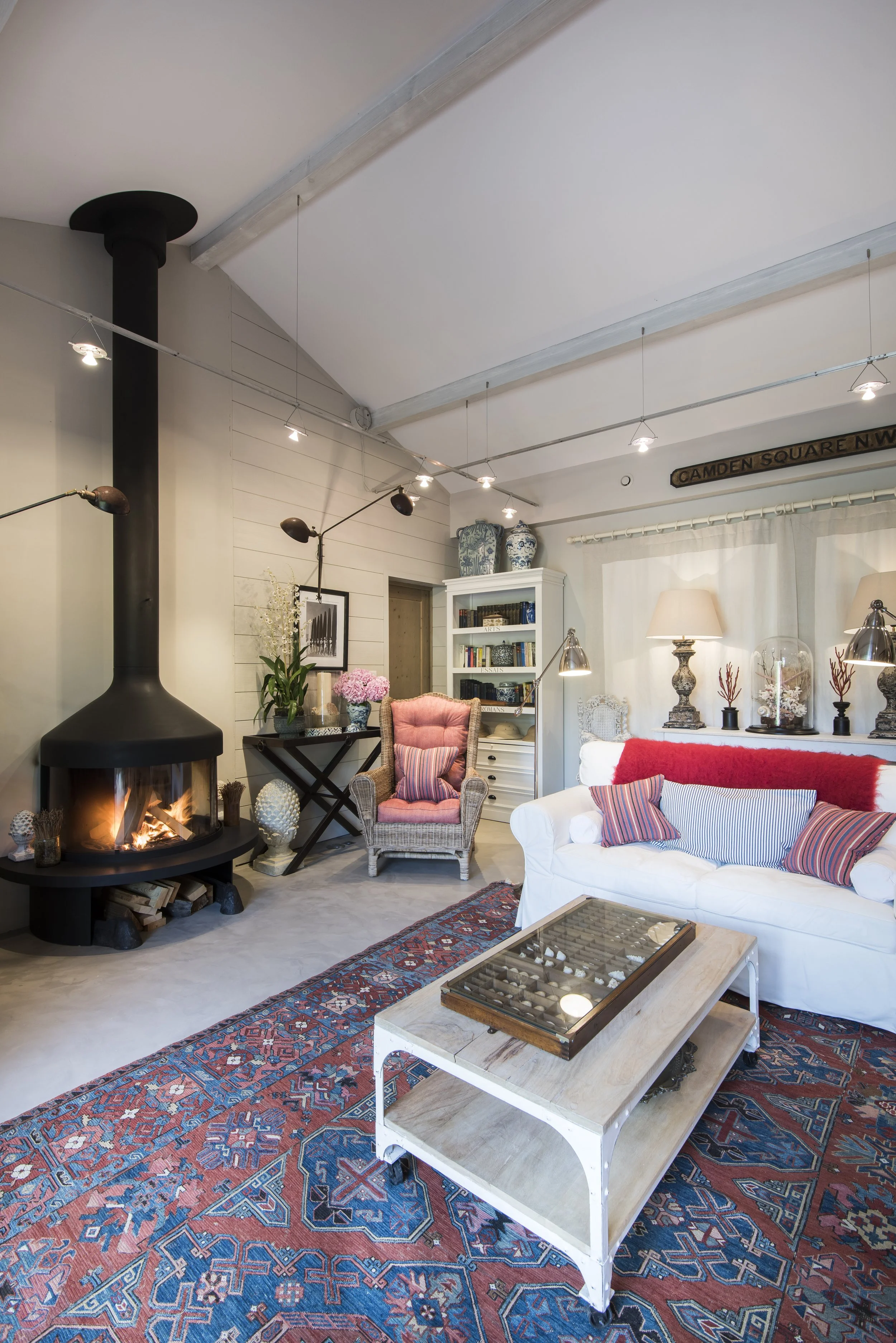
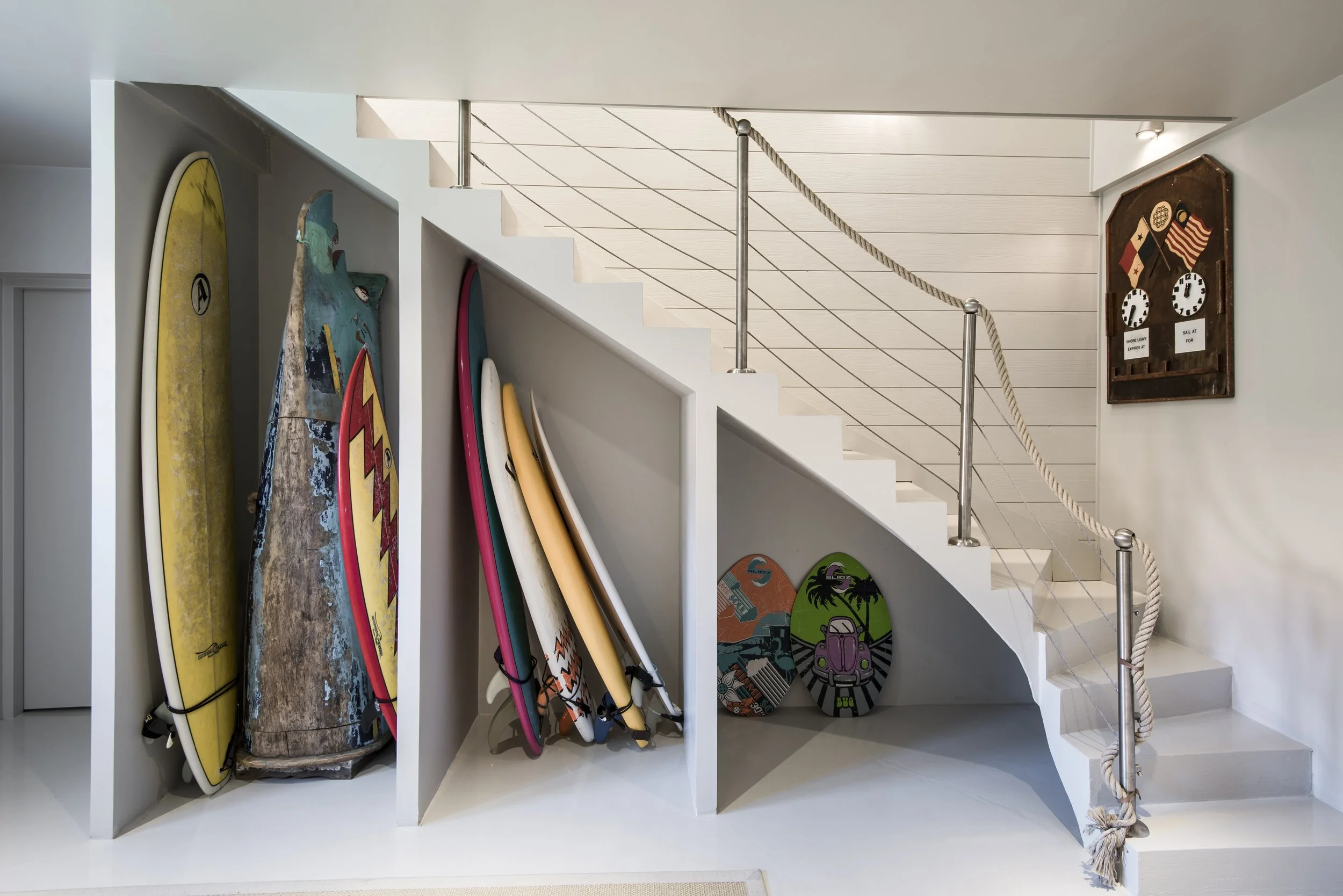
"This house is as cozy in winter with a fire as it is cool in the summer heat, filled with family treasures and stacked with surfboards , we could not be happier."
—Client, Surf Paradise, Basque Coast
THE BRIEF
Luxury, freed from convention.
The clients' brief was unusually clear, and that clarity shaped everything that followed. They wanted a luxurious beach house, but a luxurious beach house designed around freedom from convention rather than against it. The Basque coast attracts a particular kind of life. Salt on the skin. Sand on the floor. Surfboards by the door. Friends staying for the weekend. Lunches that turn into long evenings. The house had to absorb all of that without complaining about it, and without ever feeling fussy.
Our discovery process is foundational to how we work, and on this project it focused not on style but on rhythm: how the family arrives home from the beach, where the wet boards and the wet dogs go, where ten people can sit down to lunch without anyone being relegated to the corner, where the children can bring sand into the house without it becoming a problem, where a guest who has worked all morning can take a quiet hour before the house fills up again. Once those questions had honest answers, the rest of the design followed naturally.
The architectural inspiration we landed on was the colonial bungalow tradition: the Caribbean, the great Indian Ocean coastlines, the Pacific. Buildings designed for tropical climates by people who understood that a house on a hot, humid, seasonal coast lives or dies by the quality of its airflow, its shading, its connection to the outdoors. The Basque coast has its own weather rhythm, but the principles translate directly. A long covered verandah. Full-height shutter doors. Pastel exteriors that fade rather than peel. Indoor-outdoor circulation as the organising idea, not as an afterthought.
A HOUSE FOR TEN
Ten people. Ten paths. No collisions.
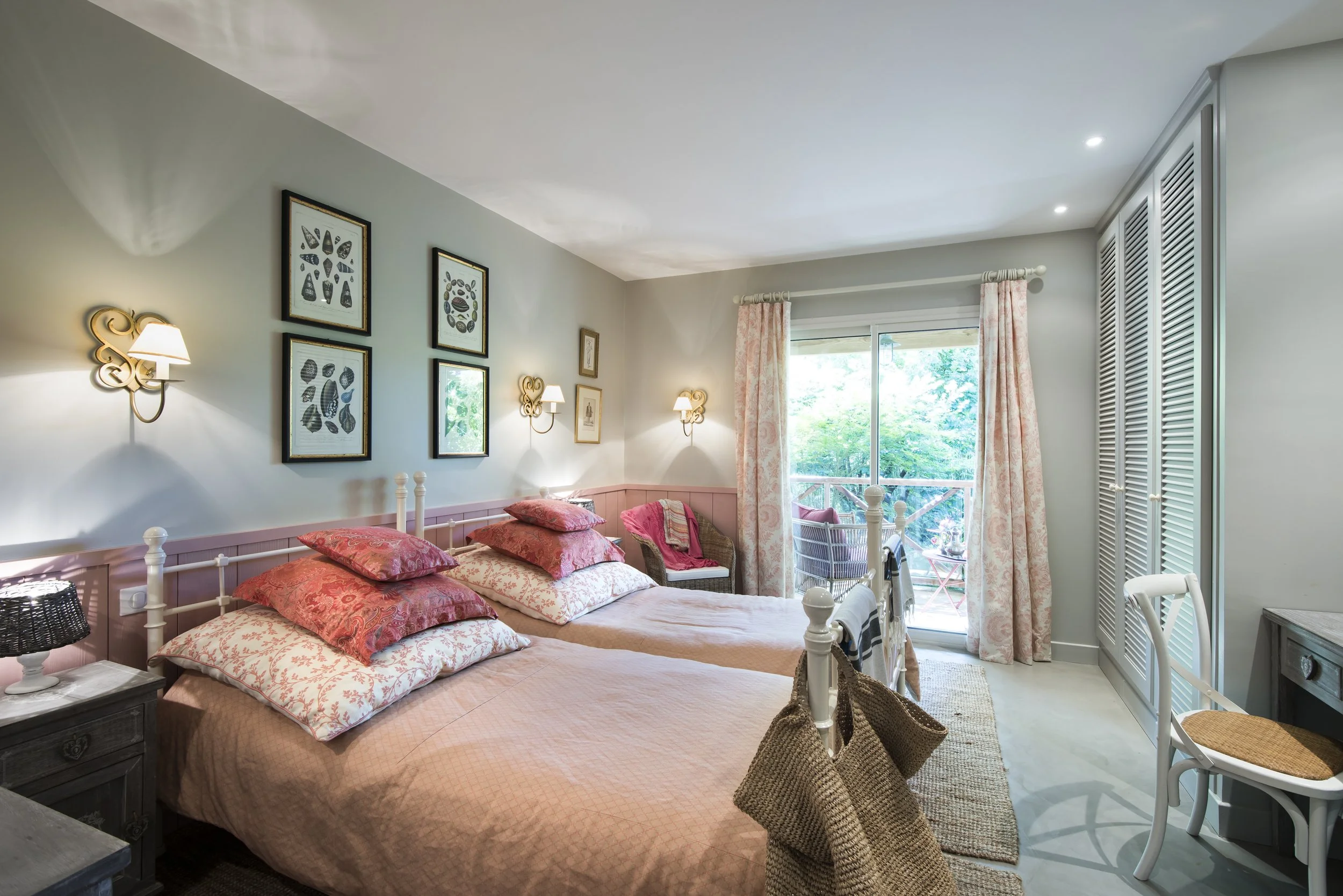
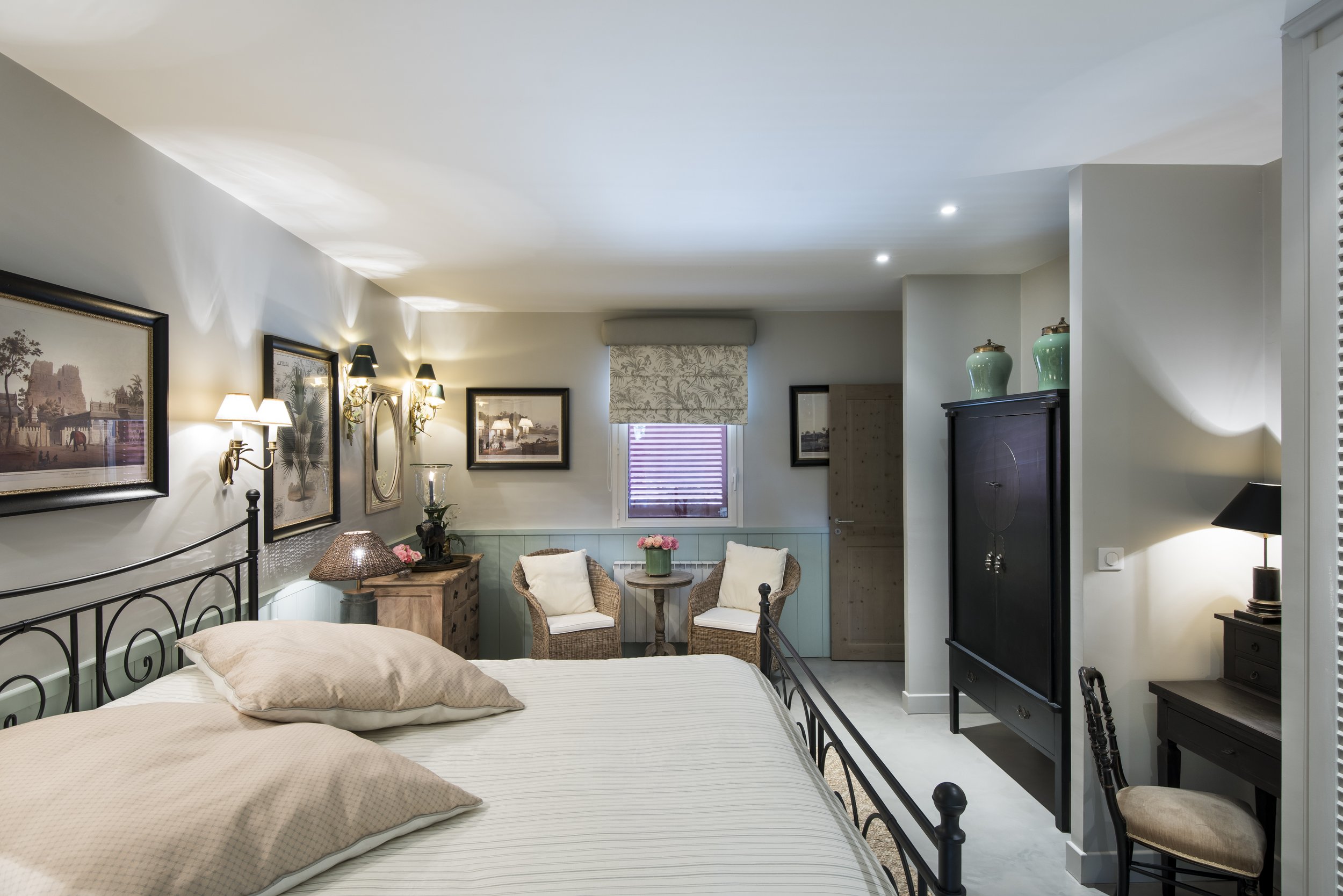
The floor plan was designed around a single working principle: that ten people should be able to circulate independently through the house without ever colliding. Every bedroom needed its own exterior terrace with direct access to the garden, the pool and the beach, so that no guest ever had to pass through the heart of the house to reach the outside world. Every bedroom needed enough storage that suitcases could be properly unpacked and the room could feel resolved rather than camped in. Every bedroom needed a desk space, so that a guest who needed an hour to work could disappear from the social rhythm of the house without feeling exiled from it.
Bespoke fitted wardrobes and generous vanity units were specified throughout. The brief insisted that any house designed for guests has to design for the way guests actually live. Which means designing for the unpacked suitcase, not the packed one. A clutter-free room is a room someone can comfortably stay in for a week. A room with nowhere to put the toiletry bag is a room someone is privately counting down the hours to leave.
These are not the decisions clients always know to ask for. They are the decisions a designer holds in mind on their behalf, the ones that determine whether a beautifully finished guest bedroom is a room a friend leaves grateful for, or a room they leave exhausted by. The cumulative effect of getting them right is that the house feels effortless to stay in. None of which the guest ever consciously notices. All of which they feel.
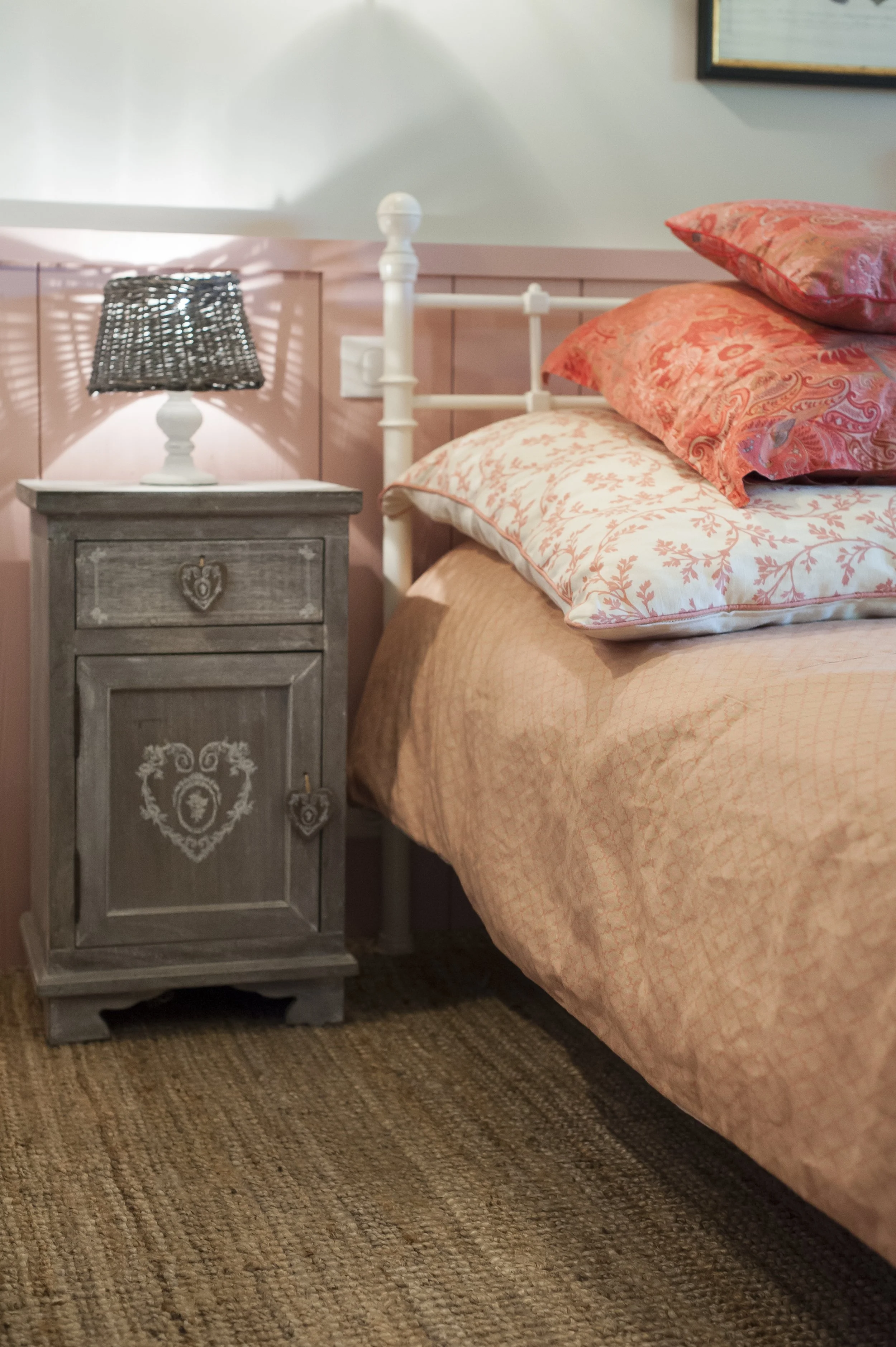
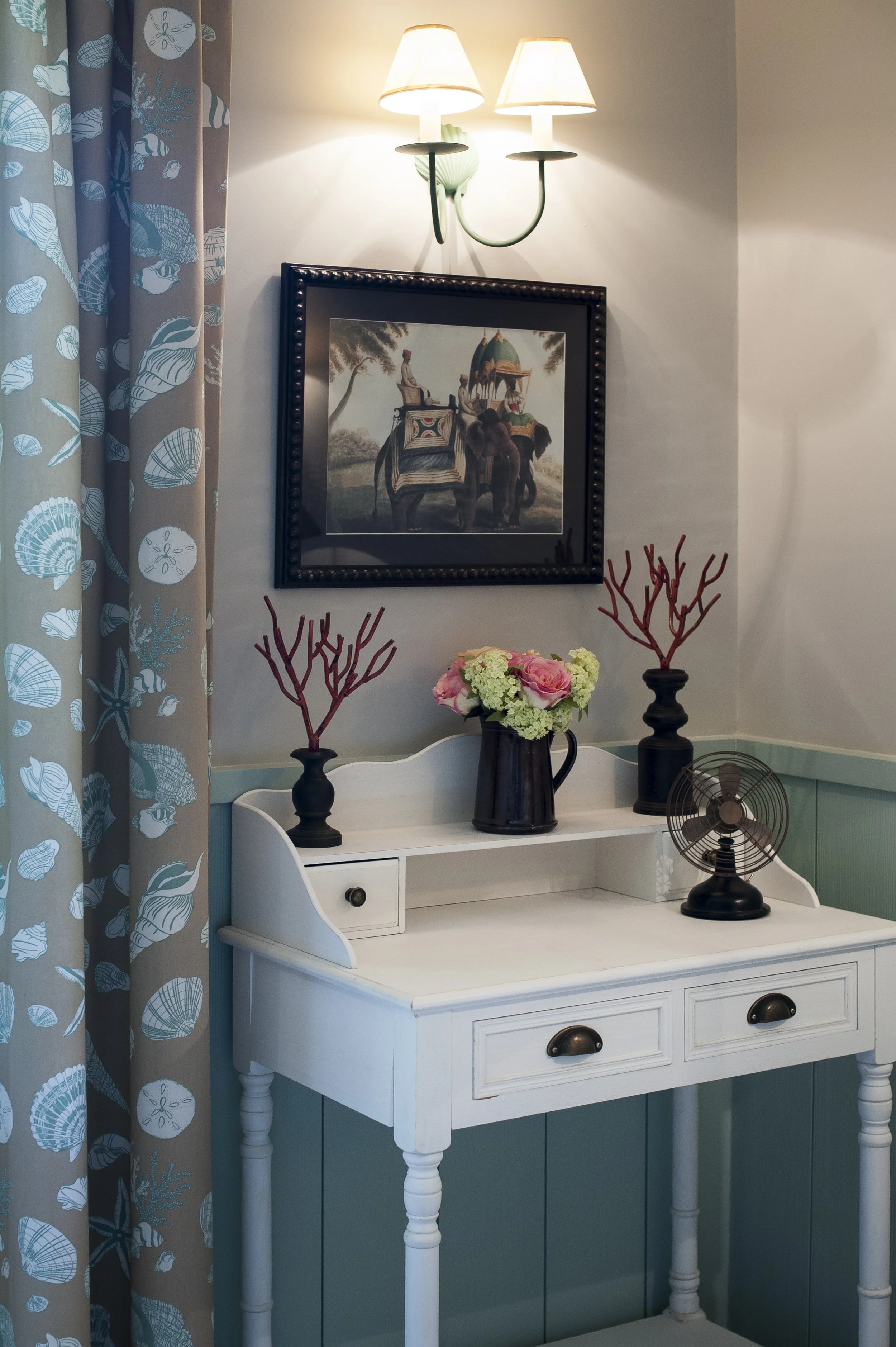
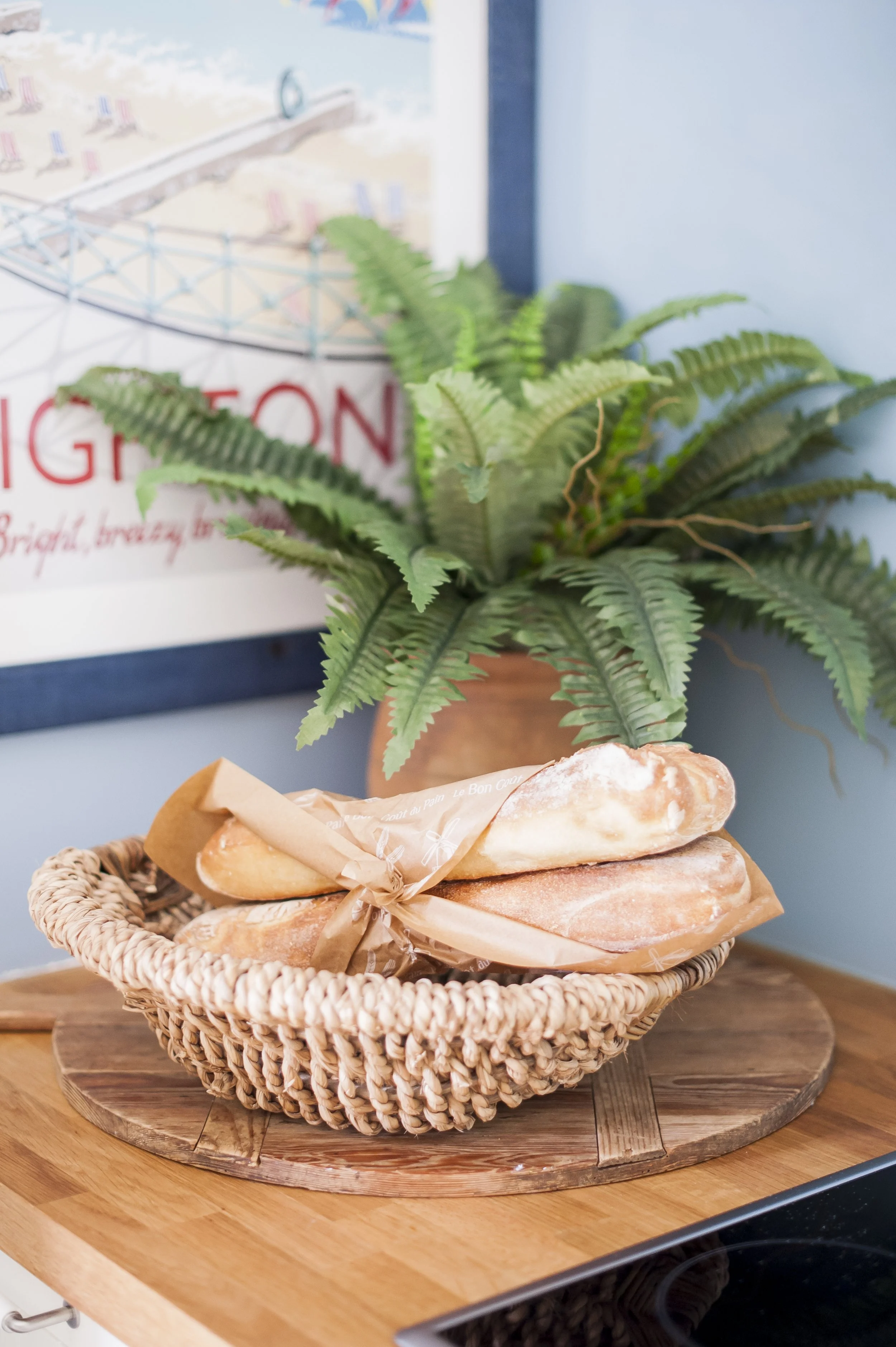
FREEDOM FROM CONVENTION
Designed for the salt air, not for the photograph.
The aesthetic of the house was the answer to a precise editorial problem: how to make a house feel laid-back without making it feel cheap, and how to make it feel luxurious without making it feel formal. Most beach houses fall on one side of that line or the other. The brief here was to find the line itself.
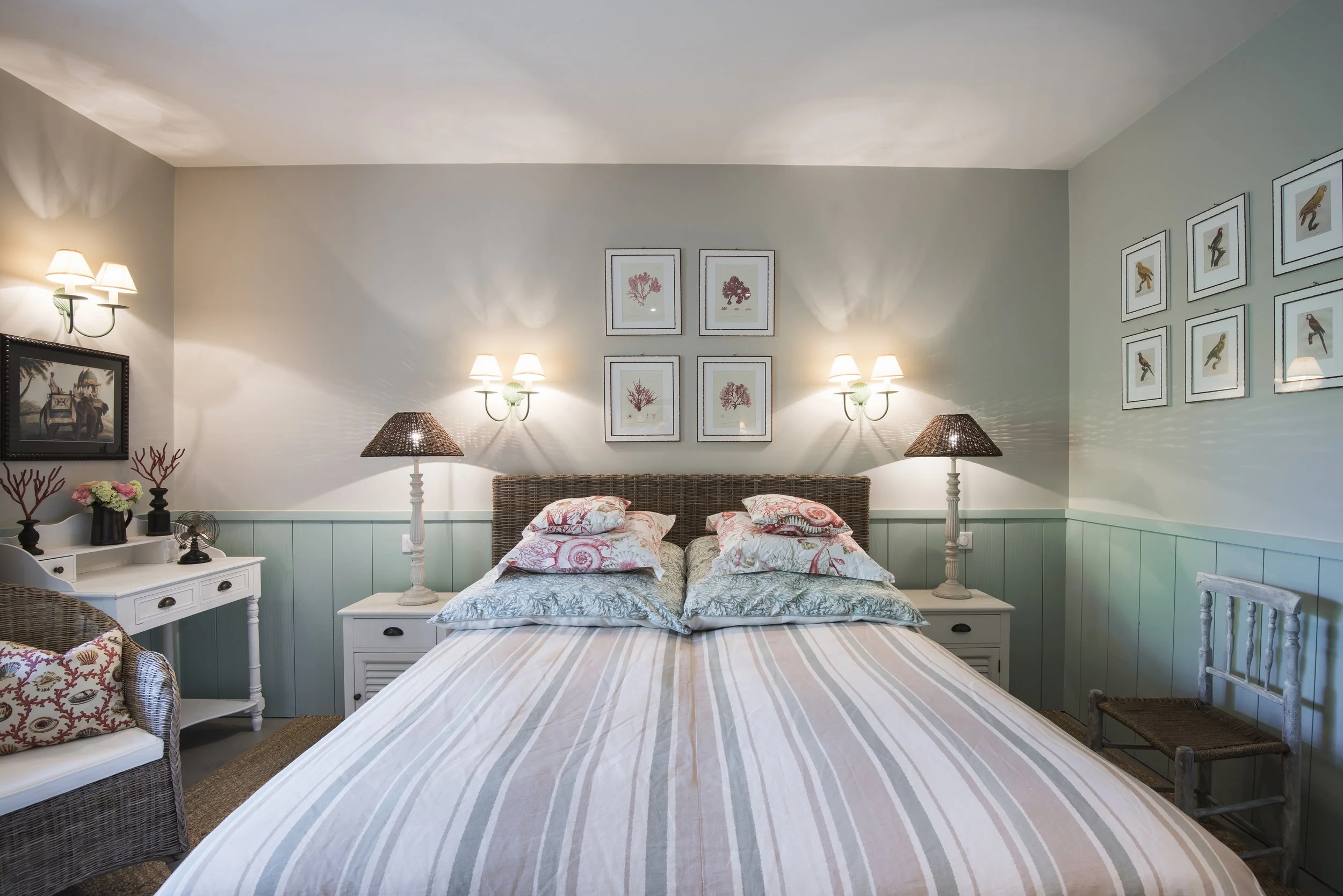
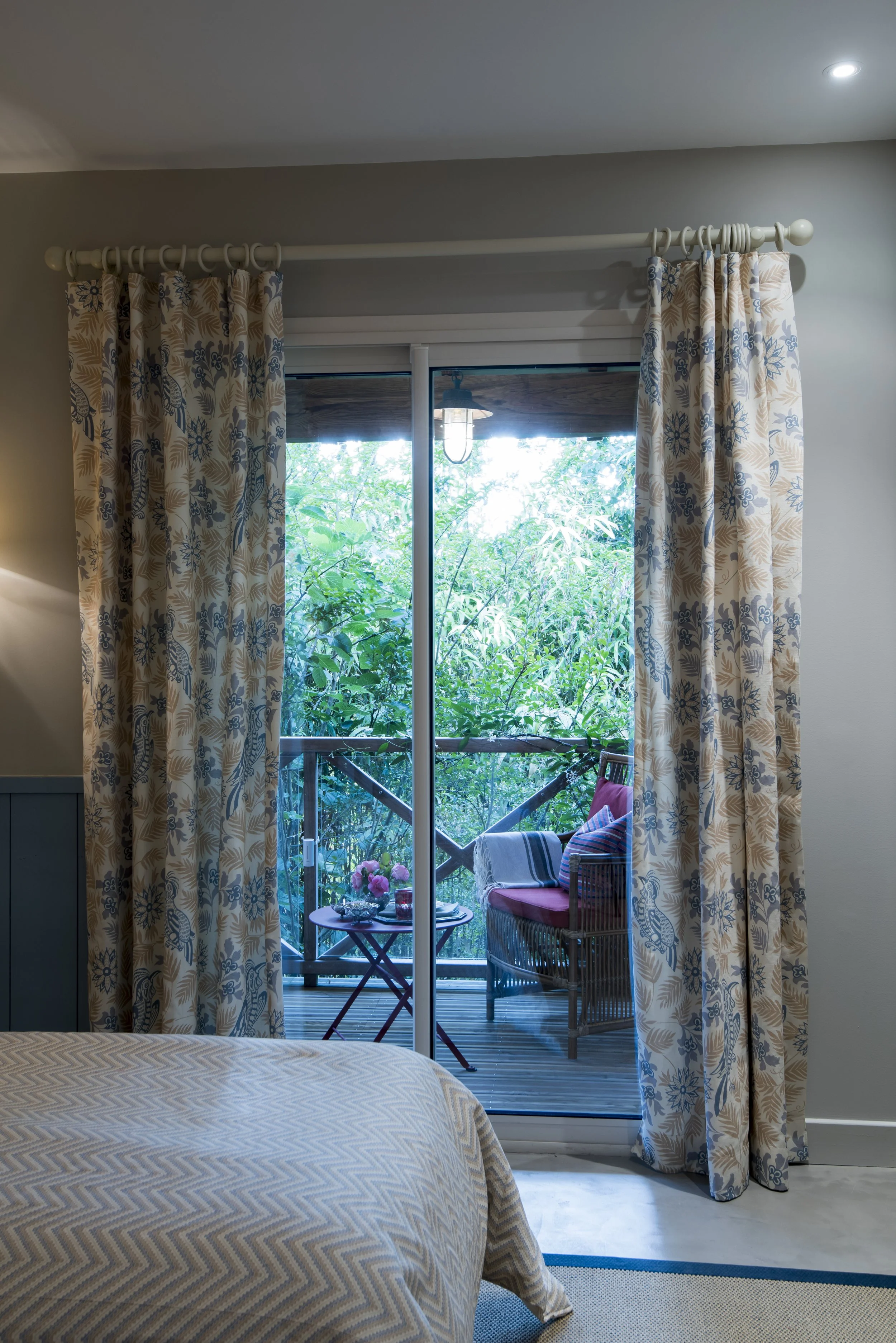
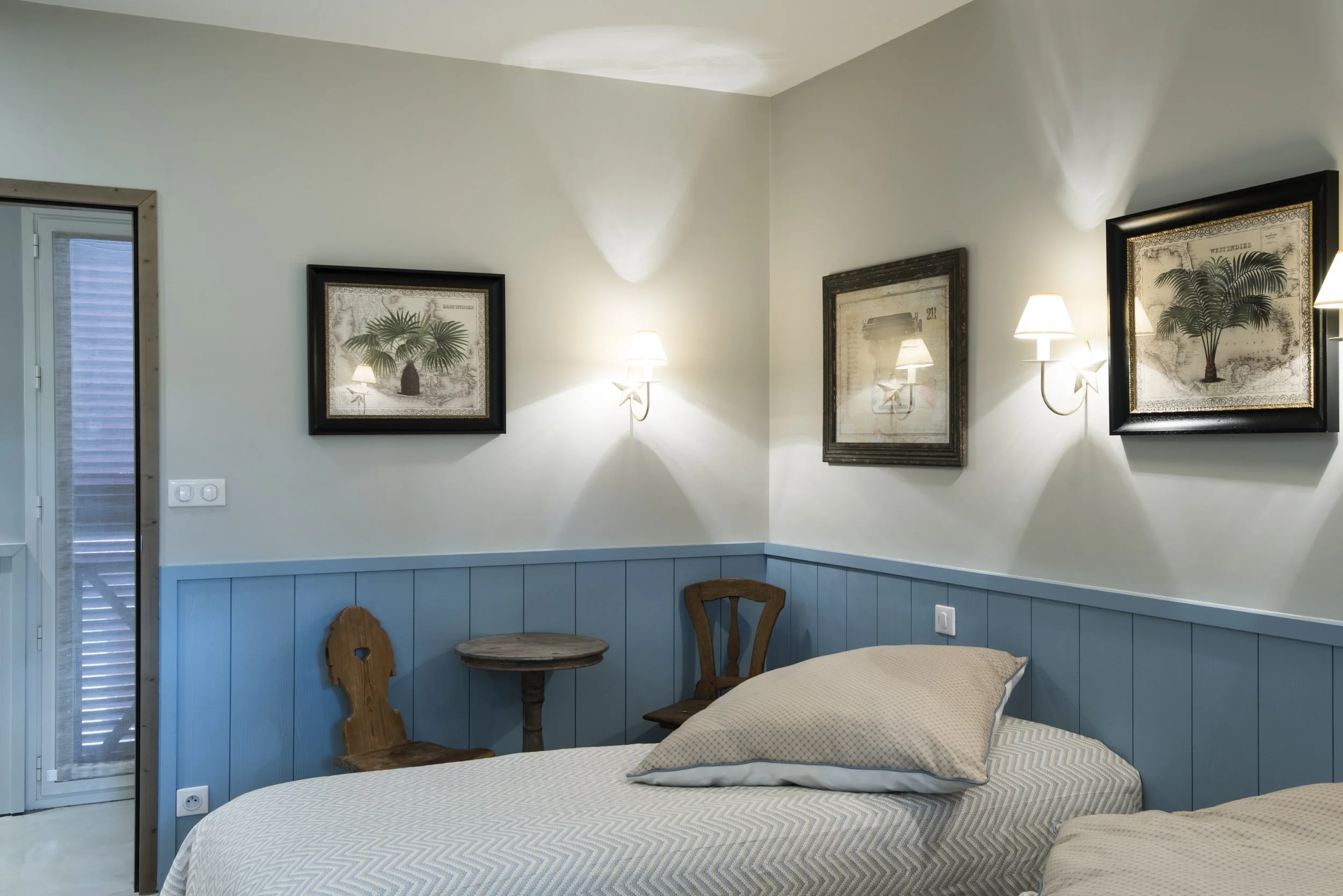
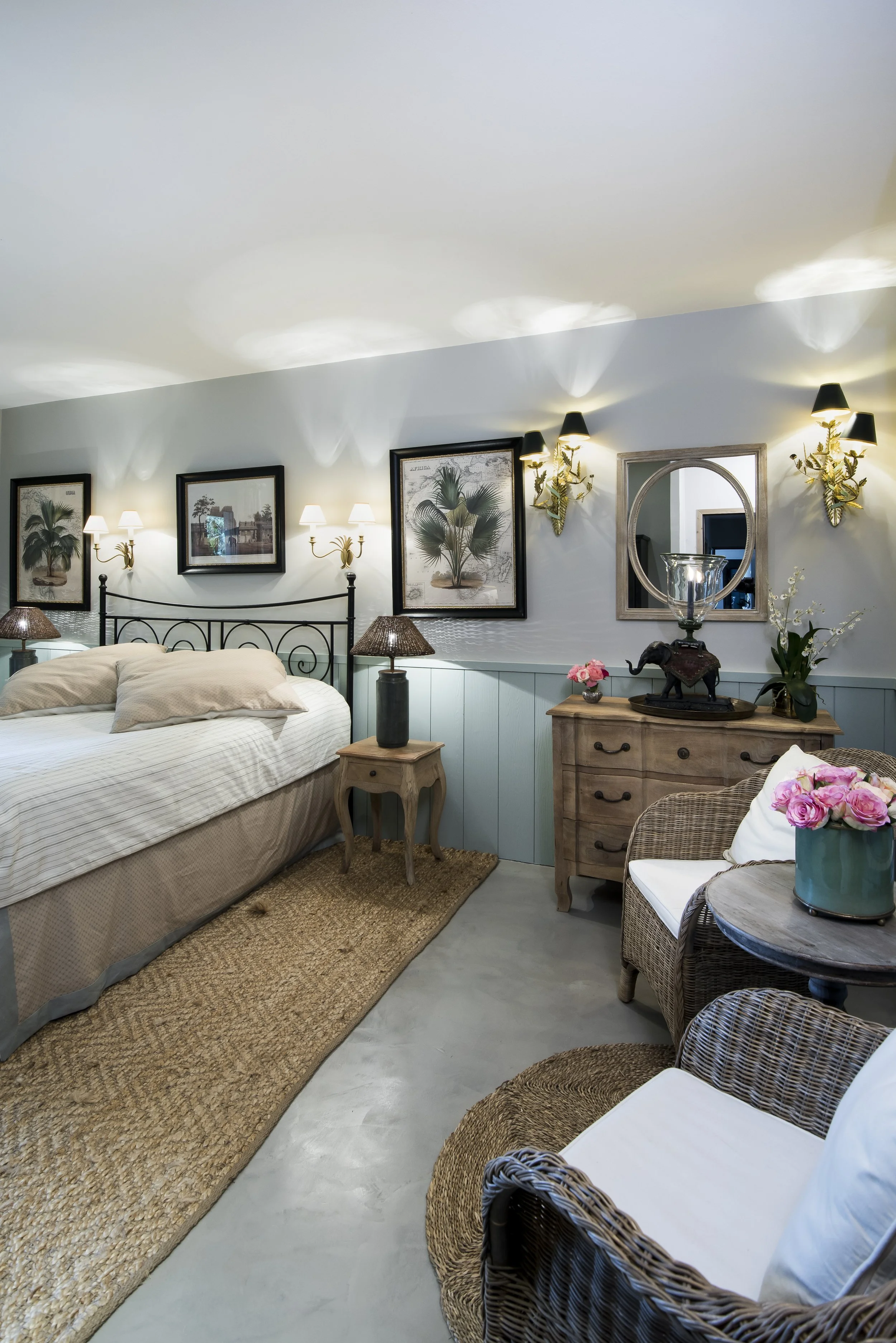
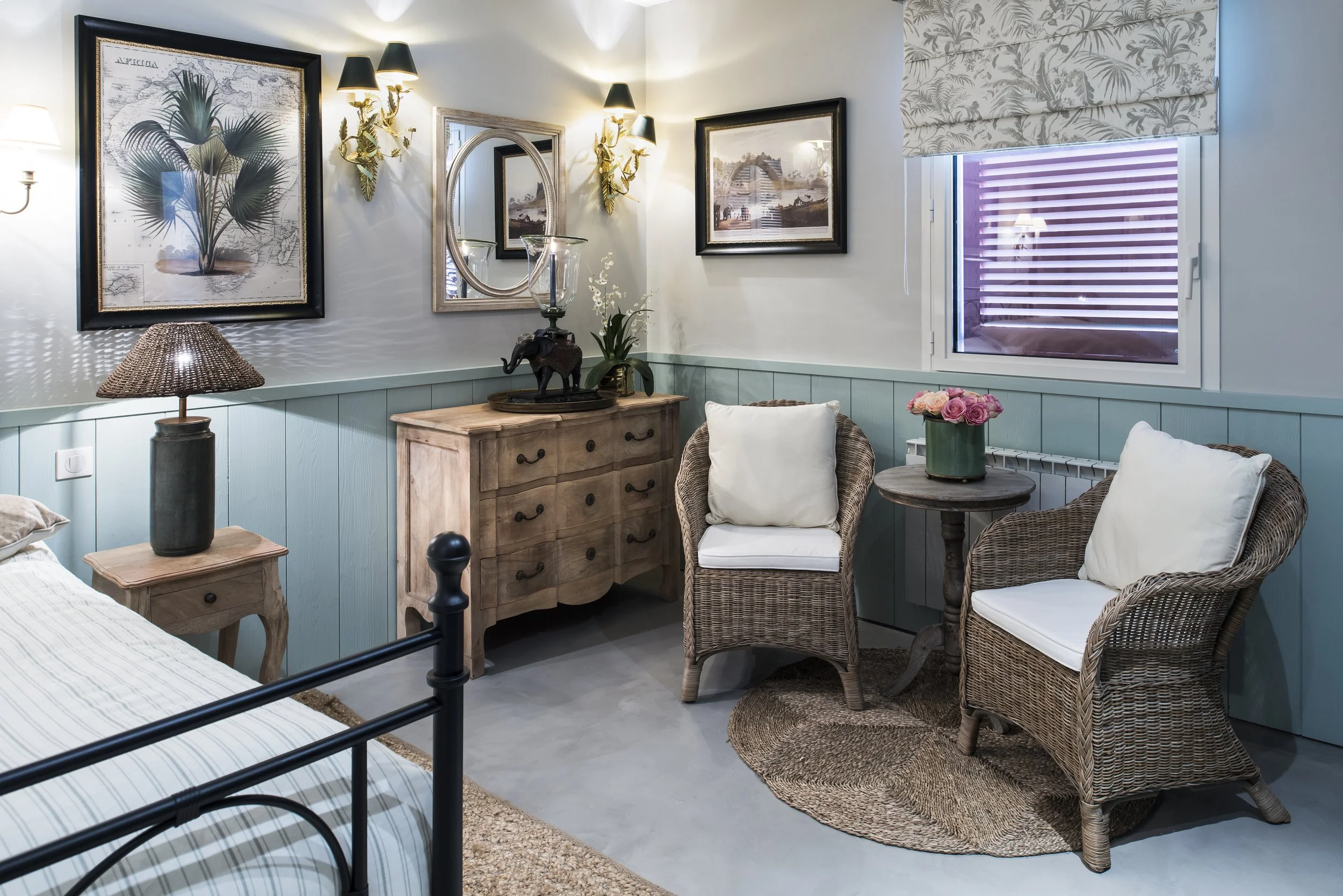
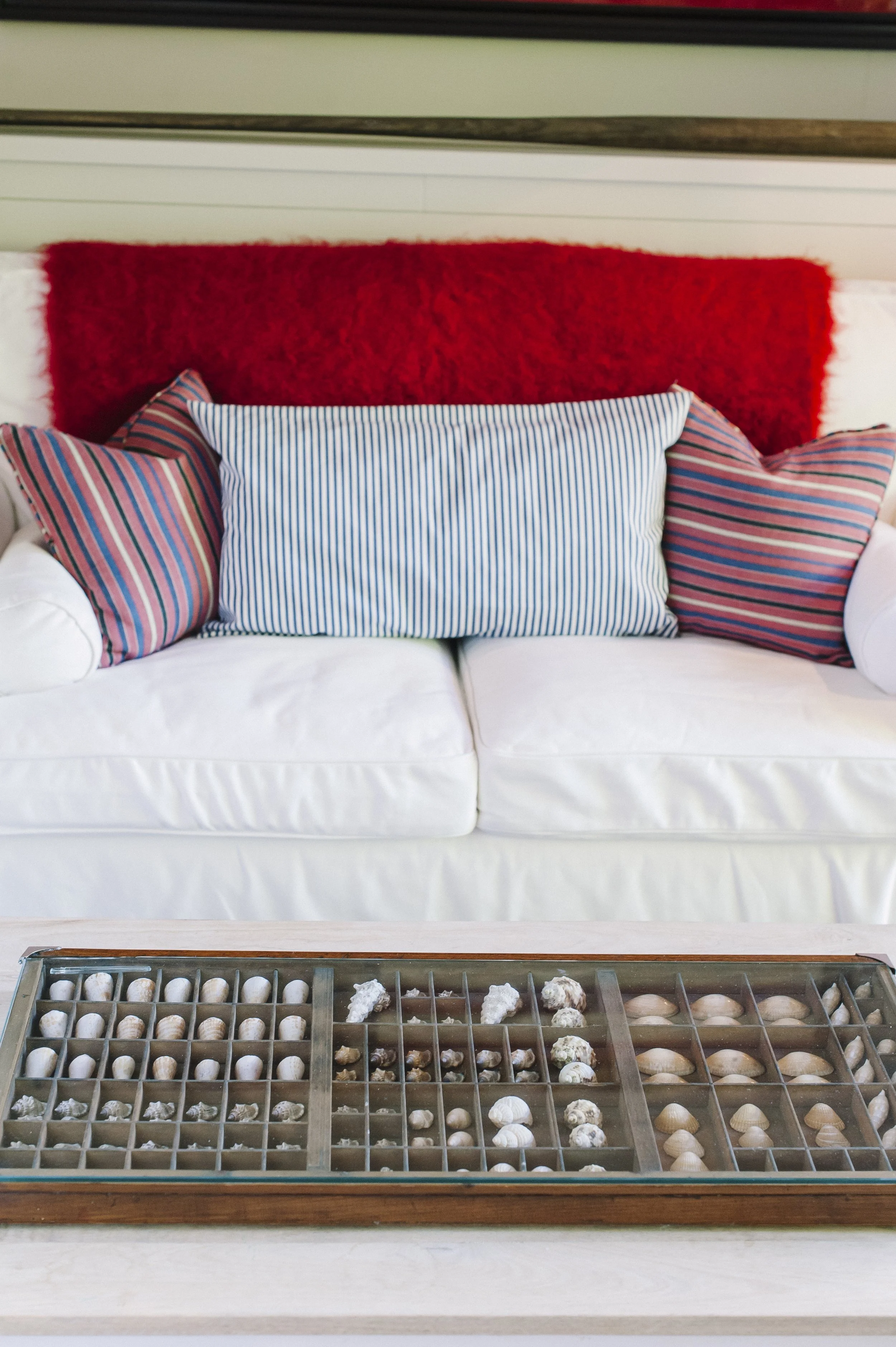
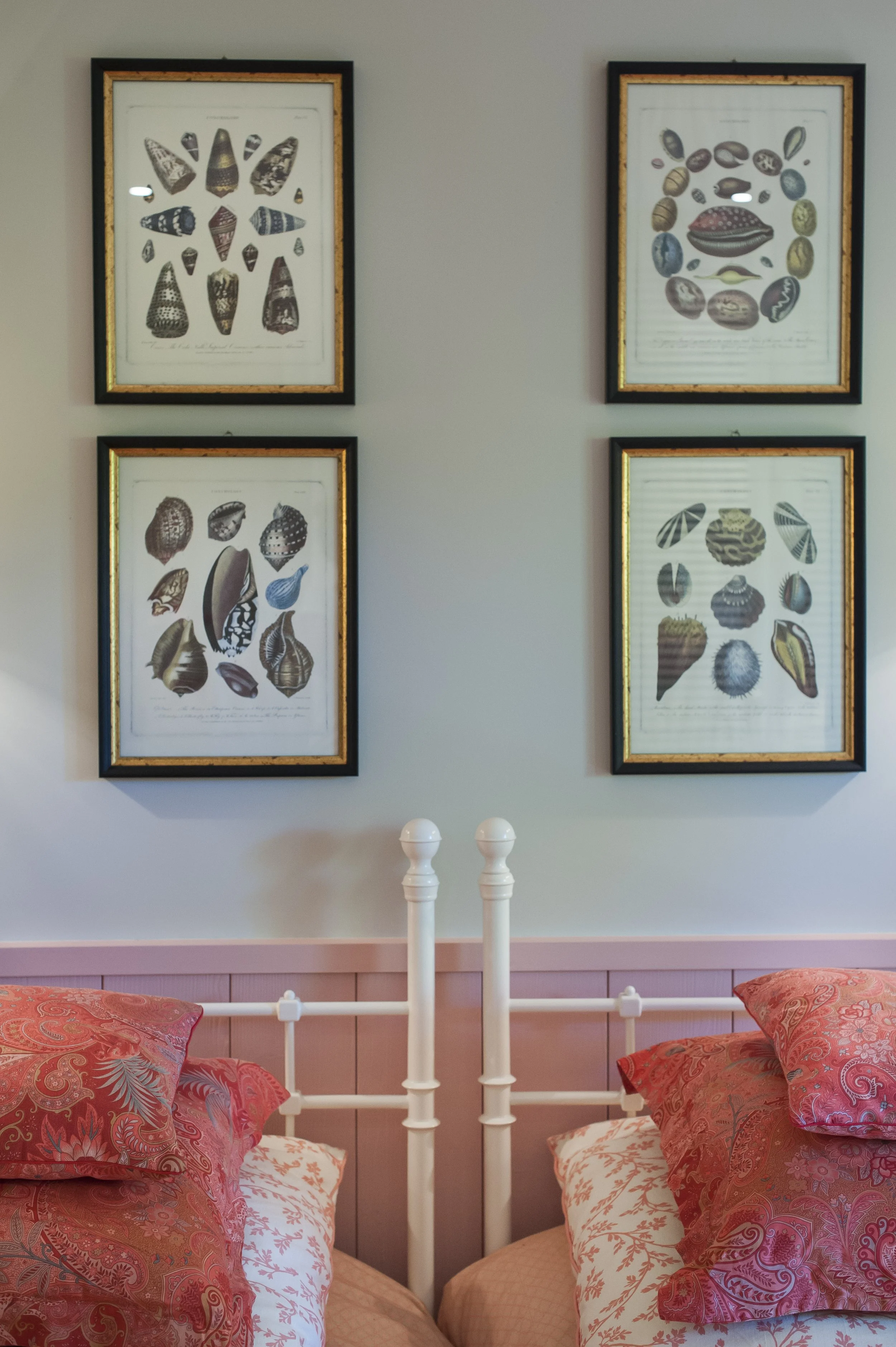
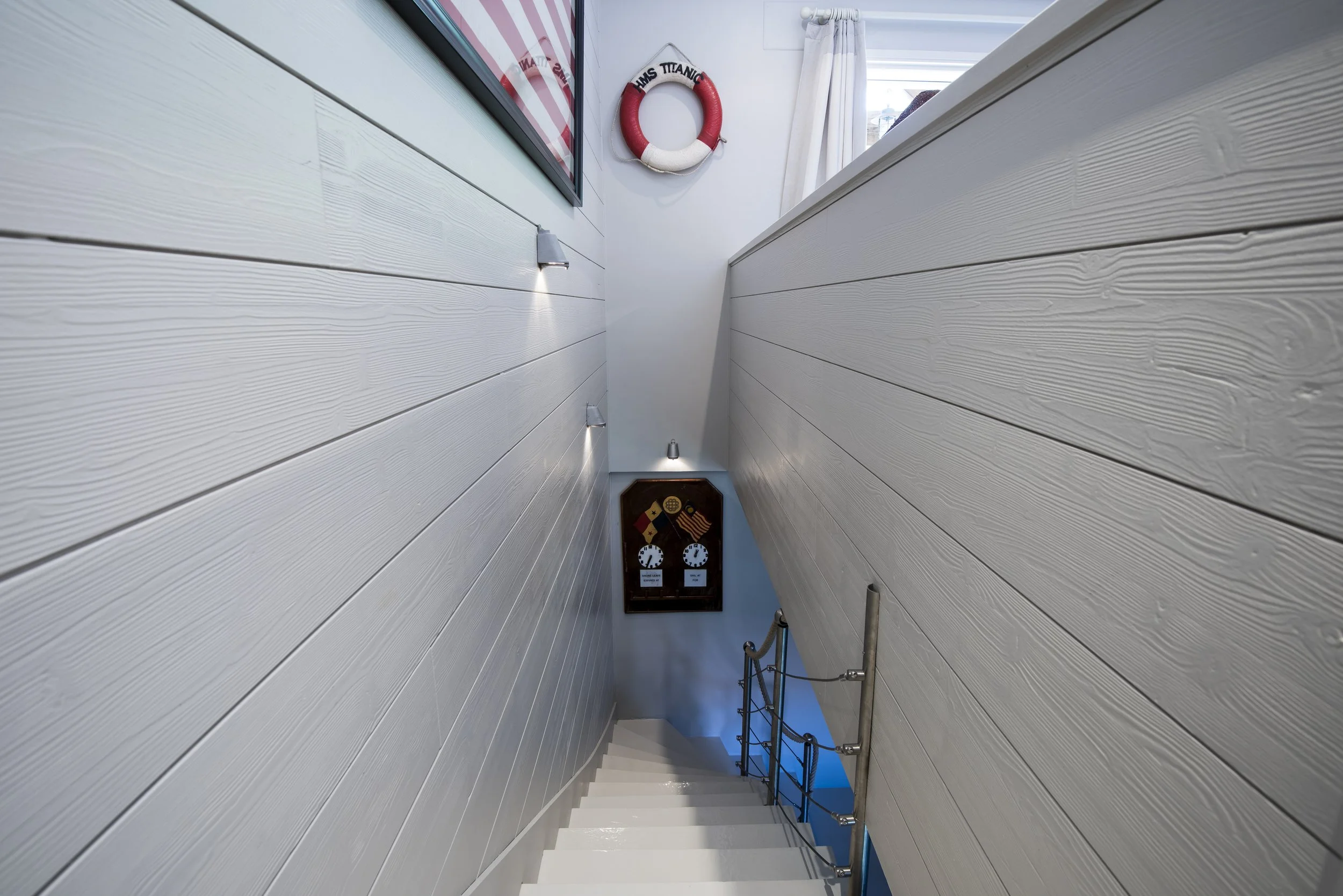
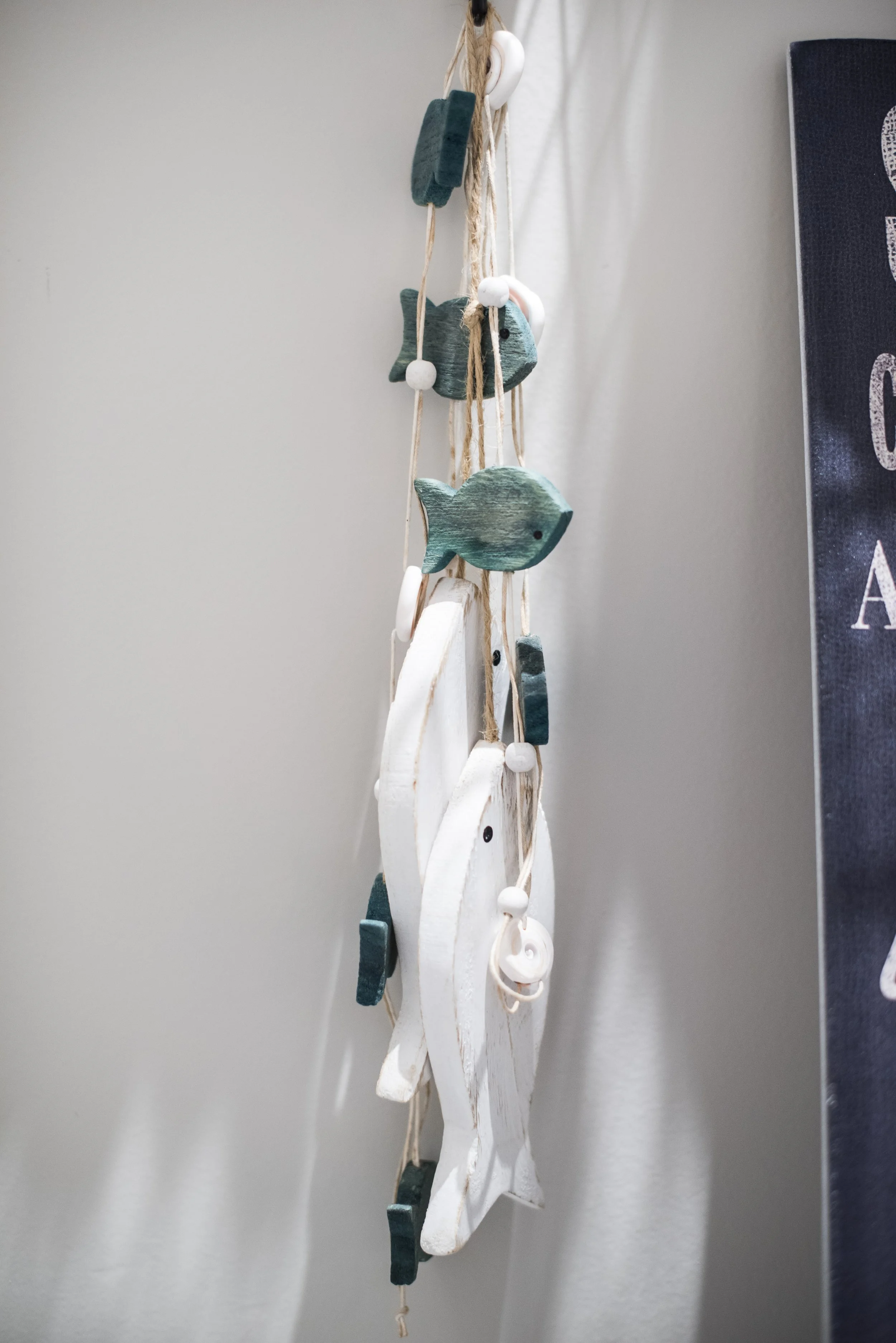
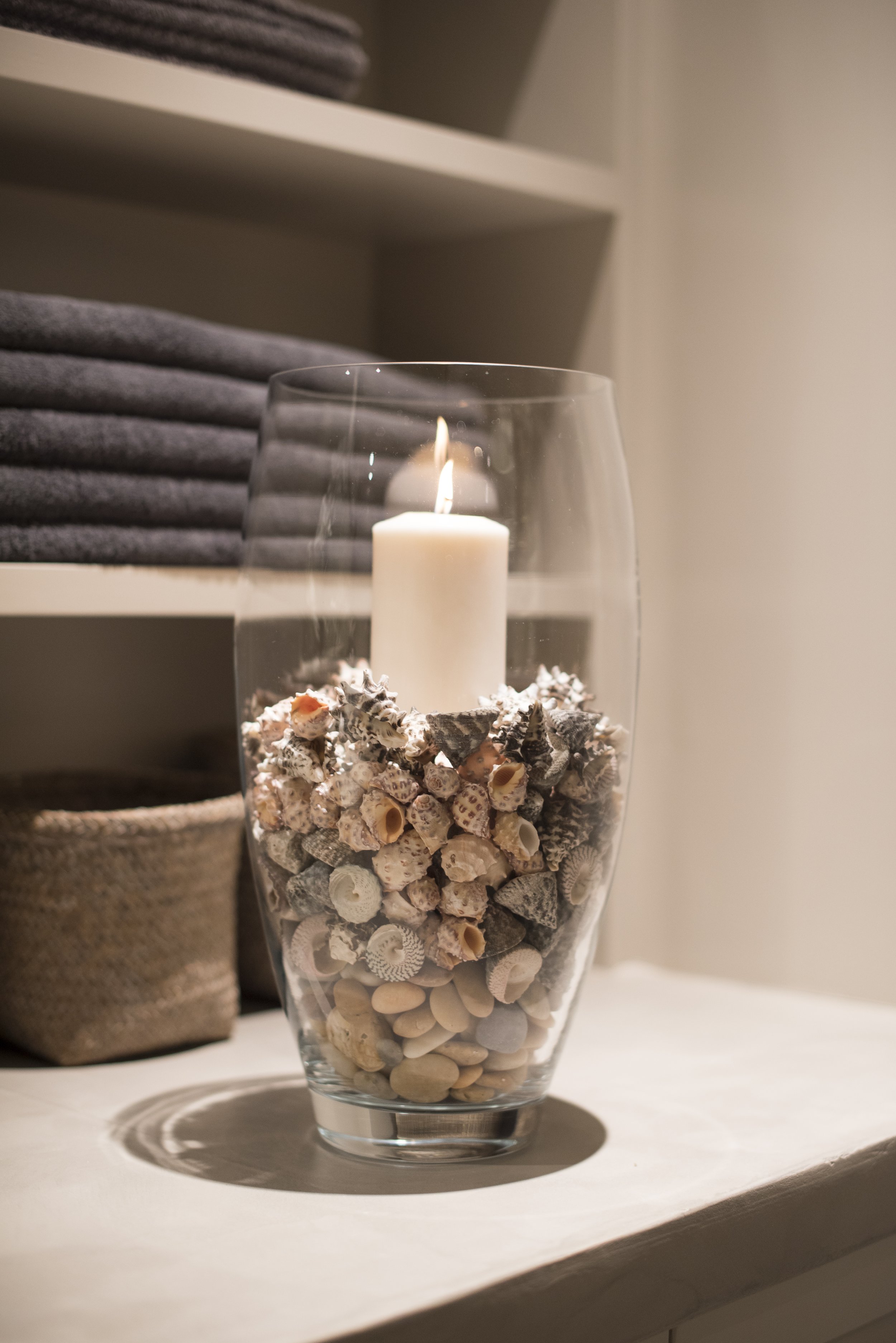
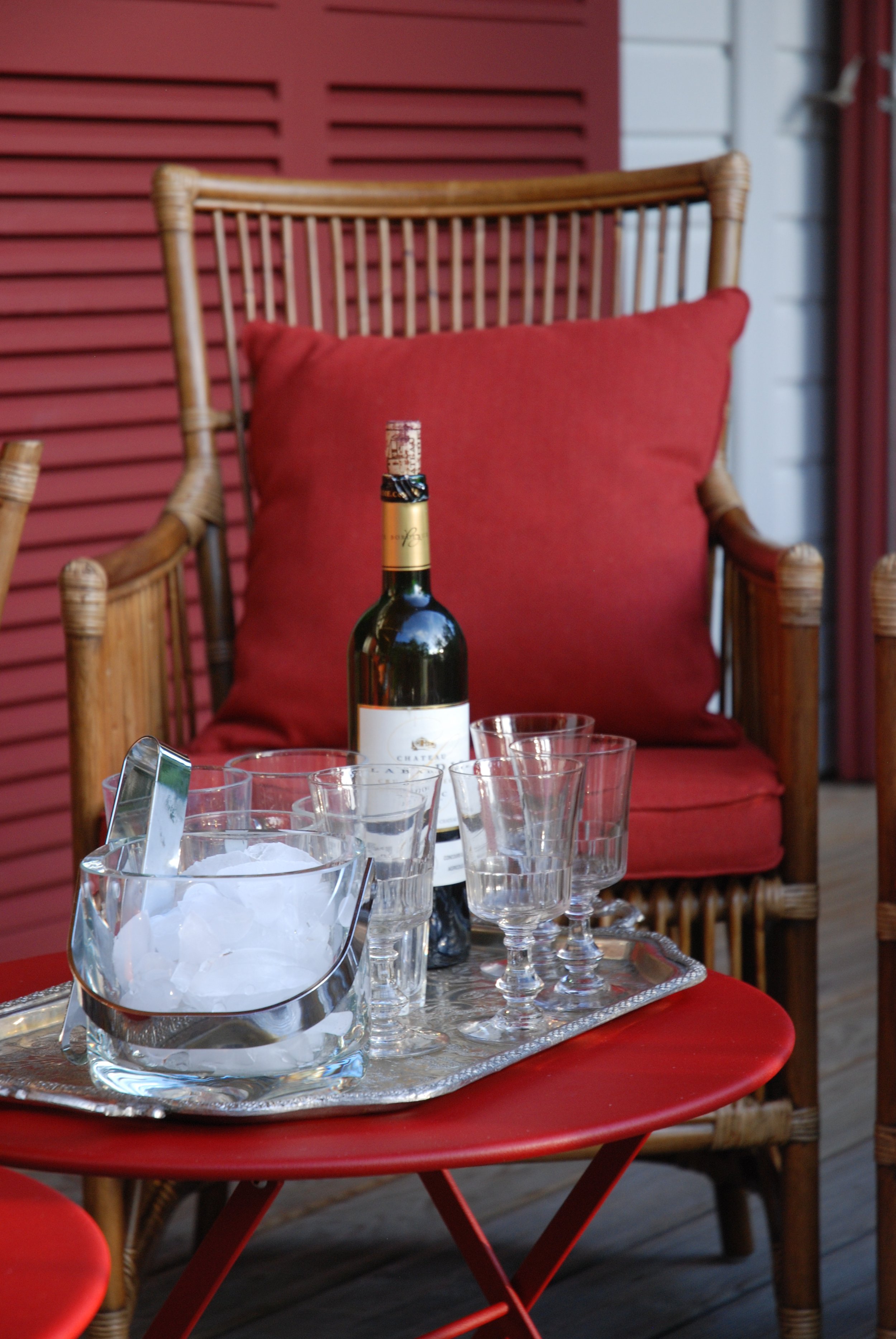
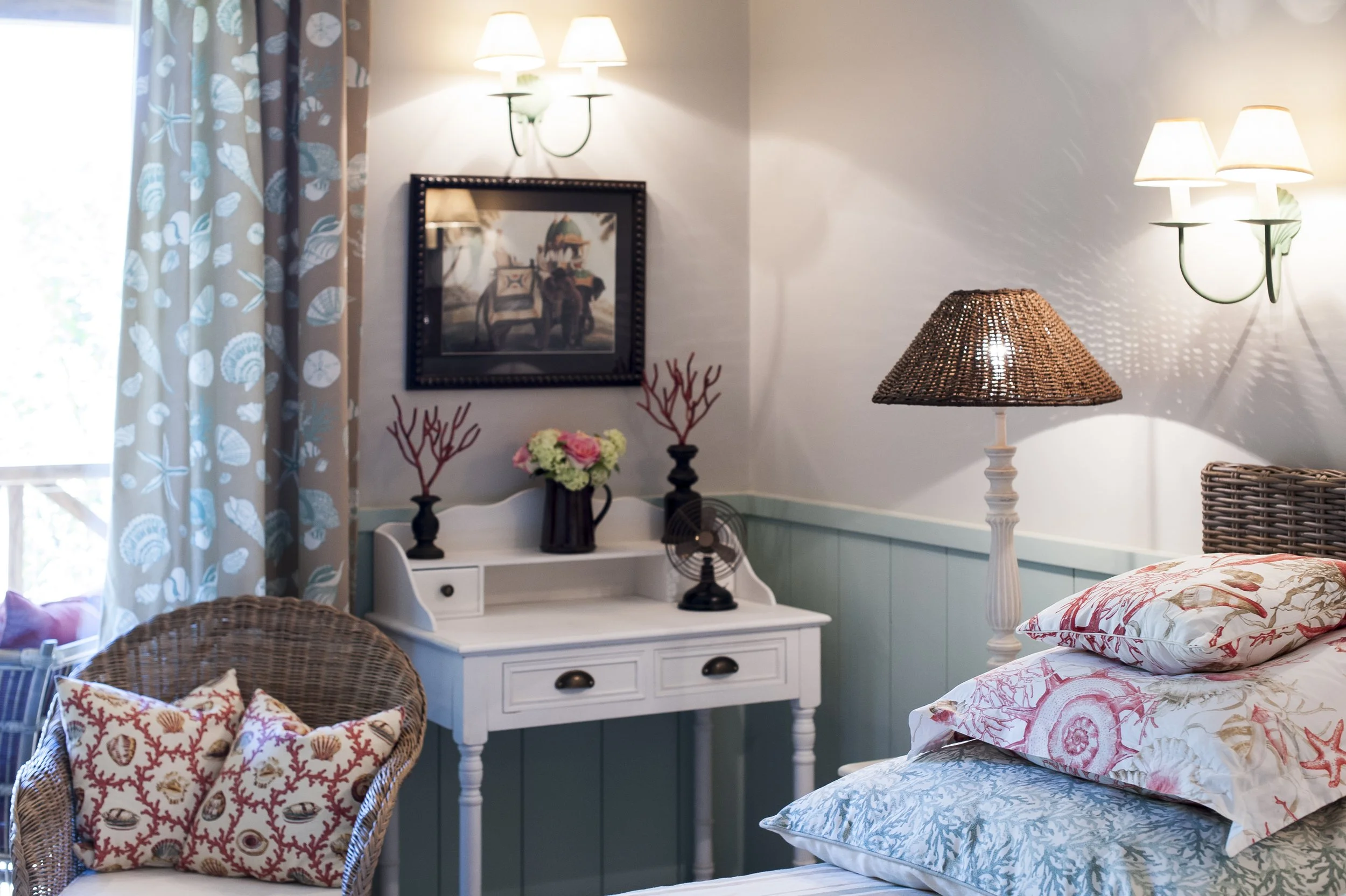
The exterior shutters are painted in a faded red, a deliberate nod to the Basque country, where the colour runs through centuries of regional architecture. We then carried shades of red as a thread through the interior, in fabrics, in art, in carefully placed accessories. The bedrooms are each given their own soft pastel palette, layered with exotic accents like shells, palms, surf motifs and vintage flags, all reading as collected rather than themed. The discipline throughout was to avoid pastiche. A coastal house that announces its own coastal-ness in every room is, in our experience, a coastal house that has stopped trusting itself.
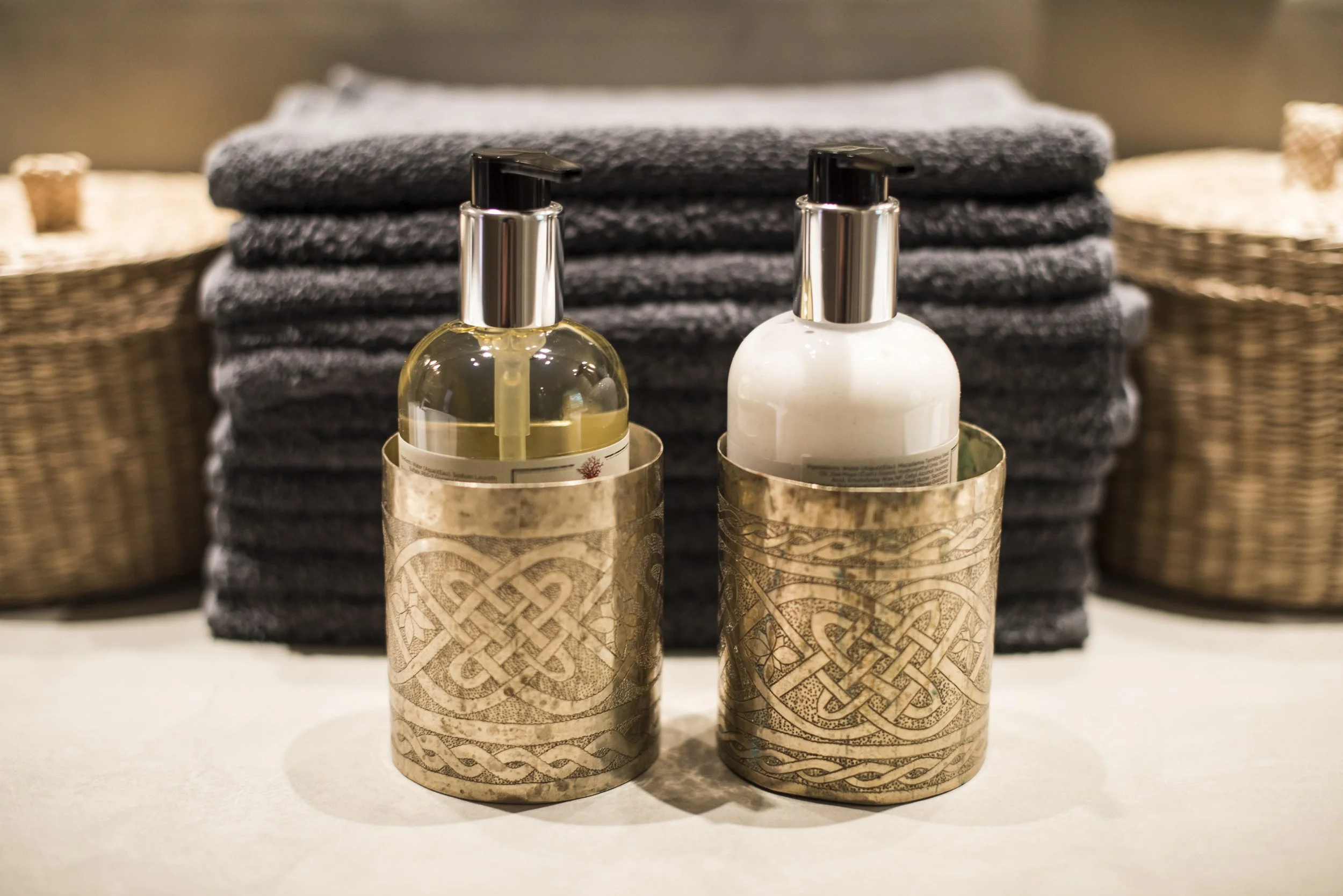
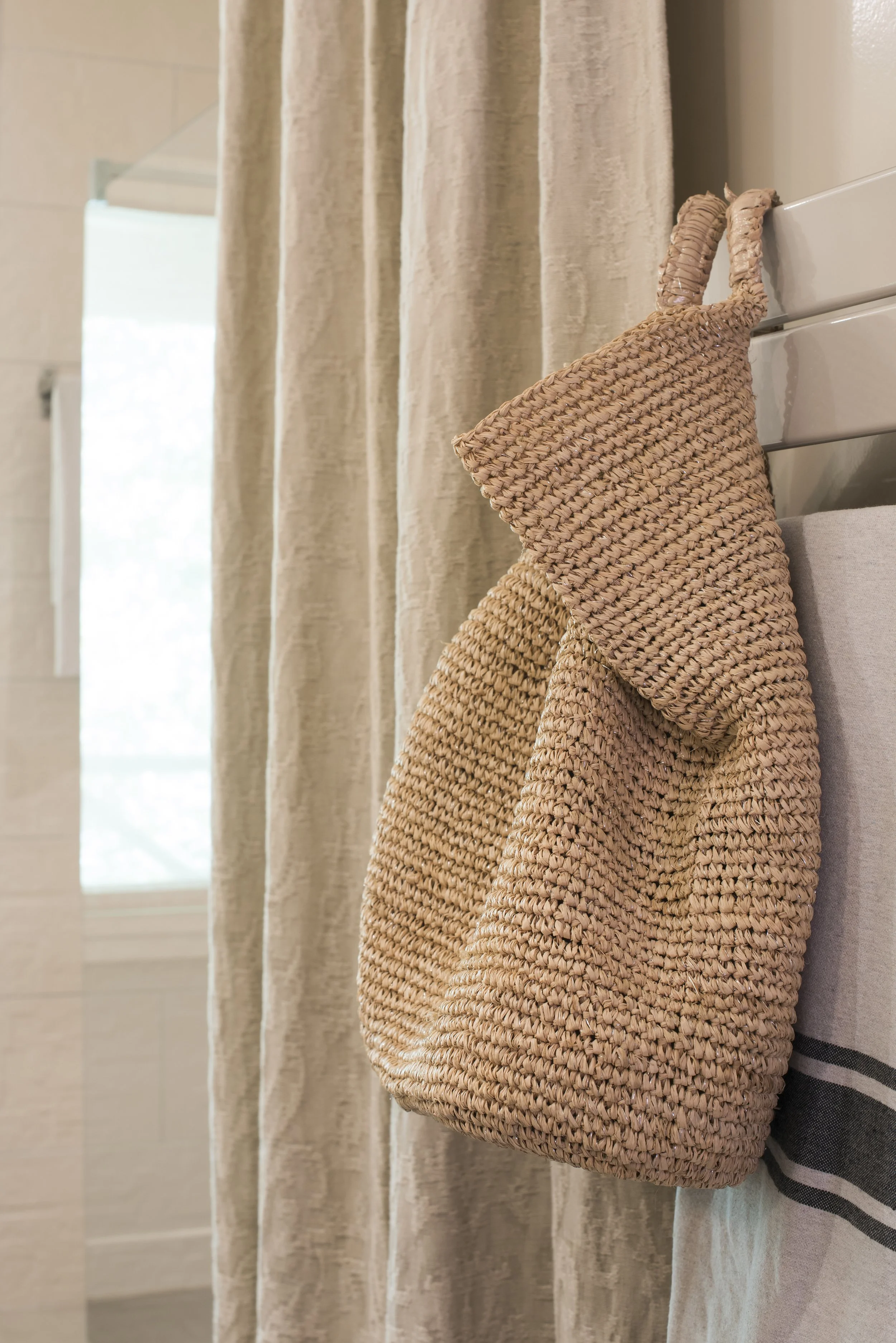
The materials are direct. Polished concrete on every floor, and on every bathroom vanity surface: durable, cool to bare feet, indifferent to sand. Painted tongue-and-groove panelling clads the lower half of most walls, the practical layer where bags and shoulders and surfboards actually meet the architecture. Rattan furniture. Linen curtains. Wood cladding. Shutter doors that fold flat against the walls when open, so that the verandah and the interior become a single continuous space. Every material was chosen for how it would behave after a year of salt air and bare feet, not for how it photographs on installation day.
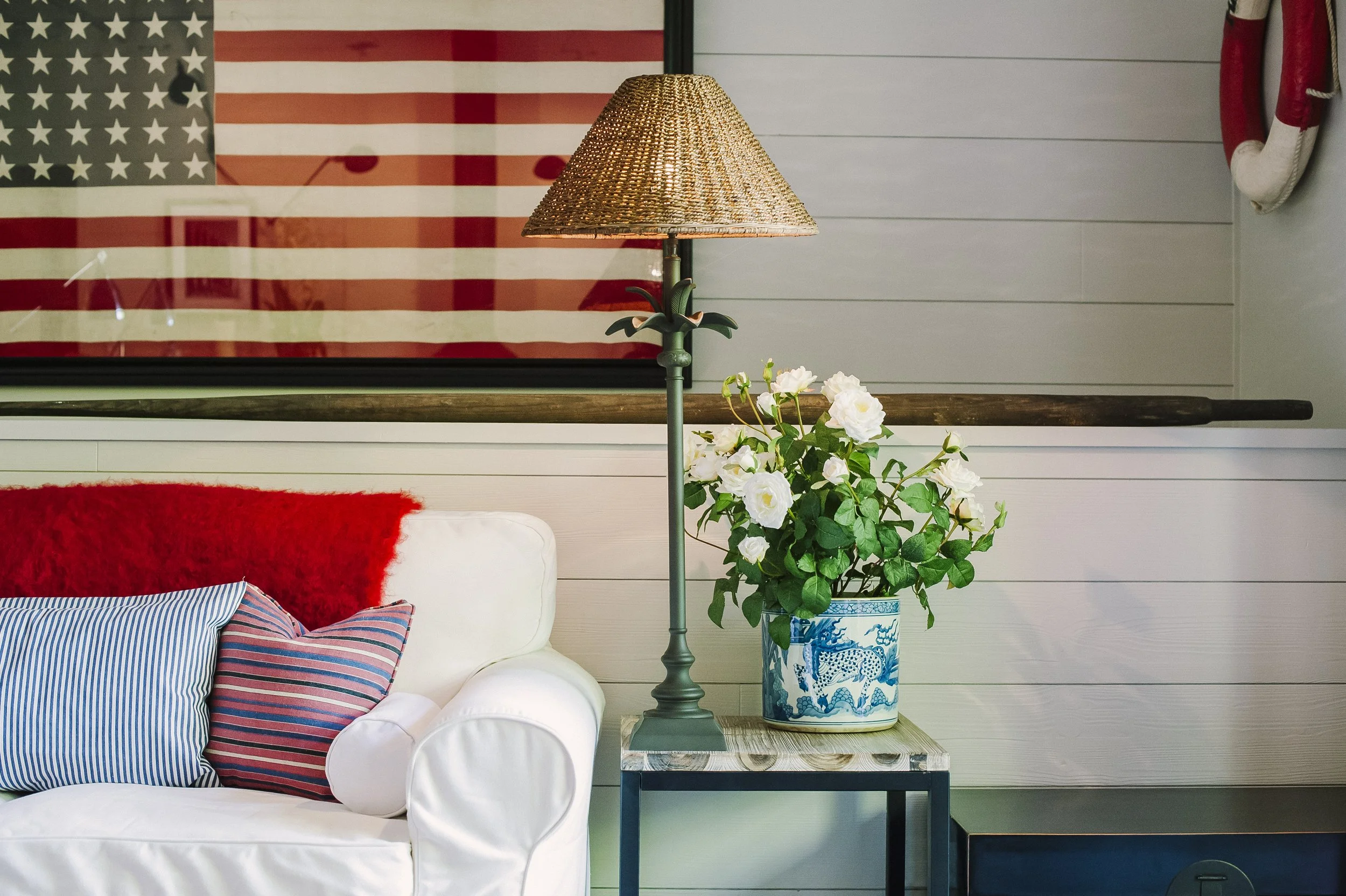
COLLECTED and CURATED
Layered personality.
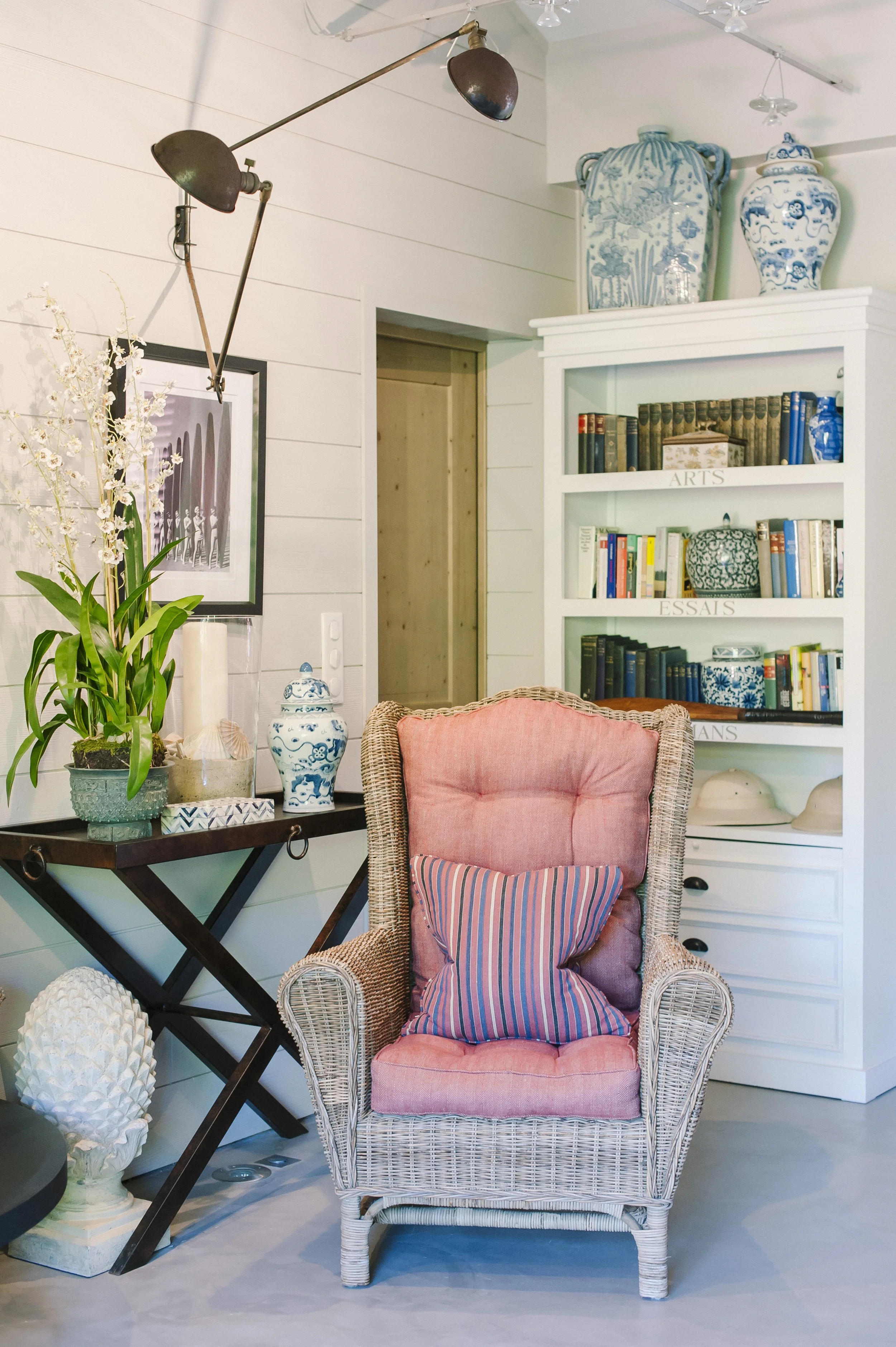
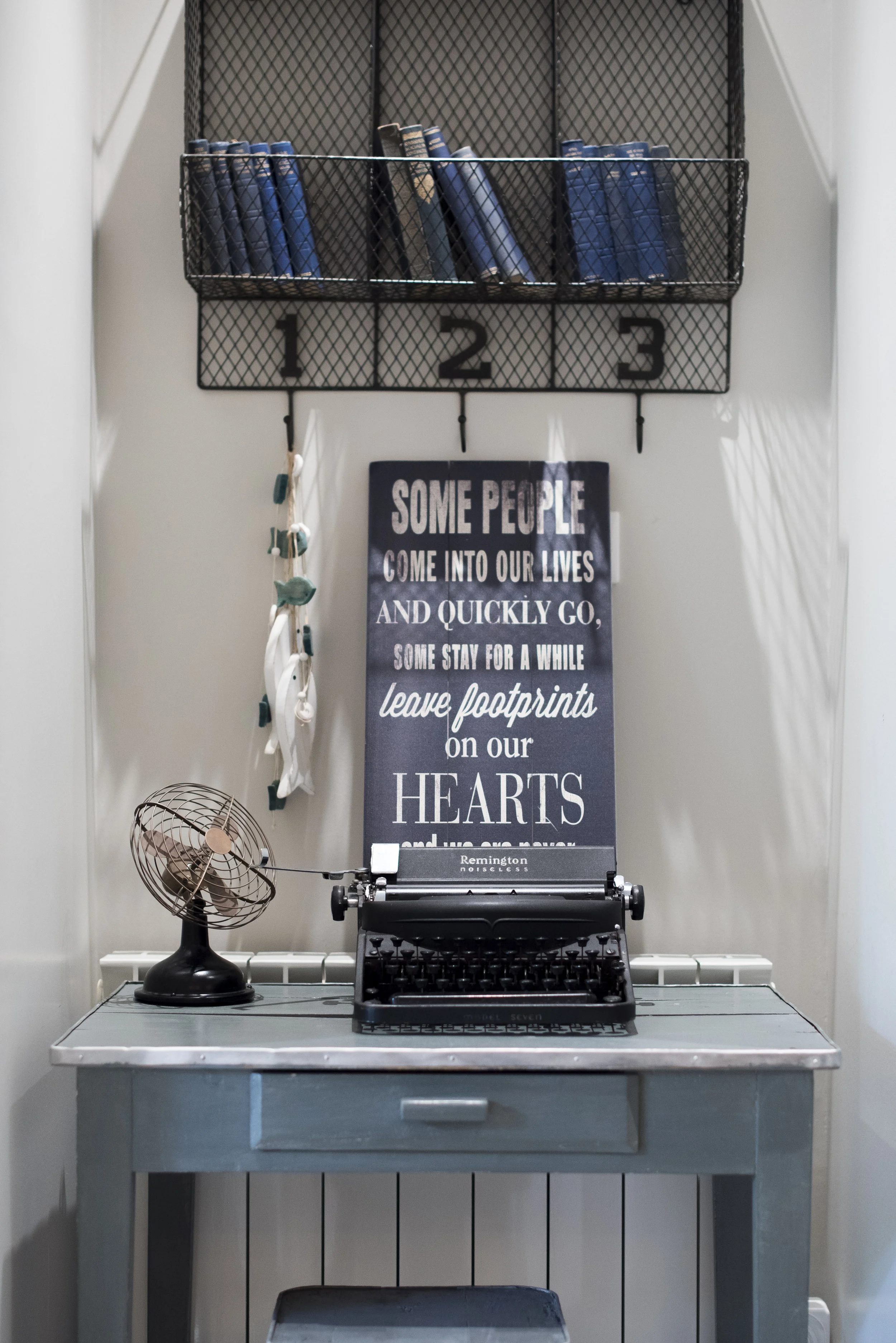
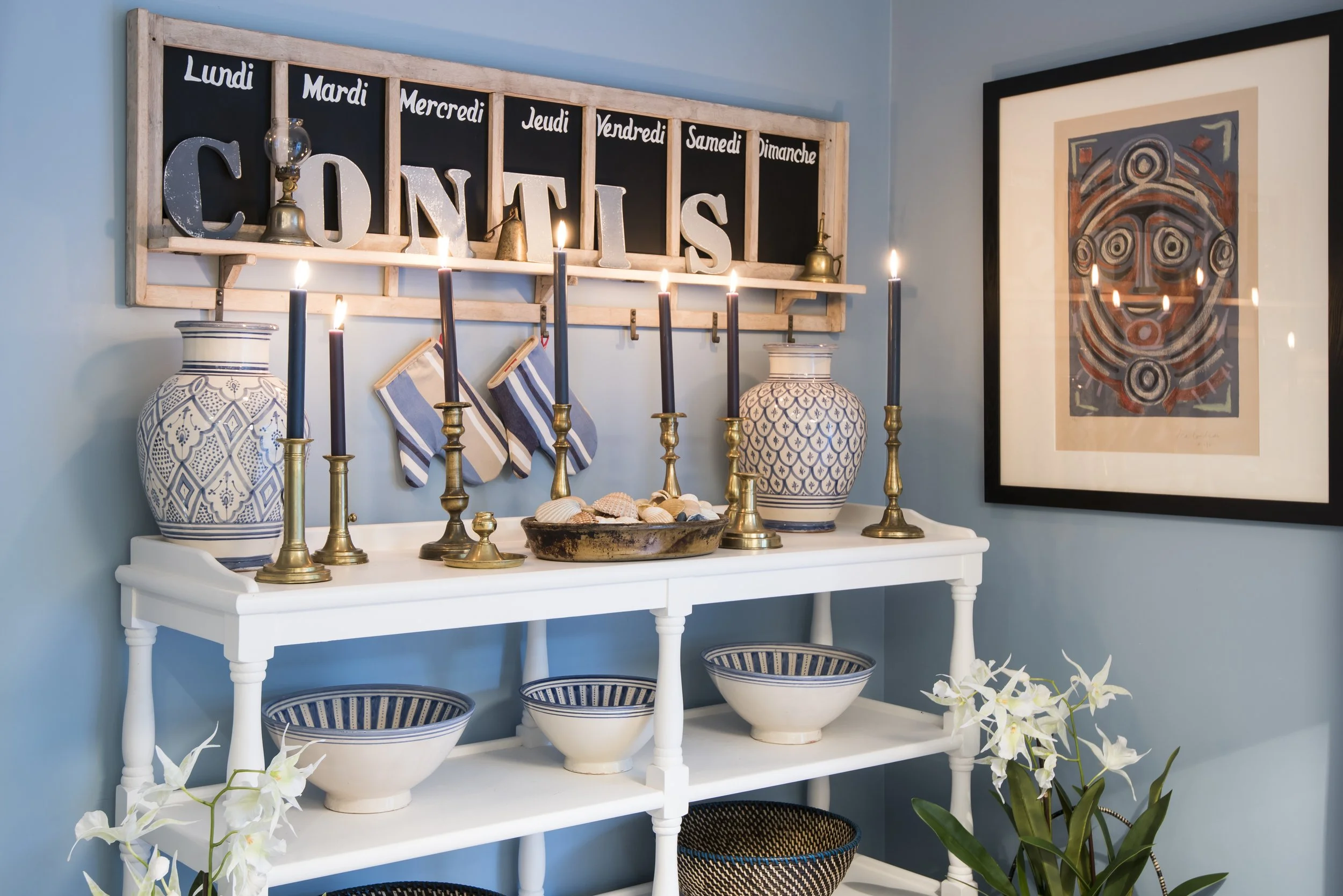
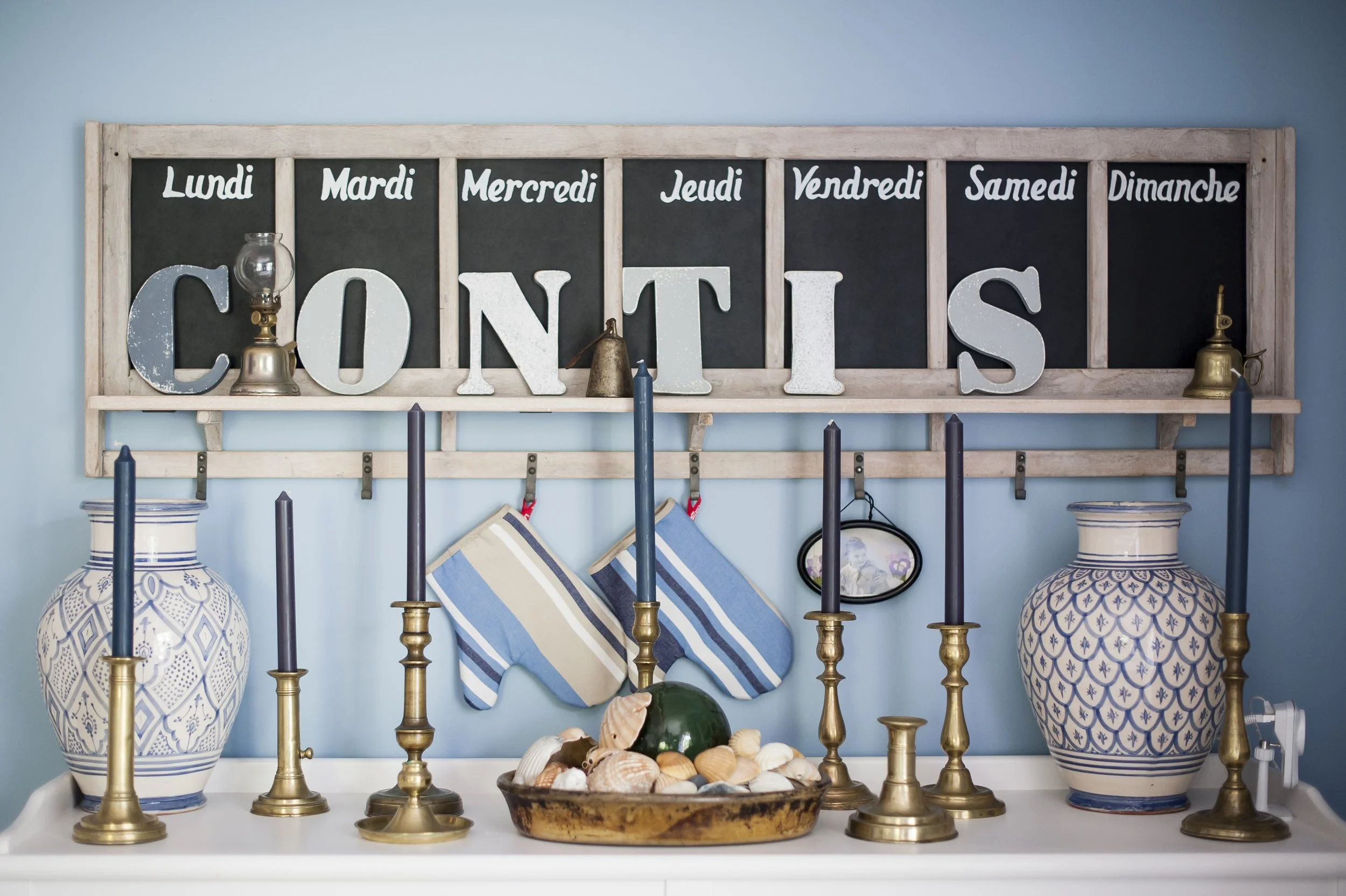
The furnishing of the house was deliberately layered rather than themed. A beach house can fail two ways: by trying so hard to feel relaxed that it becomes generic, or by trying so hard to feel designed that it stops being relaxing. We wanted this house to feel like visiting an old friend's home. Rich in colour, in texture, in displays of art and vintage and personal objects, with classic pieces and mid-century pieces and modern pieces all in the same room because that is how friends actually live.
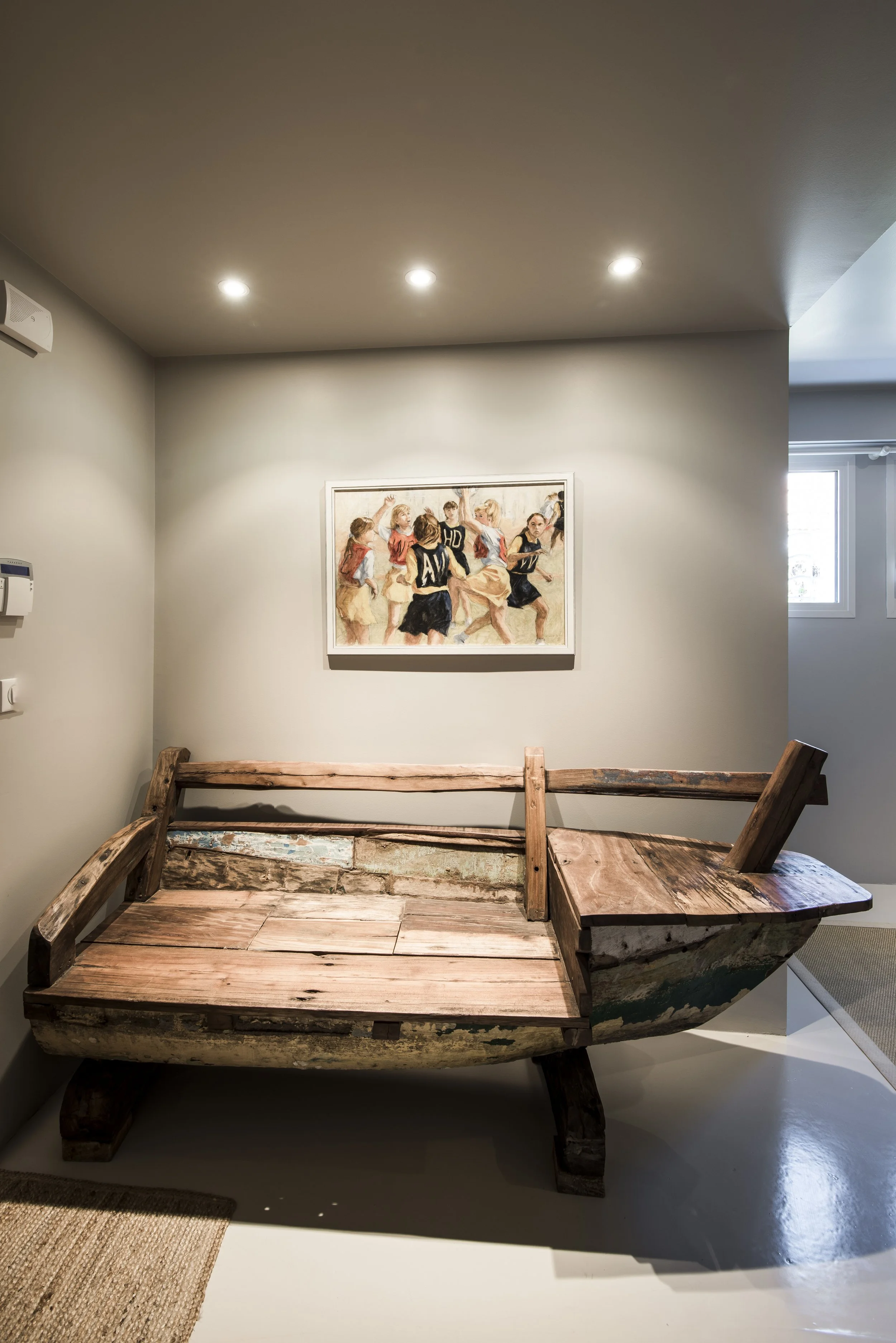
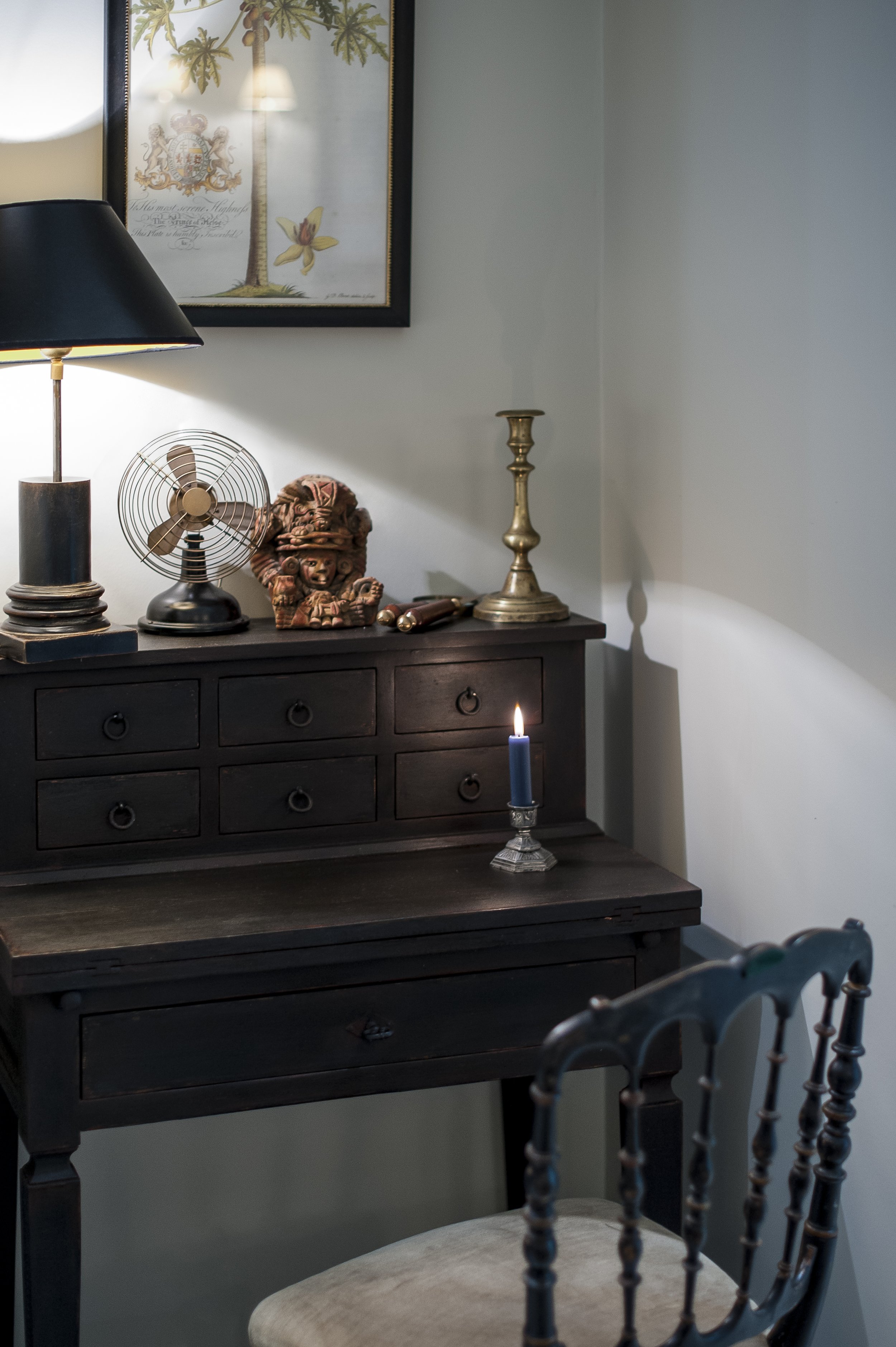
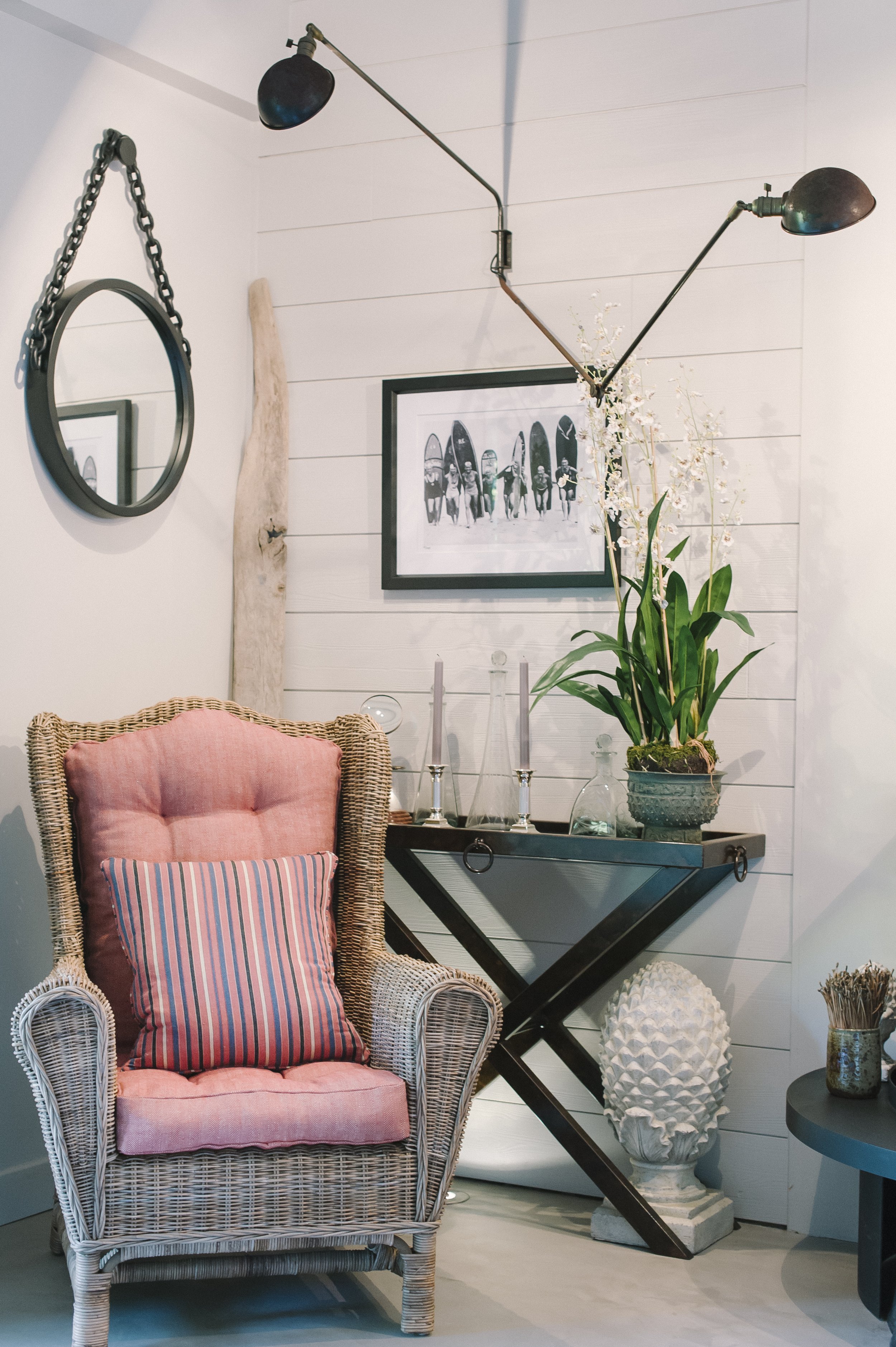
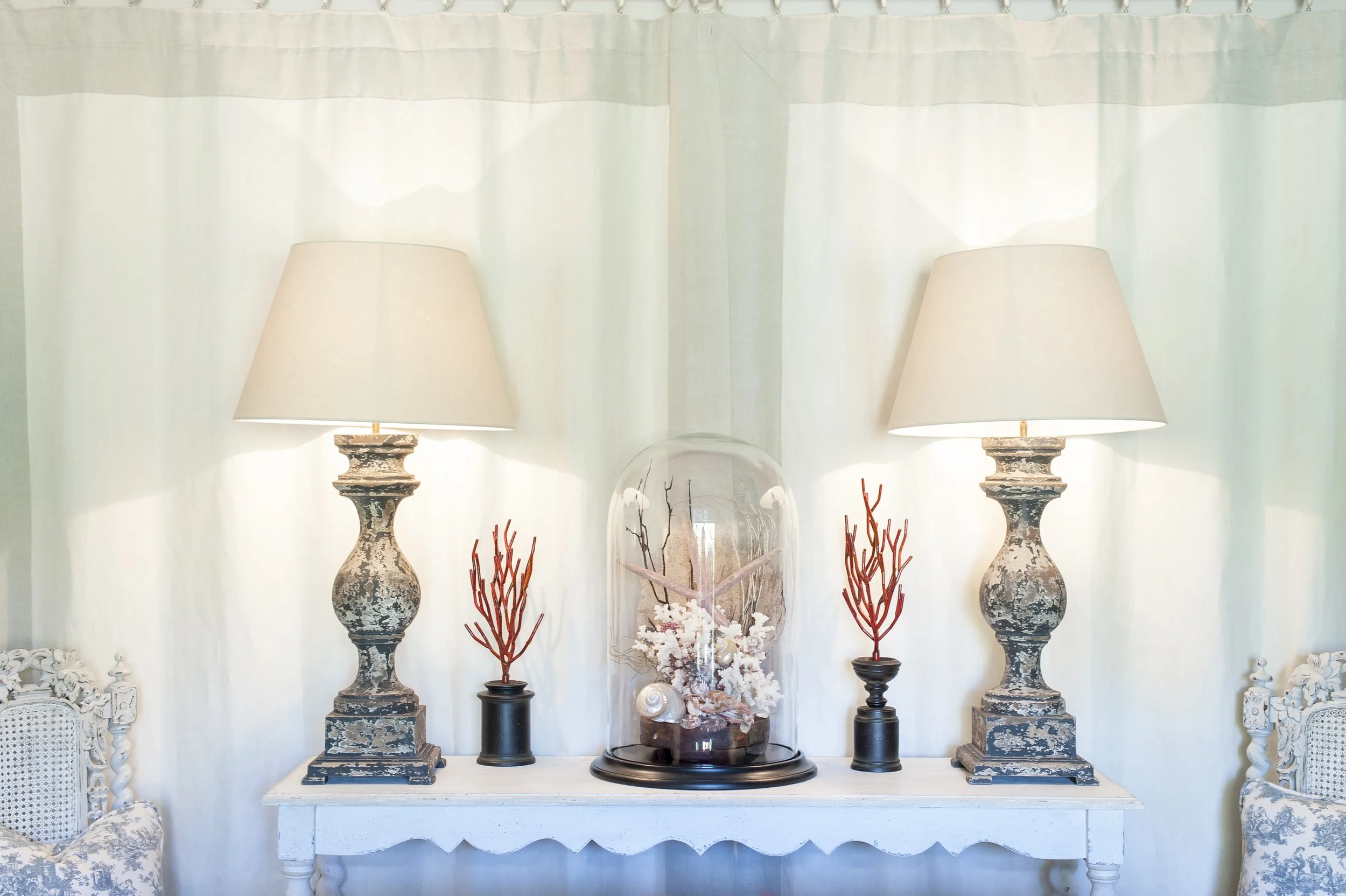
Sourcing one-off pieces is one of the studio's signature skills, and on a house with this aesthetic discipline it became central. We bought online and at auction. We pulled together vintage artifacts, framed beach finds, modern art, and considered classic furniture in dialogue with mid-century shapes. Each piece had to earn its place in the room. Each room had to earn its place in the house. None of the pieces had to match any other piece. But every piece had to belong.
ANYTHING BUT THE DOWNLIGHT
Layered for morning. Tuned for evening.
Lighting plays a defining role in every house we design, and on this project the brief was the same as ever: avoid the downlight wherever the design will allow it, and treat lighting as a layered scheme rather than a single overhead solution. A coastal house lives in completely different light from morning to evening. The lighting design has to track that arc.
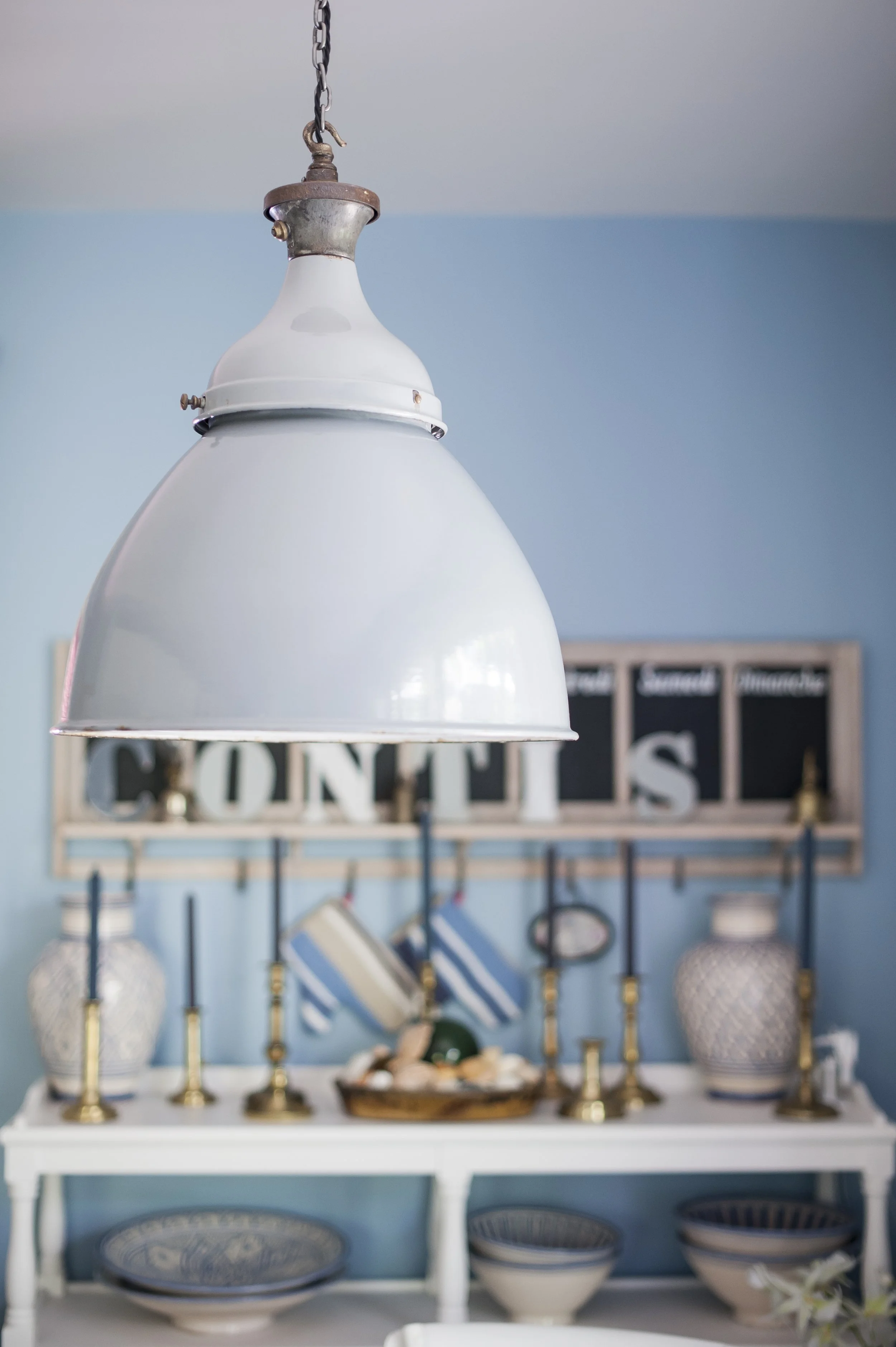
Across the rooms we mixed pendants, downlights where they were genuinely required, floor uplights, wall lights, table lamps, and floor lamps, all on independent circuits so that any room can be tuned for the time of day and the size of the gathering. The fireplace in the main living space is the room's anchor at the other end of the day. The moment where lunch turns into evening, where the verandah doors stay open, and where a house designed for sandy bare feet finds its second register entirely.

CITY
Urban Sophistication

Surf
Coastal Serenity

Ski
Alpine Craft
Every home begins with a conversation.
Every project begins with a conversation.
If you are considering a home and would like to talk through your ideas, we would be glad to hear from you.