
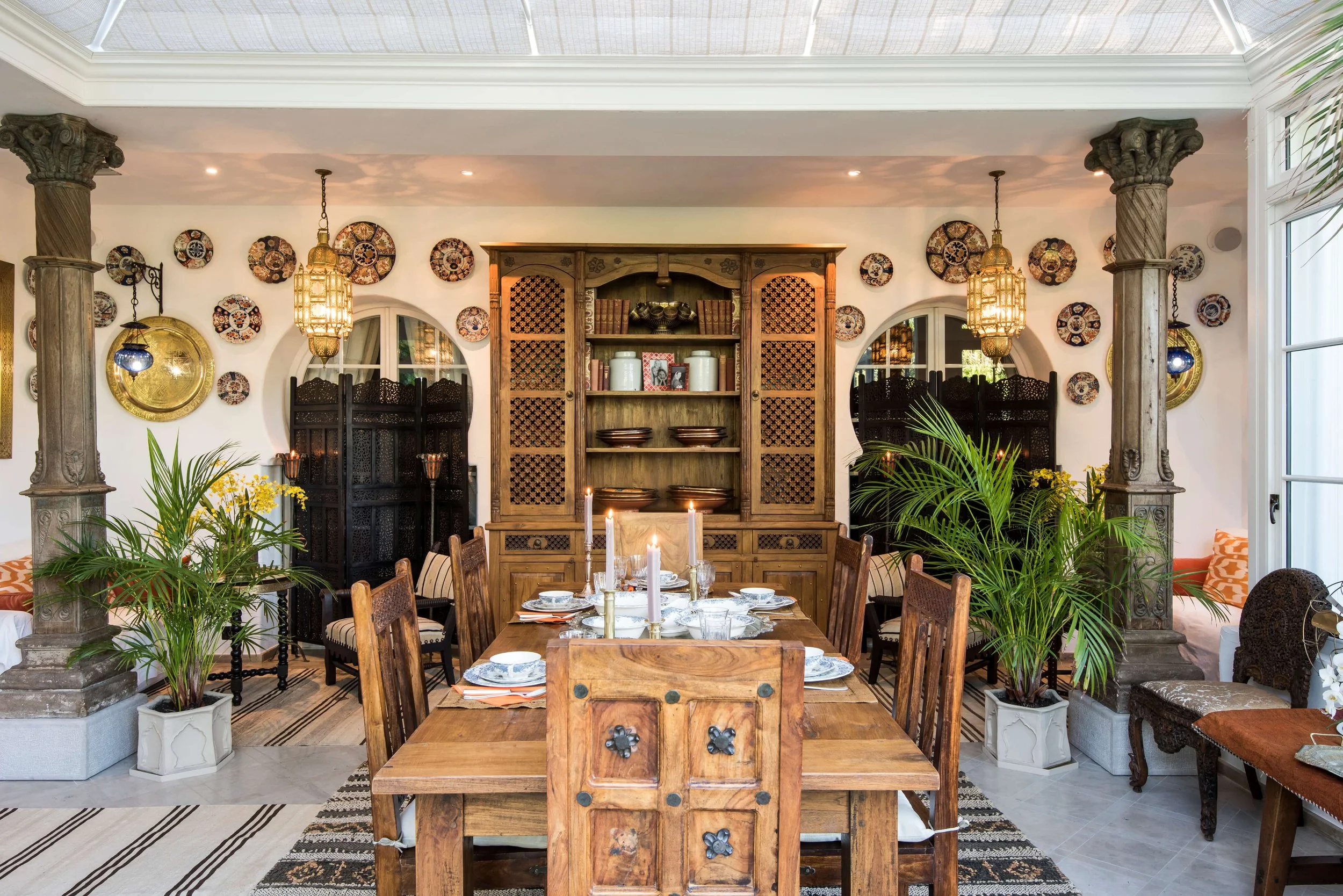
The Moroccan House
Interior architecture
Surf | Southwest France

An Atlantic-coast estate in pink stone, master-planned across several years to feel inherited rather than built.
LOCATION: Beachside, Southwest France
PROJECT TYPE: Complete interior architecture
SCOPE: Master Planning · Interior Architecture · Interior Design · Outdoor Structure Design · Spatial Planning · Kitchen Design (with Provence et Fils, Lacanche) · Bathroom Design · Material and Finish Specification · Bespoke Furniture and Lighting Commissioning · Antique Sourcing and Restoration · Lighting Design · Garden Liaison · Multi-Year Project Management
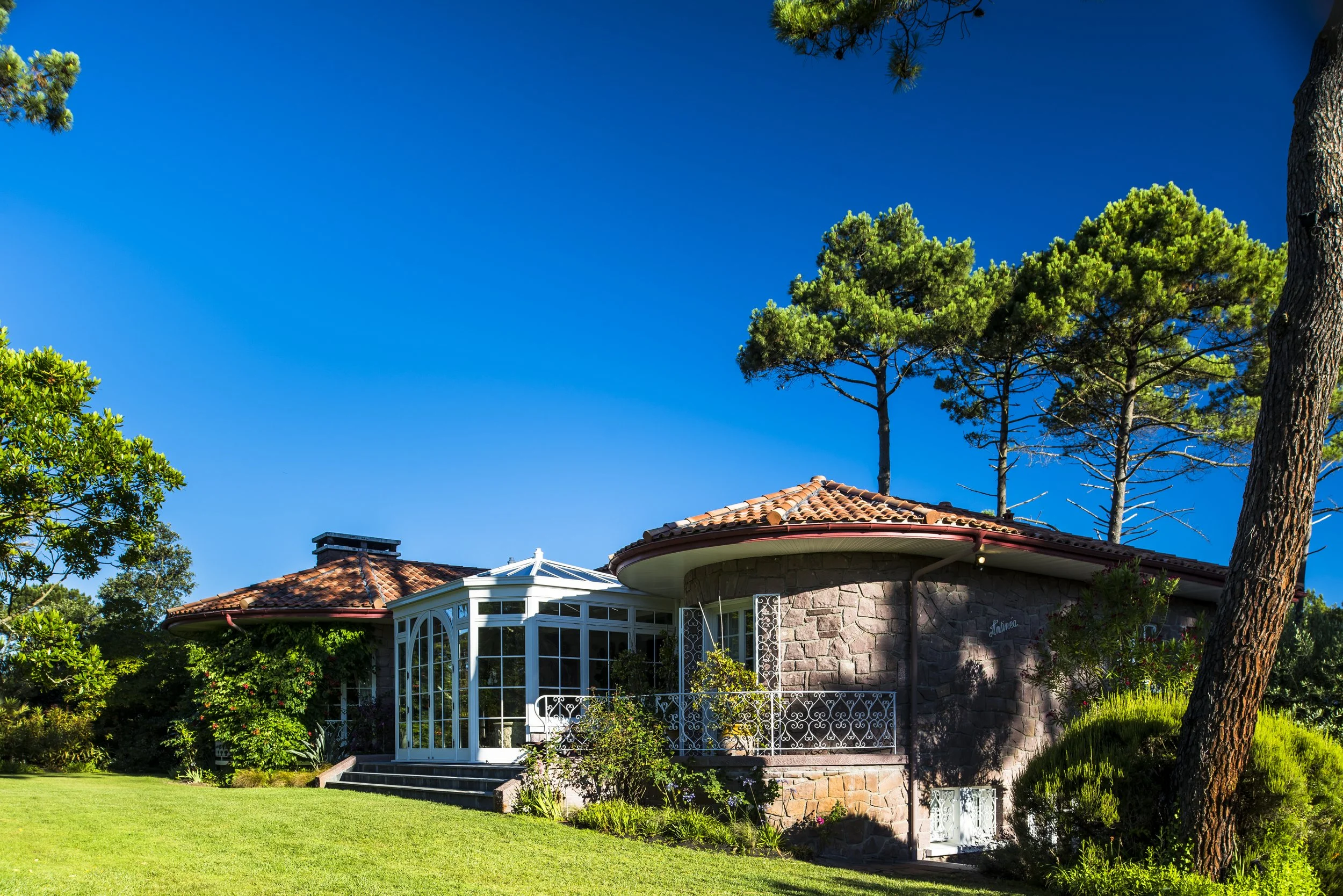
A property of unusual character and clients with a big dream. A beachside house in the south-west of France, built in solid pink stone, architecture entirely unlike anything else in the area, closer in feeling to a folly than to the regional vernacular. Arriving through tall gates, you step from sandy paths off pined dunes into lush, palmed grounds. This was the kind of project where you can let the imagination run free. Planning permission was obtained for substantial extension and the addition of new buildings. The brief was to work slowly over several years, to create a legacy estate for a young and growing family, with more children expected, designed for four generations to gather across summers and decades to come.
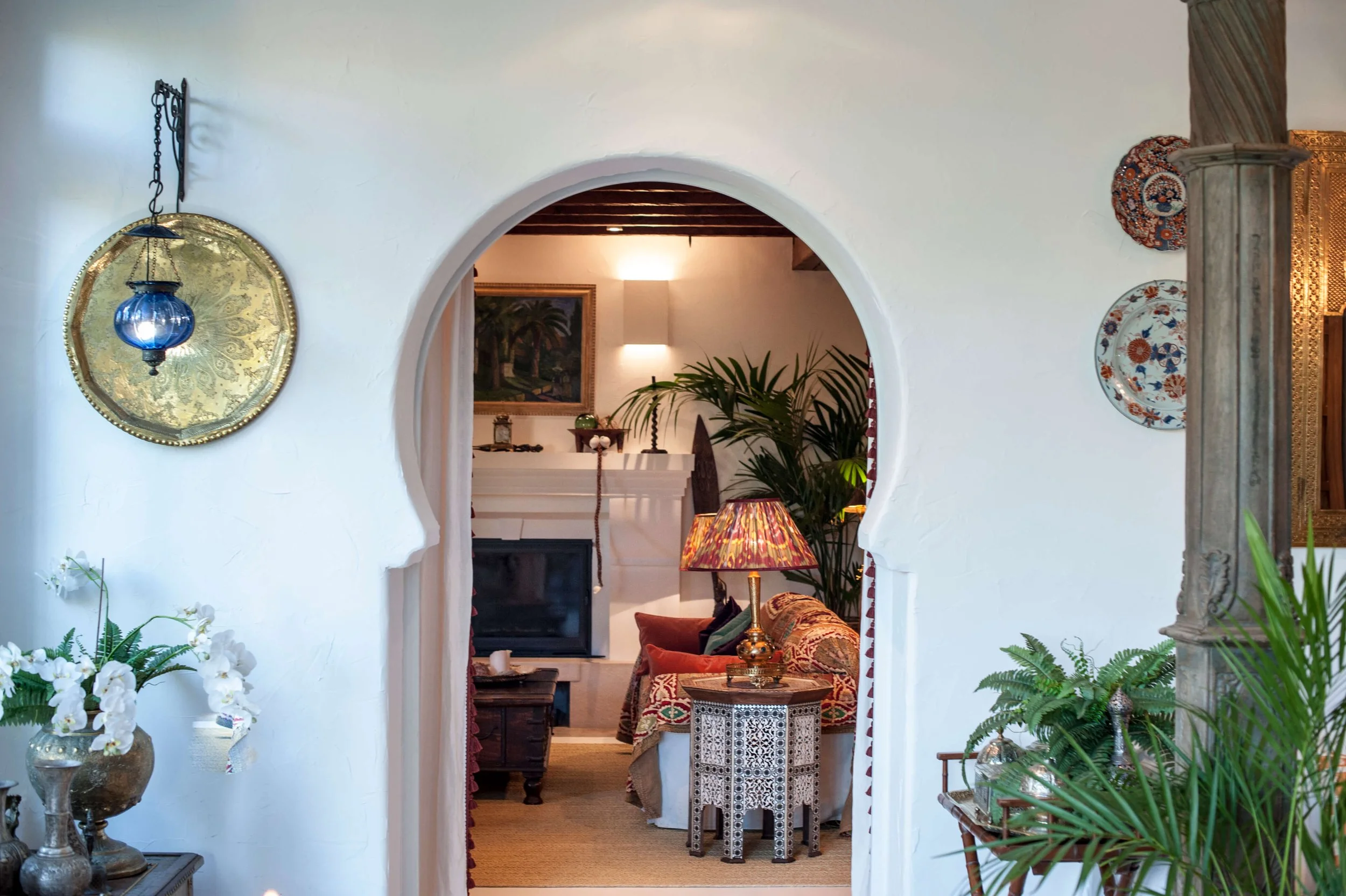
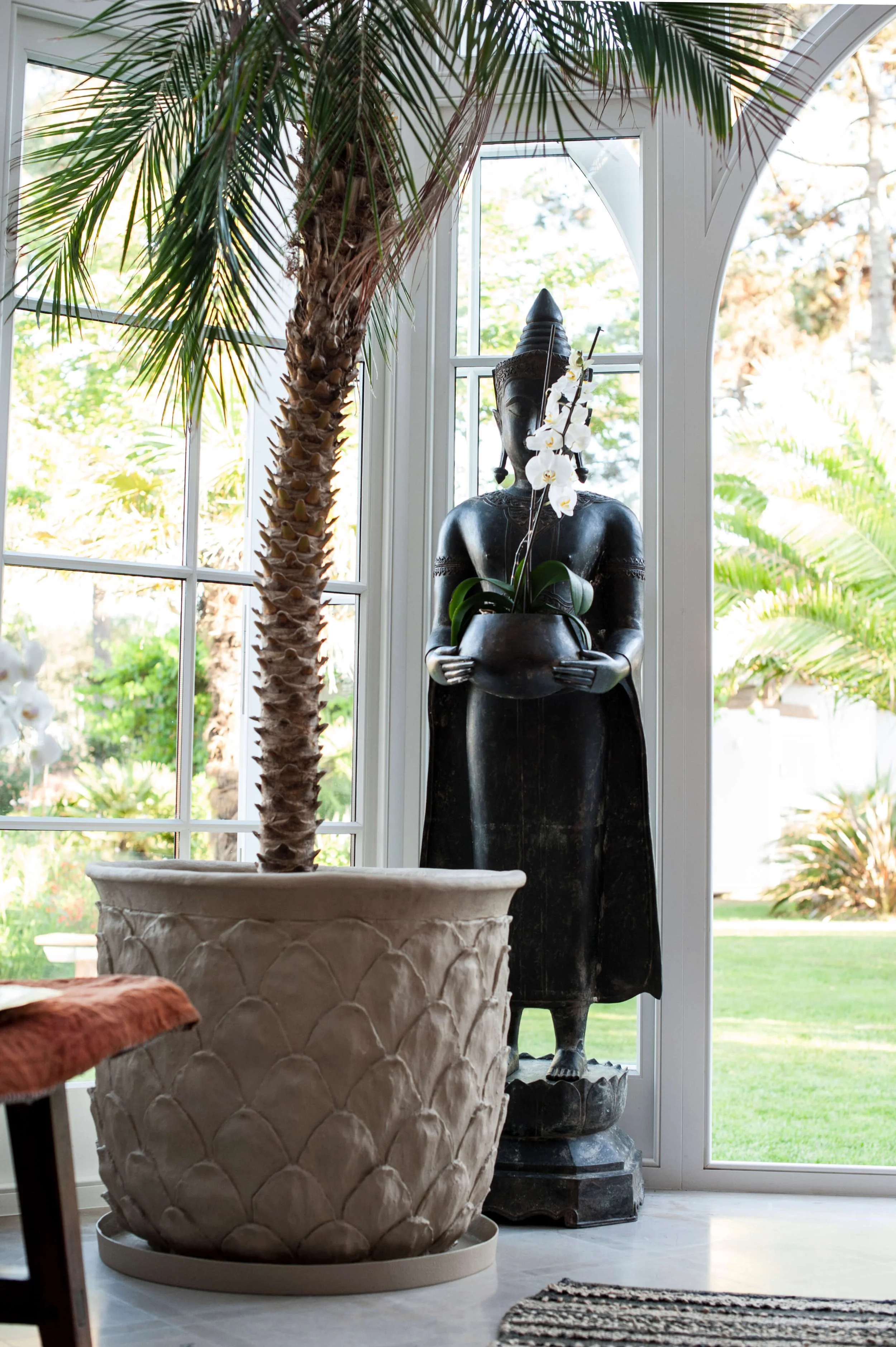
The aesthetic brief followed from that. The clients are well-travelled, and the home was to hold the accumulated influences of their travels rather than commit to a single regional style: Asian, Arabian, Moroccan, the great domestic interiors of the British and French colonial periods. The architecture of the existing house, singular, almost theatrical, sitting in a garden being transformed at the same time into a tropical paradise, gave us permission to lean fully into the imagined haven the brief asked for. And the deeper editorial discipline beneath it all: the house was not to look as though it had just been designed. It was to feel inherited rather than built, already at ease with itself by the time the family arrived for their first season, and ready to absorb the next four generations of life that would gather inside it.
We worked on the project in phases over several years, alongside a local architect, a topographical survey, a garden designer and a network of regional craftsmen. Furniture and objects were sourced through the family's own travels, through auctions, and through the studio's wider network. Bespoke pieces were commissioned where the right thing could not be found. The intent throughout was a house that does not look as though it has just been designed, and an estate that will only deepen with use.
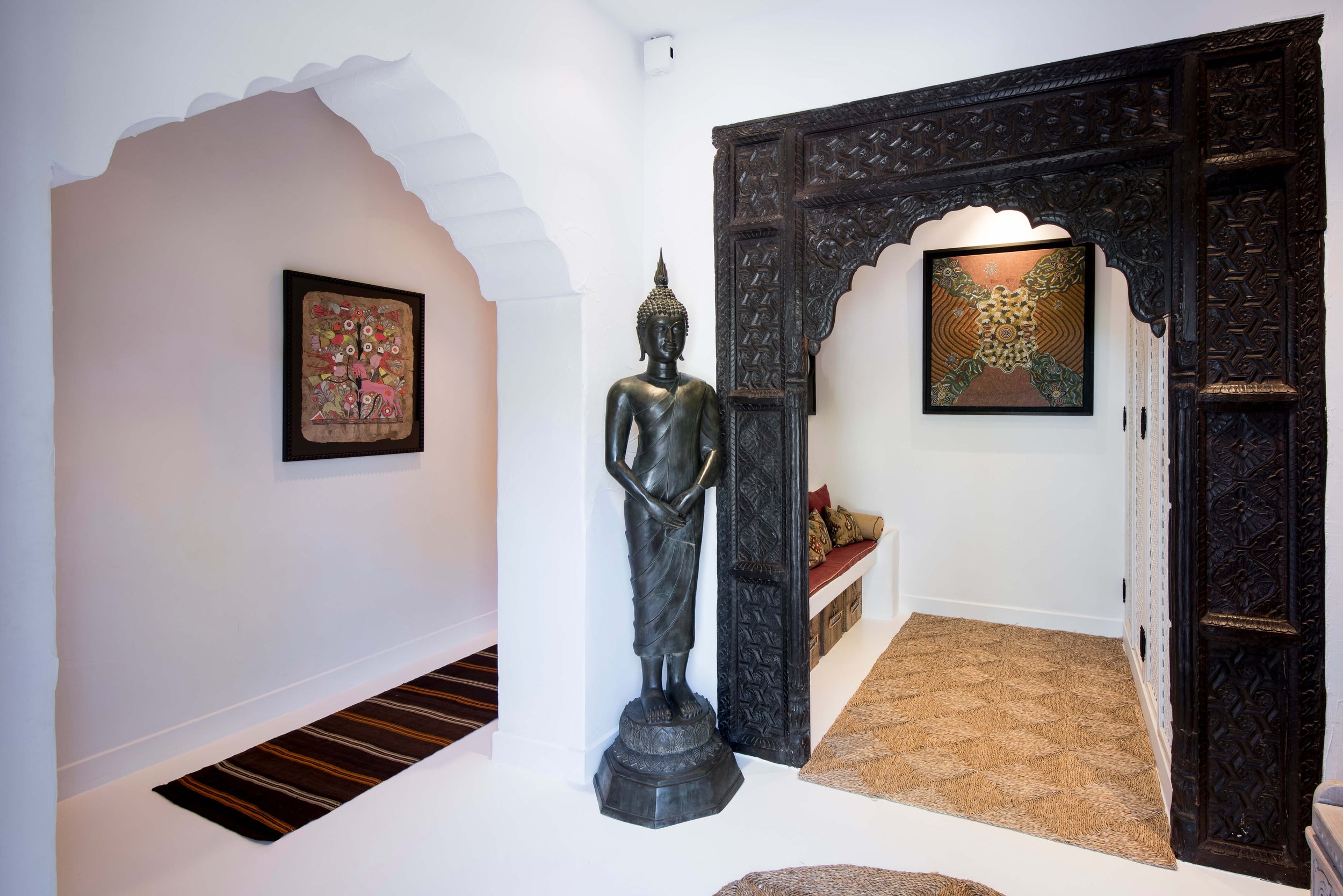
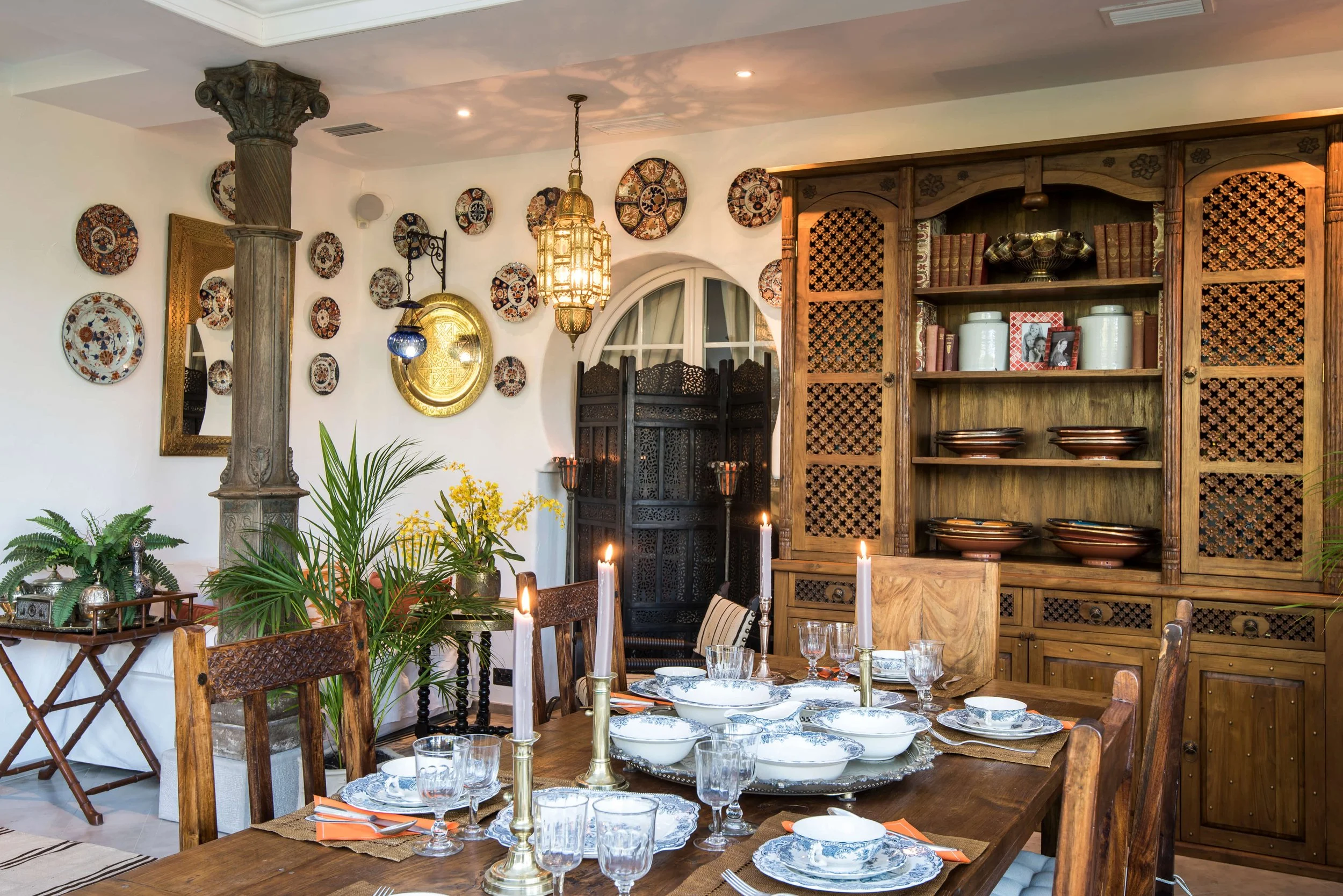
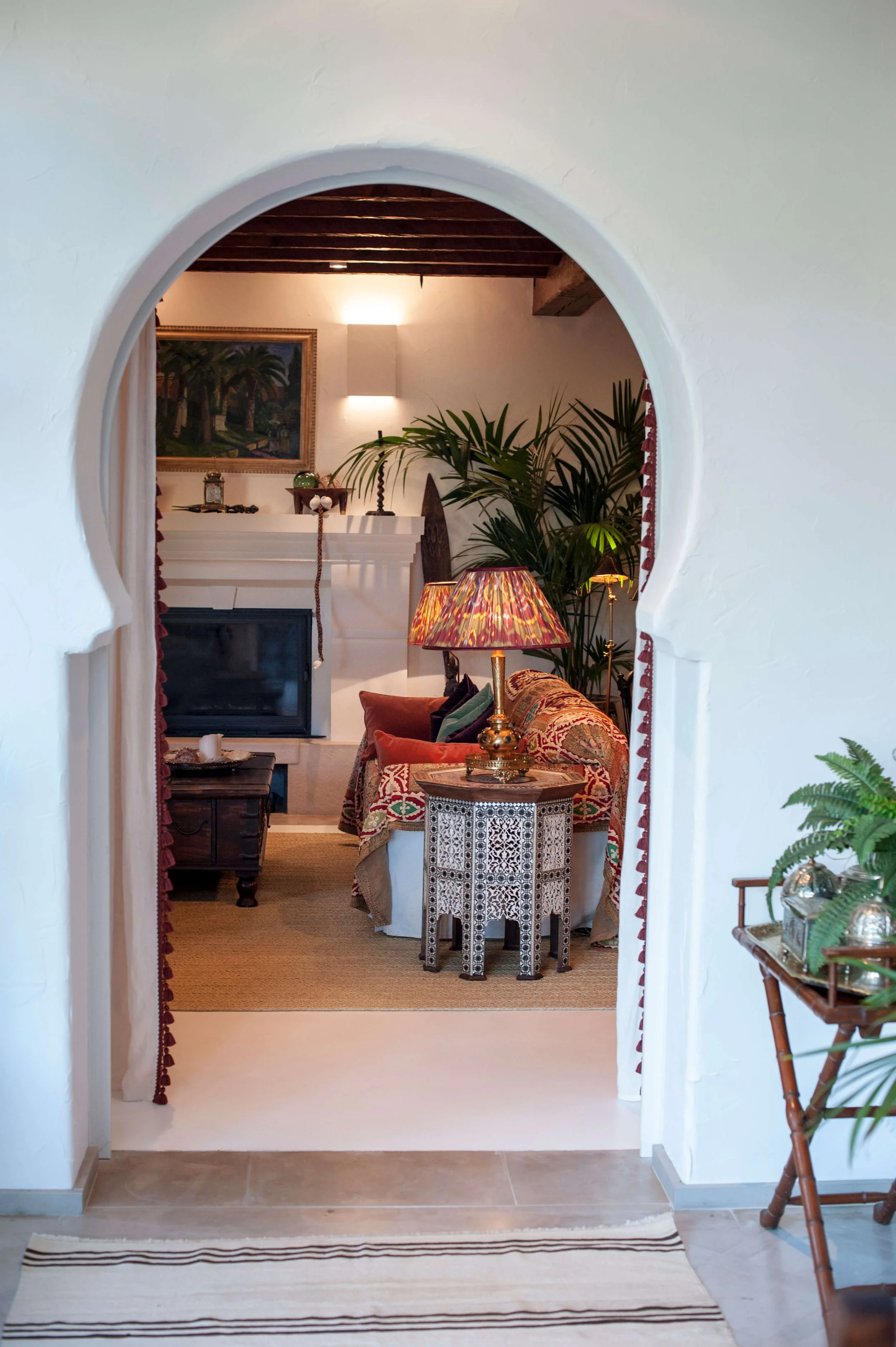
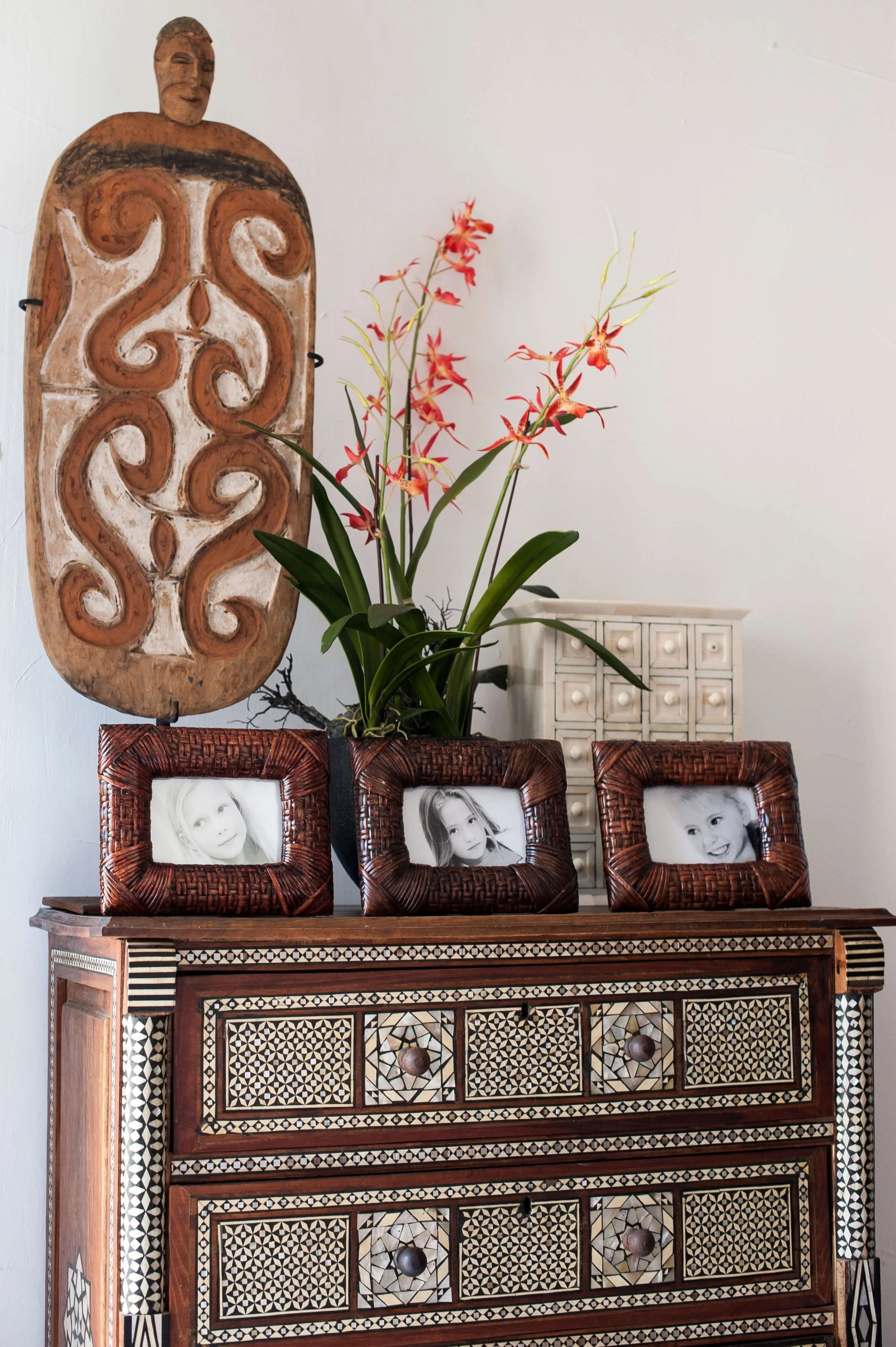
"This is our favourite house, when we arrive here we feel like time has stopped and the best is yet to come. Every inch of this place tells a story and there is still room to continue to write new chapters."
—Client, The Moroccan House, Southwest France
THE brief
Inherited, not built.
Our discovery process is foundational at our studio, and on this project it ran longer and deeper than usual. We needed to understand not only the family in residence, both partners, their children, the rhythm of their summer, but the wider community of guests the estate would host. Where do twenty children eat lunch? How do four families share a pool without losing their own corners of quiet? Where does the music play late, without disturbing the sleeping children? Where can someone who needs an hour alone find one? The answers shaped every spatial decision that followed.
The aesthetic brief was deliberately unusual. The house was not to look as though it had just been designed. It was to feel inherited rather than built. Already at ease with itself by the time the family arrived for their first season. That instruction, more than any single material or colour decision, organised the project.
THE master plan
A day on the estate. Without leaving it.
The estate was master-planned around a single principle: that a guest could spend an entire day on the property and still find new corners. The grounds had to support eating, swimming, playing, resting, exercising and roaming, across small groups and large, in sun and in shade, in fine weather and in the unpredictable Atlantic conditions that can move through this coastline even in August.
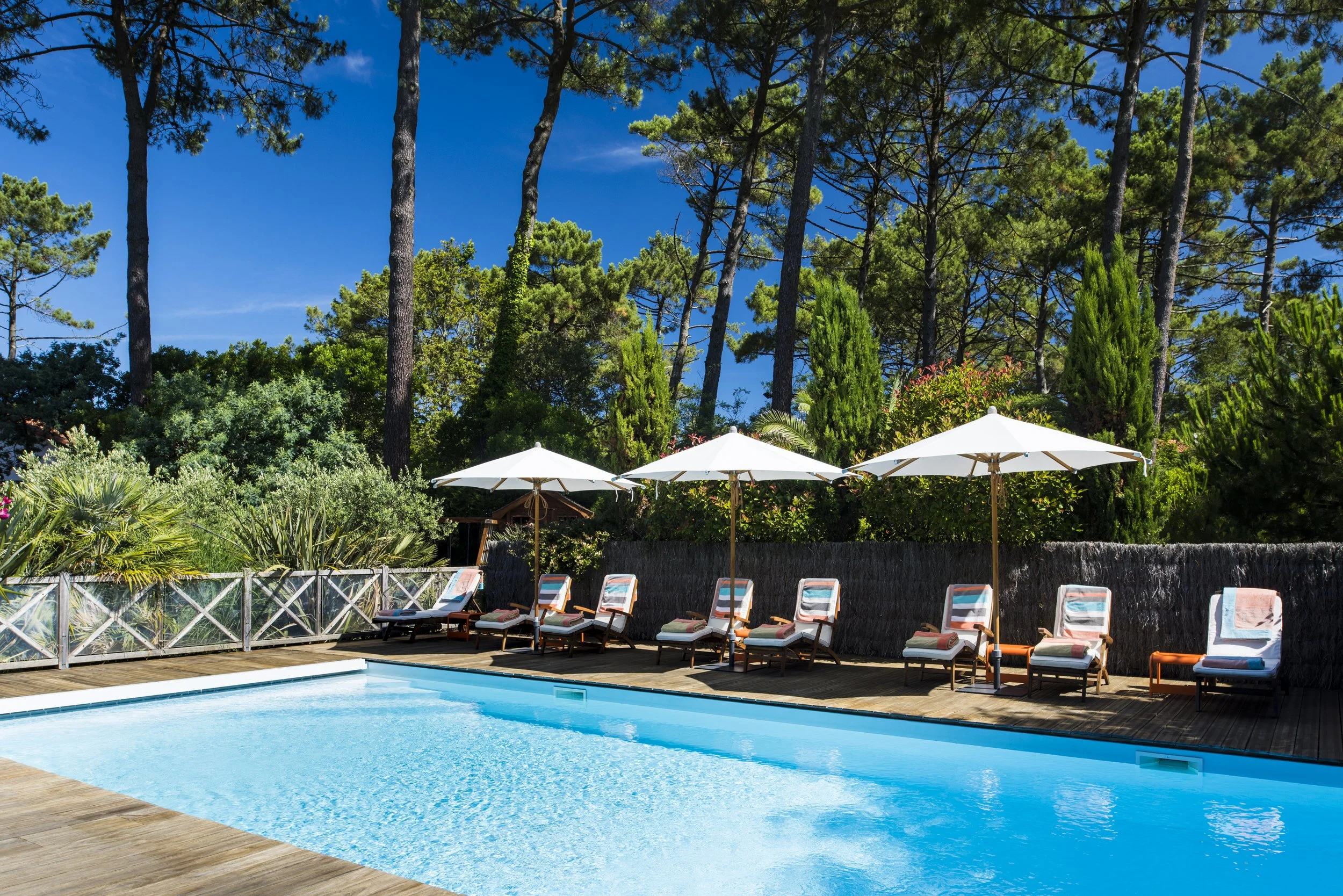
Working alongside the local architect, the topographical survey and a garden designer, we mapped the property into a series of related structures and zones, each with its own character and purpose. A Balinese-inspired yoga shala for early-morning practice. A table tennis hut with seating and games for the teenagers. A children's playground at scale. A pool house with deep seating and a large fireplace, designed for lunches that stretch into long evenings. Sheltered indoor spaces, accessible from anywhere on the grounds, for when the weather turns. The principle running through all of it: enough variety that no part of the estate ever competes with another, and enough connection that the whole still feels like one place.
THE POOL HOUSE
Shaded retreat by day. Entertaining venue by night.
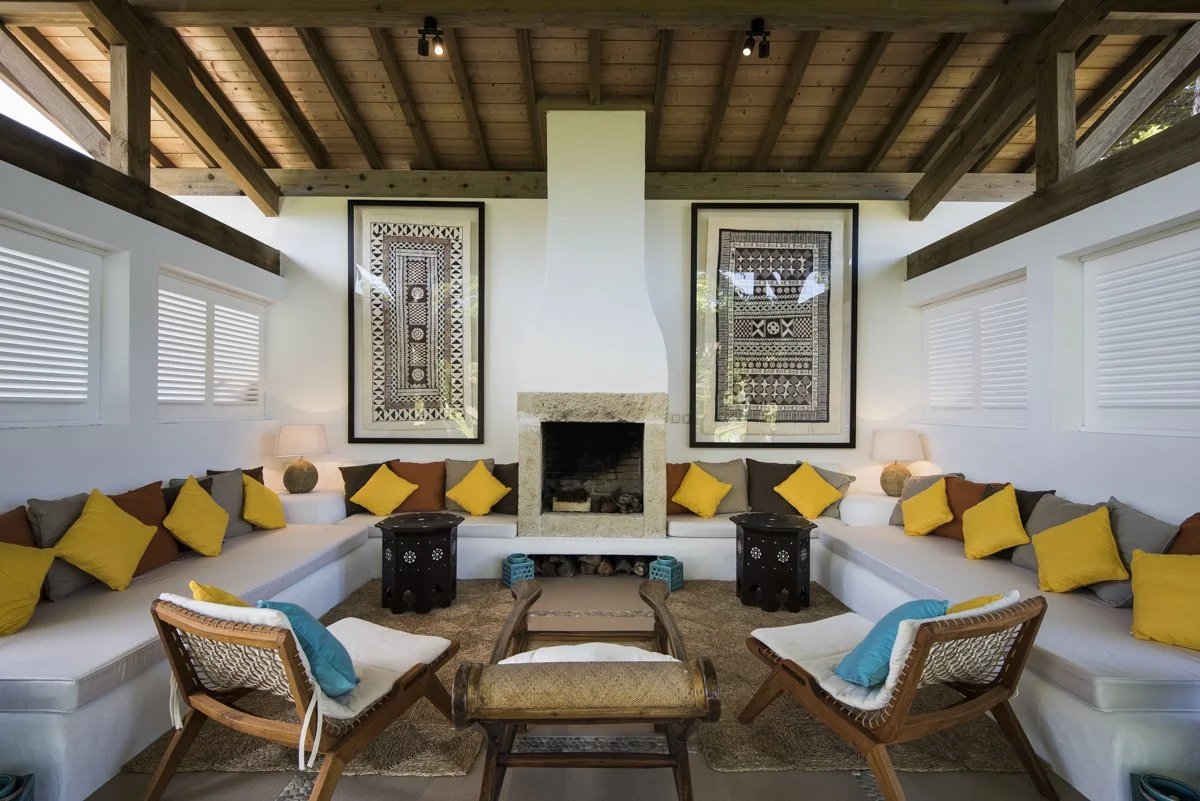
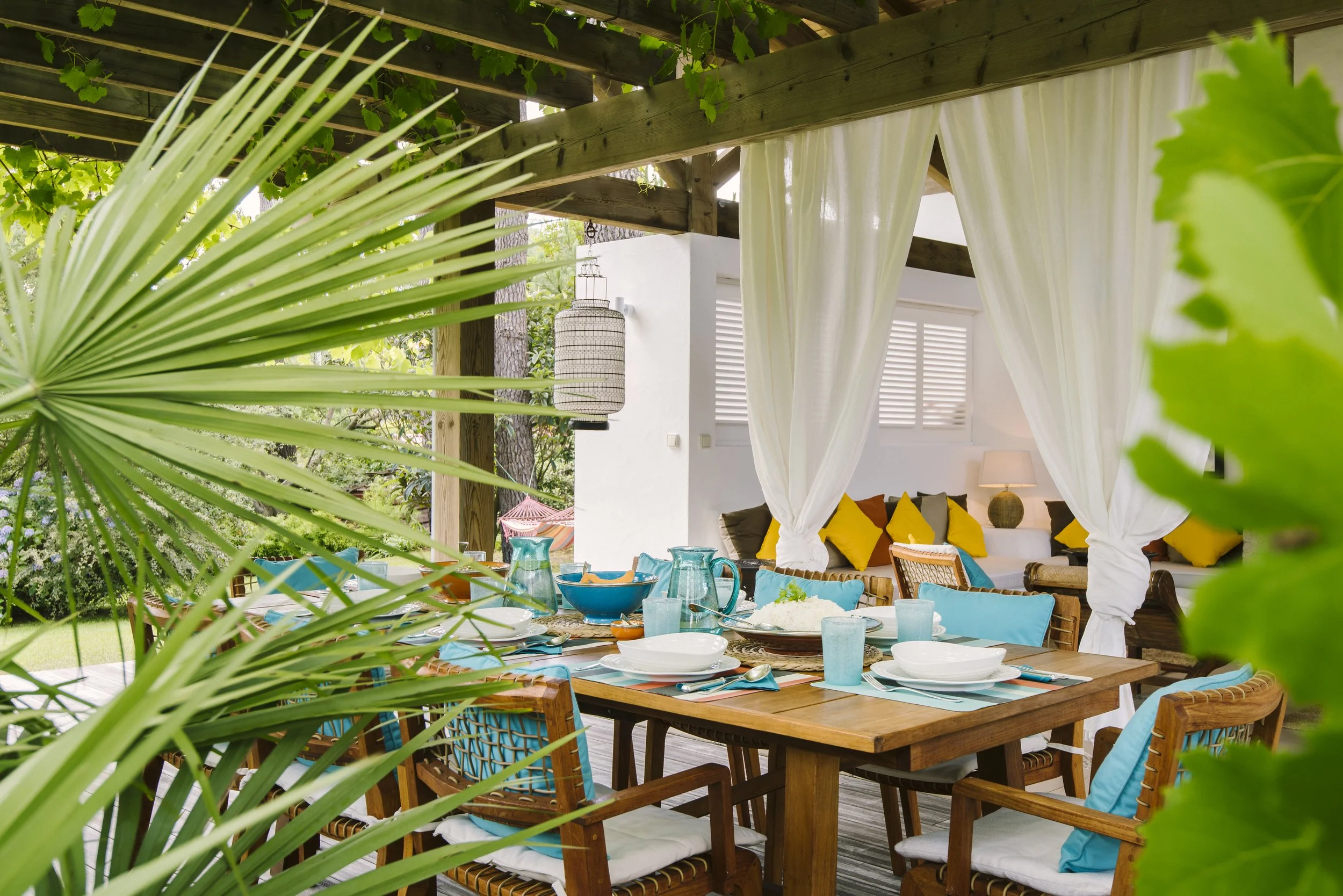
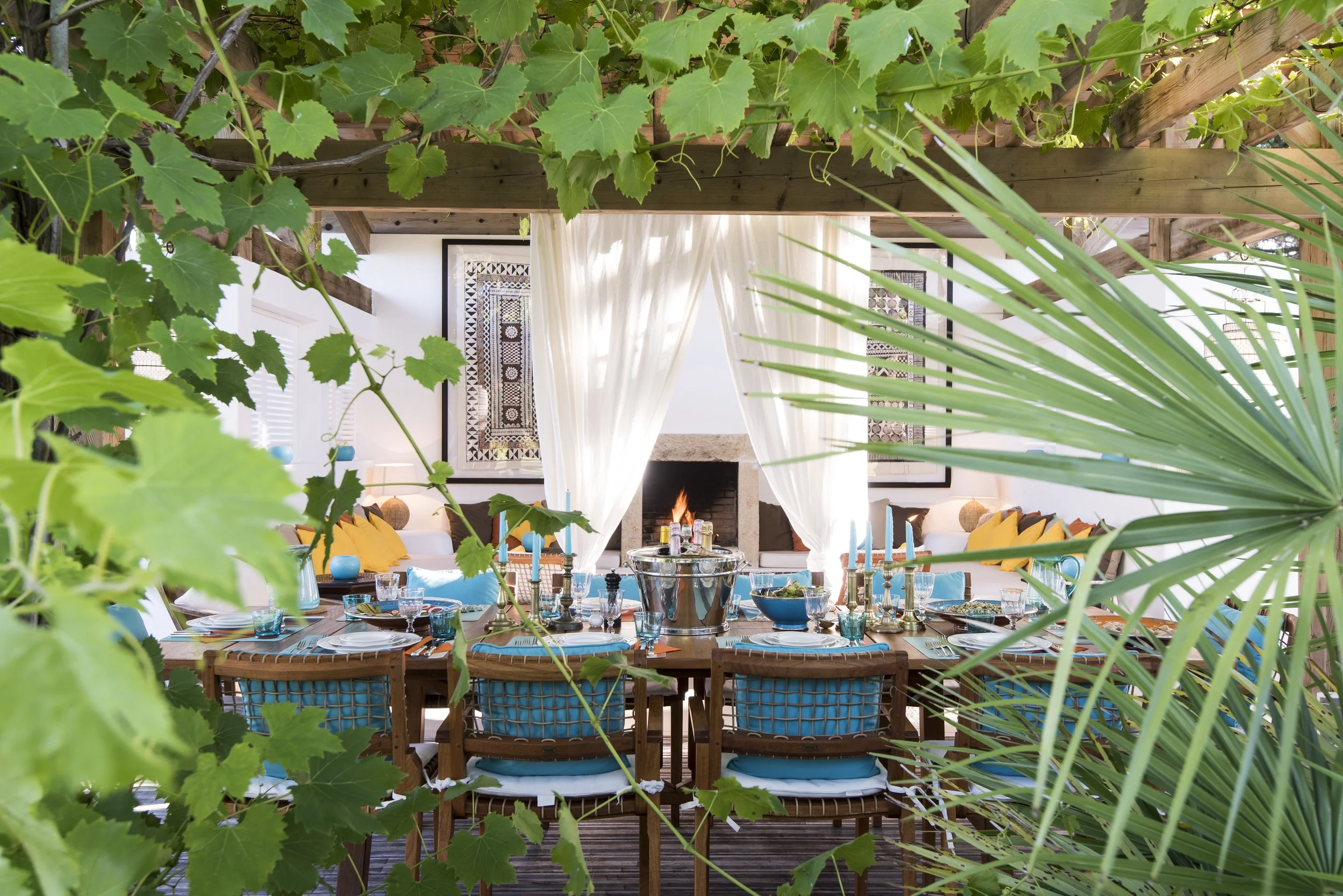
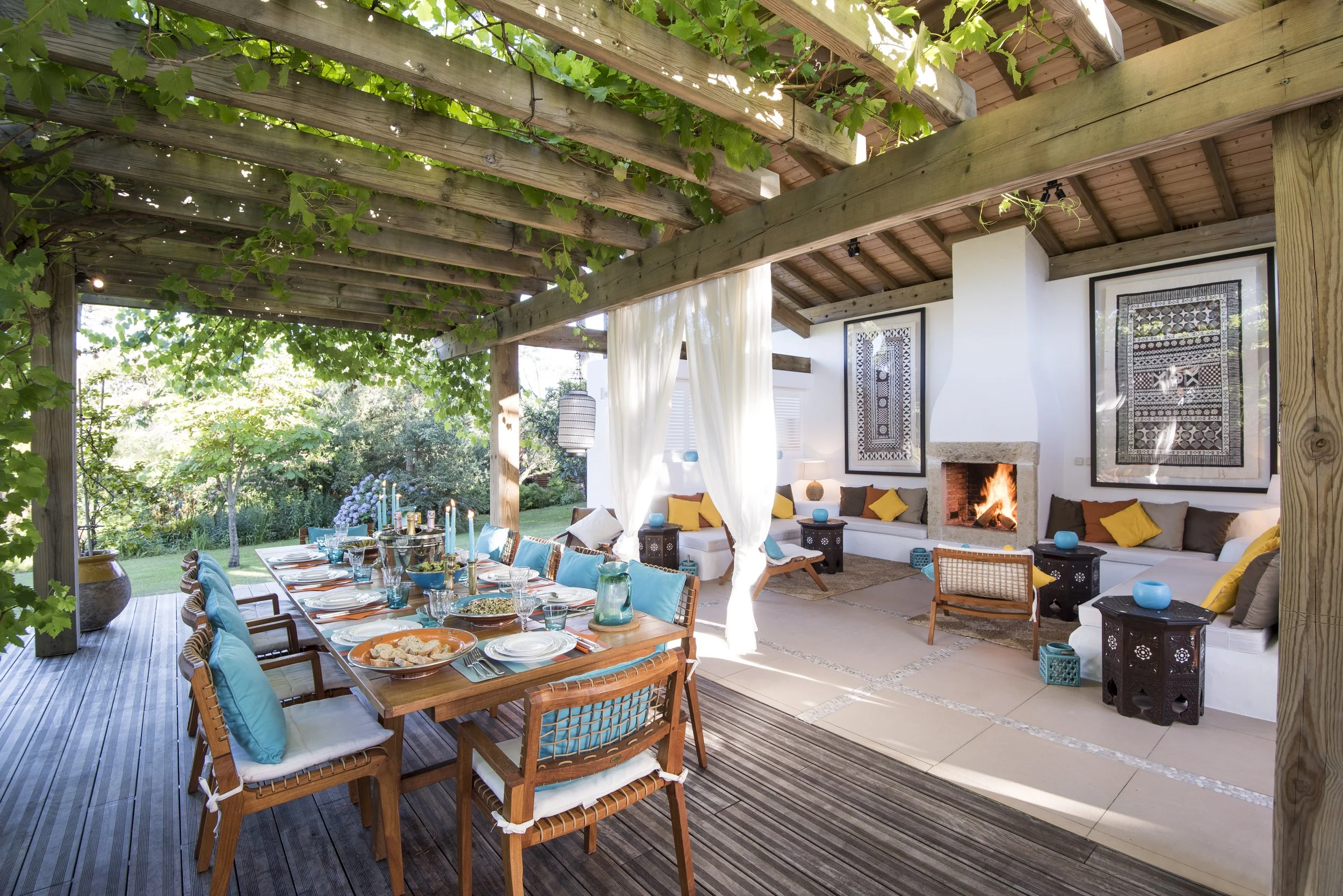
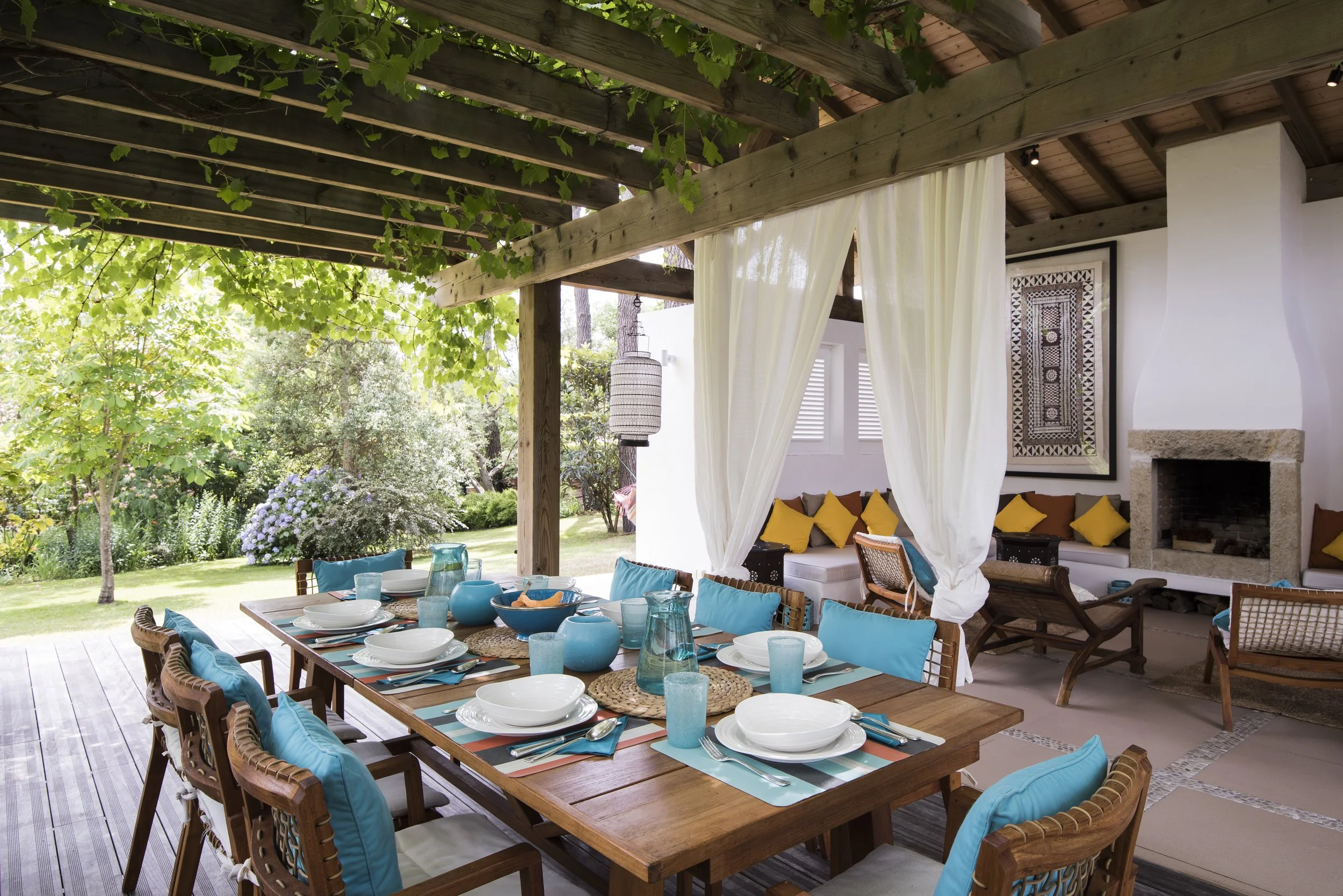
Of the new structures across the grounds, the pool house was the one with the most distinct architectural personality. Set on an elevated position overlooking the pool and the wider grounds, the building was conceived as both shaded retreat by day and entertaining venue by night.
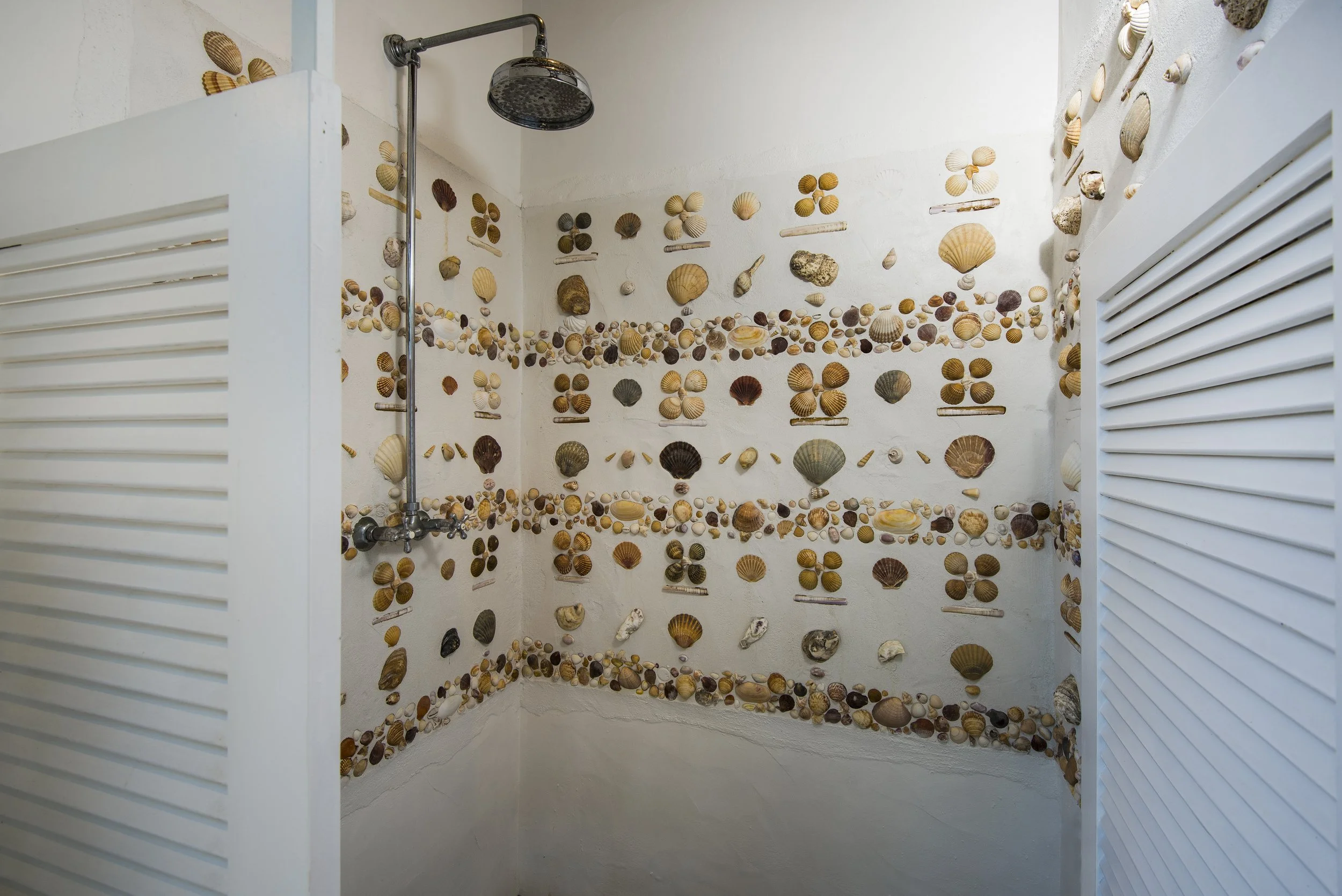
At its heart is a U-shaped deep seating arrangement around an open fireplace, a deliberate decision to anchor the structure in the way the family actually uses outdoor space, which is rarely seated upright at a table. Above the fireplace hangs a piece of papyrus art the clients brought back from their honeymoon in Fiji, framed and re-mounted for this position. In front of the building, a large dining deck under a pergola roof seats twenty for long evenings. One side of the building houses a summer kitchen, with fridges, cabinetry and barbecue for outdoor catering at scale. The other holds shower and bathroom facilities, decorated with shells gathered from the local beach.
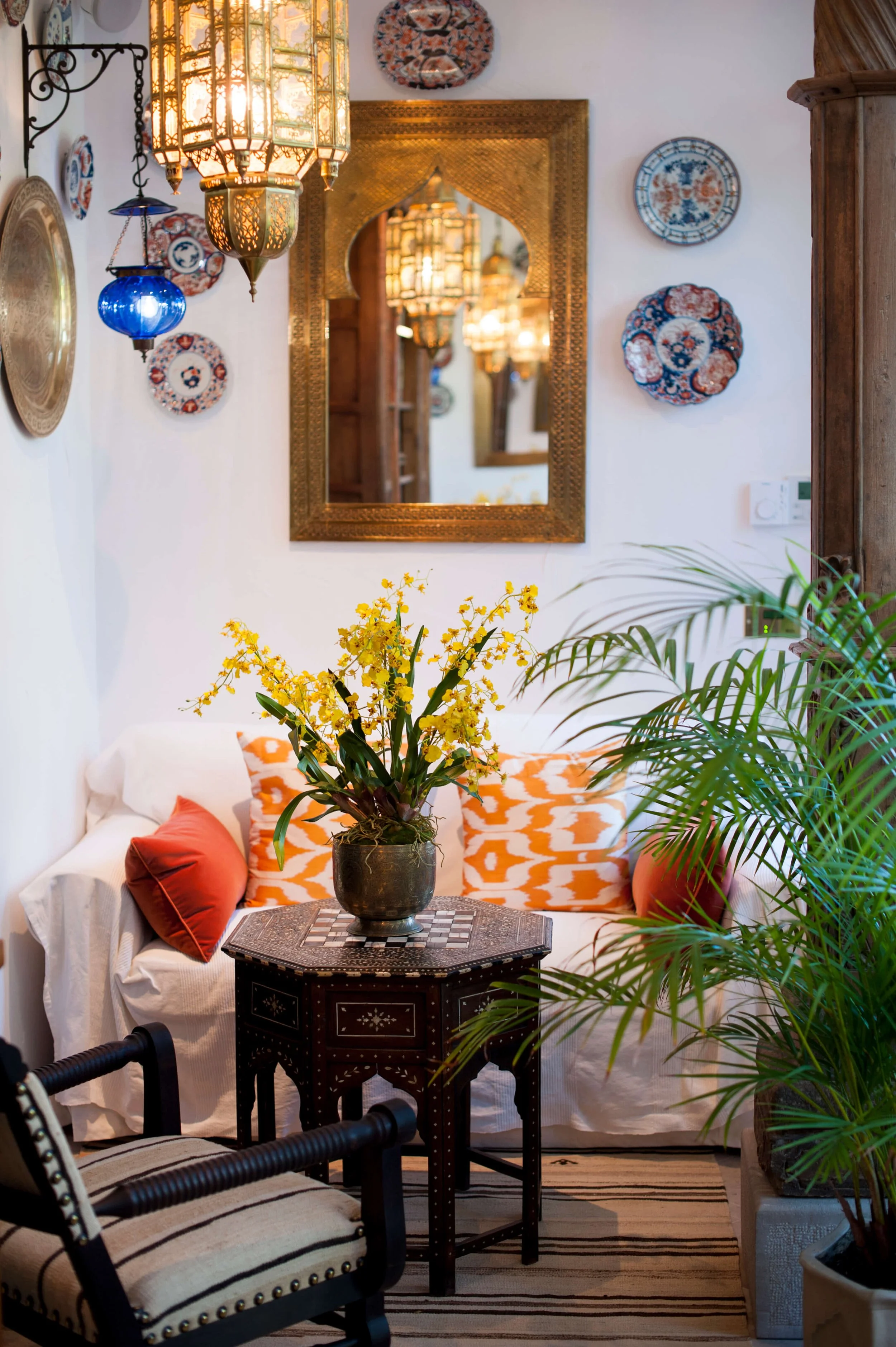
The materials are deliberately tactile and unfinished. Pebbled floors. Wooden outdoor furniture. Side tables sourced from Morocco. Woven rugs that soften the architecture. Multiple layers of lighting were specified, overhead, ambient, accent, so the building can be tuned to the time of day and the size of the gathering. By the time the pool house was finished, it looked like a building the estate had always had.
THE MAIN HOUSE
Extended in two directions. The proportions kept.
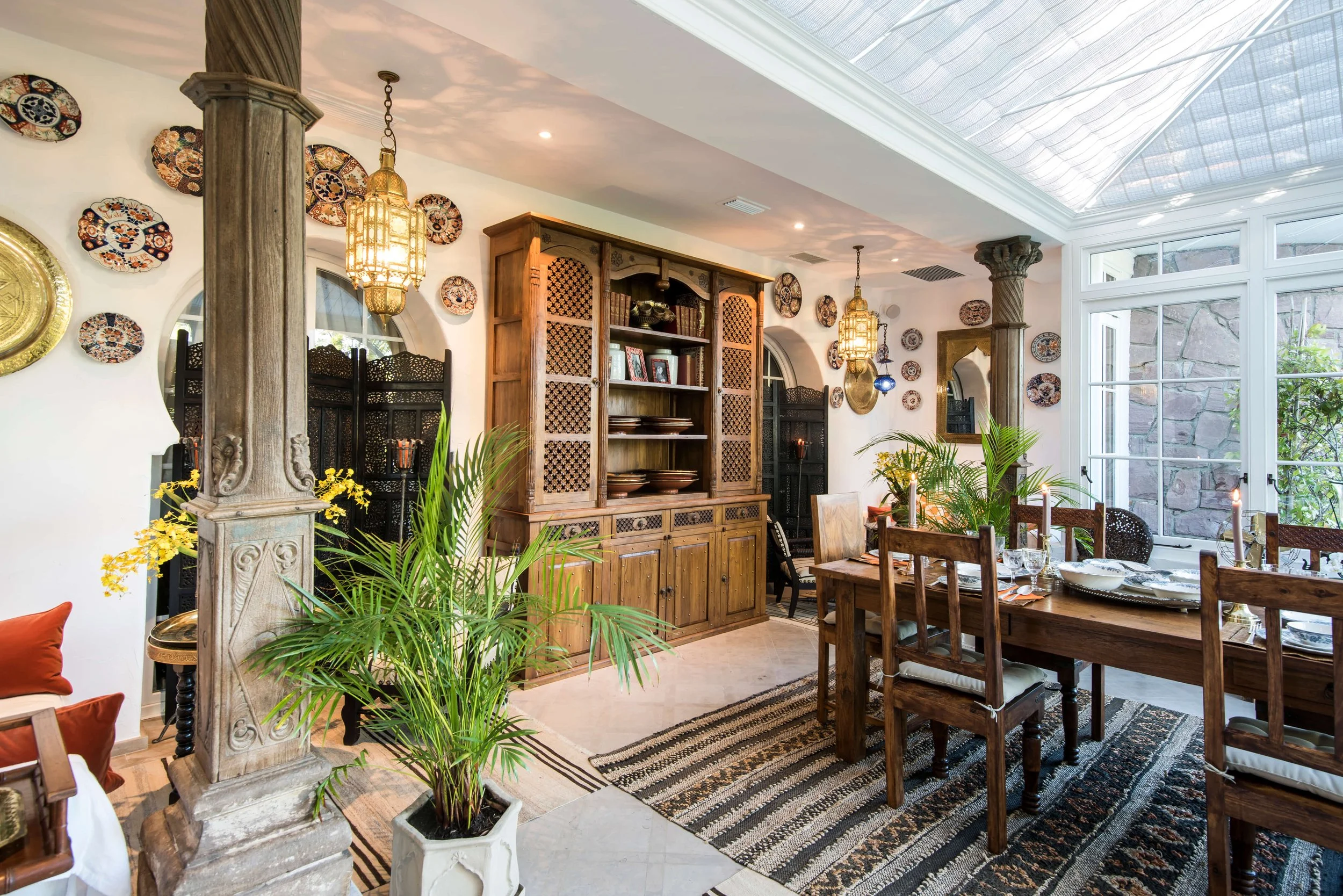
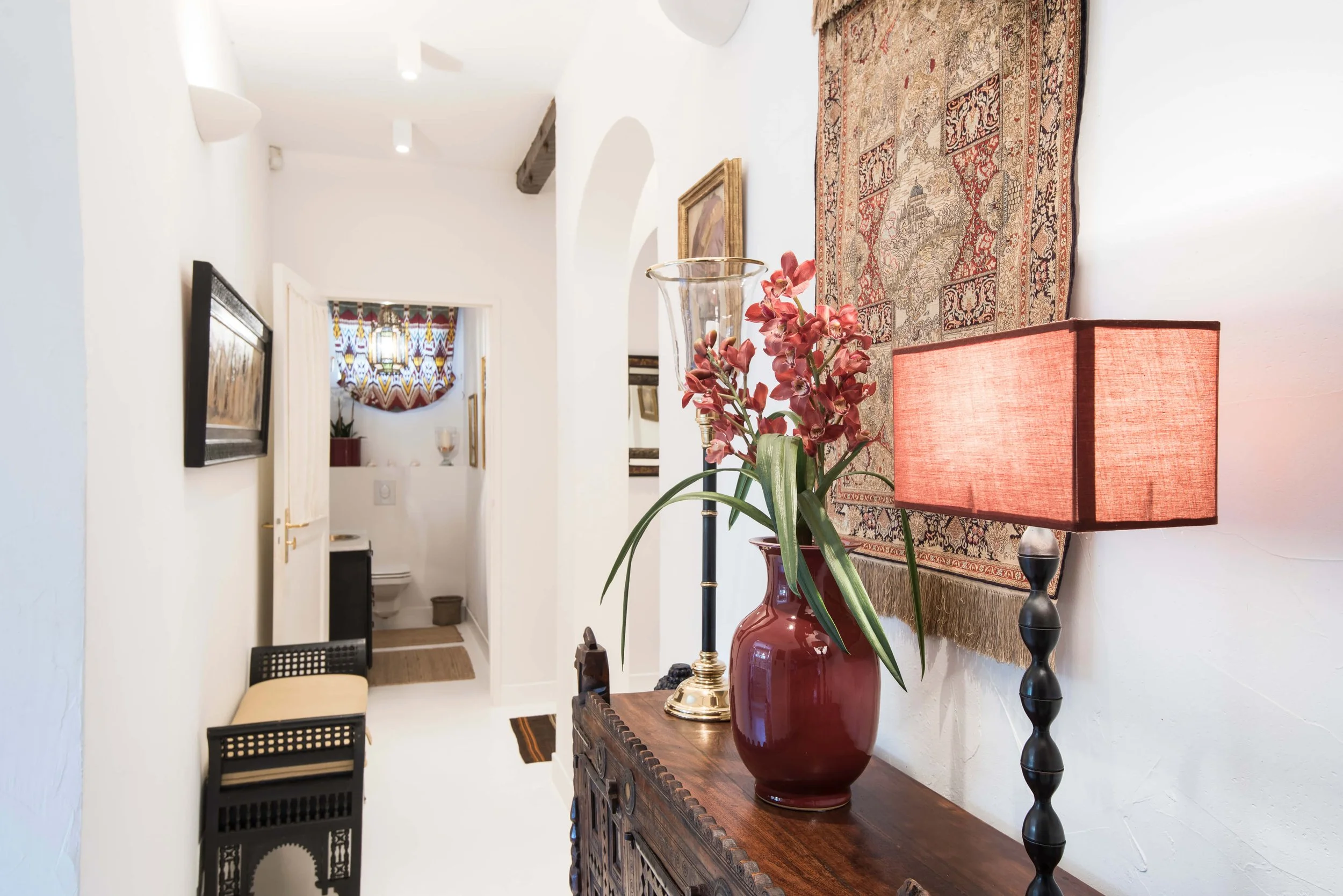
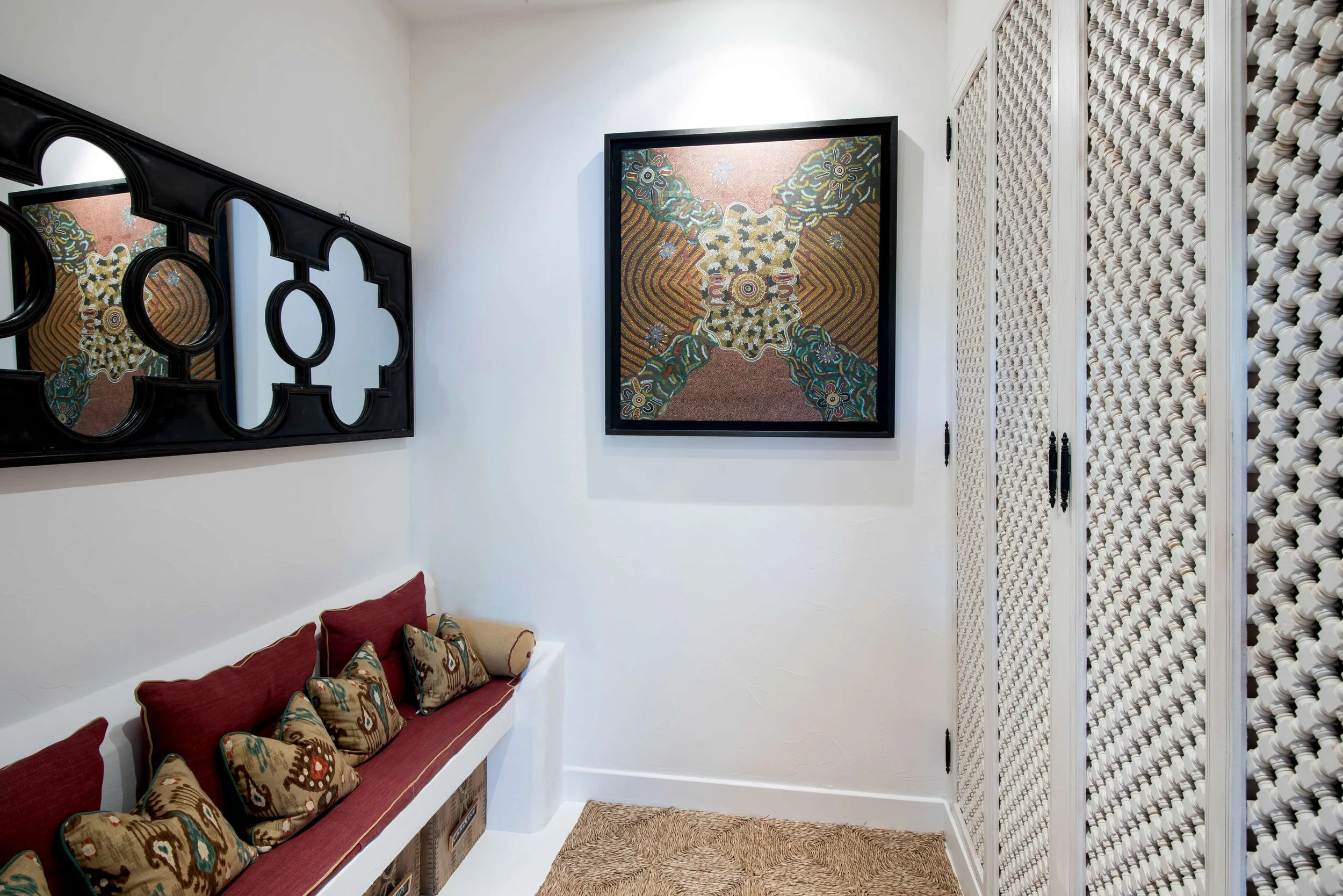
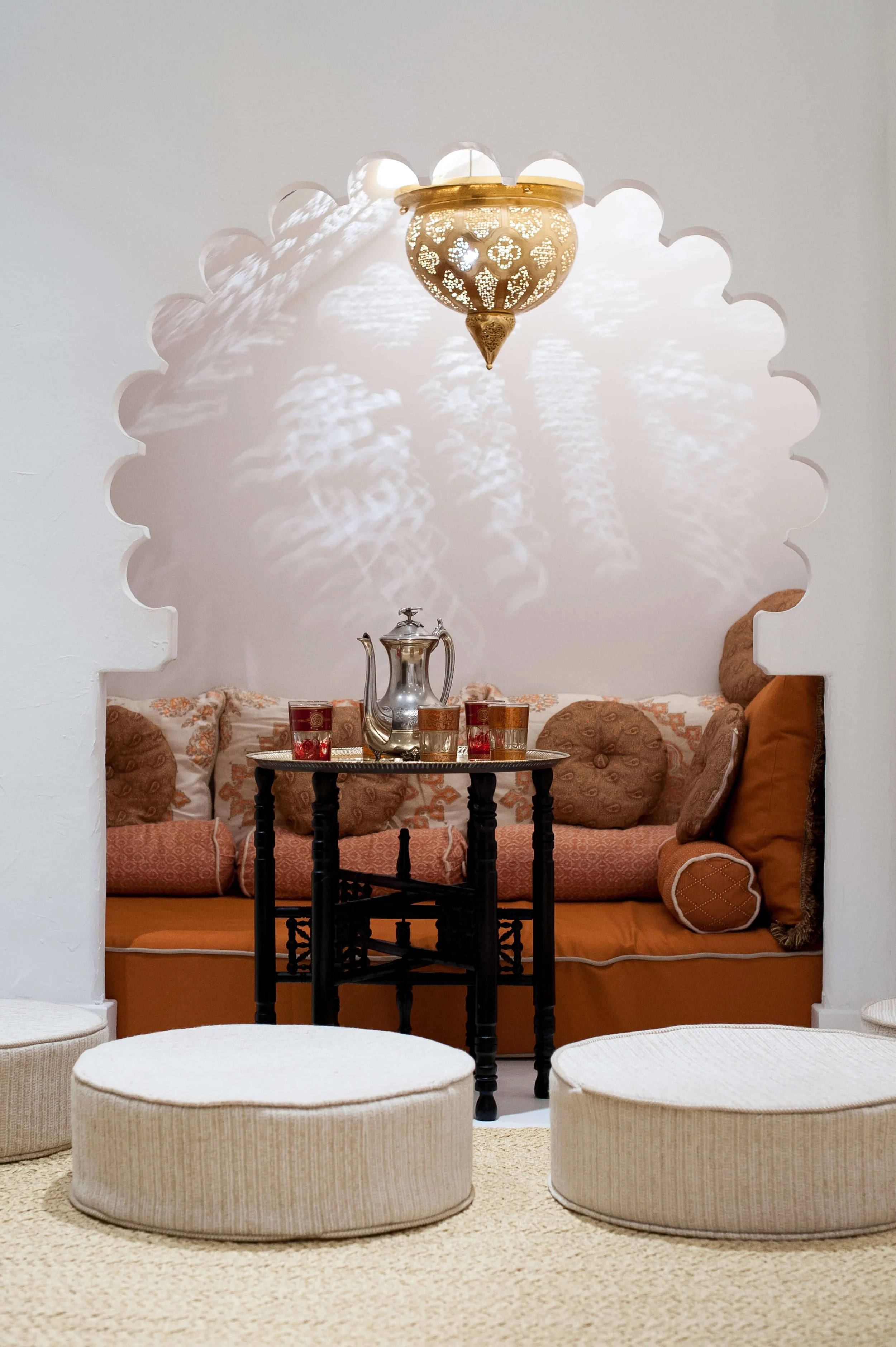
The main house itself was extended in two directions. At the rear, the structural wall was pushed out to double the kitchen footprint and create a grand new entrance with cloakroom facilities, making the back of the house, where the family actually lives, the heart of daily life. At the front, an orangery was added and designed to imitate the feeling of a Moroccan riad courtyard, with the architecture, light, and proportions that traditional riads earn through centuries of refinement. This room became the hub of the house: a transitional space between outside and in, between the formal life of the estate and the relaxed life of the family.
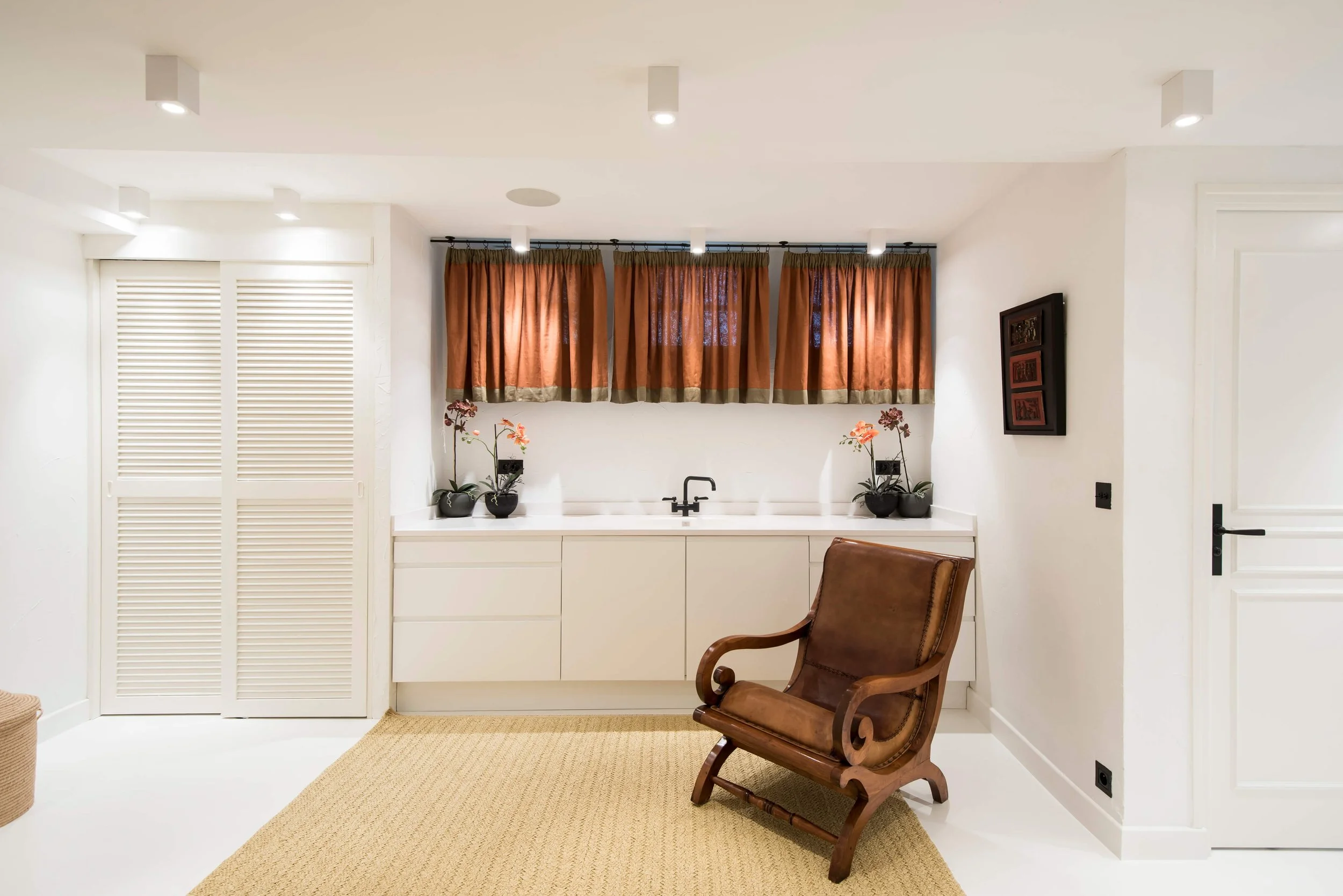
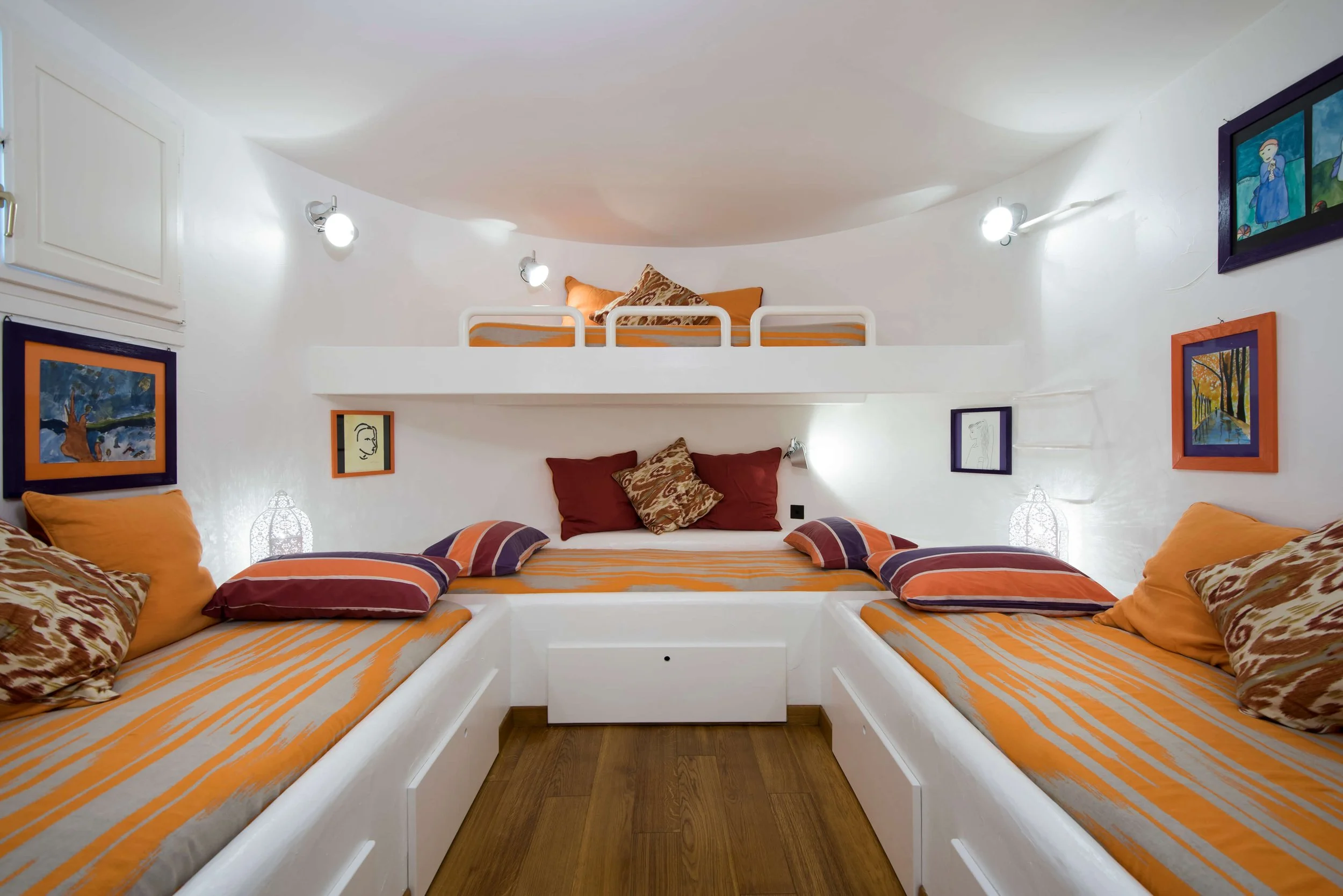
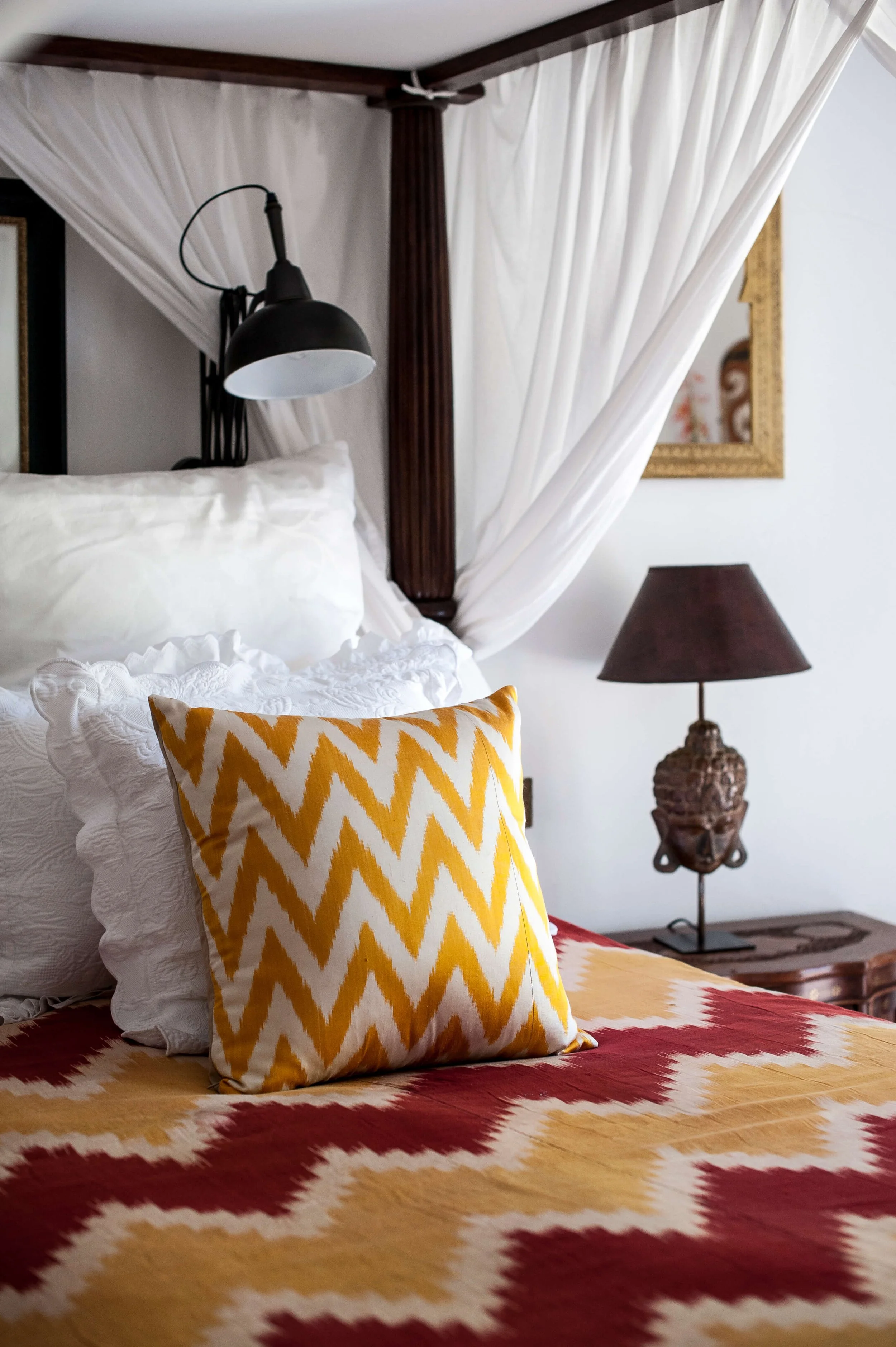
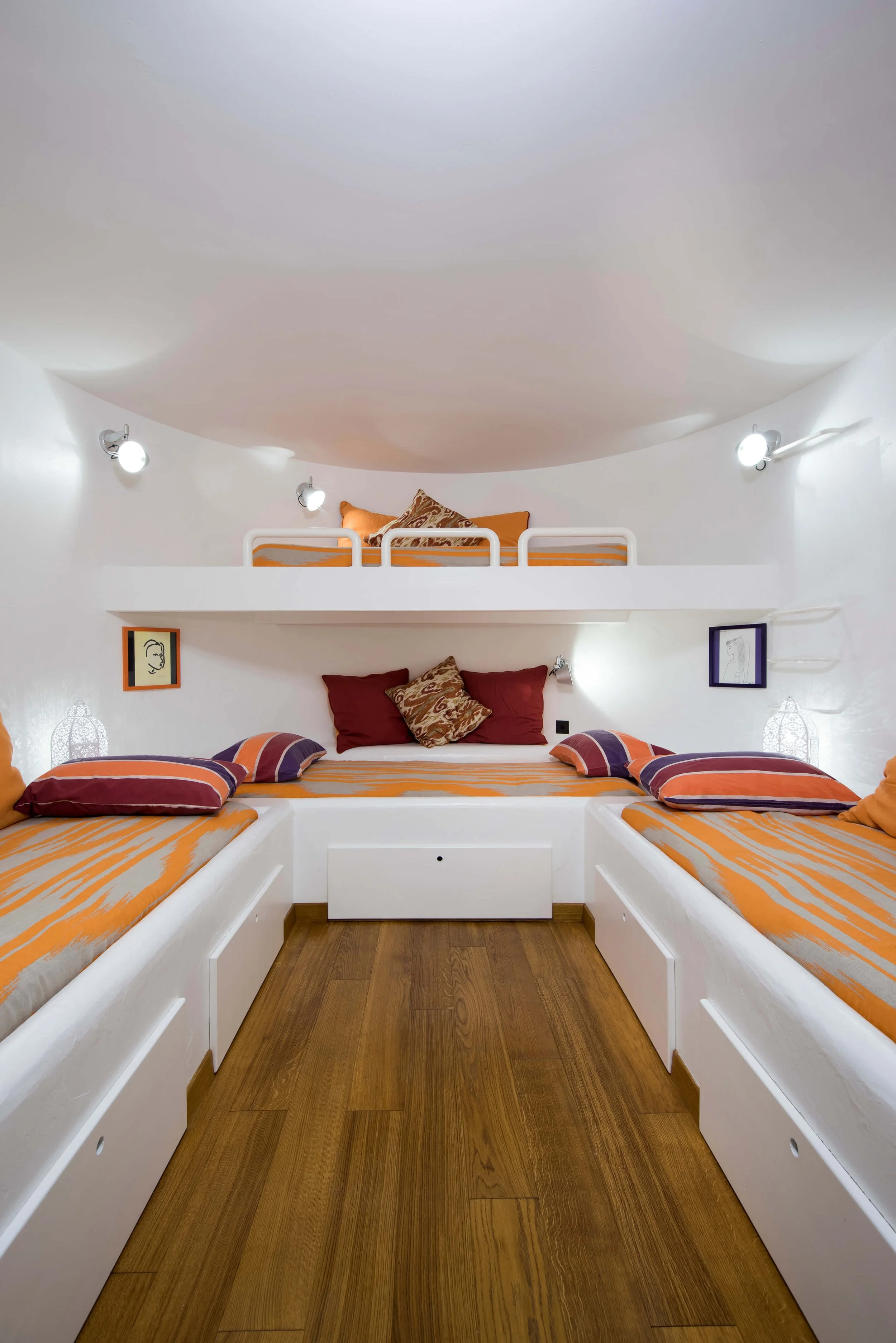
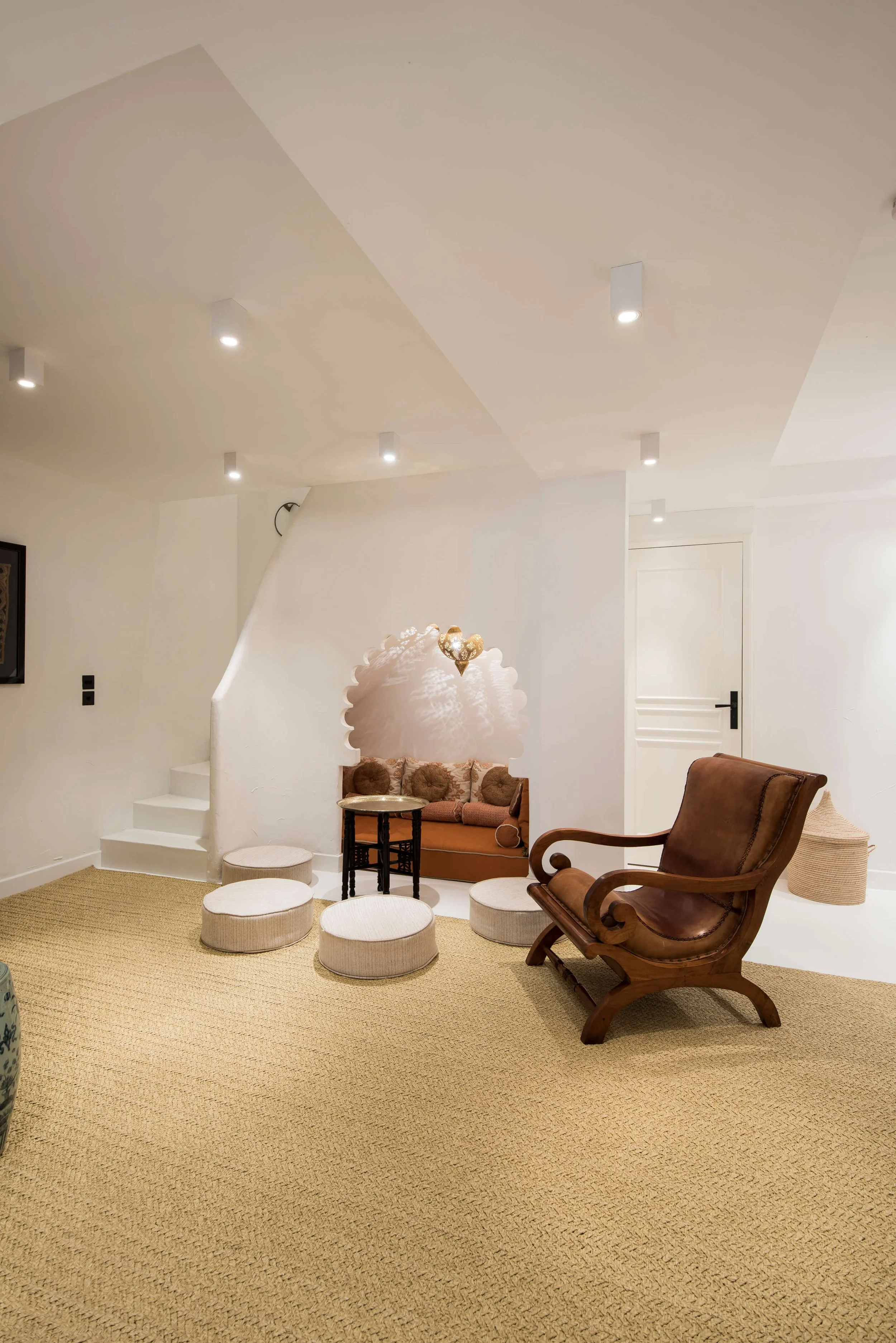
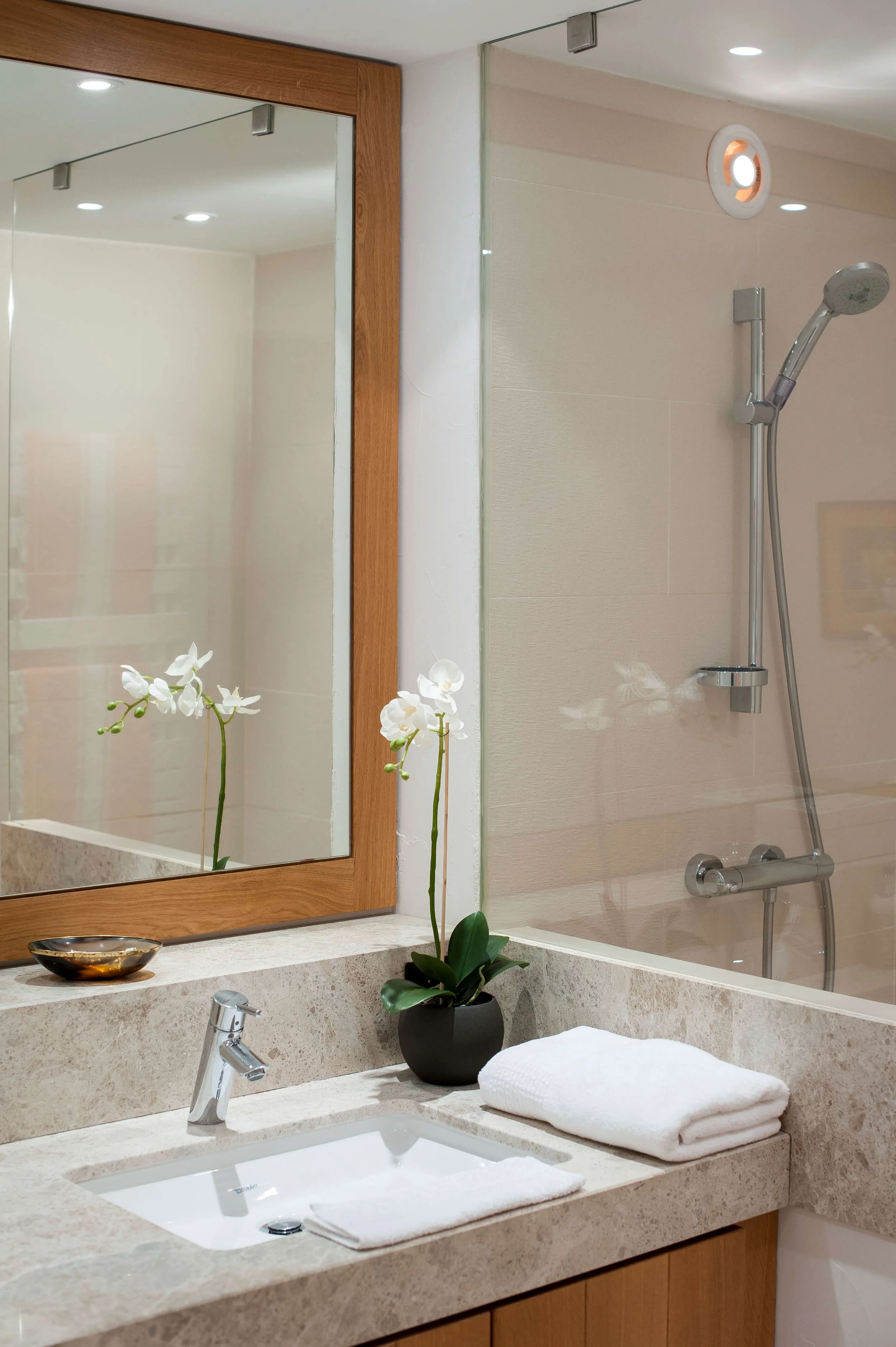
Below ground, the former garage was converted into bedrooms and ensuite spaces for children and staff, adding considerable accommodation without disturbing the proportions of the original house. On the main floor, every bedroom had its access reconfigured, every bathroom was gutted and rebuilt, and the master suite was separated from the rest of the house with the addition of a single new doorway. Small architectural decisions, but the kind that determine whether a house with twenty guests in it still feels private to the people who live there.
THE KITCHEN
Professional scale. Domestic soul.
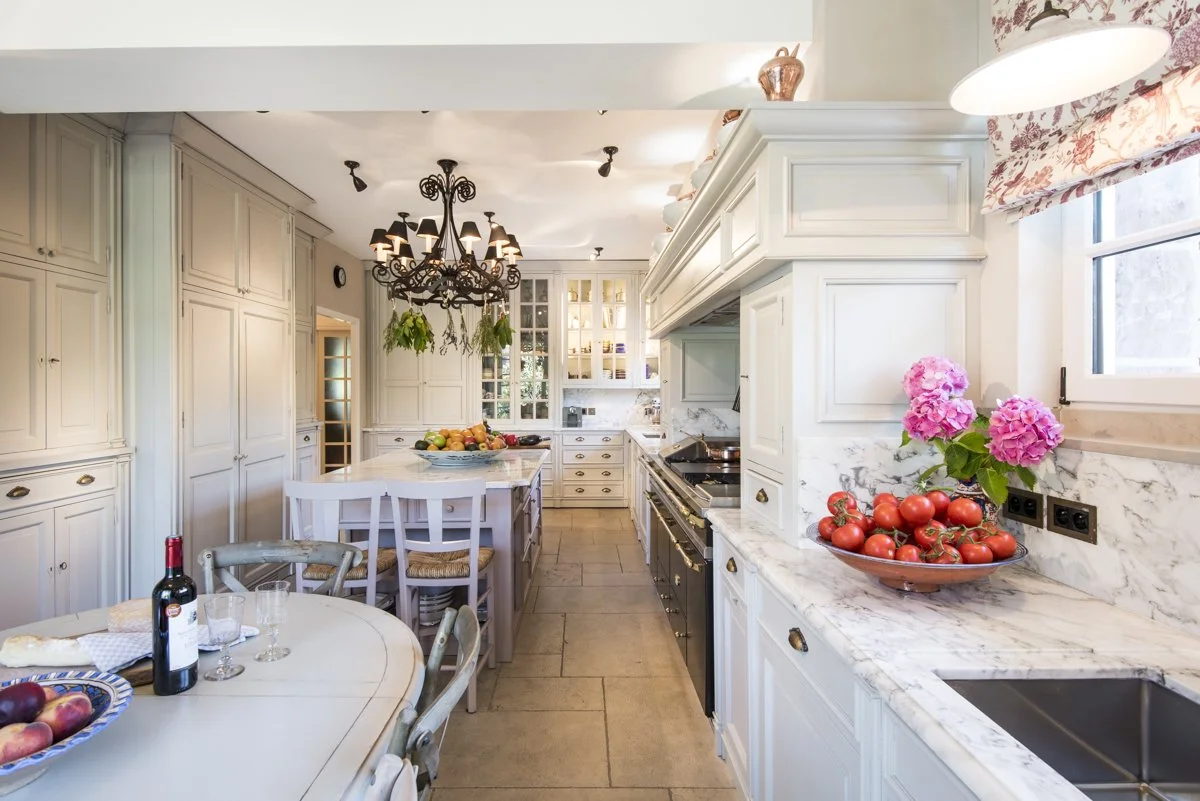
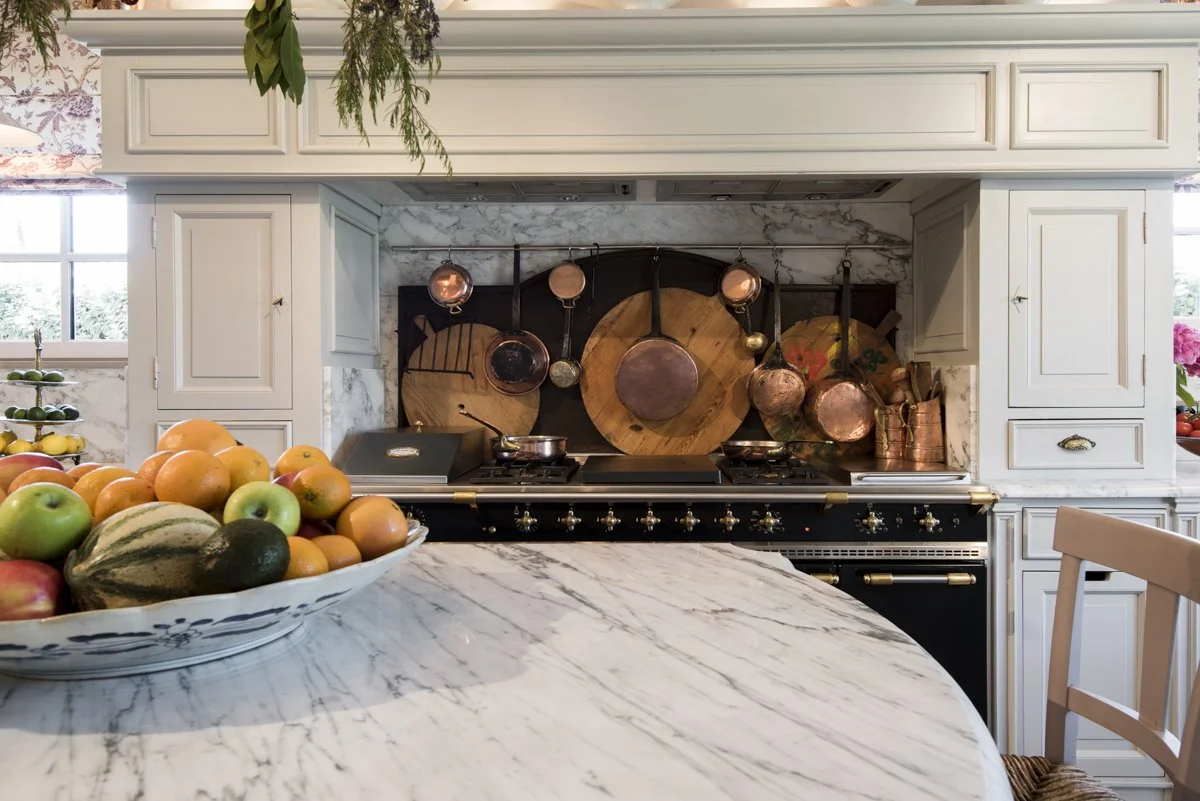
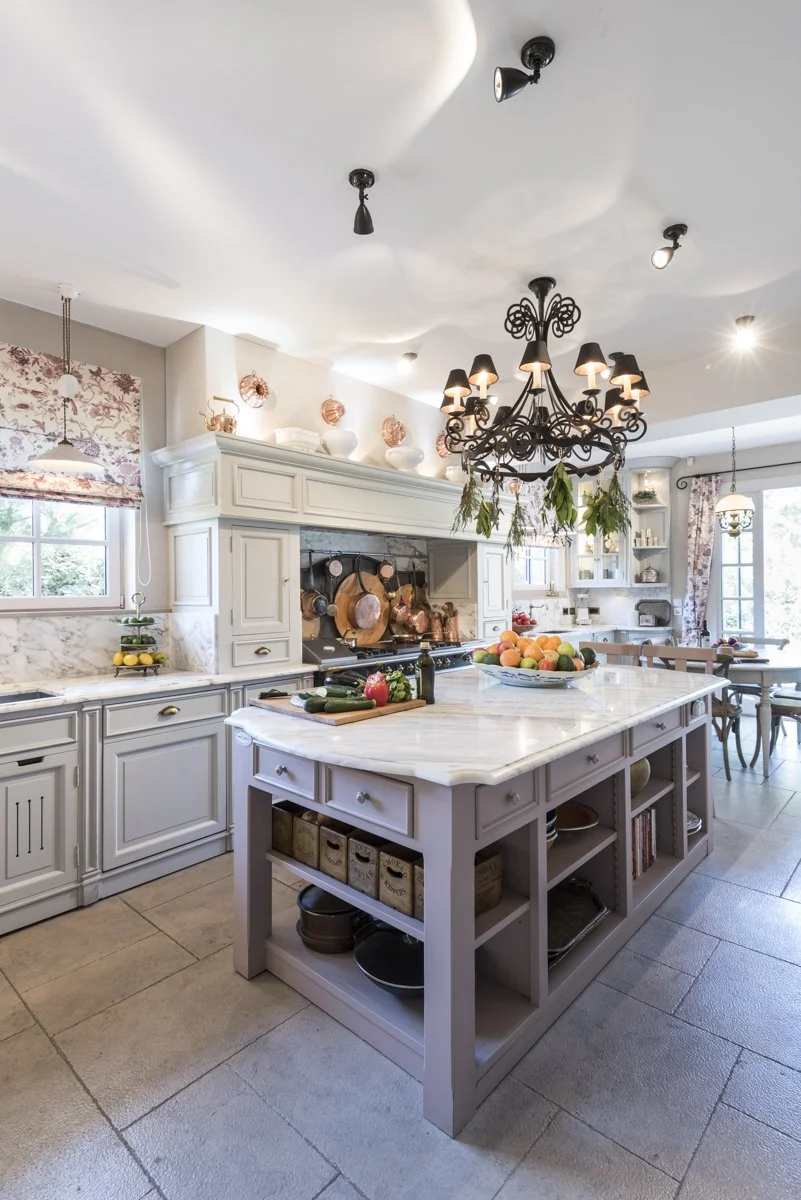
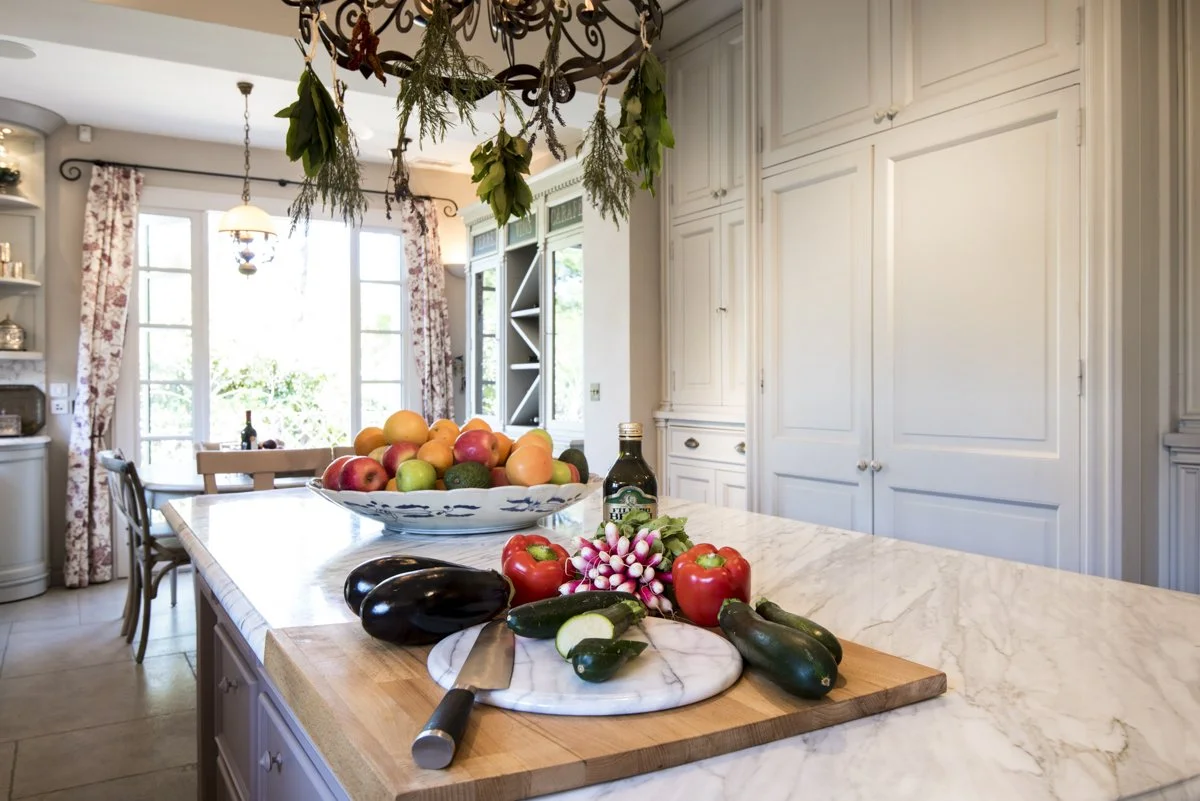
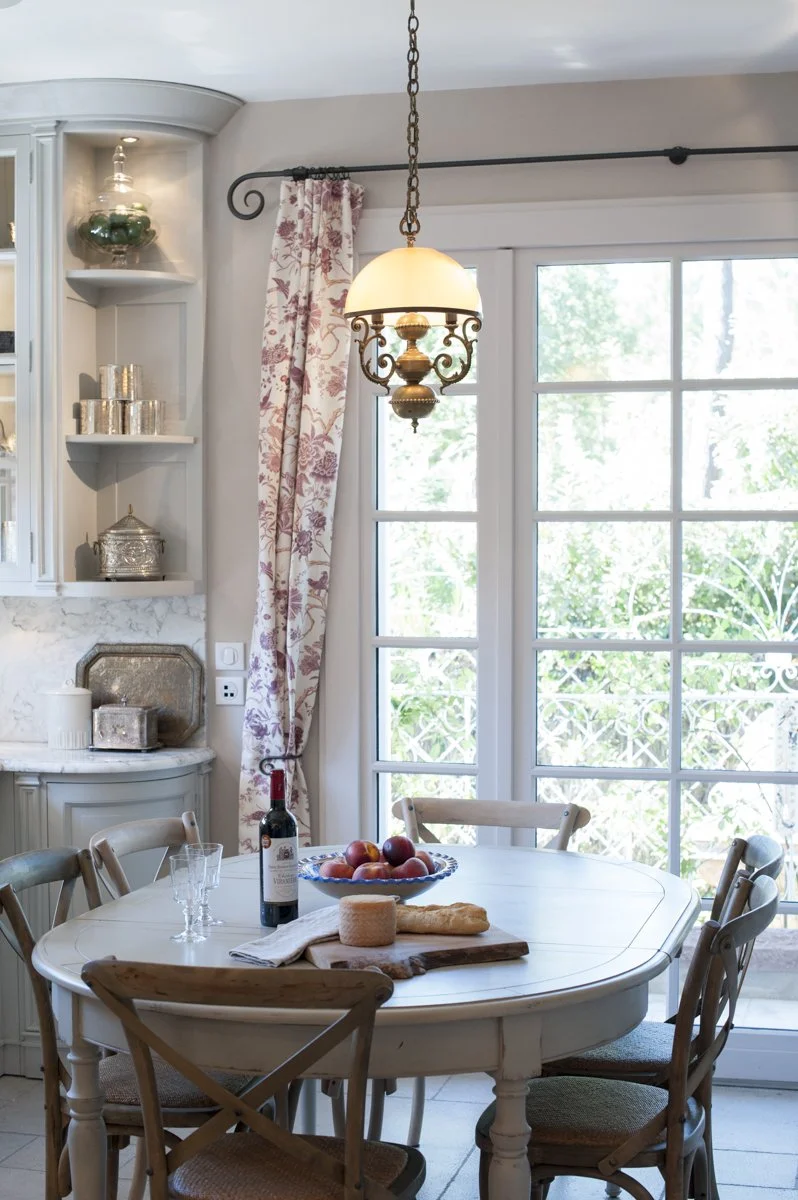
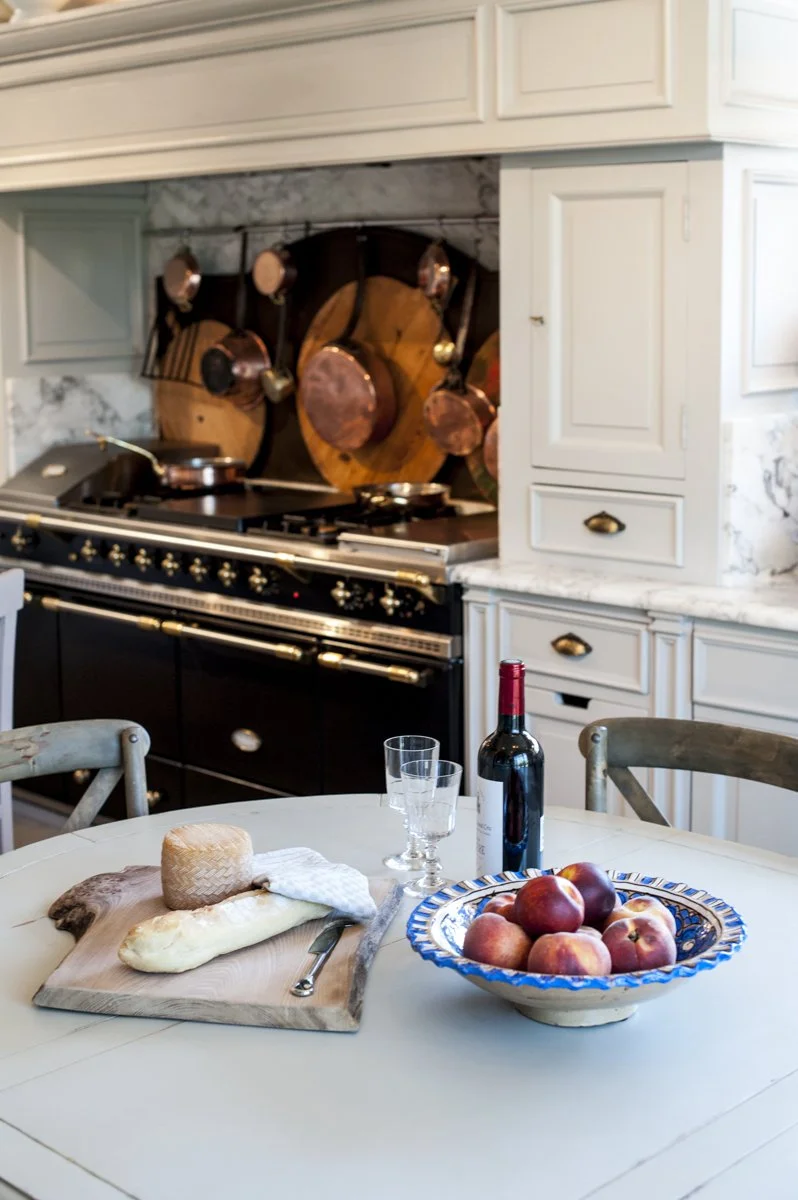
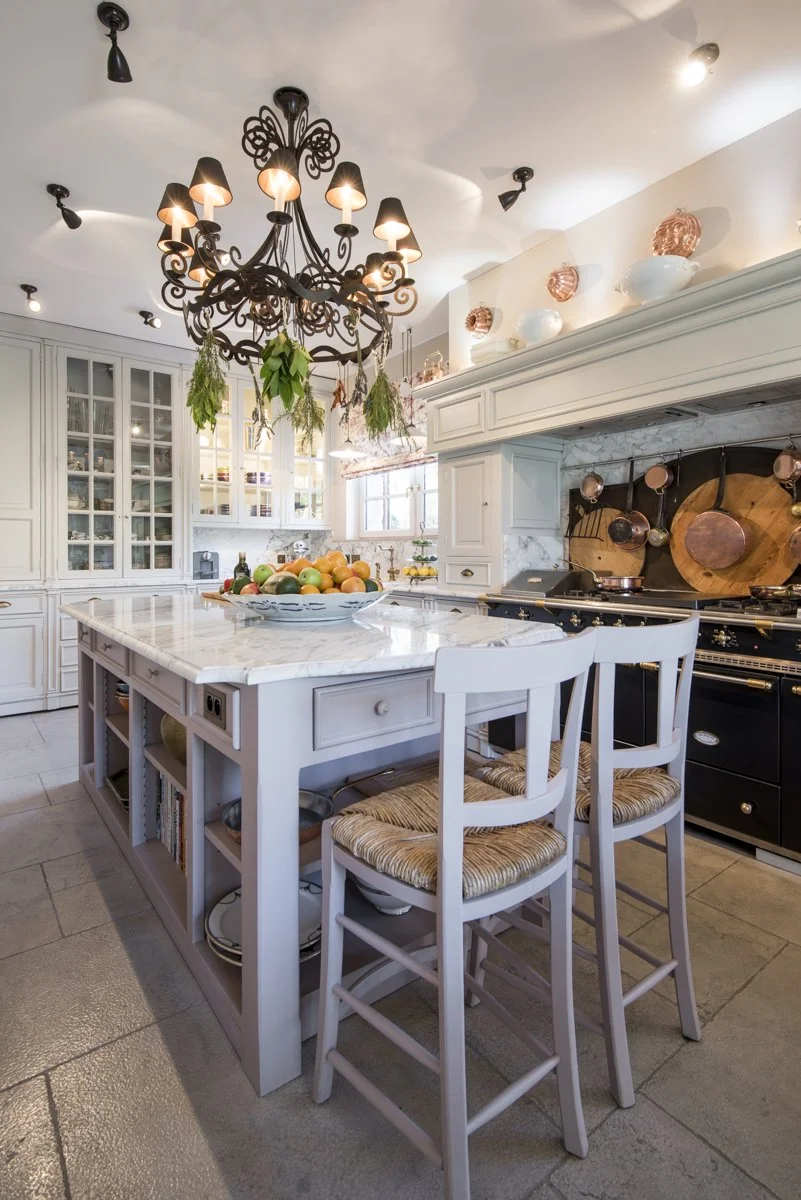
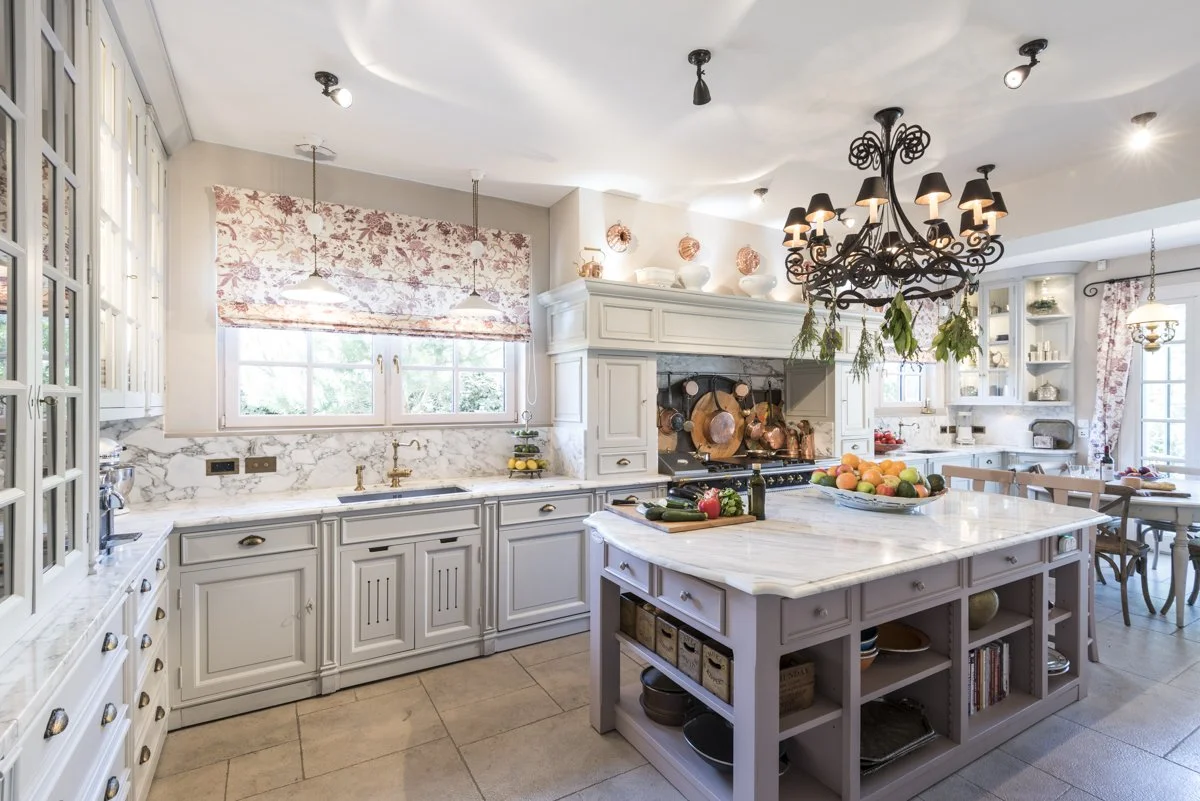
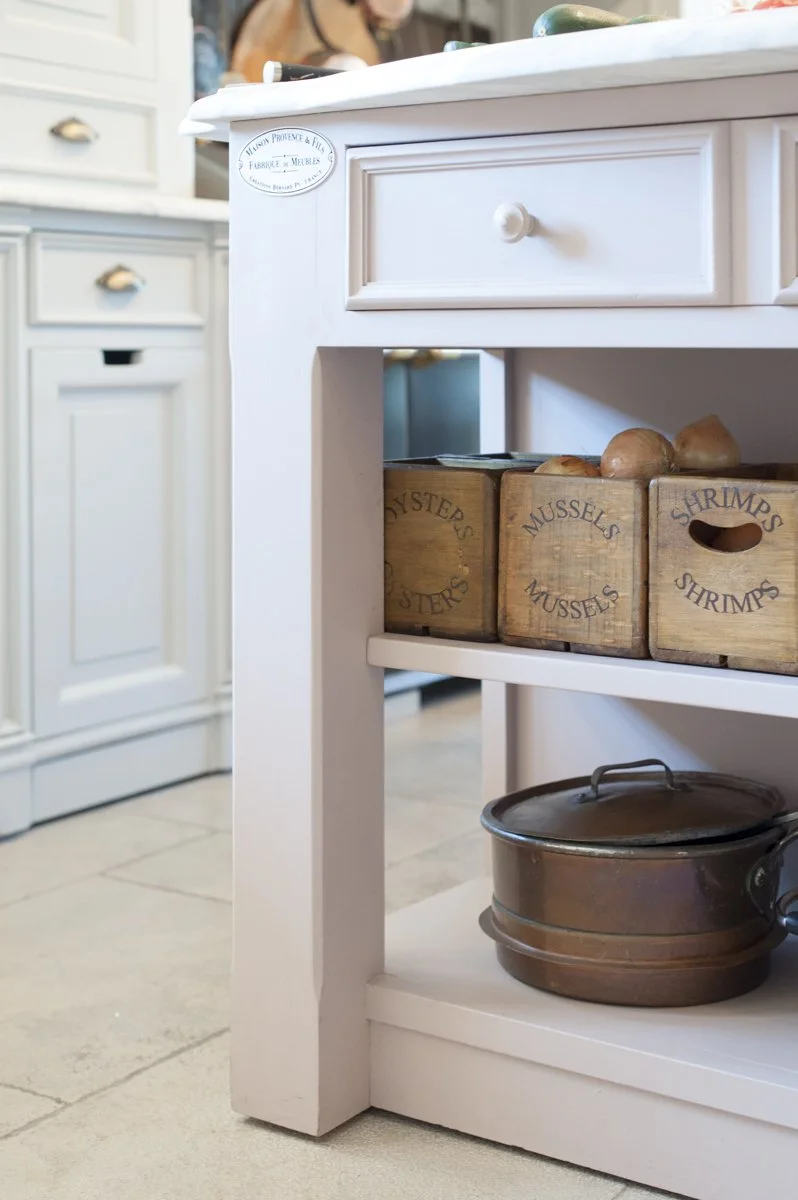
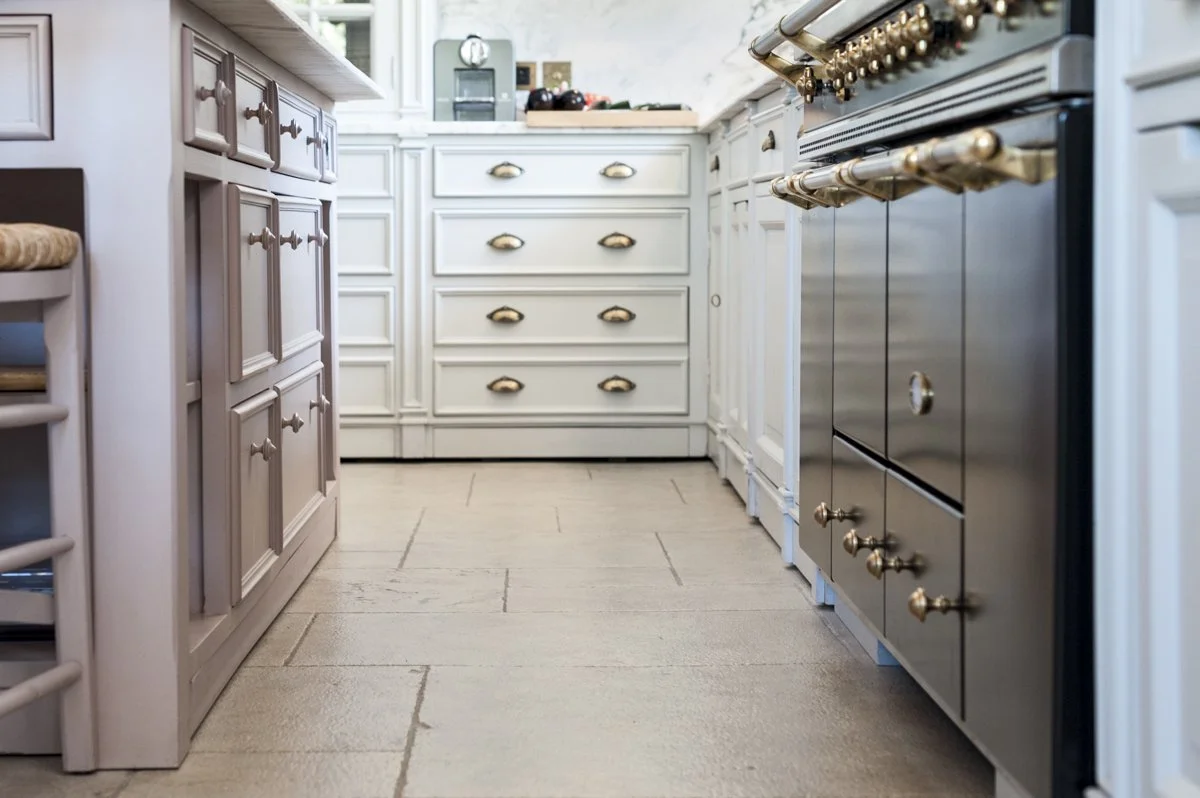
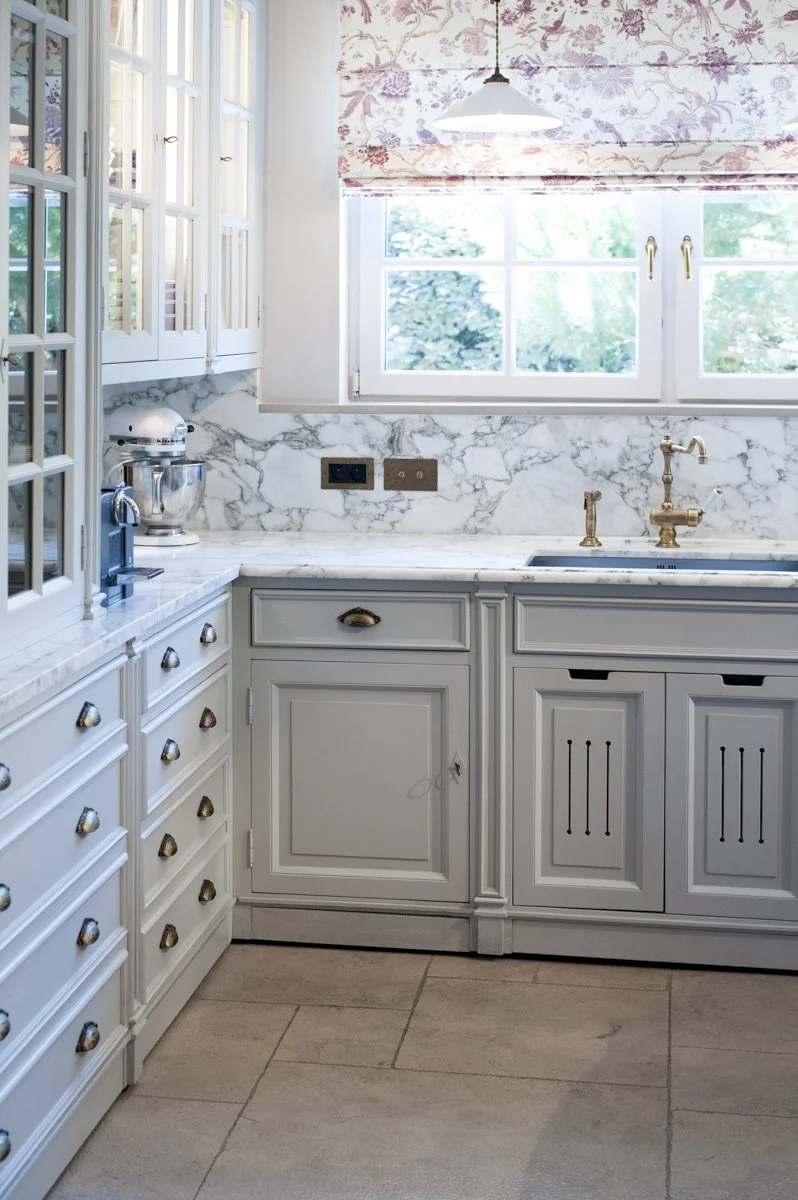
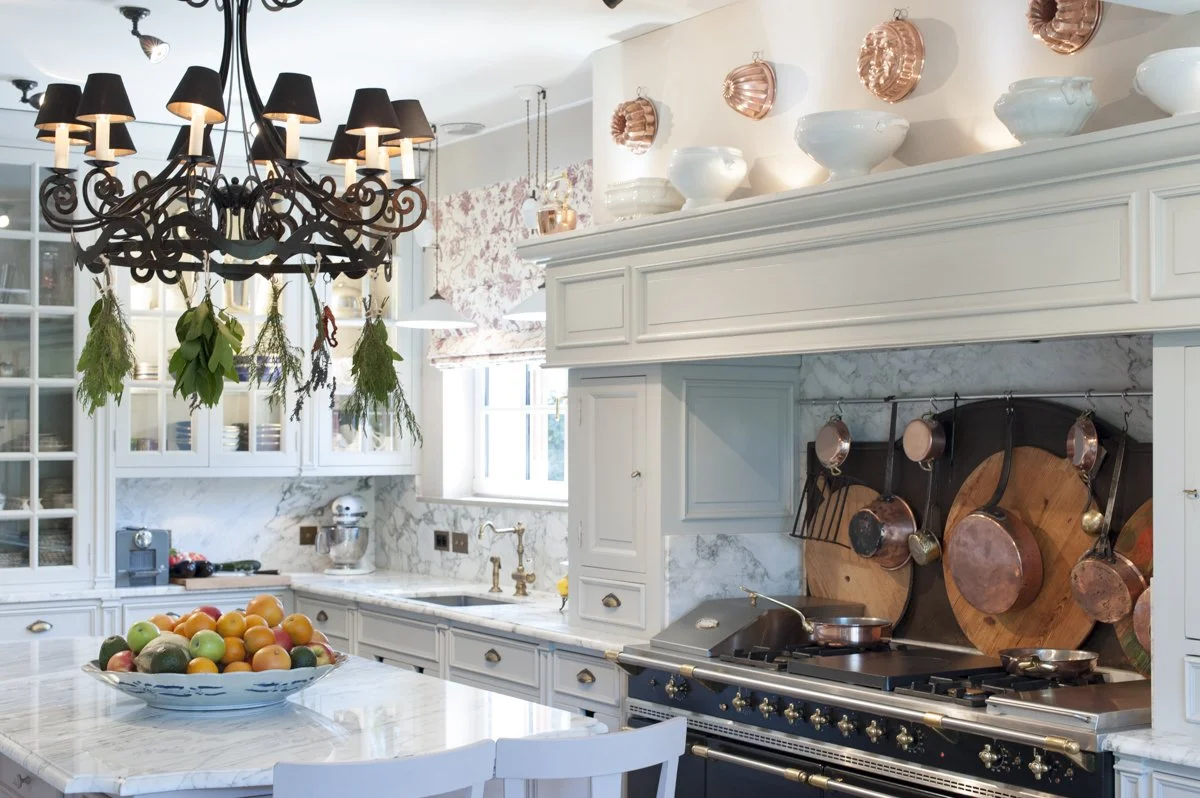
With the extension, the kitchen footprint doubled. We used the additional space to design a working kitchen at proper estate scale, capable of preparing meals for thirty without losing its calm. Two sinks, each with its own dishwasher and bins. A large central island with multiple work stations. A French Lacanche stove as the room's hearth. The cabinetry was made by Provence et Fils, the artisanal kitchen studio whose work runs in conversation with this region's domestic architecture rather than against it.
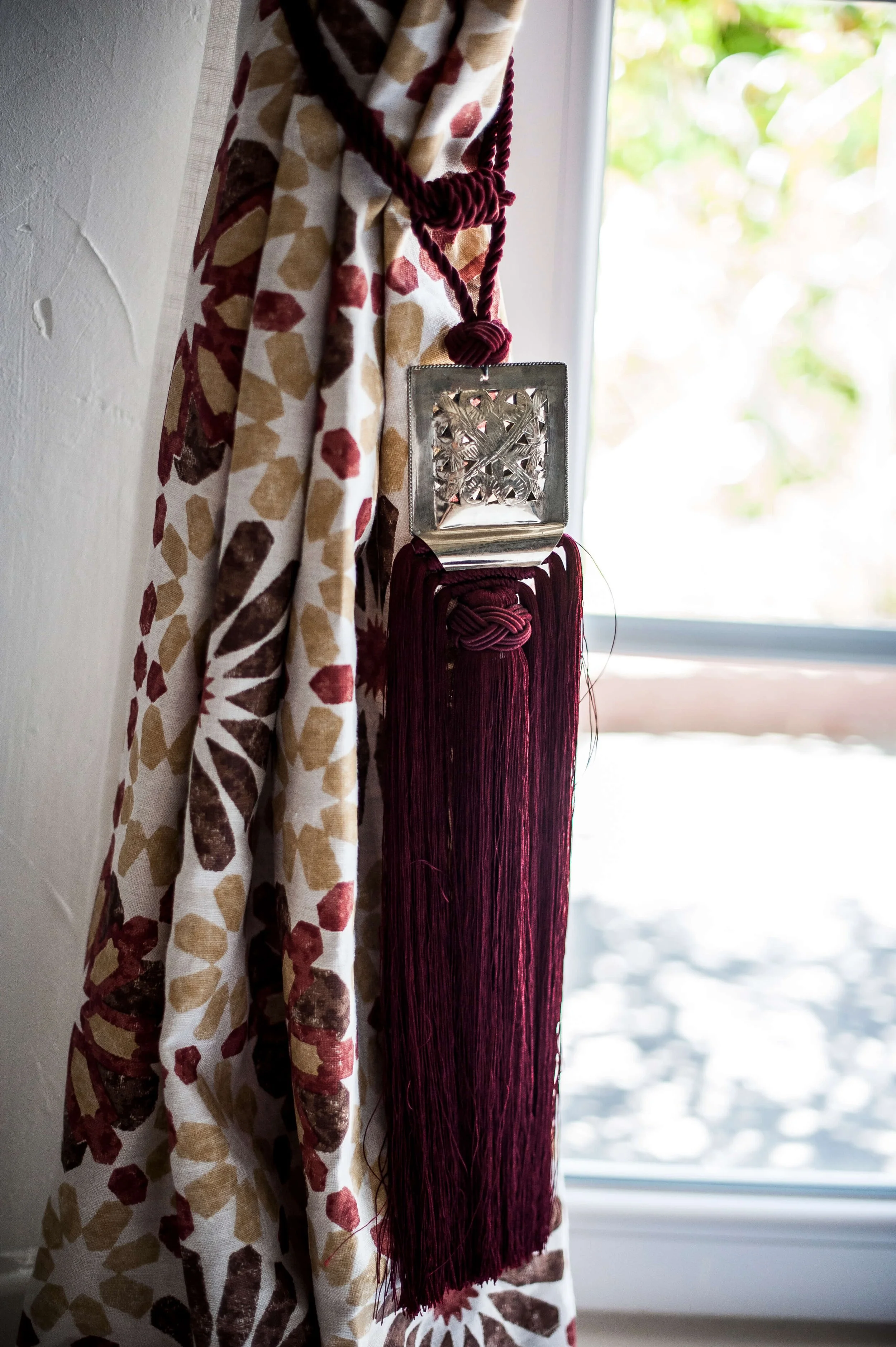
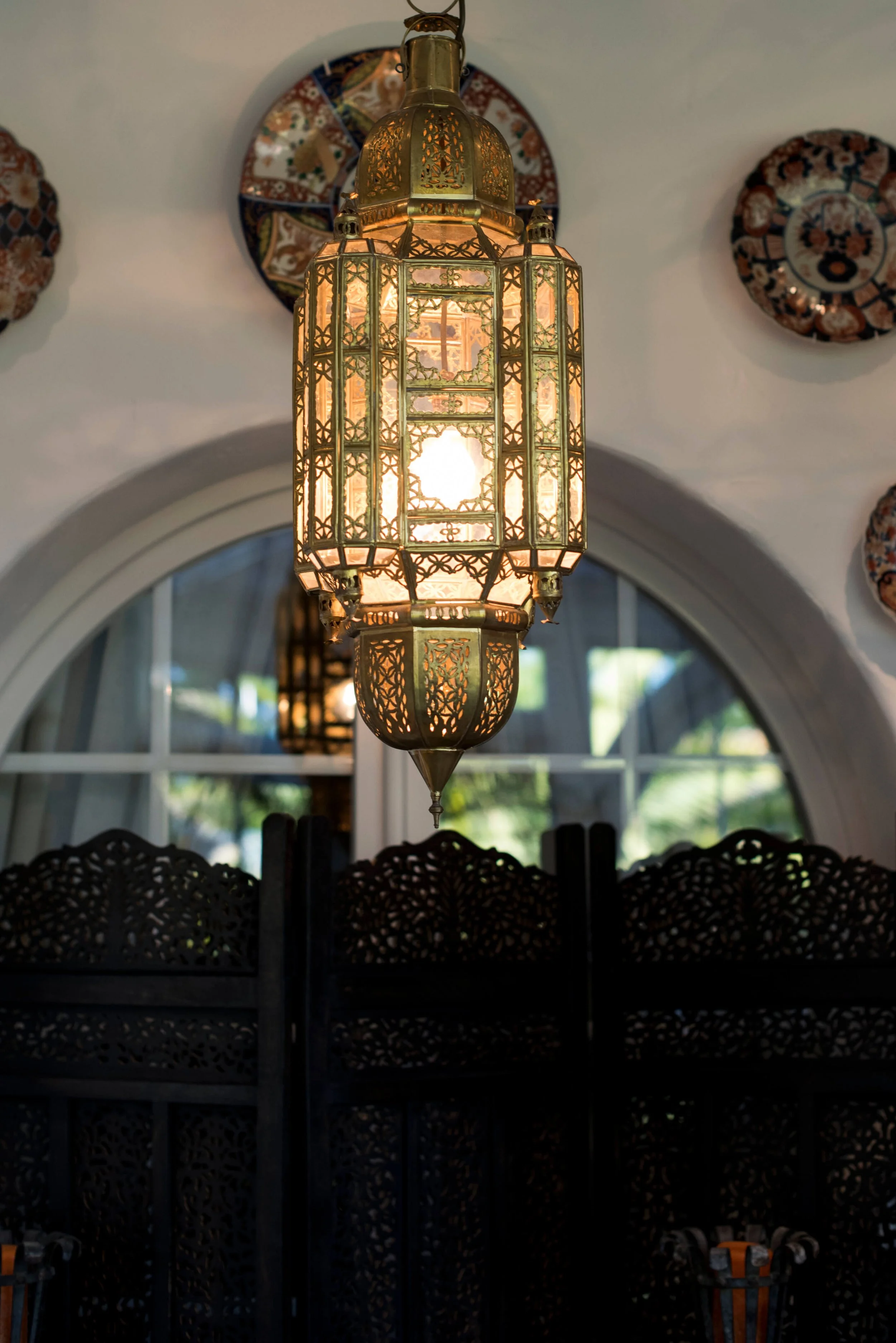
The chandelier was commissioned specifically for the room. Inside its metal structure, a rail allows fresh herbs to be hung to dry, a small, deliberately functional gesture that acknowledges what a working kitchen actually does. The room was then layered with vintage. Copper pots. Antique chopping boards. Old fruit crates. Heritage china. Moroccan tea sets. Reclaimed pendant lamps. Even the curtain fabric was a bespoke print run, dyed to the colours of the wider house. The result is a kitchen with the seriousness of a professional one and the soul of a kitchen that has been collected, family by family, across a hundred summers.
PATINA BY DESIGN
Patina cannot be bought. It can be planned.
The most demanding part of the brief was an editorial one: to design a house that did not look as though it had just been designed. Patina cannot be bought. It can, however, be planned for from the very first material decision. That is what every choice across the property had to answer to.
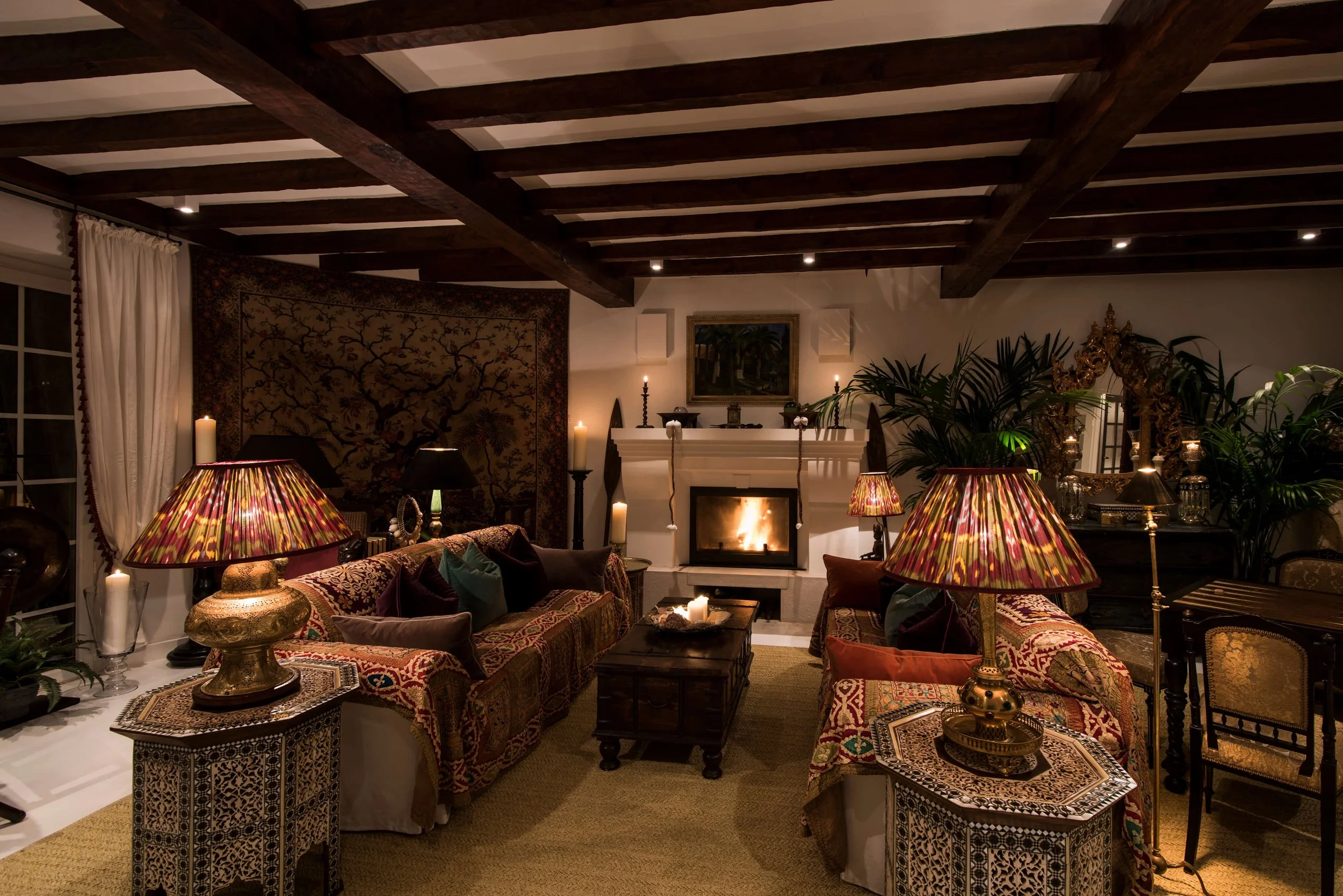
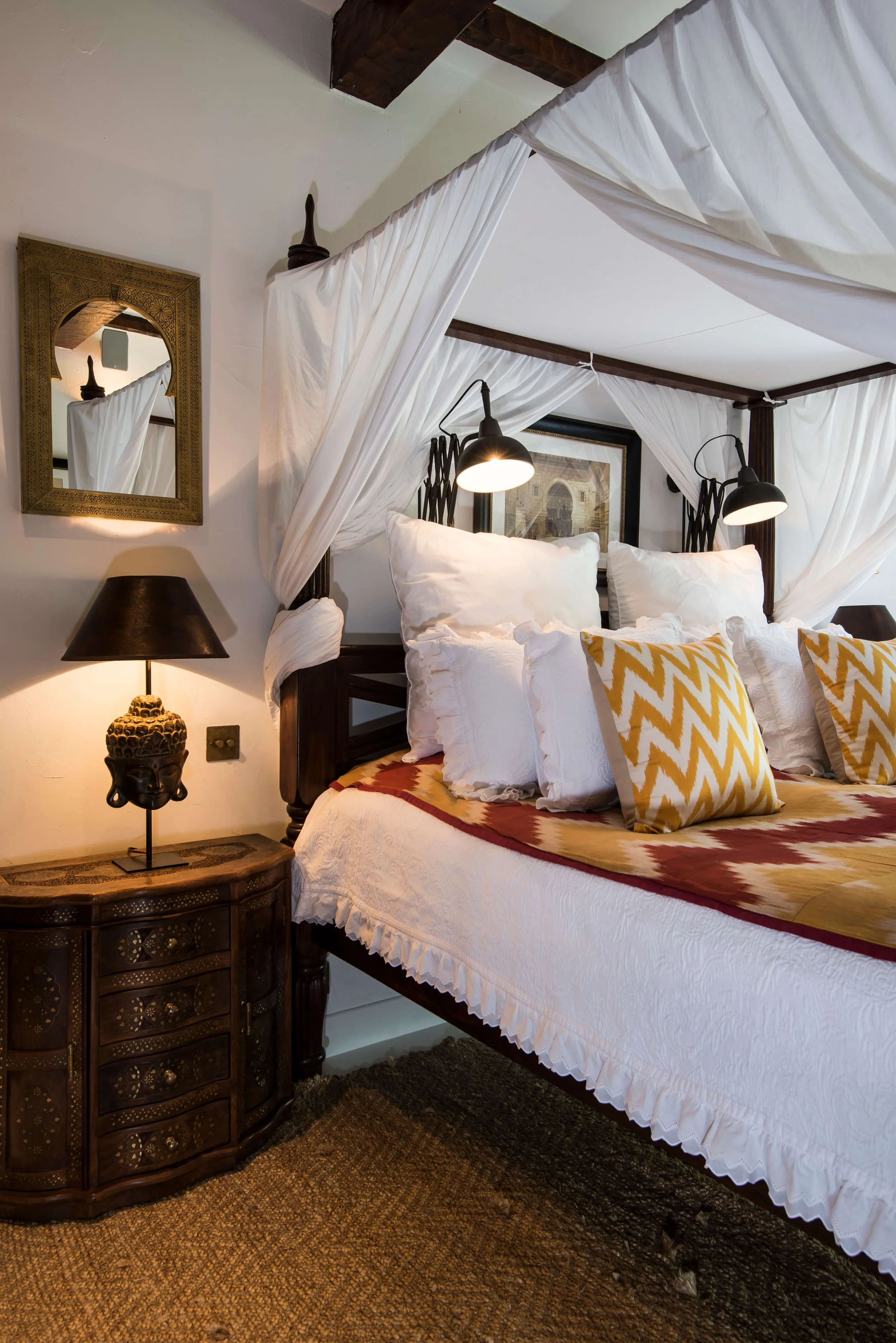
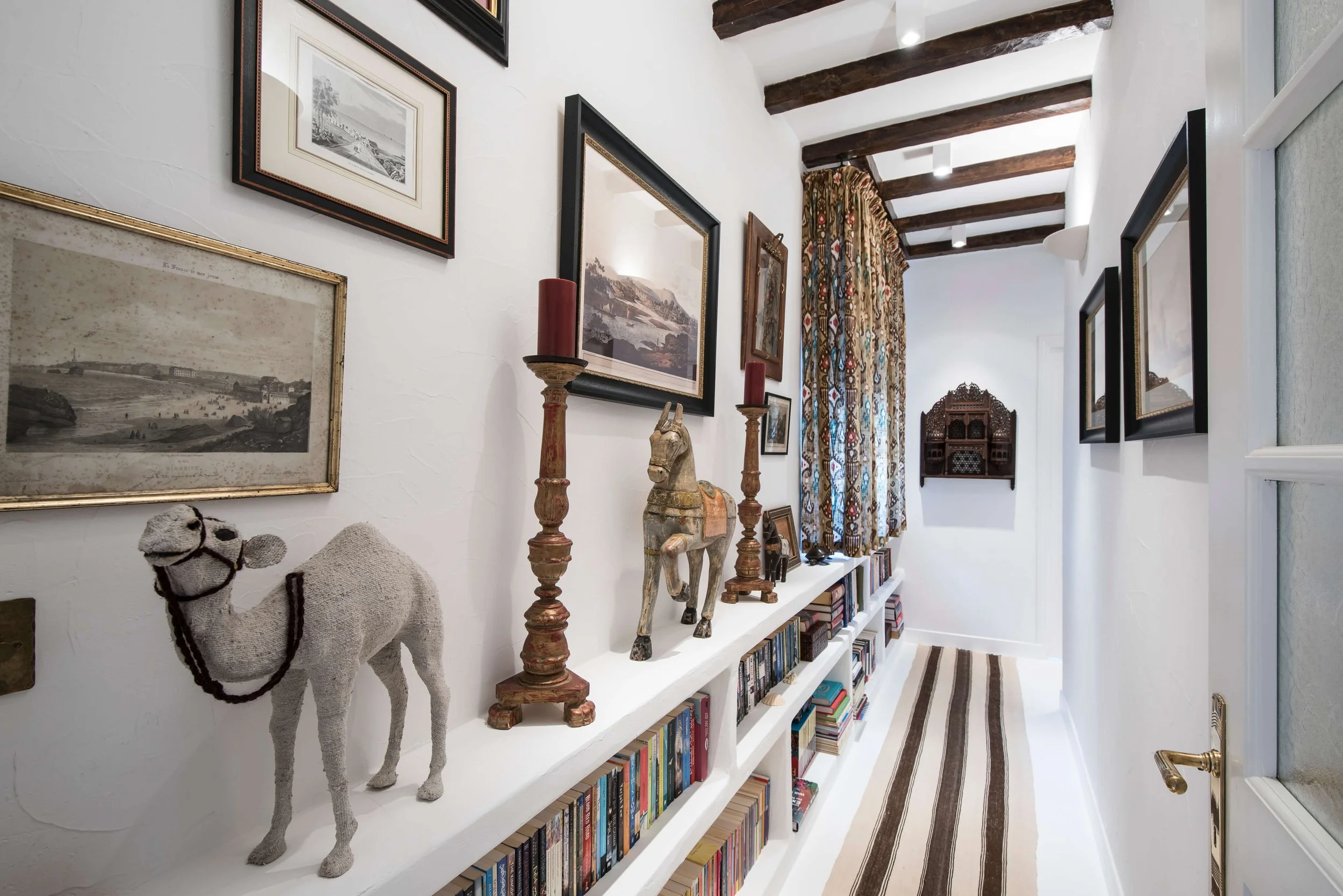
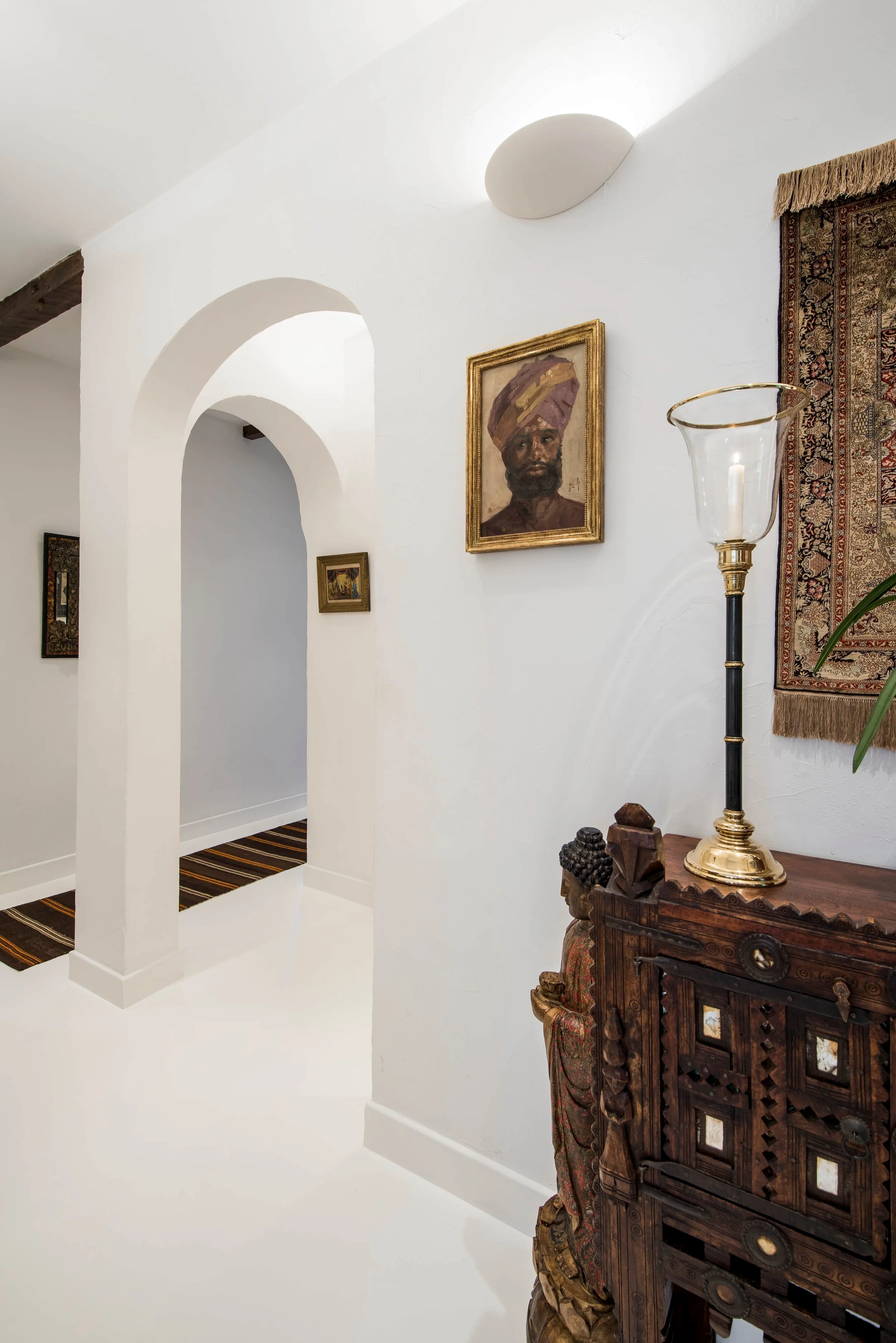
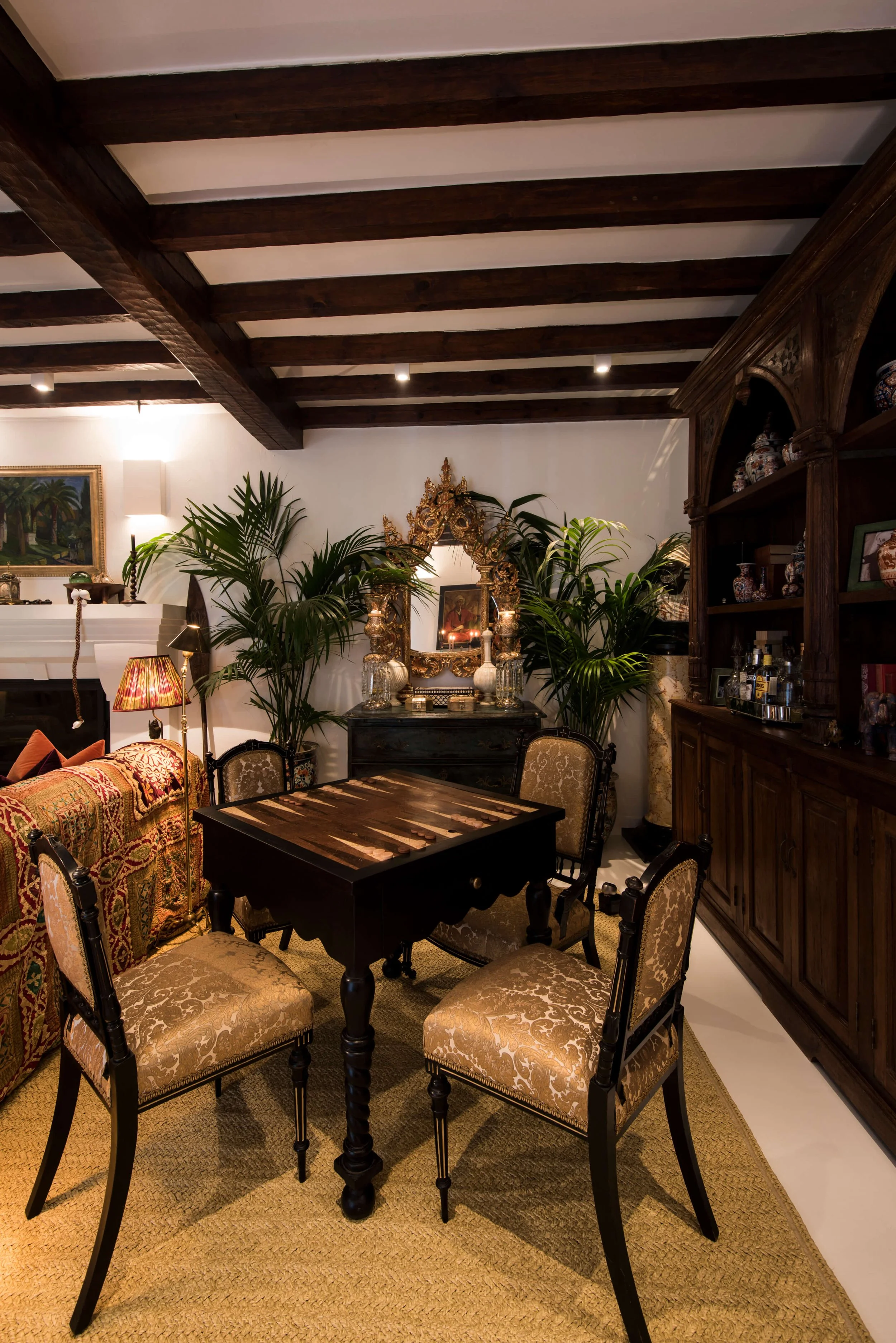
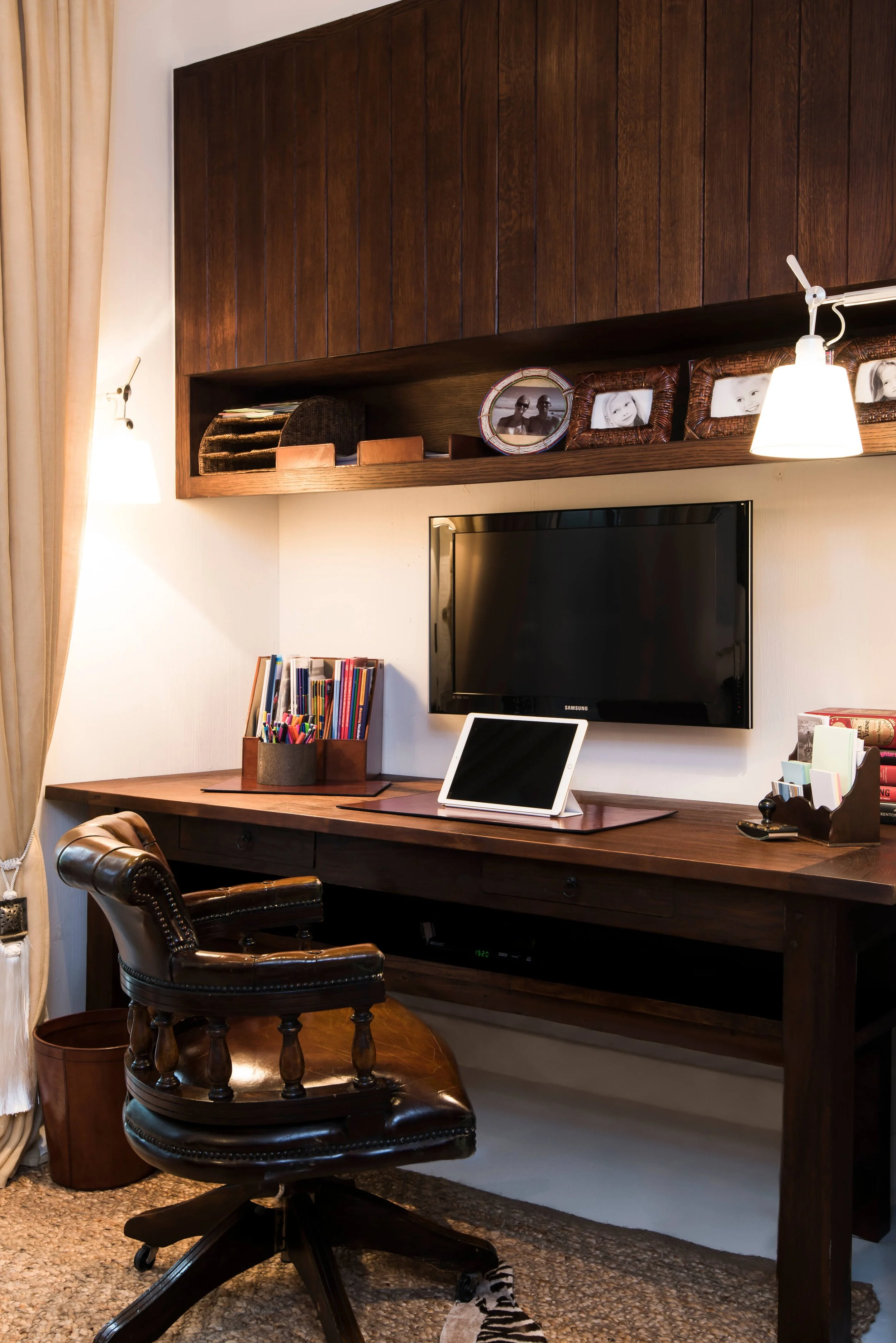
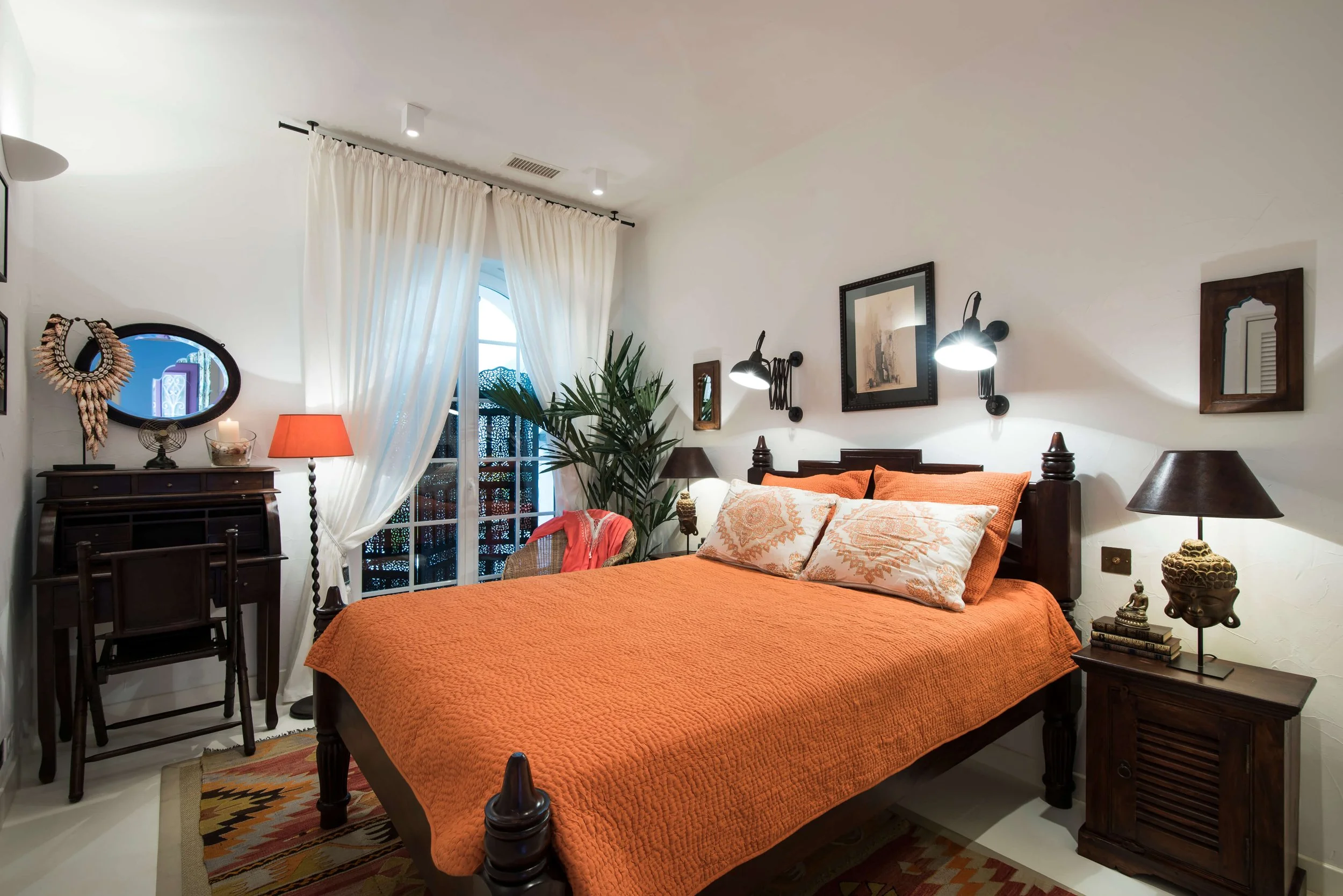
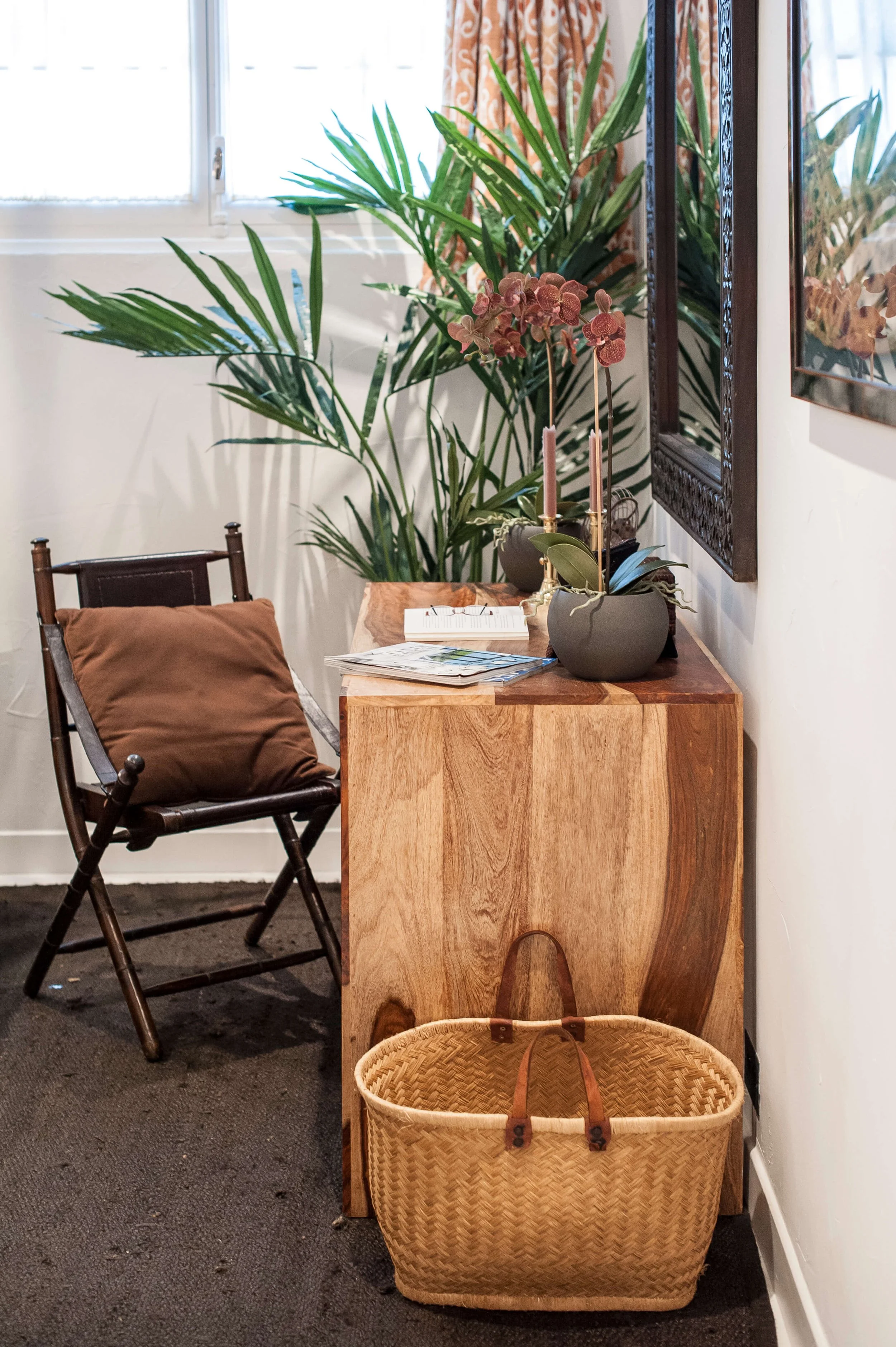
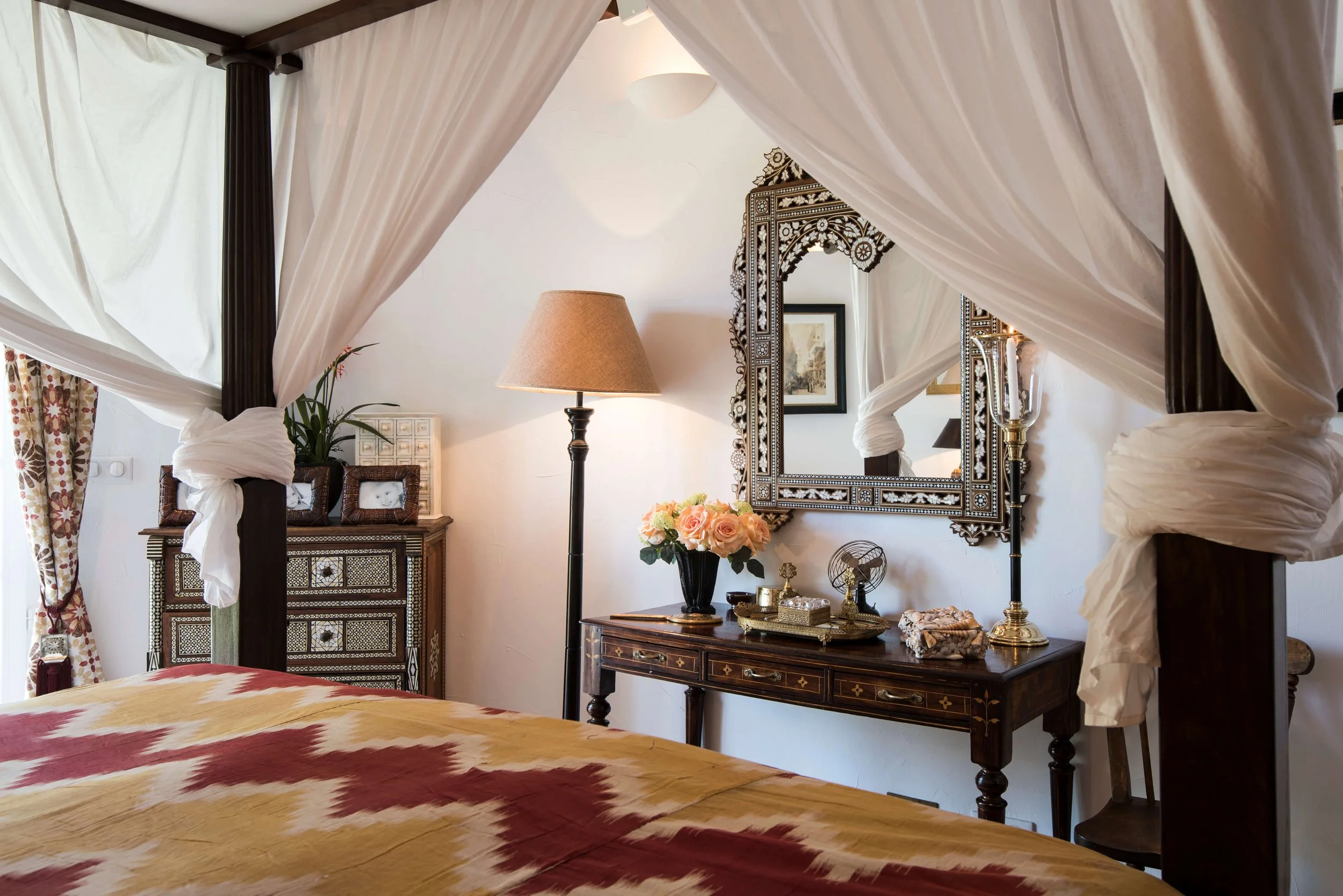
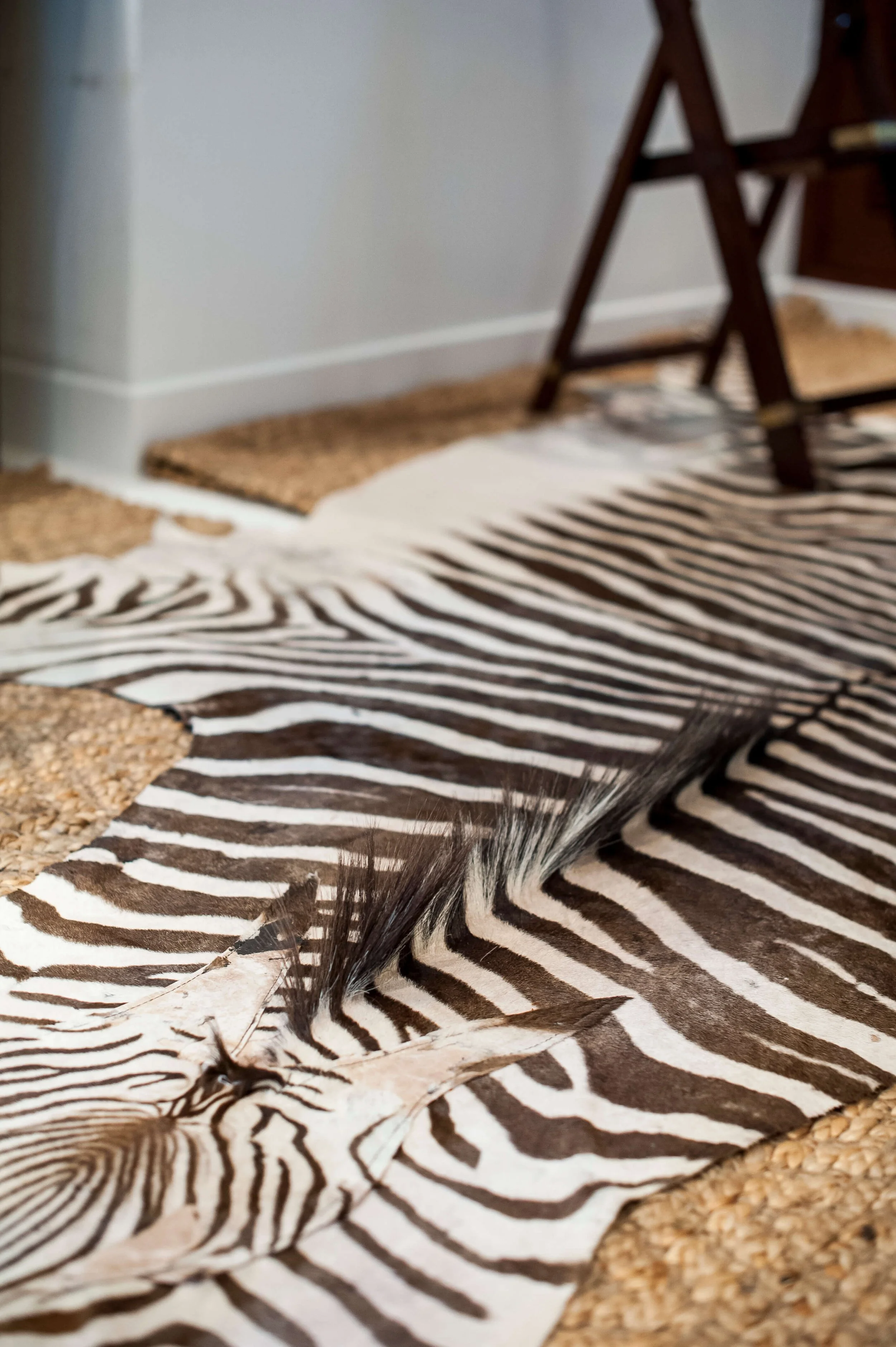
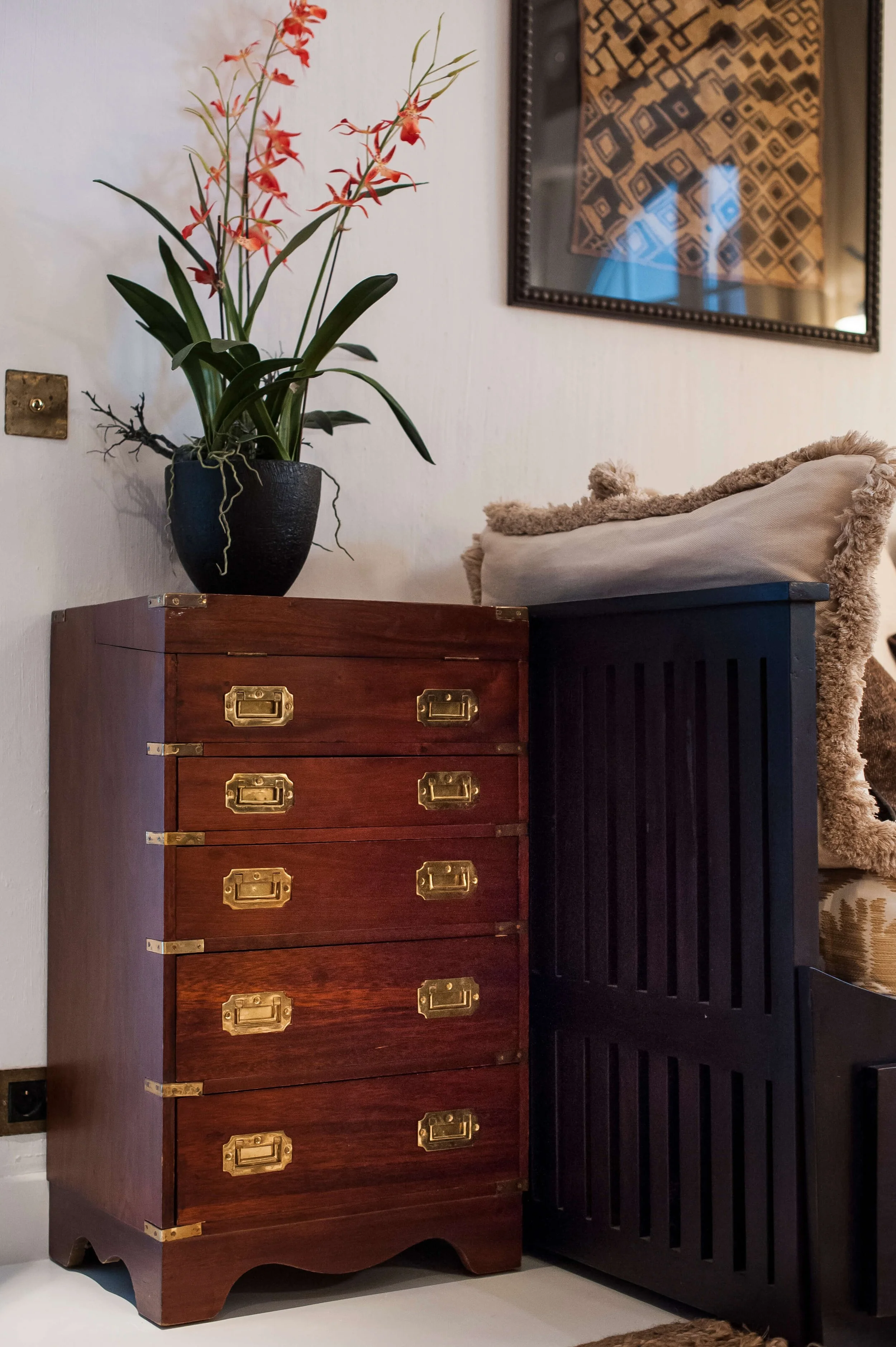
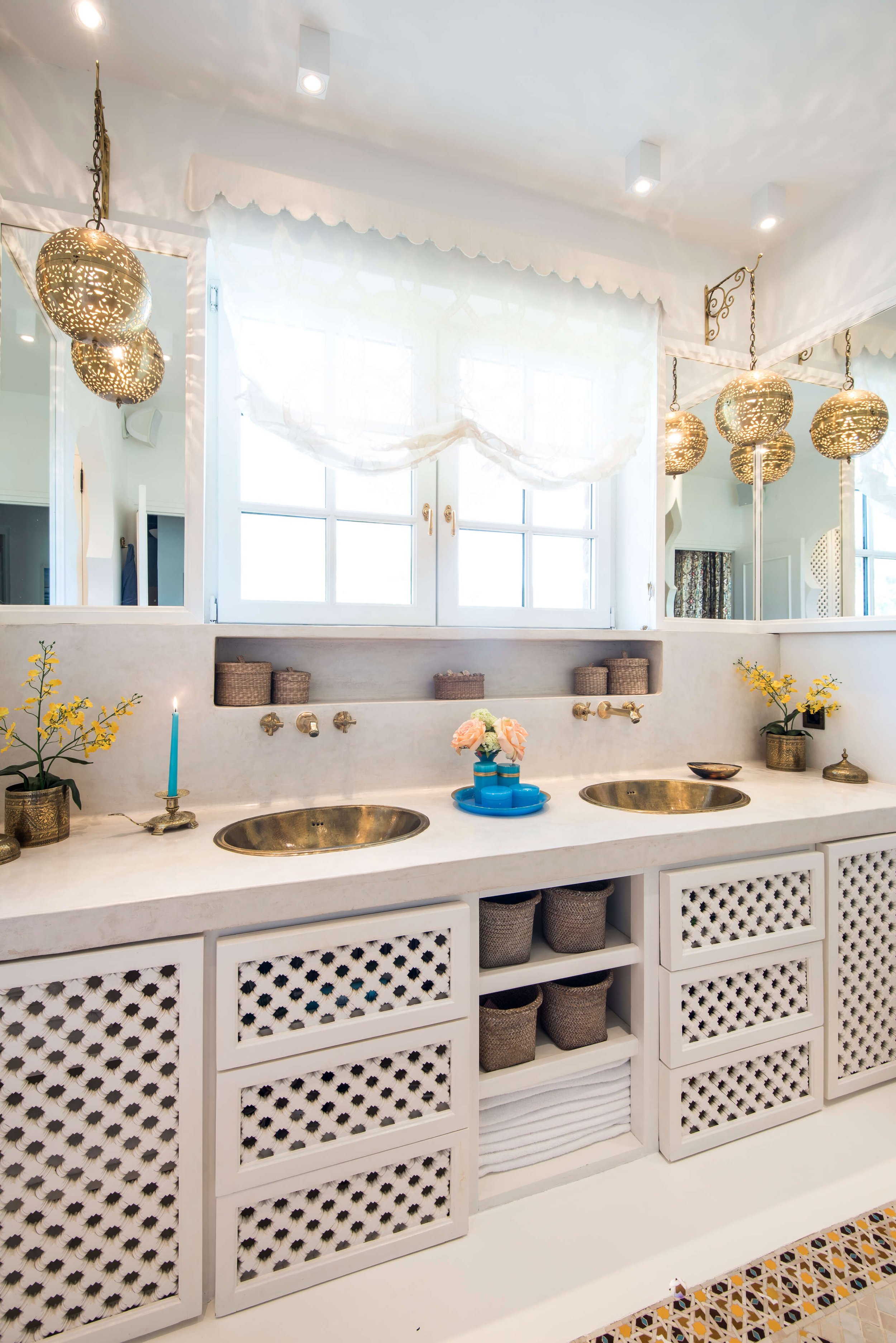
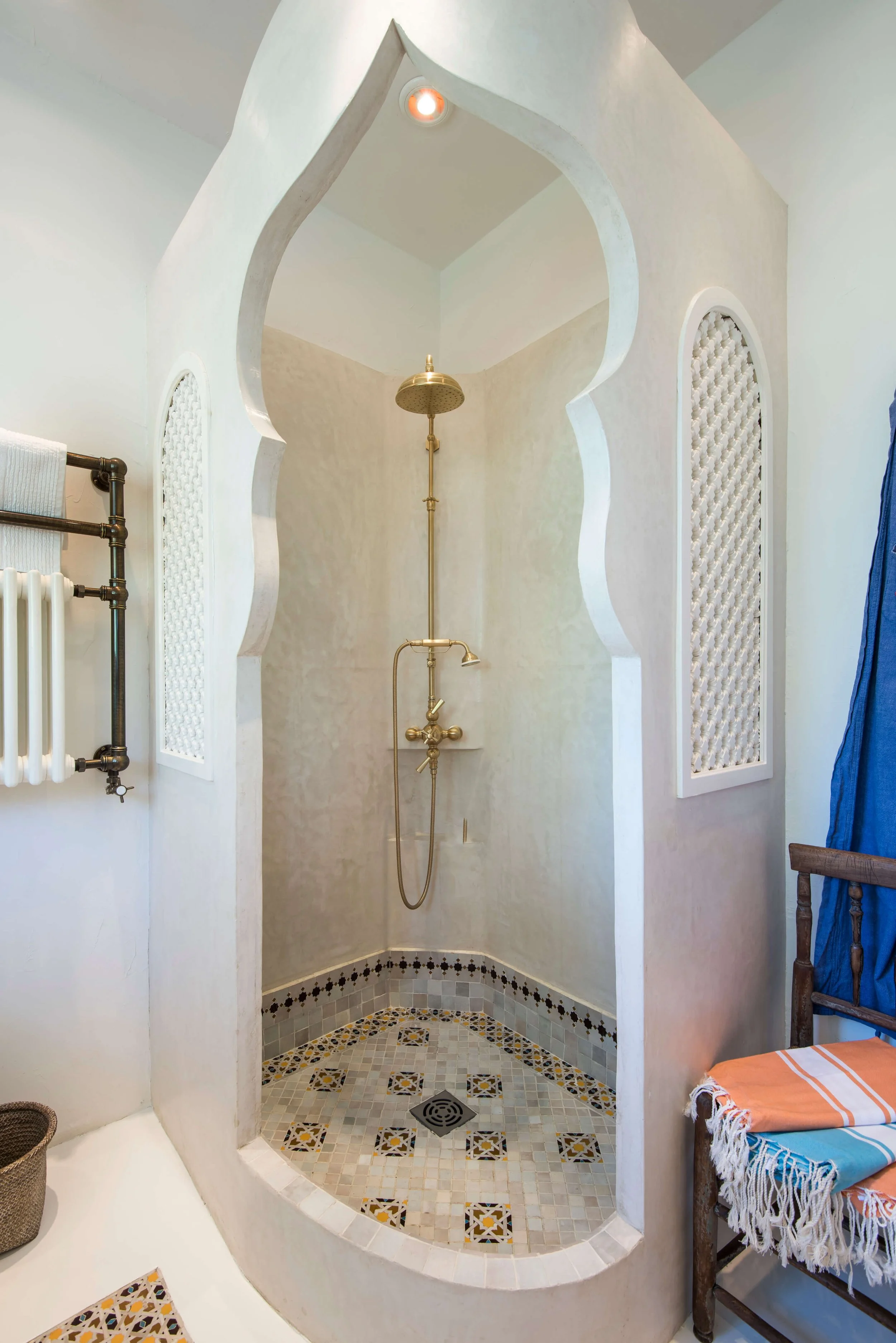
The floors are a mix of wide wooden boards, tumbled limestone and white-painted concrete, layered with rugs that soften the transitions between rooms. The walls were finished in lime wash with a deliberately rough textured effect. Corners, window reveals and door openings were rounded and shaped by hand rather than left geometrically sharp. The bathrooms were clad in a layered mineral palette: marble, pebbles, zellige imported from Morocco, tadelakt finished traditionally. The original ceiling beams were stained dark to work with the dark timber furniture sourced and commissioned for the rooms below them. The original fireplace was reclad in plaster moulding to give it a wholly different presence in the room.
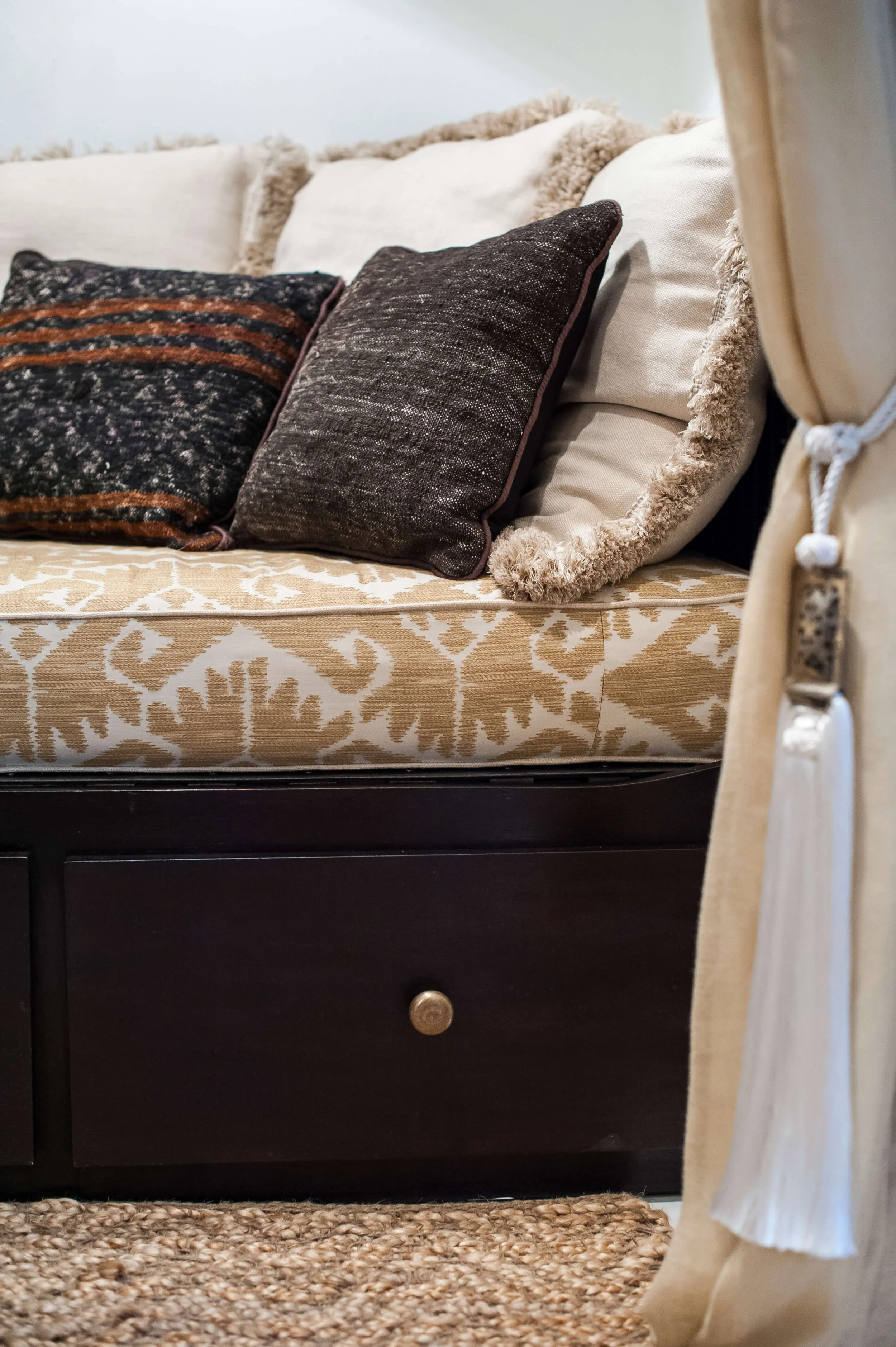
The colour story runs through everything. A faded, slightly dusty red by Farrow and Ball was selected for the exterior woodwork and woven through the interior as a thread, appearing in fabrics, in the lining of curtains, in the painted edges of cabinetry, in the warmth of certain rugs. Around it, a wider palette of oranges, deep purples, dark woods and aged whites builds up the layered atmosphere the brief asked for. The intent throughout was that the colours should feel as though they had faded to that point over decades, not been chosen yesterday.
COLLECTED AND COMMISSIONED
Found where possible. Commissioned where not.
Sourcing one-off pieces is one of the signature skills of the studio, and on this project it became a discipline in its own right. We immersed ourselves in the literature of the British and French colonial periods in the Caribbean, Africa and Asia: the grand domestic interiors of India, Singapore, Morocco, Java, and beyond. From there, the work split into two streams.
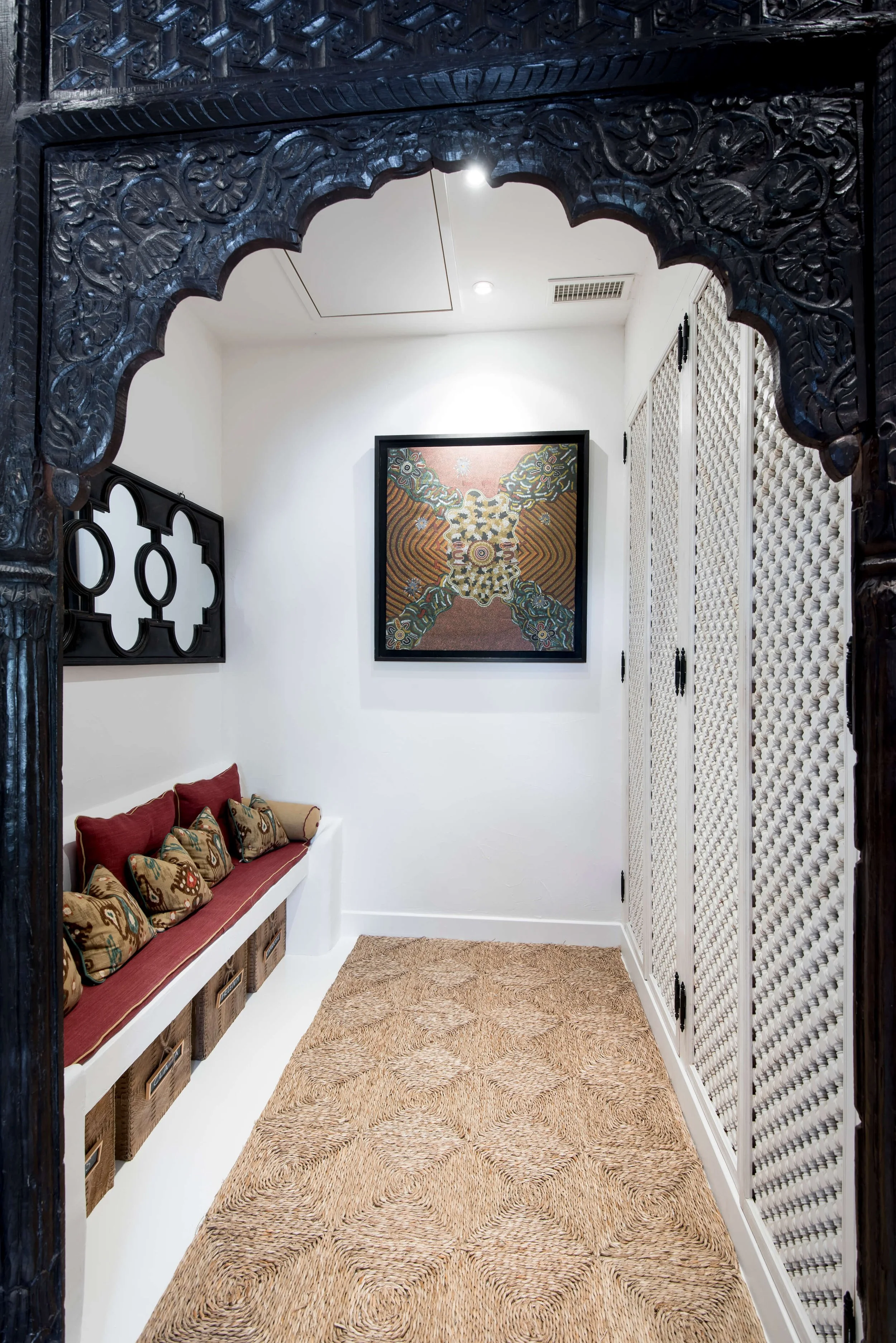
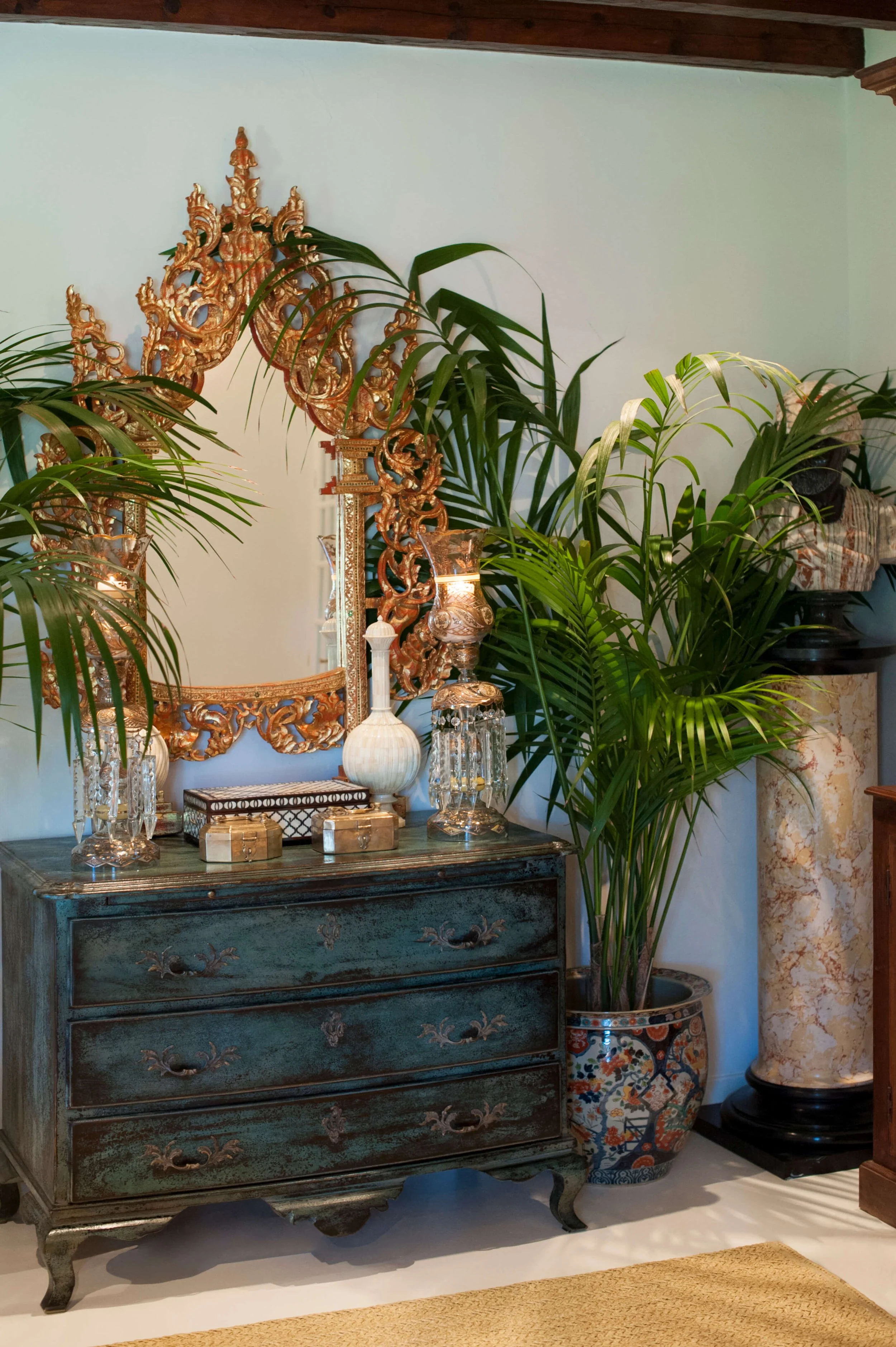
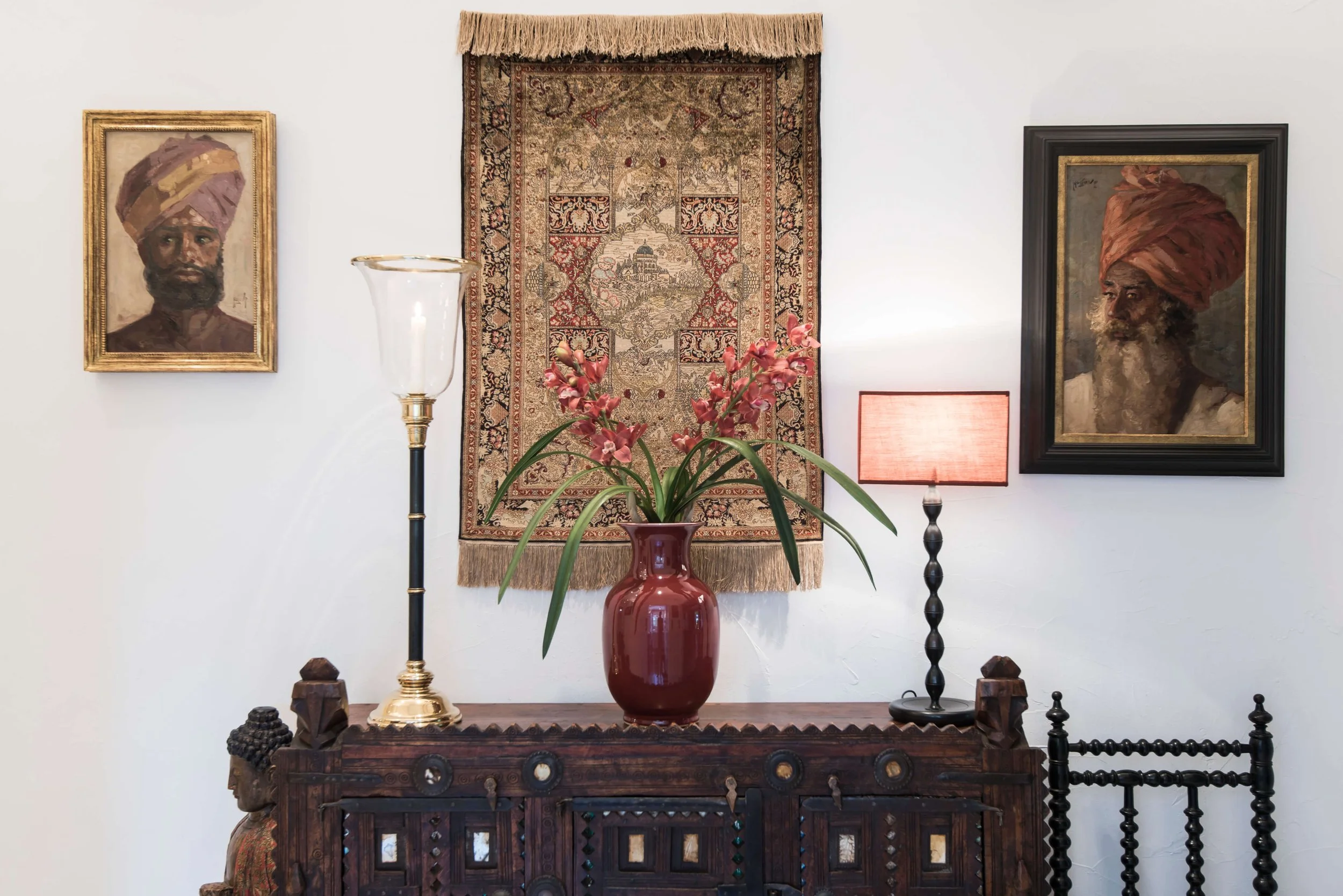
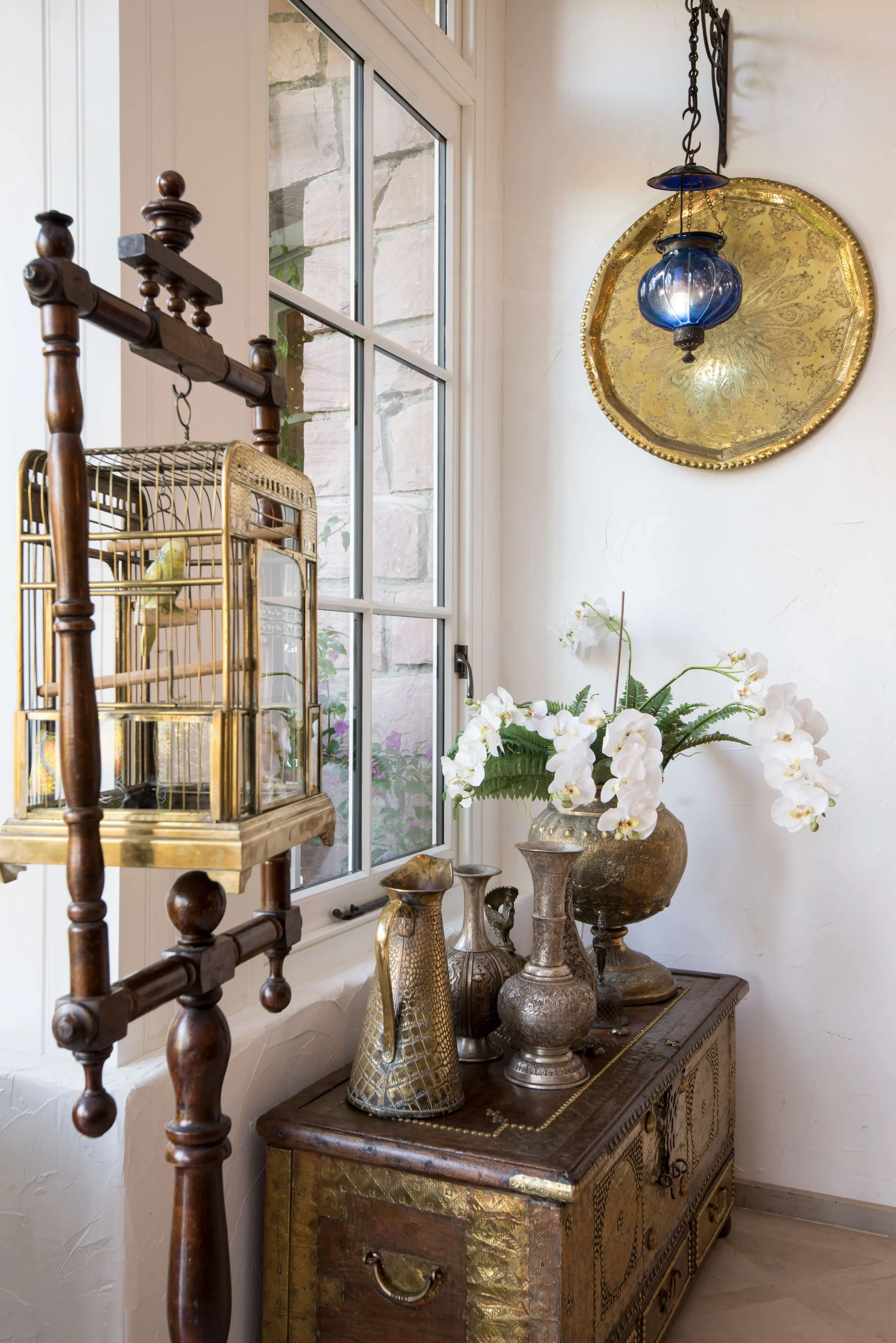
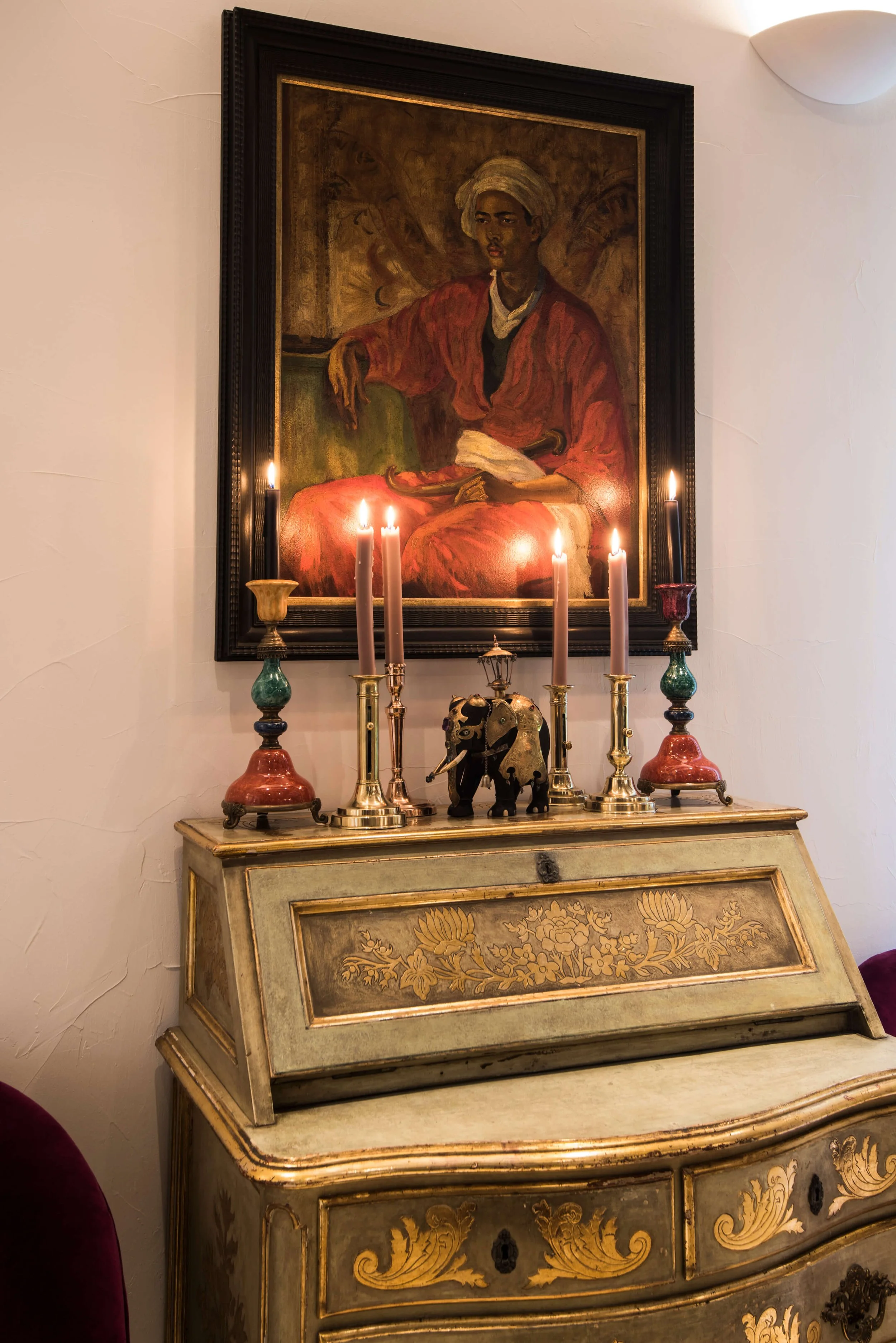
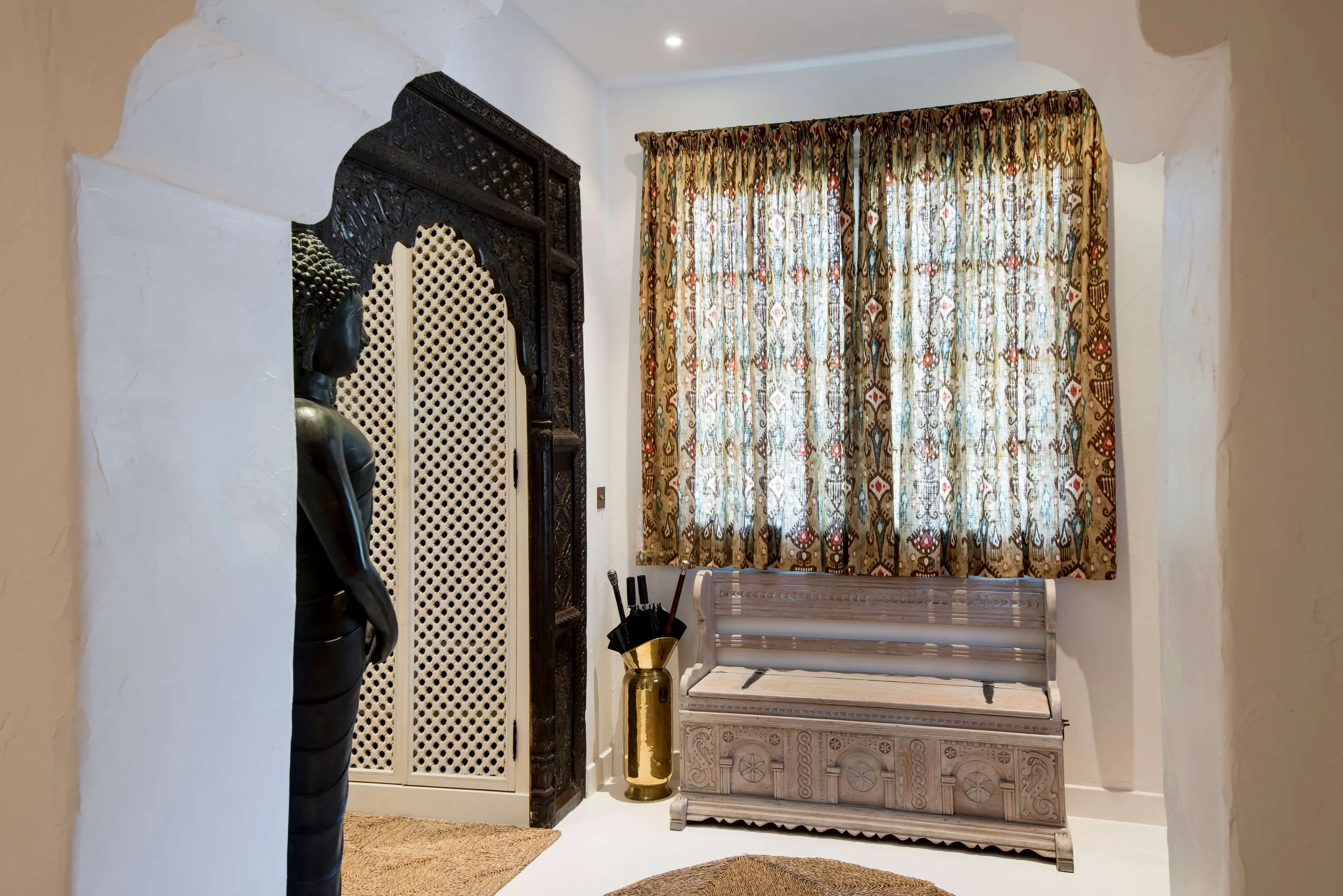
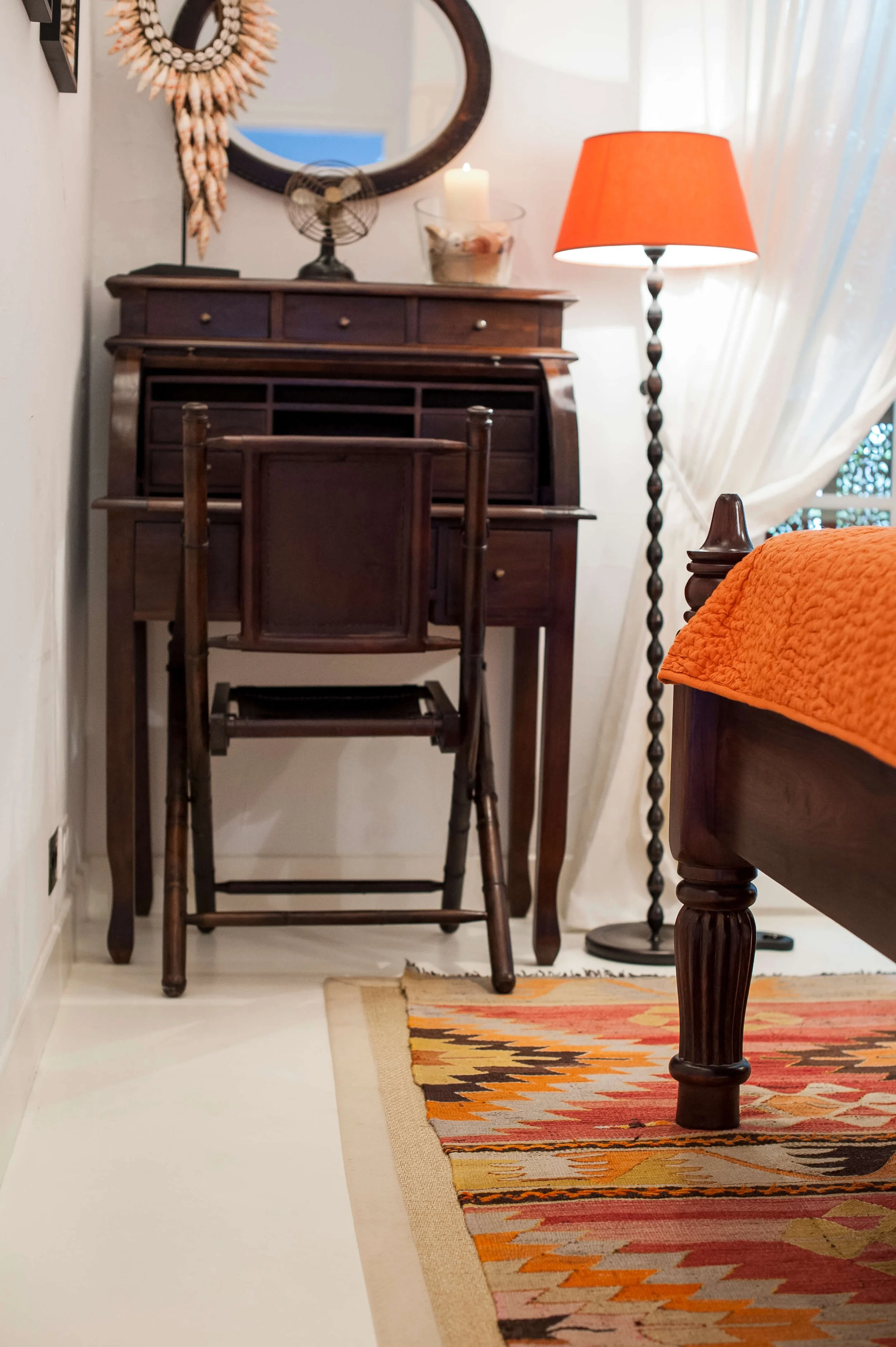
The first was hunting. We bought online and at auction. We travelled to source artworks, lamps, mirrors, rugs and architectural details that could not be found by any other route. Each piece that came into the house was assessed for fit and then often restored, polished, regilded, recovered or otherwise adapted to take its place in the wider scheme. The 18th-century block-printed tree-of-life that hangs on the curved sitting-room wall was painstakingly restored by Victoria and Albert Museum specialists. The teak slatted doors of the master suite wardrobes are reclaimed from a retired ocean liner, found because we knew where to look. The entrance portal of the house is a reclaimed window arch from a building in India.
The second stream was commissioning. Where the right piece could not be found, we worked with artisans across multiple countries to make it. The studio drew on a network built over many years of practice: joiners, metalworkers, ceramicists, embroiderers, fabric houses. We commissioned furniture, lighting, hardware and decorative pieces designed specifically for this house. The dresser, the sofa-bed, much of the bespoke joinery, all conceived as responses to particular rooms, made one-off, finished as if they had always belonged there.
This is the work that gives a house its soul. It is also, incidentally, the work that makes a house genuinely sustainable. Every antique brought into the estate is one piece of furniture that did not need to be made from new resources. Every reclaimed door, arch or beam carries decades of life into the next century. The house is full of objects that have already lived several lives. They will live several more here.
“The brief was for a house that does not look as though it has just been designed. A summer estate that feels inherited rather than built — already at ease with itself by the time the family arrived for their first season.”

CITY
Urban Sophistication

Surf
Coastal Serenity

Ski
Alpine Craft
Every home begins with a conversation.
Every project begins with a conversation.
If you are considering a home and would like to talk through your ideas, we would be glad to hear from you.