
Scandinavian Serenity
Interior architecture
Surf | Danish Coast, Denmark

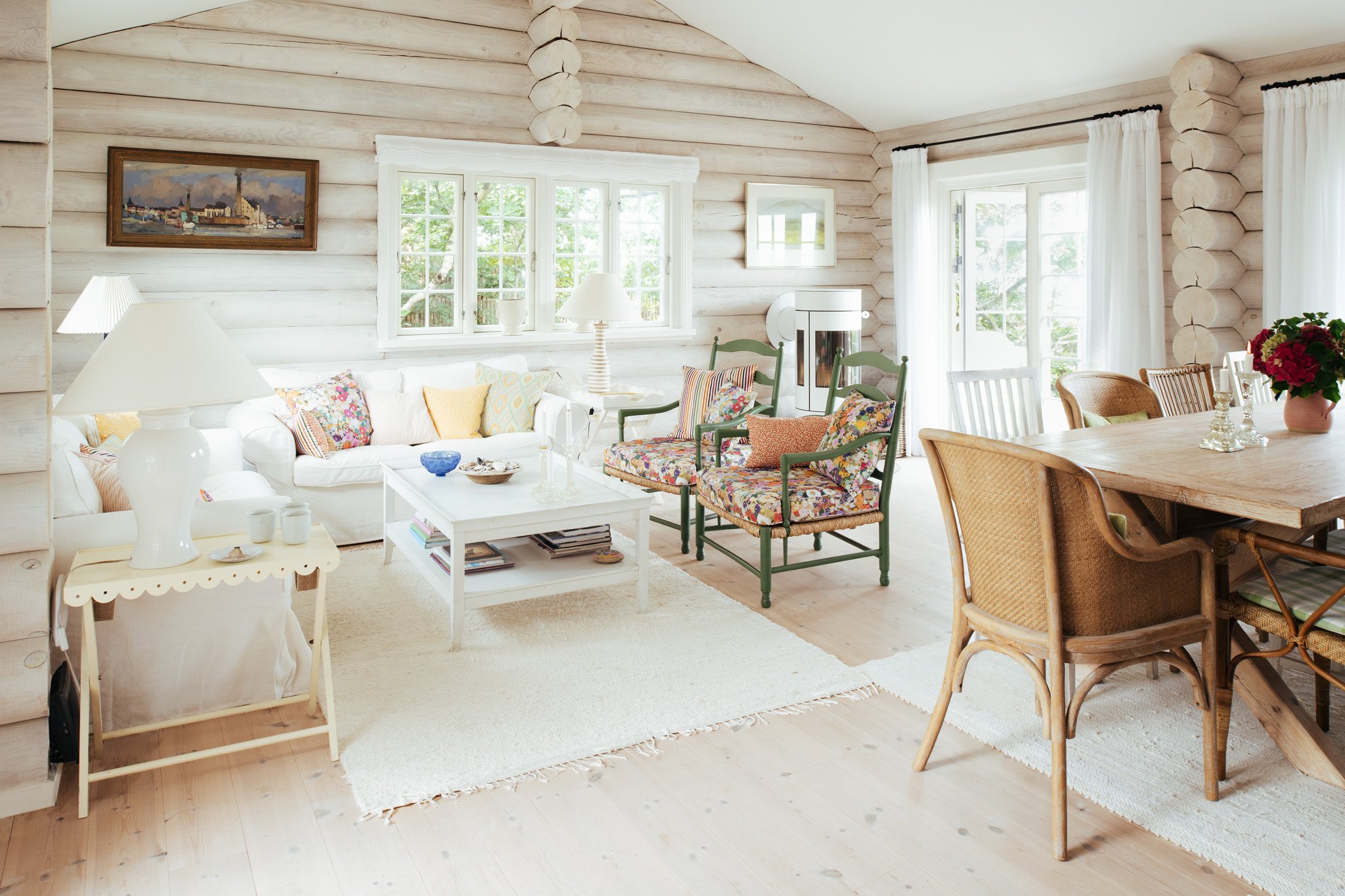
A 1960s Danish coastal cabin, restyled for a new generation within its original walls, anchored by the discipline of Nordic light.
LOCATION: Danish Coast, Denmark
PROJECT TYPE: Complete interior architecture
SCOPE: Interior Design · Spatial Planning · Bespoke Joinery (Library, Wardrobes, Headboards, WFH Station) · Lighting Design · Window Treatments · Furniture Reupholstery · Fabric Sourcing (Chelsea Harbour Design Centre) · Art and Antique Curation · Bathroom Restyling
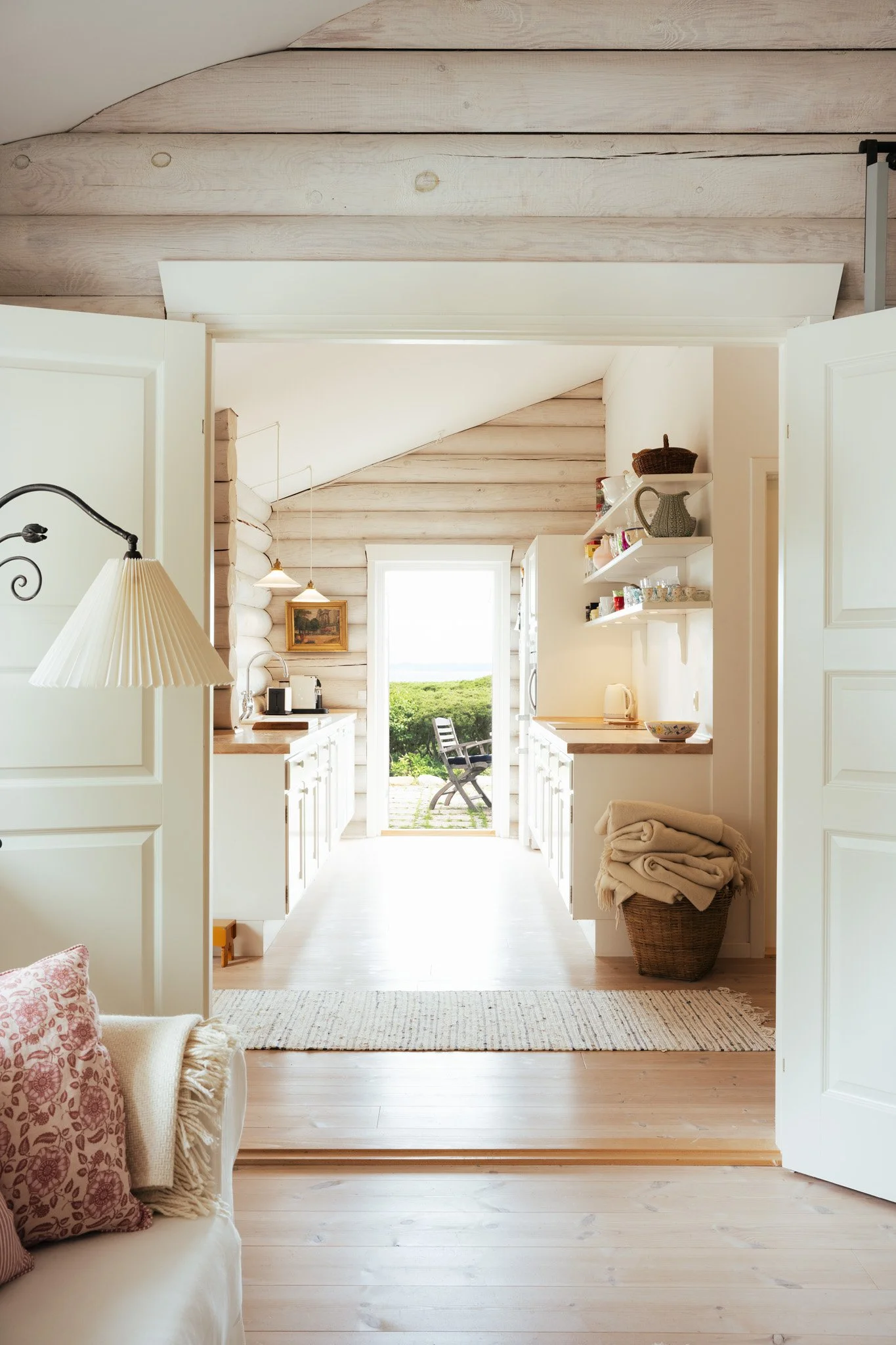
This summer villa sits on the Danish coast, a few steps from the sea, in one of the traditional coastal cabin villages that have defined northern European holiday life for generations. The house was built in the 1960s in the local log-cabin vernacular: interwoven notched corners, sloping roofs, the kind of cabin construction that the Danish coastline has refined over a century of summers. It had recently changed hands within the family, passing to the next generation.
An inherited summer house carries a particular kind of brief. The bones of the building are not in question. The memories the house holds for everyone who has spent a summer there are not in question. What changes is what the house needs to do for the next chapter of the family, and what the new generation feels strongly enough about to alter, and what they leave to settle quietly into its own continuity. These clients, for whom we had already worked in London, used the handover as the moment to undertake some architectural reconfiguration, add bedrooms, and entirely restyle the interiors. We were given a blank canvas to introduce bespoke joinery, lighting, fabrics and texture, and to curate existing pieces of art and antiques into a new conversation.
The discipline that ran through every decision was the light. Nordic summer light, even at its highest point, is not the light of the Mediterranean or the southwest of France. It is longer, lower, gentler, and it falls on a coastline whose colours are themselves cooler and softer than any southern coast. A summer house in Denmark cannot be decorated with the palette of a summer house in Mallorca. A scheme that ignores the light it is sitting in will feel wrong no matter how beautifully it is executed. That conviction was the editorial anchor of the project.
"We had worked with Claudia twice in London and fully trust her judgement, attention to details and immaculate sourcing skills. Travelling to the property together to review spatial planning, colours, fabrics and joinery designs made the process enjoyable and efficient."
—Client, Scandinavian Serenity, Danish Coast
THE BRIEF
What to keep. What to alter. What to leave alone.
An inherited summer house is a particular kind of brief, and one we treat with particular care. There are many memories to hold. Existing furniture, art, an existing relationship between the building and the village around it. What was needed was a refresh that would carry the house forward into a new generation of summers without erasing the previous ones. Reconfigure the layout where the family had outgrown it. Add the bedrooms the next generation needed. And then restyle and decorate everything inside the original walls, but lightly enough that the house still recognised itself.
The discovery process for this project ran in two directions. We needed to understand how they would use the house in their own way, and where the previous generation's preferences should give way to theirs. And we needed to understand the existing pieces, the art, the family vintage wicker, the antiques, well enough to know which ones to keep, which to recover, and which to recurate into different rooms entirely. The pieces a family inherits with a house are not always the pieces that belong in the house's next chapter. The studio's role was to know the difference, and to make those decisions in dialogue with the family rather than for them.
THE LIGHT, FIRST
Nordic, not Mediterranean.
Much work on overseas projects can be negotiated remotely, but some travel is non-negotiable. You have to feel the actual quality of the light: its angle, its warmth, its colour temperature, the way it falls across the timber walls of a cabin and the dunes beyond.
The light in this part of the world is unmistakable. Long, low, golden in the late evening, with a clarity that the Mediterranean does not have and a softness that southern coastlines never quite achieve. It falls on a landscape whose colours are themselves cooler: pale blues, soft greys, the bleached tones of dune grass, the silver-pink of timber that has weathered for sixty summers. Any scheme we proposed had to sit comfortably inside that palette and that light, not announce itself against them. The choice of paints, wallpapers and fabrics began from there. Anything richer would have read as borrowed from a different climate. Anything cooler would have felt austere in a house that was meant to feel like family.
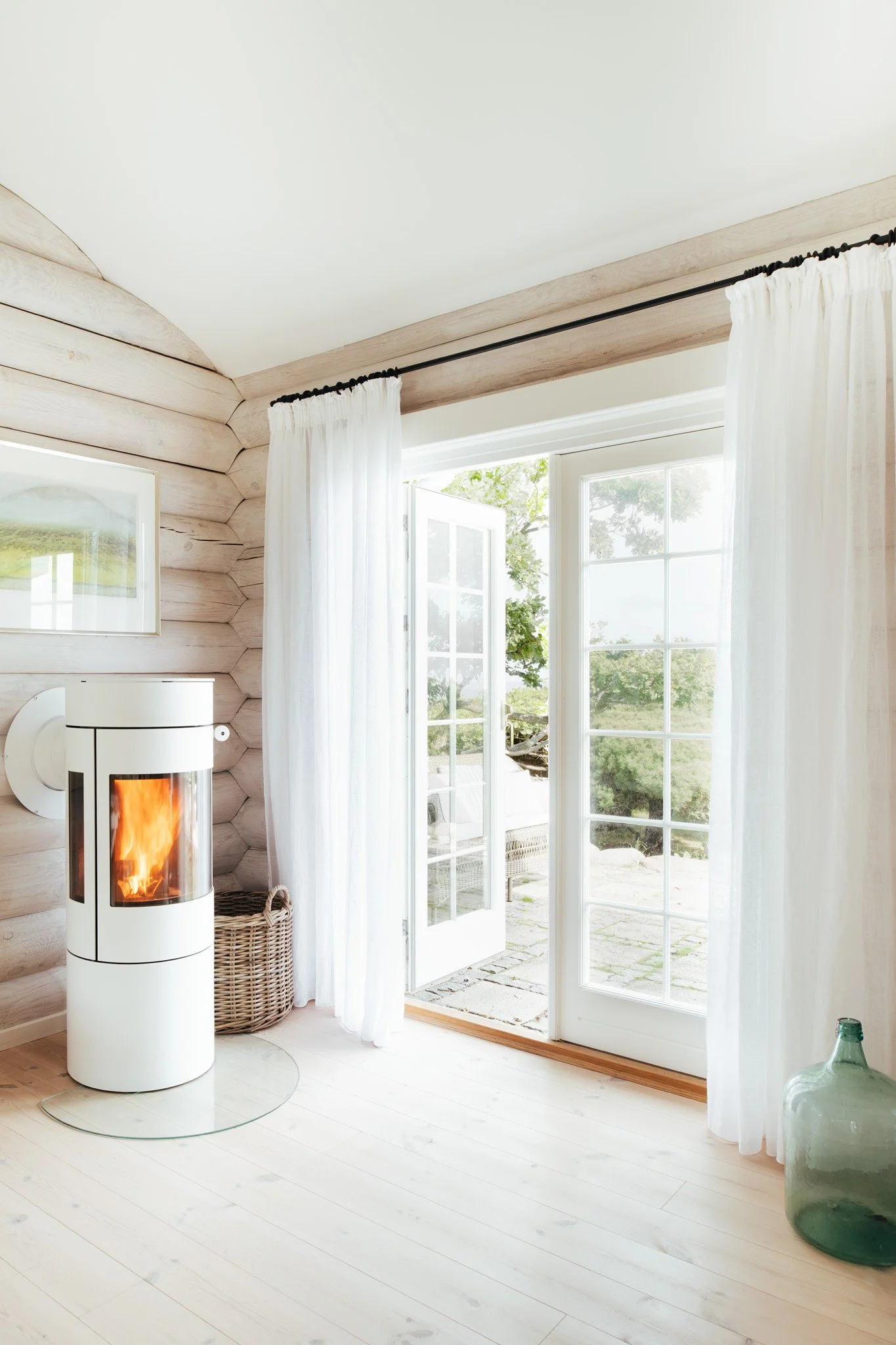
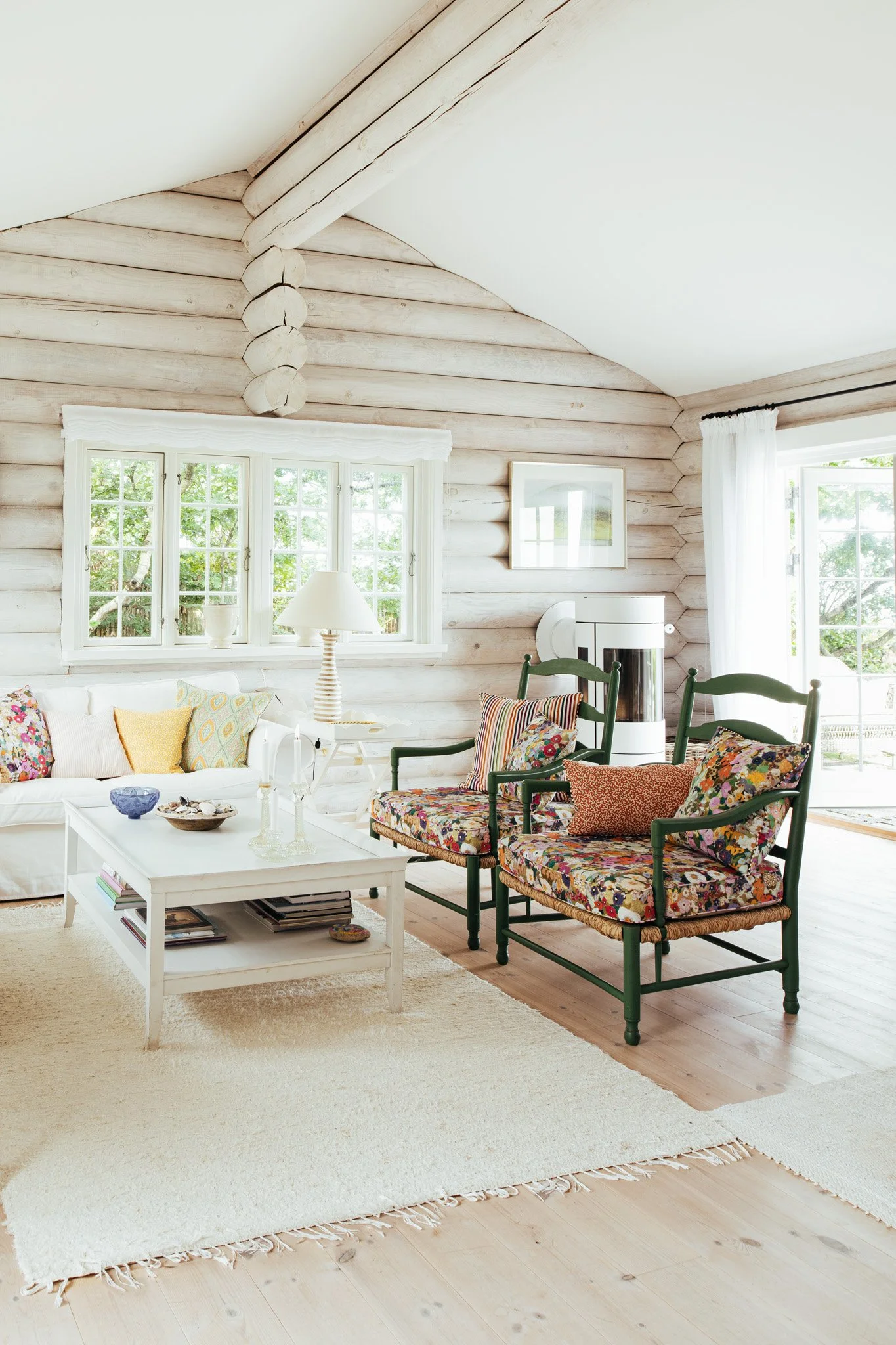
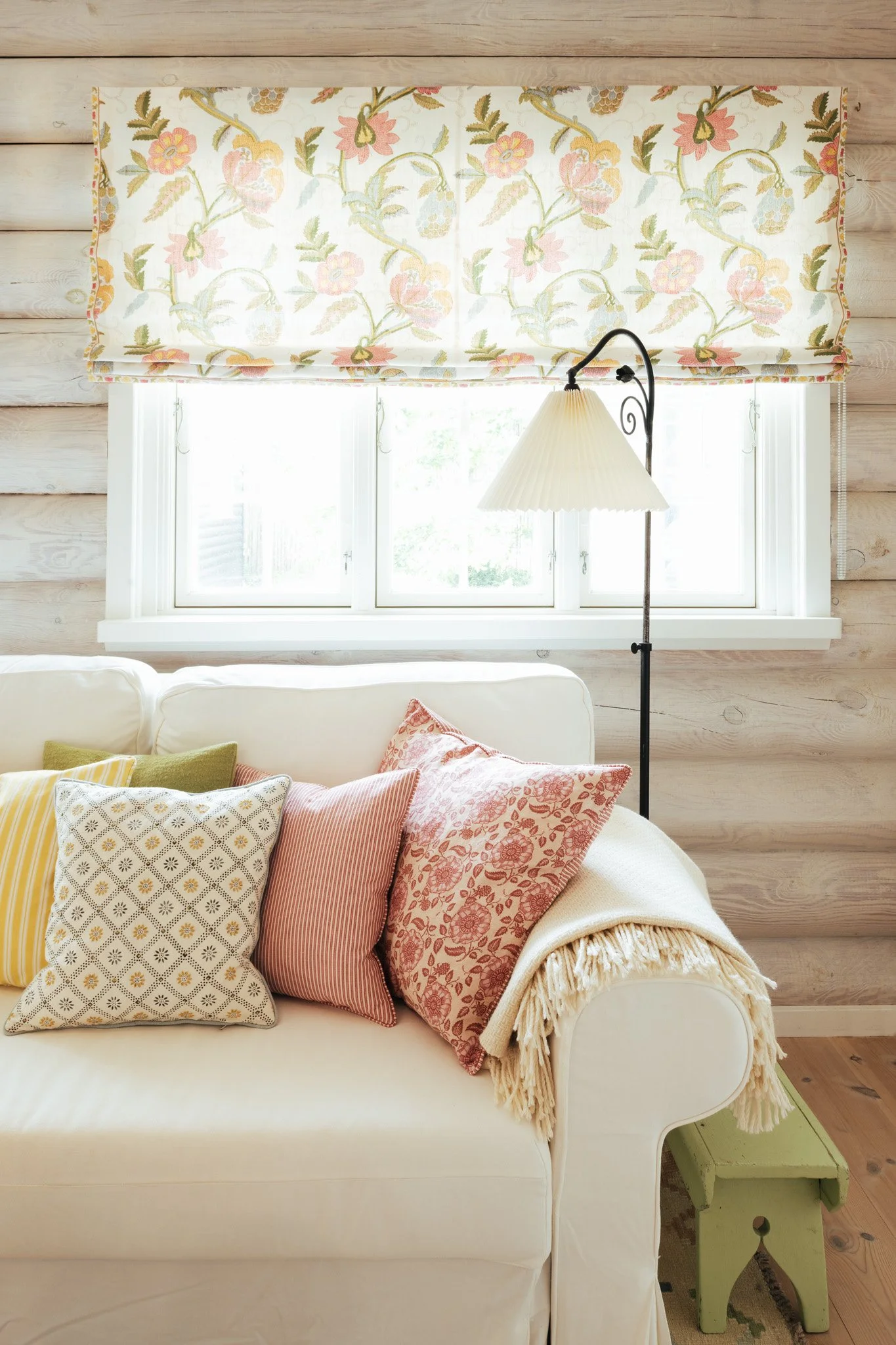
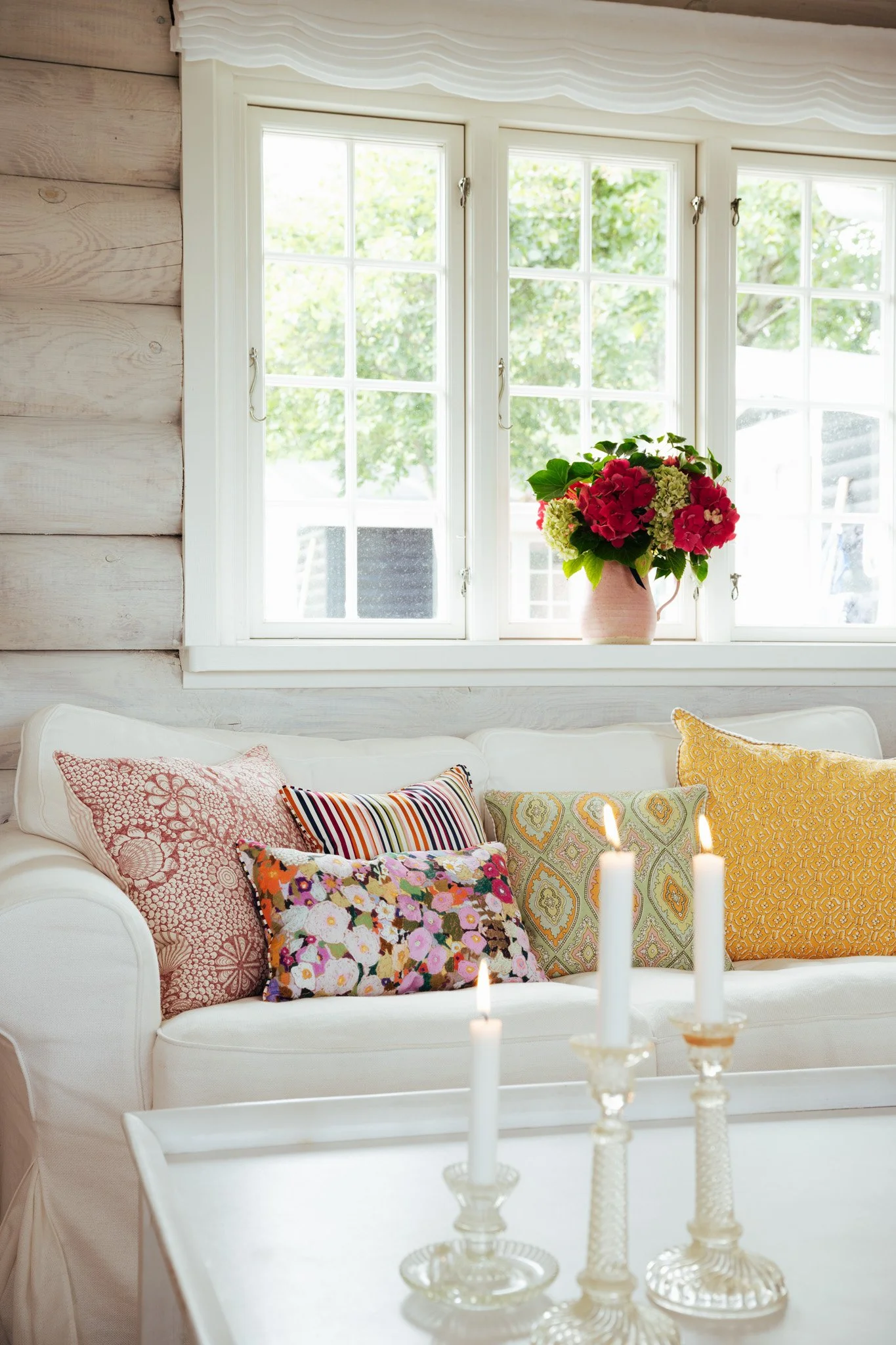
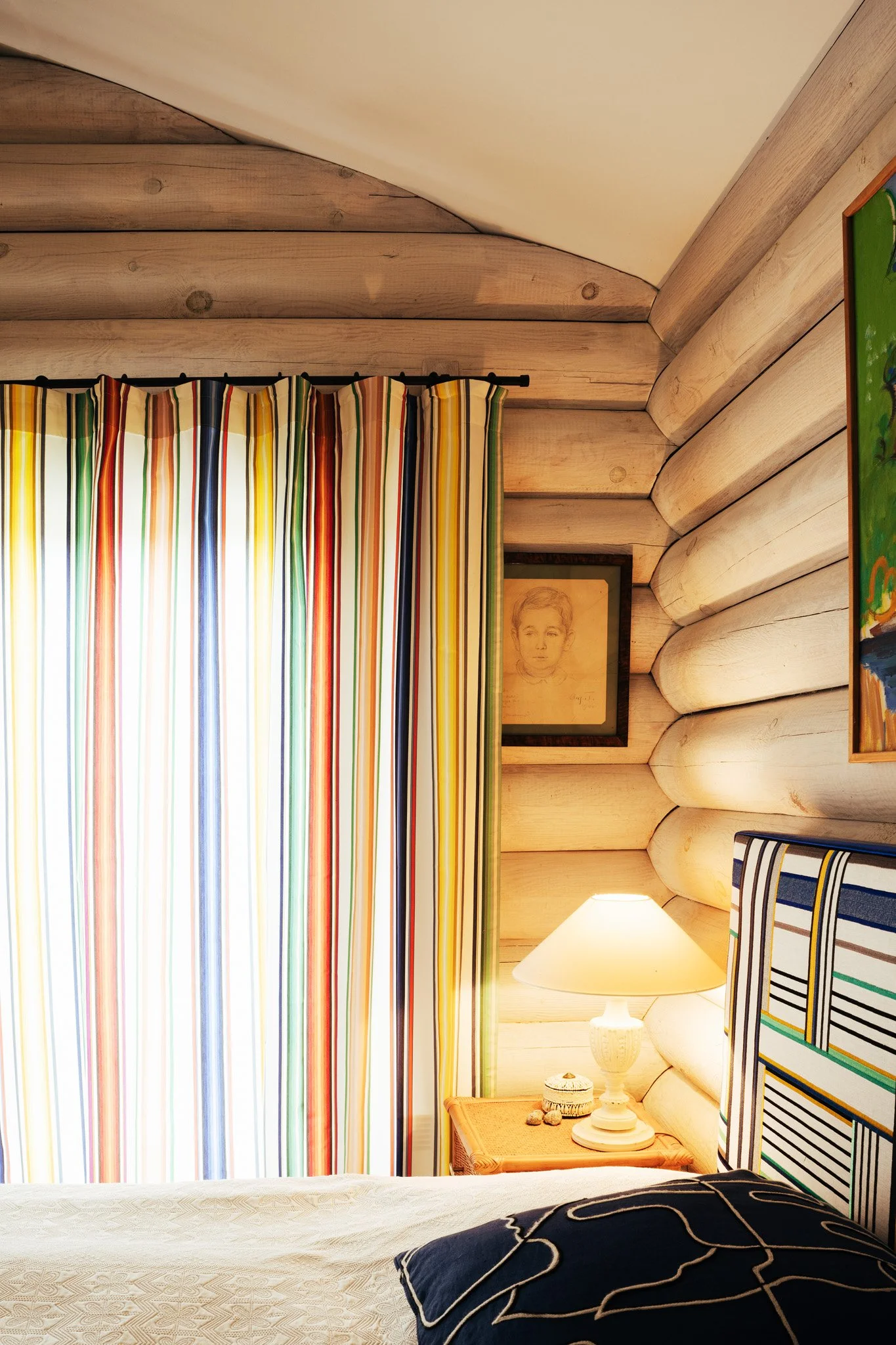
The window treatments throughout the house are the most direct expression of this discipline. We designed new curtains and blinds, made locally, deliberately unlined. Lining a curtain controls the light. That is exactly what you want in a southern summer house and exactly what you do not want in a Nordic one. Unlined linen lets the light through gently, glowing rather than blocking, so that the long evenings stay in the rooms as long as the sky allows.
JOINERY FOR A LOG CABIN
Drawn for the walls. Not fitted to them.
Cabin architecture has its own scale and its own challenges. The traditional Danish log construction, notched at the corners, the logs interwoven into self-supporting structural joints, produces rooms that are cosy by definition, and walls that are rarely flat or square. Standard furniture does not always fit. Conventional wardrobes and bookcases sit awkwardly against logs that step in and out by an inch every metre. The architectural character that makes a log cabin distinctive is also the architectural character that makes large-scale storage difficult.
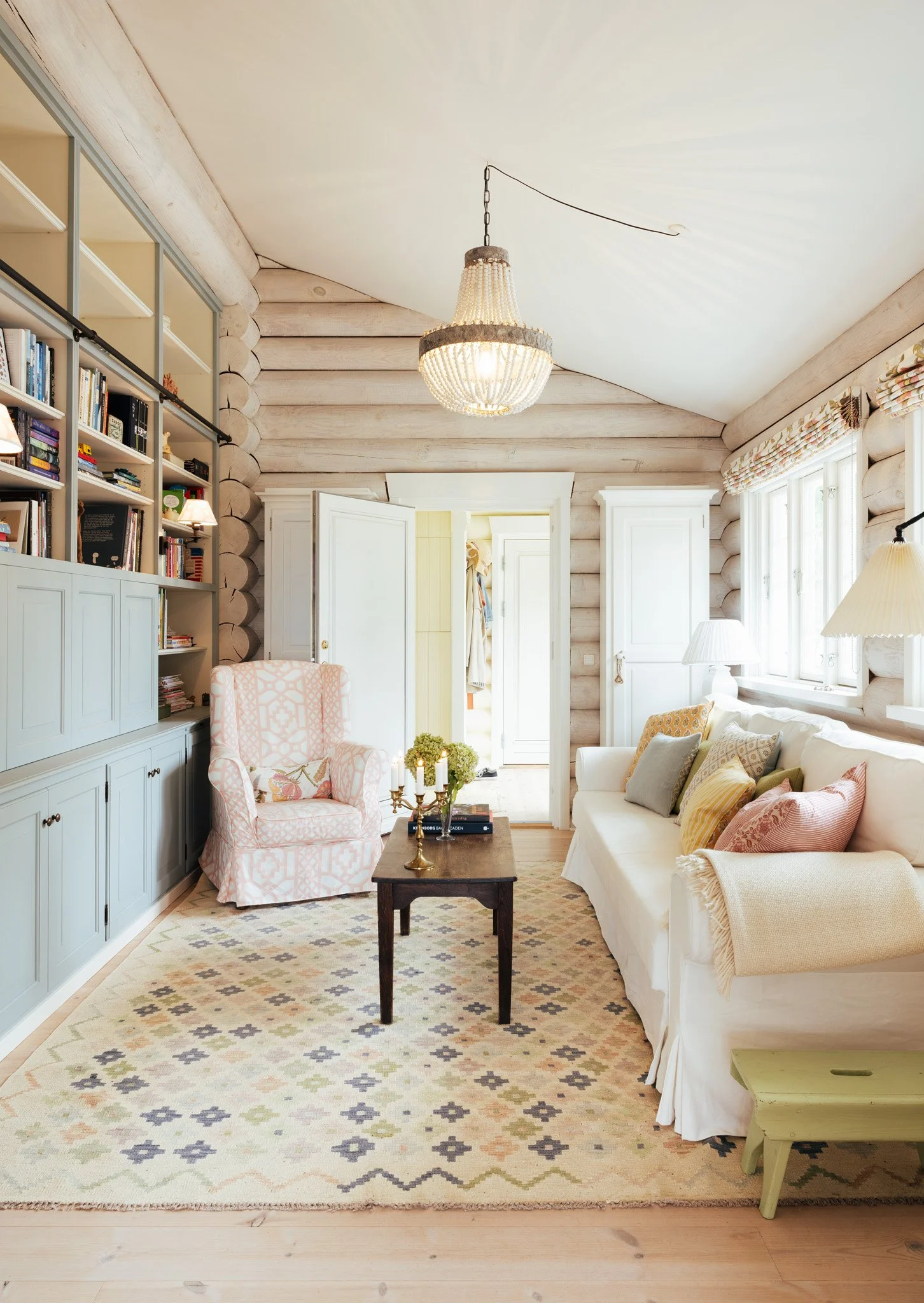
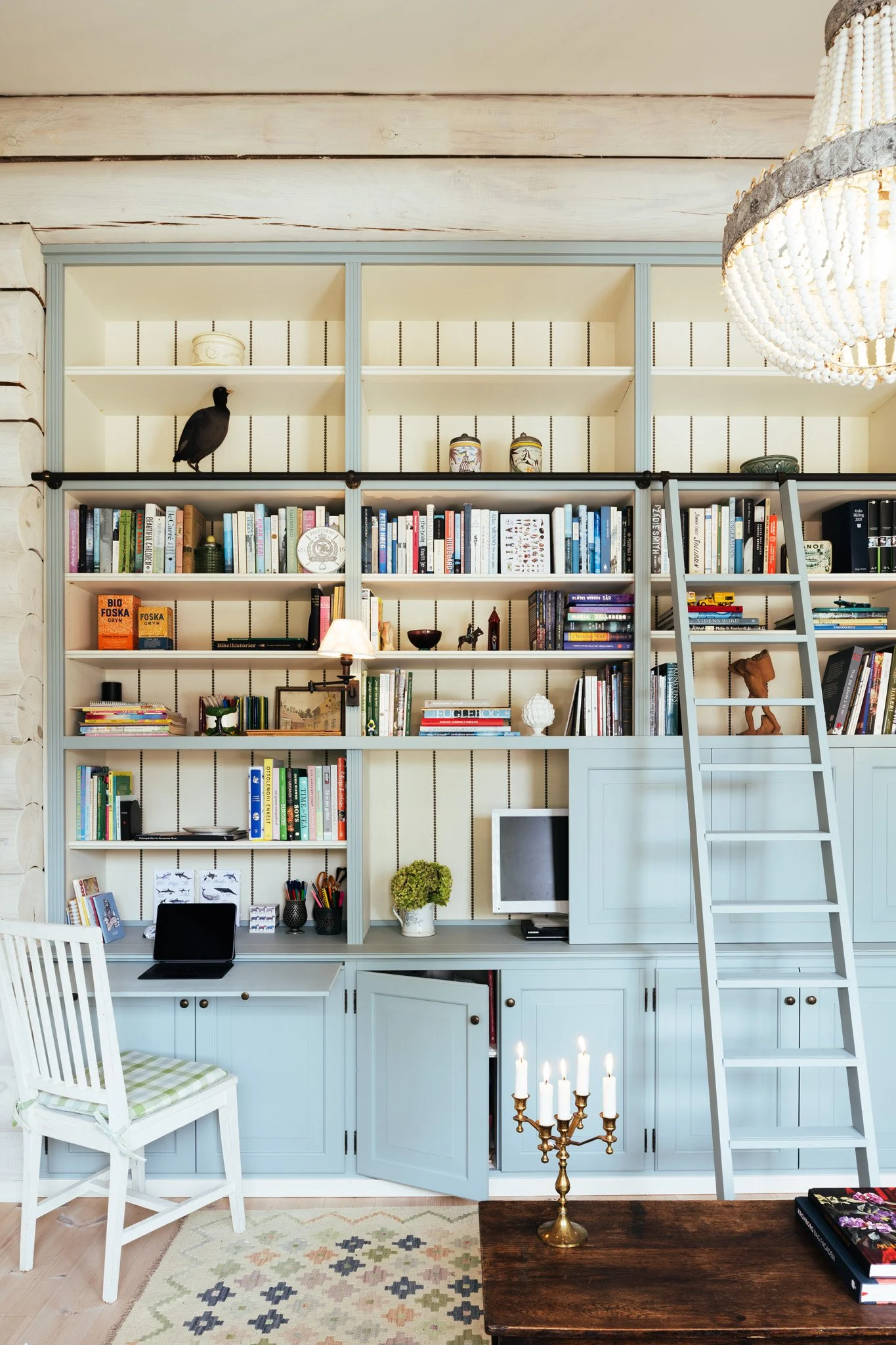
Our response was to treat the joinery as interior architecture rather than as fitted furniture. Bespoke freestanding and built-in pieces were drawn for each individual nook in the house, designed to negotiate the unusual wall shapes rather than fight them. The most ambitious of these is the family room library.
The family room sits beneath the spine of the cabin and is the connecting space between the two wings of the house: the beach-front wing with its kitchen, master bedroom, dining and lounge, and the rear wing with the children's and guests' bedrooms. Its roof is tall and pitched, following the log structure of the cabin to a single high ridge. We designed a bespoke library that follows that pitched geometry from floor to ridge, complete with a sliding ladder system. A hidden television sits within the joinery. A pull-out desk, with drawers, storage and integrated sockets, transforms a section of the library into a discreet WFH station that disappears completely when not in use. A piece of joinery that looks, at first glance, simply like a beautiful library, but is in fact doing five jobs at once. The most useful work in a holiday home is almost always the work the holiday-makers do not see.
RESTYLING WITHOUT REBUILDING
Knowing what to leave alone.
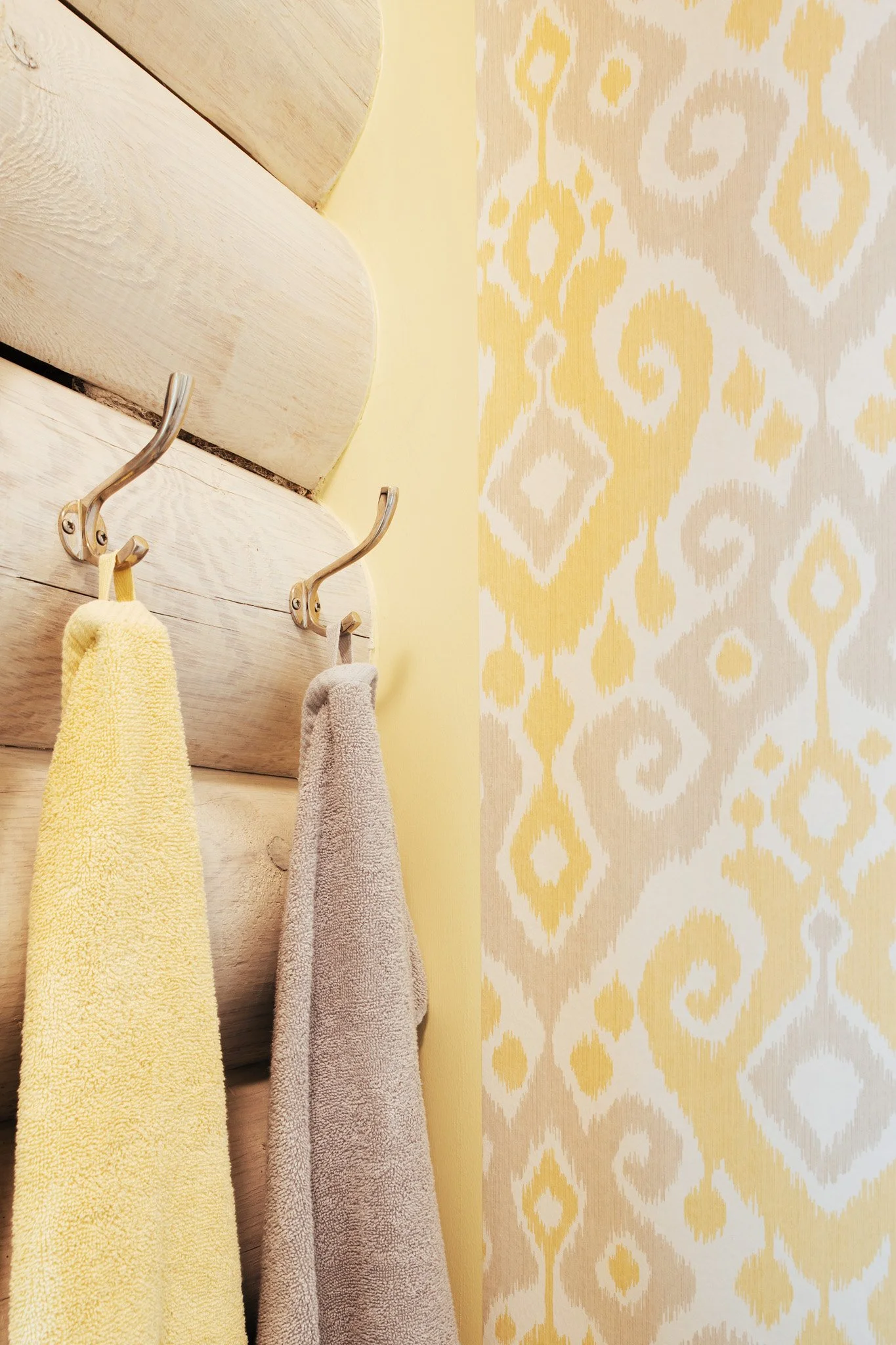
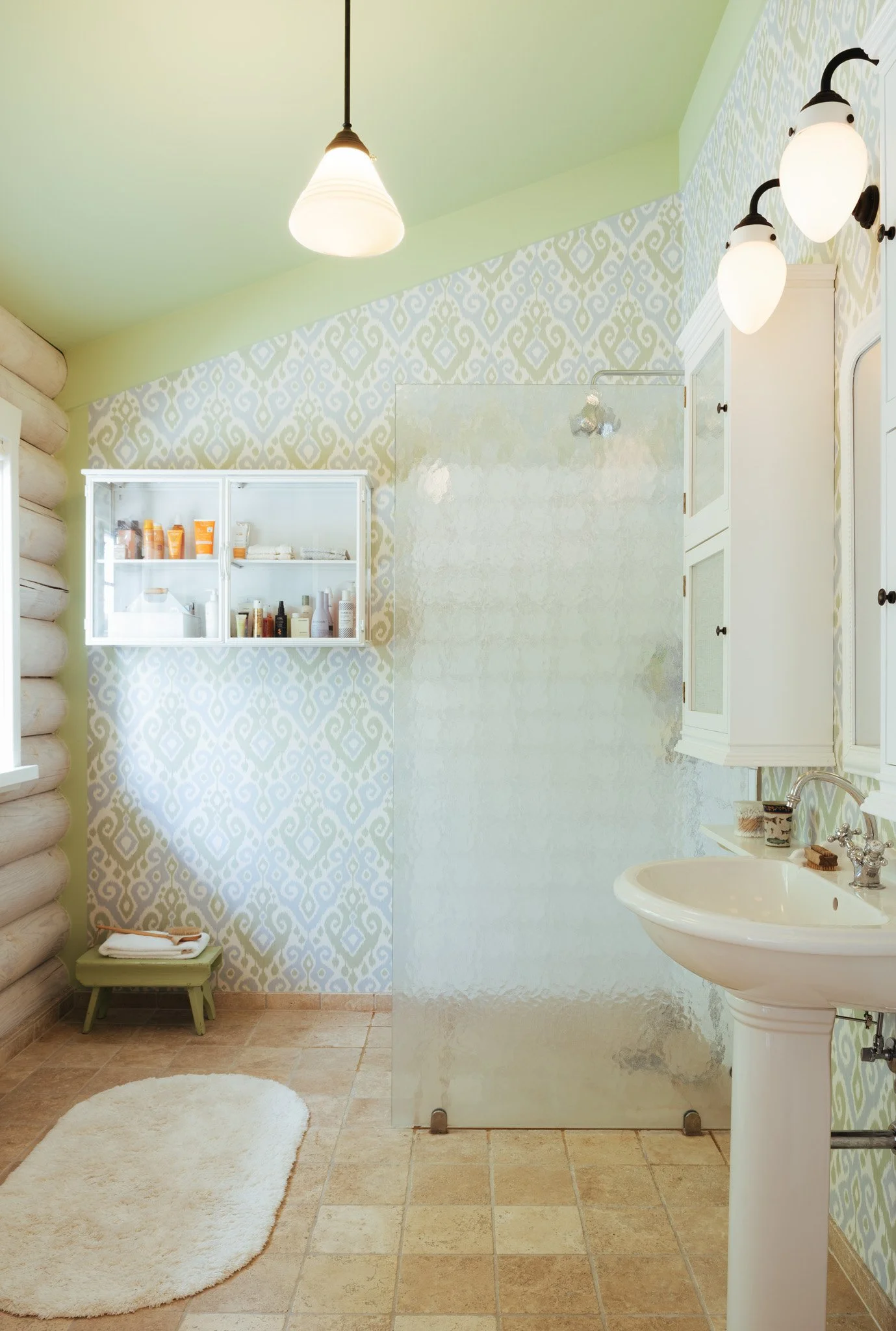
Not every project needs to start from zero. The bathrooms in this house had original sanitaryware and tiles that were in genuinely good condition, and our recommendation to the clients was clear: the right answer was to restyle, not to rebuild. New Schumacher wallpapers were specified for each room, chosen to sit in the cooler Nordic palette of the wider house. New mirrors. New lighting. New cabinets. The original surfaces stayed where they were.
This is the kind of restraint that takes some explaining to a client whose first instinct is often to renew everything. But a holiday house that gets ripped out and replaced loses something it cannot recover. The patina of fifty summers, the particular feel of a tap that has been used by three generations of the same family. Choosing what to leave alone is one of the most important design decisions in a project of this kind. Knowing where to spend and where to leave well alone, as we say to clients on inherited homes, is itself a form of design intelligence.
TEXTURE, COLOUR, COMFORT
Colour brought in through pattern. Inherited pieces, returned to use.
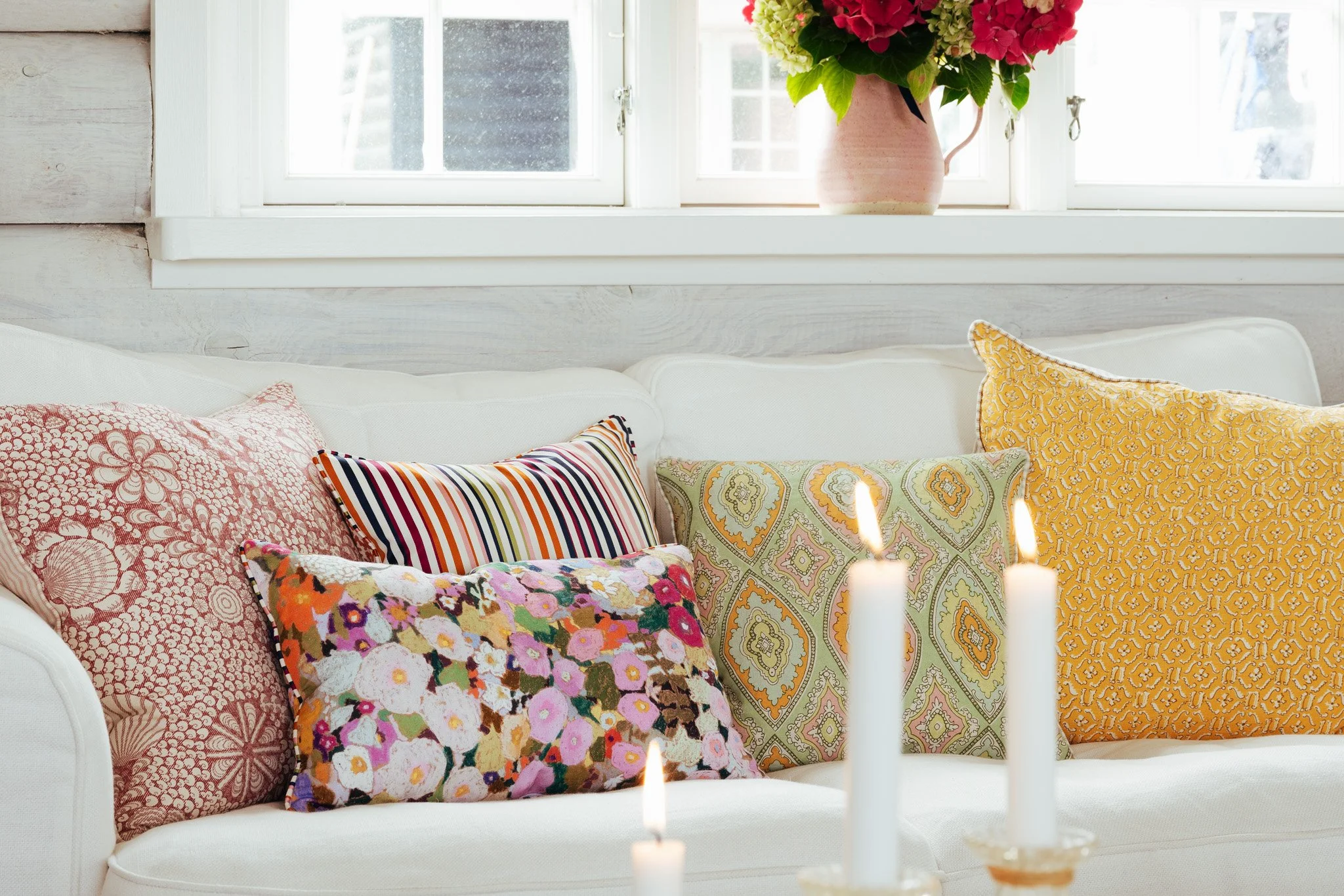
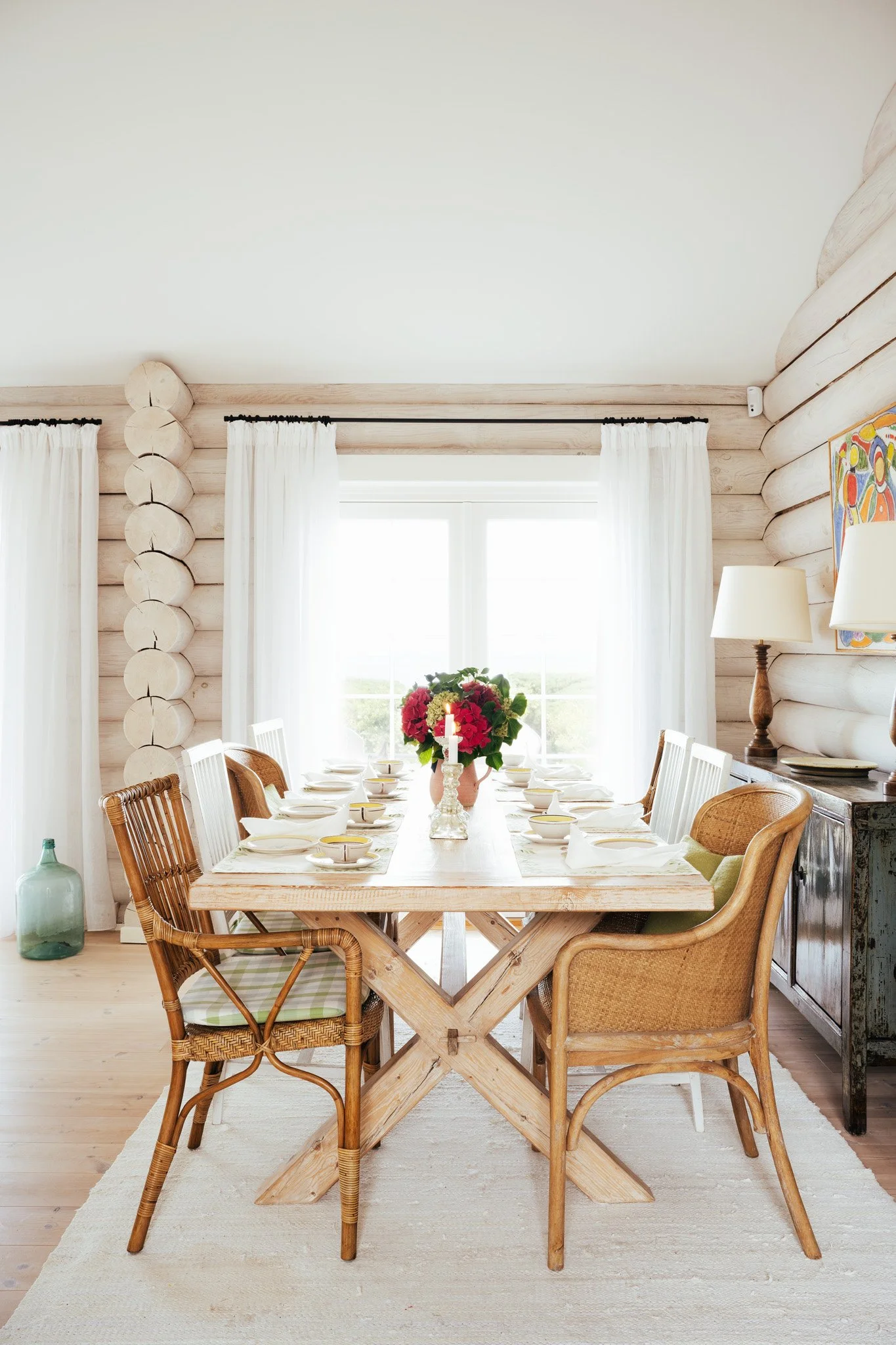
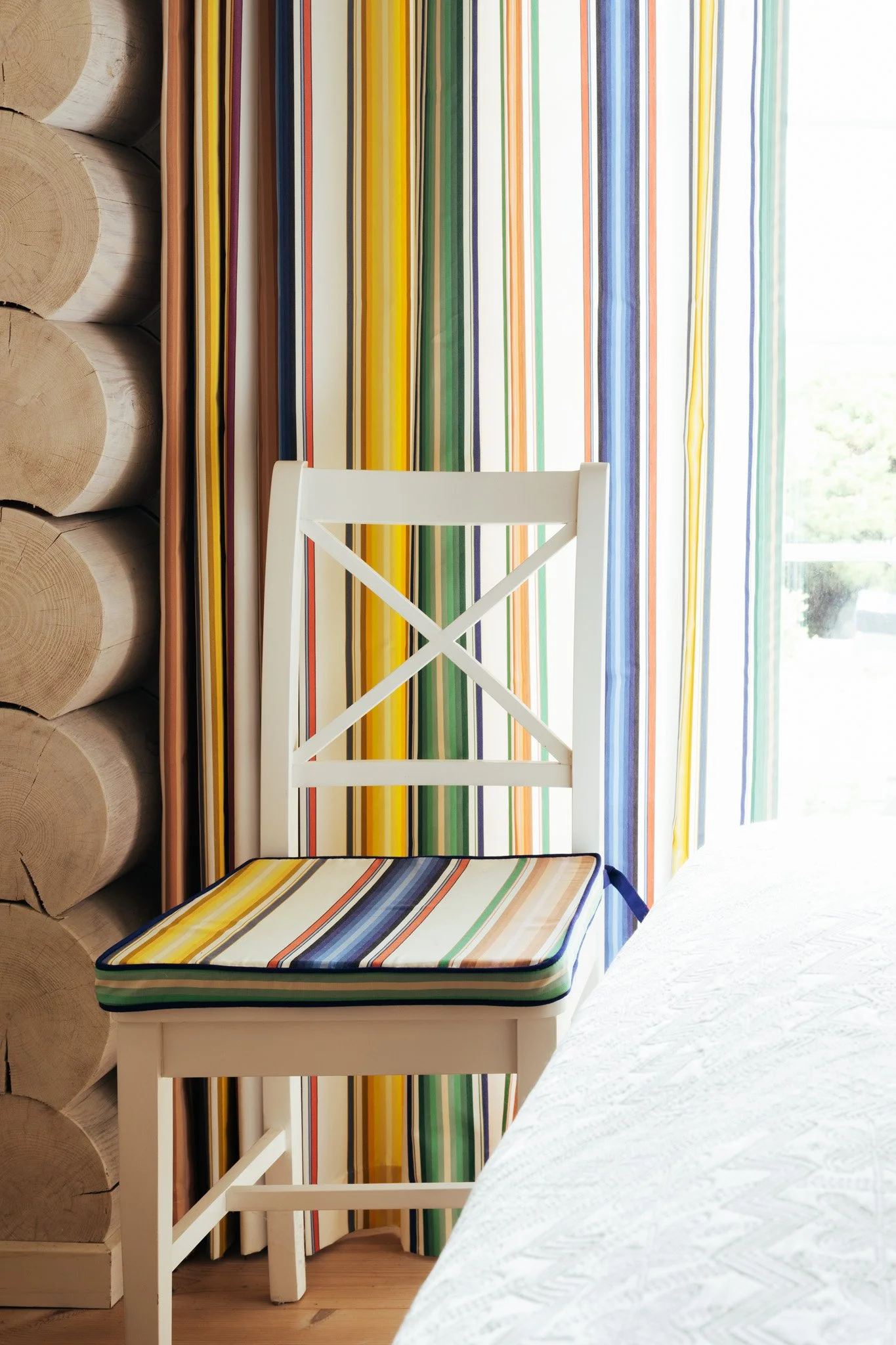
The lounge had an abundance of large white sofas, which the family loved and wanted to keep. The challenge was to bring colour and texture into the room without overpowering them or making the white feel clinical. Our answer was to commission cushions in soft hand-blocked prints, small in scale, gentle in pattern, layered in groups that read as collected rather than coordinated. The sofas became the canvas; the cushions became the colour story. The family vintage wicker chairs, kept from the previous generation, were given new fitted seat pads in complementary fabrics, a small intervention that brought them back into comfortable use without asking them to become something they were not.
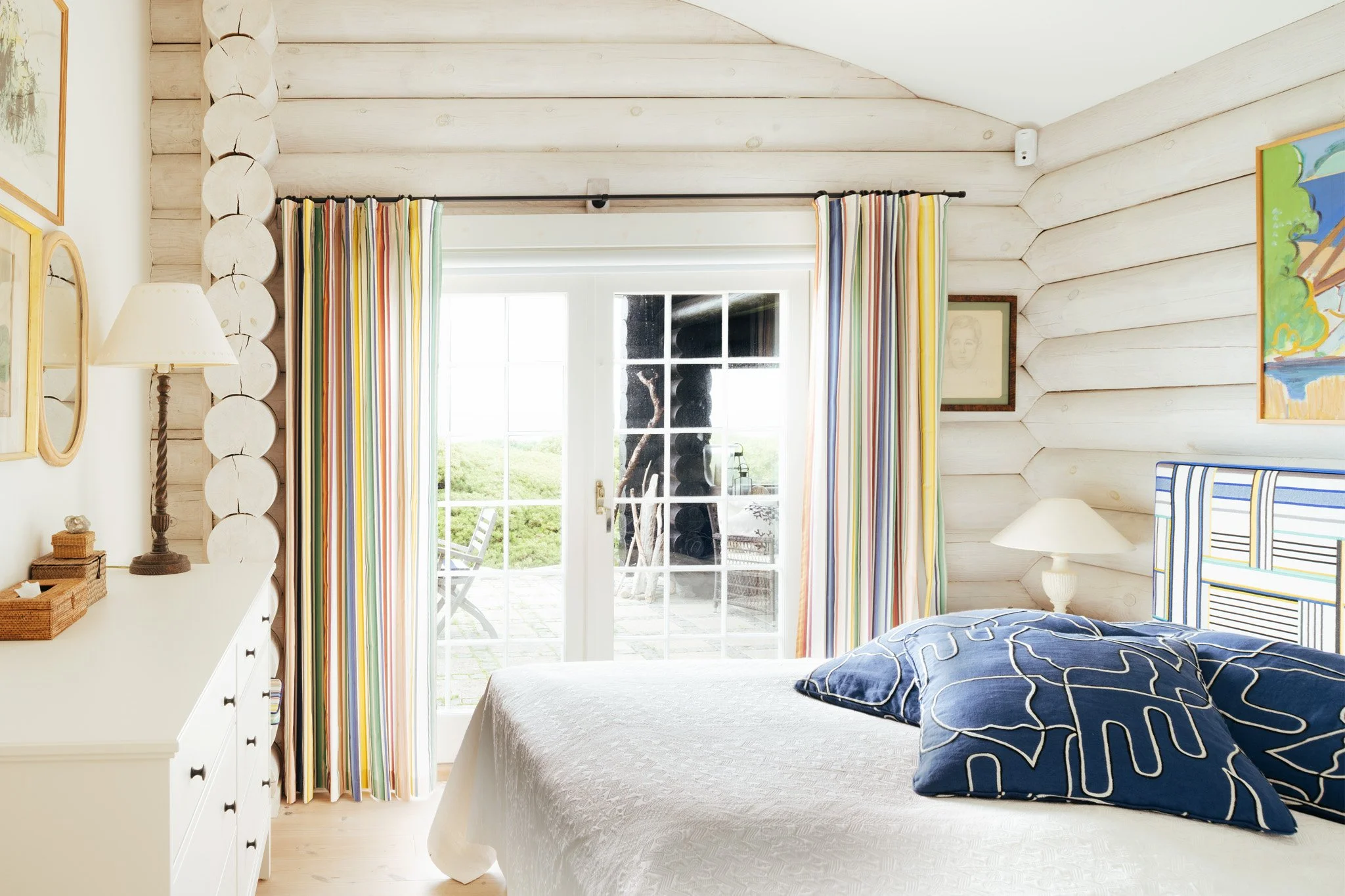
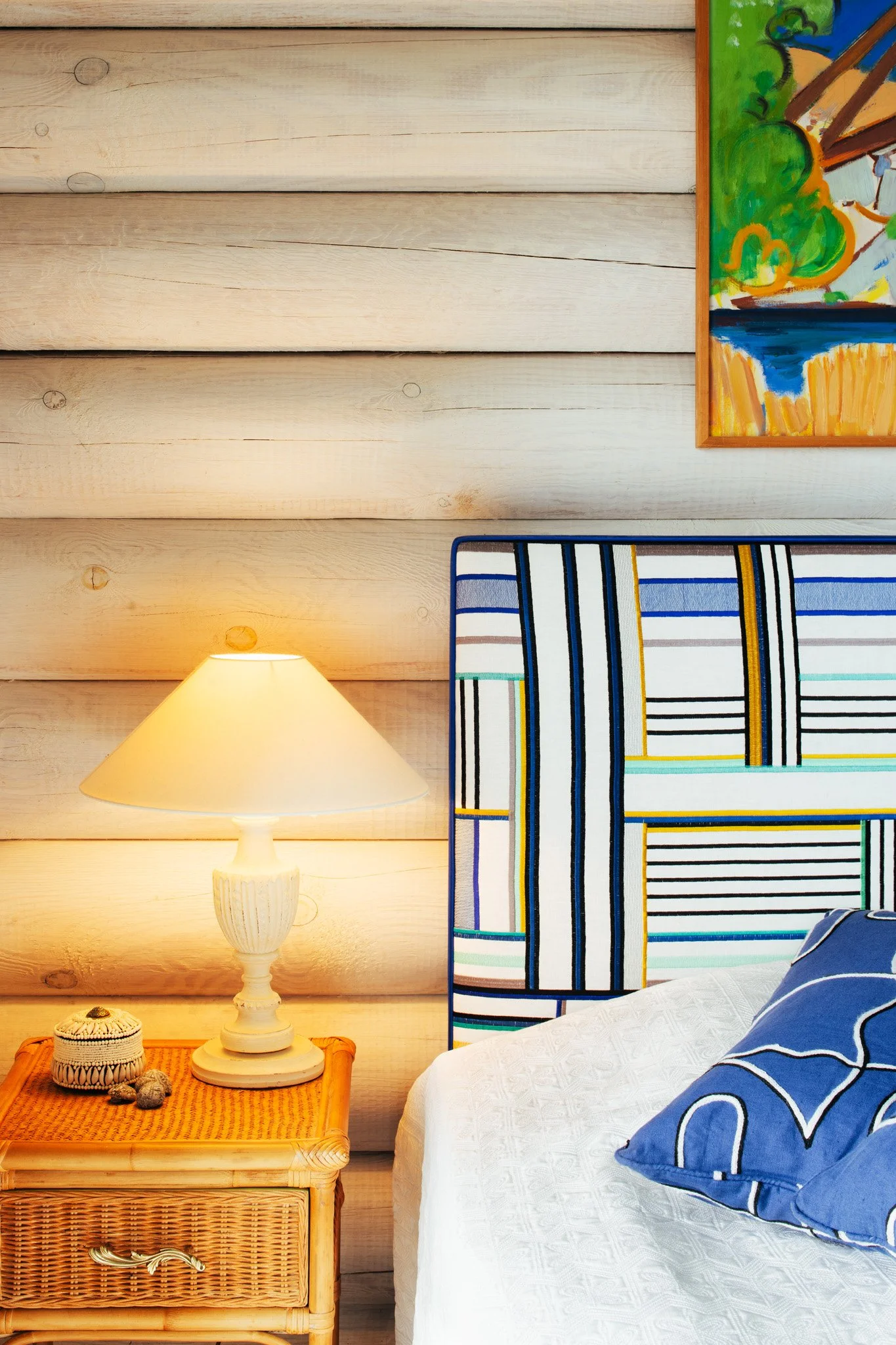
The lounge was also fitted with a new wood stove, anchoring the room for the shoulder seasons when the cabin is used and the long Nordic evenings turn cool. New headboards were designed for every bedroom, another opportunity to bring fabric and colour into rooms that the cabin walls themselves naturally keep restrained. The fabrics for these were chosen during a sourcing trip with the clients to Chelsea Harbour Design Centre, then shipped to Denmark and applied locally: a small geography of furniture-making that the studio's network is built to coordinate. The pattern story across the headboards moves between florals and geometrics, all in the soft pastel range that the Nordic light asked for. Each bedroom has its own personality within the wider language of the house. None of them shouts.
SUMMER ENTERTAINING
Eight weeks a year. The house designed for them.
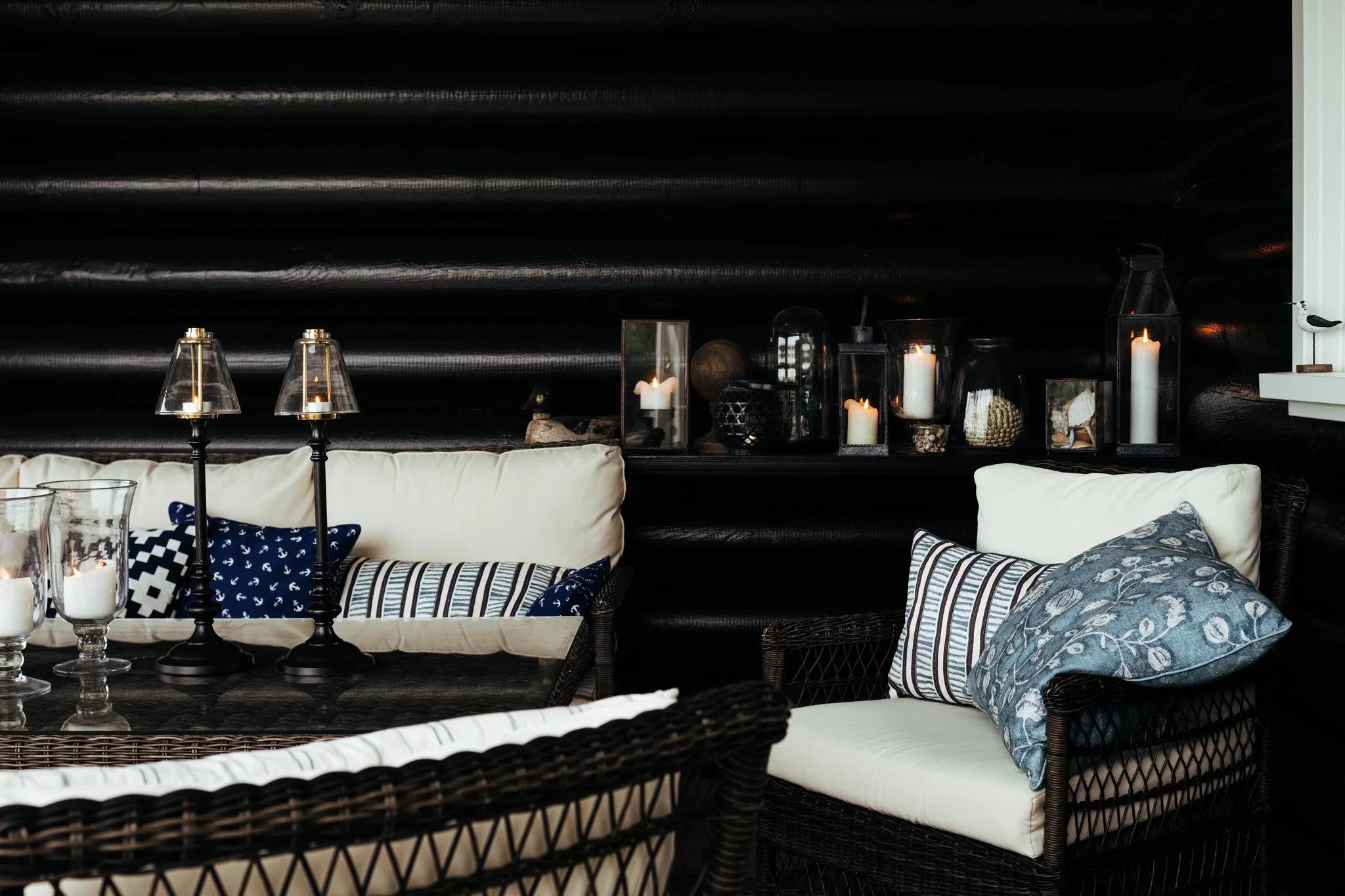
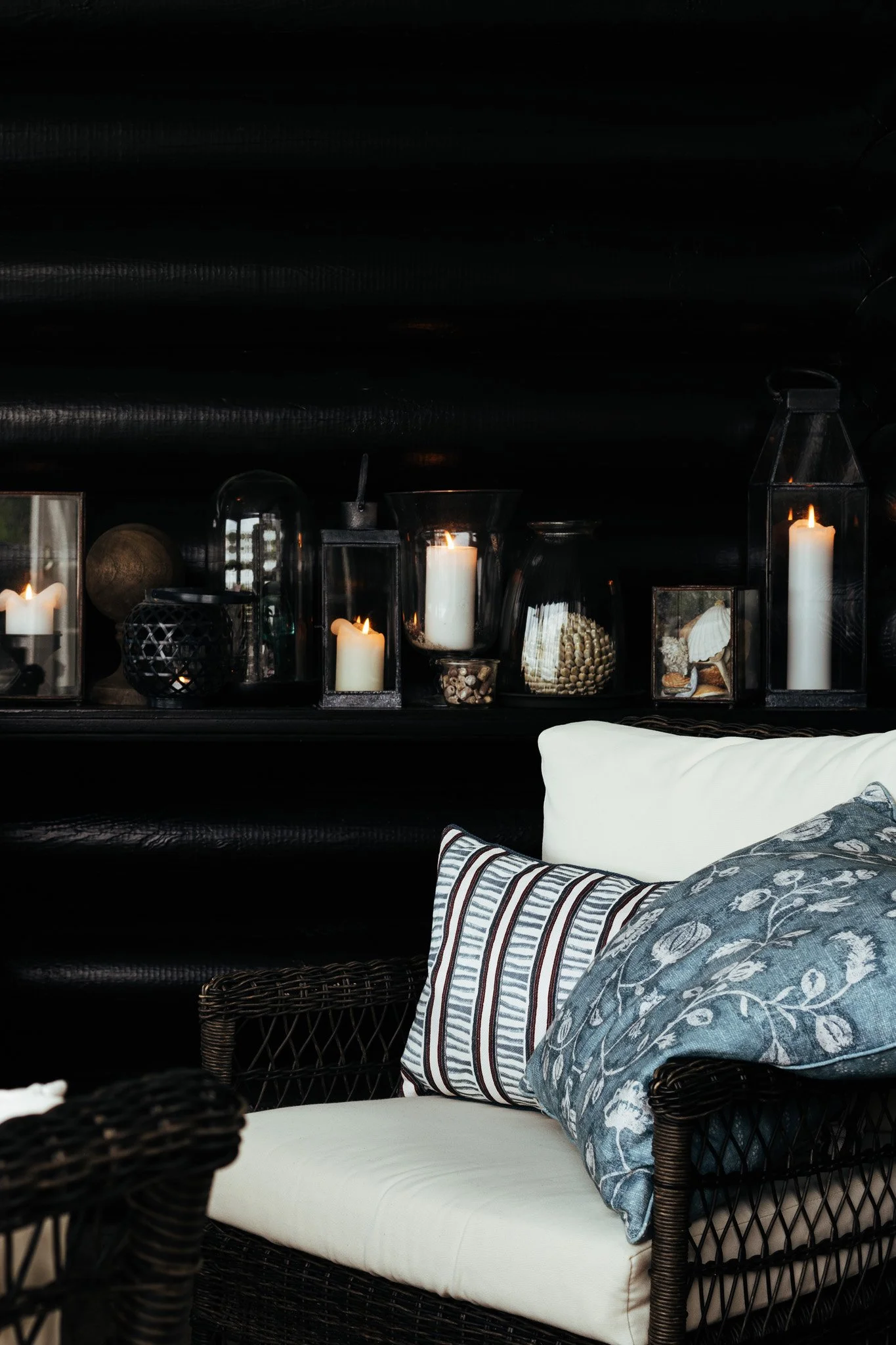
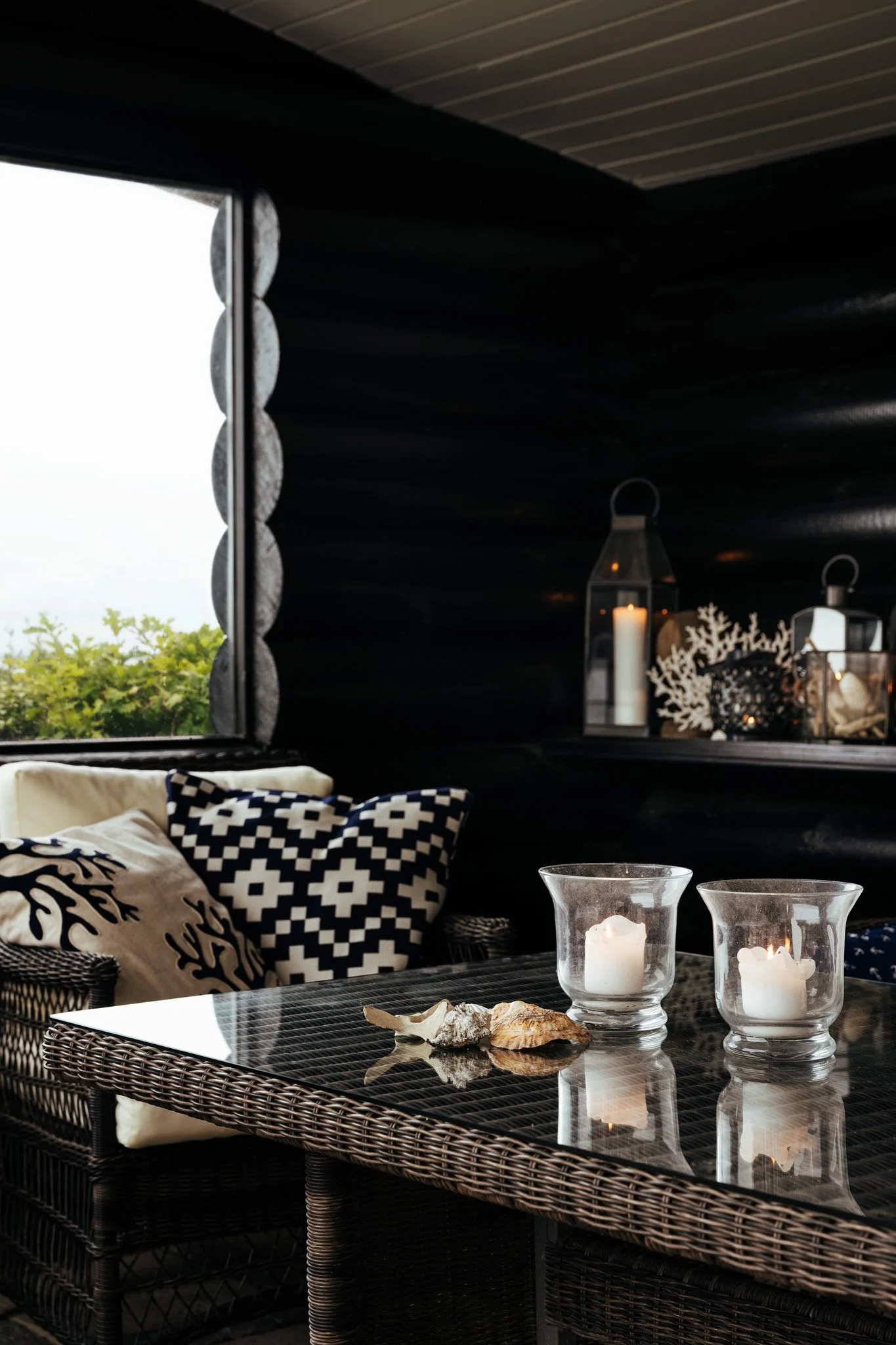
A Danish coastal summer villa exists, fundamentally, for the eight or ten weeks a year when the light stretches out and the family gathers. Every part of the house had to support that: generous spaces inside and out for entertaining, lounging, eating, gathering, drifting between rooms. The dining room opens directly onto the terrace facing the sea, so that summer meals can move from inside to outside as the evening unfolds. We designed a covered outdoor seating area as a deliberate companion to the dining terrace: the place to gaze into the long northern sunsets, sheltered from the Atlantic-edge breeze, comfortable enough to settle into for the hours that the Nordic evening lasts.
“The light on the Balearics and the light on a Scandinavian coast are not the same. A scheme that ignores the light it is sitting in will feel wrong, no matter how beautifully it is executed. Context leads, always.”

CITY
Urban Sophistication

Surf
Coastal Serenity

Ski
Alpine Craft
Every home begins with a conversation.
Every project begins with a conversation.
If you are considering a home and would like to talk through your ideas, we would be glad to hear from you.