
The Art of Timeless Design: Blending Antiques with the Modern Home

I grew up in a house full of antiques. My father took me to fairs from a young age, first to look, then to understand. I learned to read maker’s marks, to recognise real silver by weight, to feel the small charge in the air when a dealer noticed what we had noticed before they did. Later I worked for some of those dealers. The house we lived in was layered, slightly chaotic, continuously evolving. Nothing in it had been bought to match, and the proof of that was that nothing in it ever felt finished.
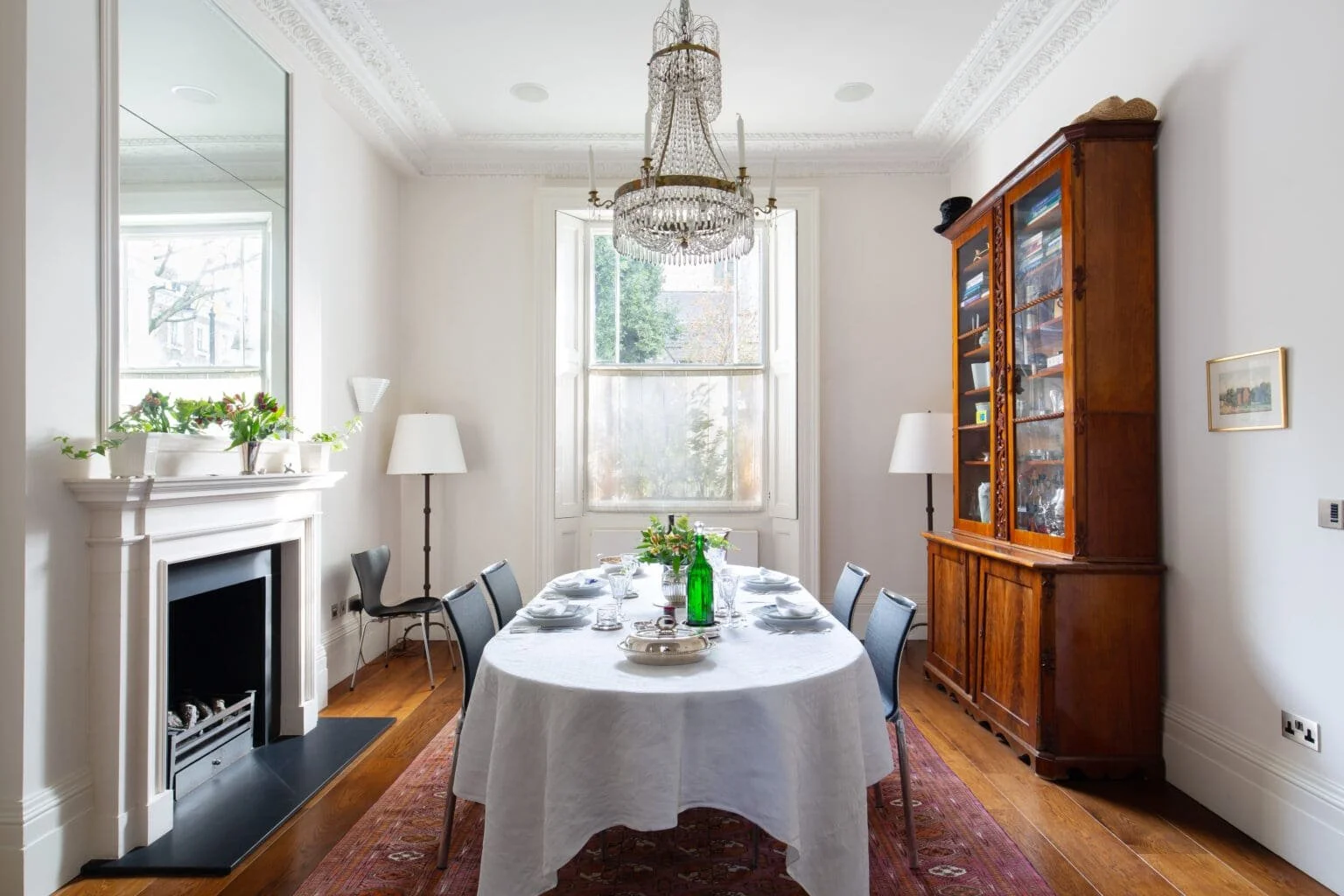
That apprenticeship shaped how I think about interiors now. I am not drawn to homes that feel too polished, or too perfect, or too new. I find them airless — as though everything has agreed in advance not to disturb anything else. What I look for instead is the tension between things. A sleek modern kitchen made to breathe by a piece of furniture from another century. A classical room loosened by something contemporary placed inside it without apology. It is in that dialogue between centuries that a room comes alive.
Why old things hold a room
Antiques do something to a space that nothing else can do. They carry weight. Not the weight of cost or rarity, although they may have those, but the weight of having been made by hand, used, repaired, passed on. They tell the room it is permitted to be lived in. A house decorated entirely with new things, however beautifully, can feel as though it is still waiting for something to happen — for a family to arrive, for a season to pass, for someone to spill a drink. A house with even one or two pieces that have lasted a century behaves differently. It already knows how to hold time. It does not flinch at the marks of being lived in, because some of those marks were already there when it began.
The patina is the point. The cracks, the worn edges, the silver that has darkened where hands have held it most often, the timber that has deepened into something the original maker could never have specified — these are not flaws. They are evidence of life, and they grant interior schemes a quality you cannot fabricate from anything new. A weathered wooden chair, an aged mirror, a tarnished silver accent: each of these grounds a room in a way that polish never can.
The edit comes first
Most projects begin with editing. Before any new piece comes into a home, I work with clients to understand what they already own, what should travel with them, and what should not. This is harder than it sounds. People are attached to objects for reasons that have nothing to do with whether the objects are beautiful, and our role is to respect that attachment without being overruled by it. A piece that mattered enormously in one house may not earn its place in the next, and a piece that seemed unimportant for years may turn out to anchor an entire scheme. Sometimes we move walls to accommodate what stays. Once, we built a hydraulic lift inside a wall to bring an object up into view. The architecture serves the objects as often as the other way round.
A dialogue between centuries
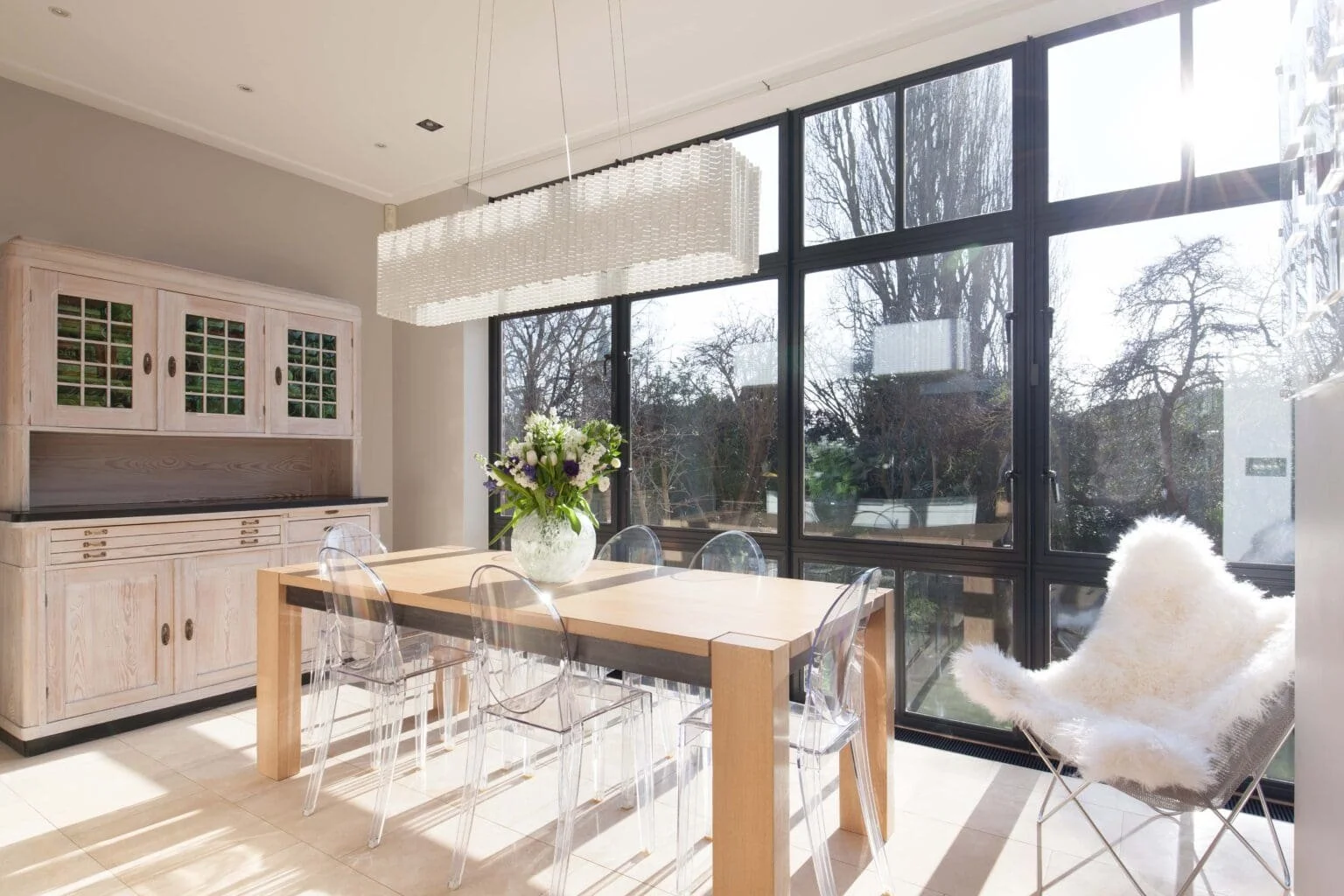
The work then becomes a question of dialogue. In a Crittall-windowed kitchen extension I designed in London, the architecture was decisively modern — clean lines, large panes of glass, a simple oak table, transparent Ghost chairs from Kartell. The piece that resolved the room was a German kitchen sideboard, stripped and treated, complete with its original stained-glass doors dating to the year the house was built. The contemporary structure was the body; the sideboard was the memory. Each was made stronger by the other. In another London entrance hall, the architecture itself was the antique. I sourced a pair of reclaimed Indian arches from a dealer online, framed the passage to the cloakroom with them, and had wardrobe doors made bespoke in Morocco in the moucharabieh style — fine carved geometric screens that filter light and obscure what lies behind. Everything else in the hall was contemporary, but the room was held by the arches.
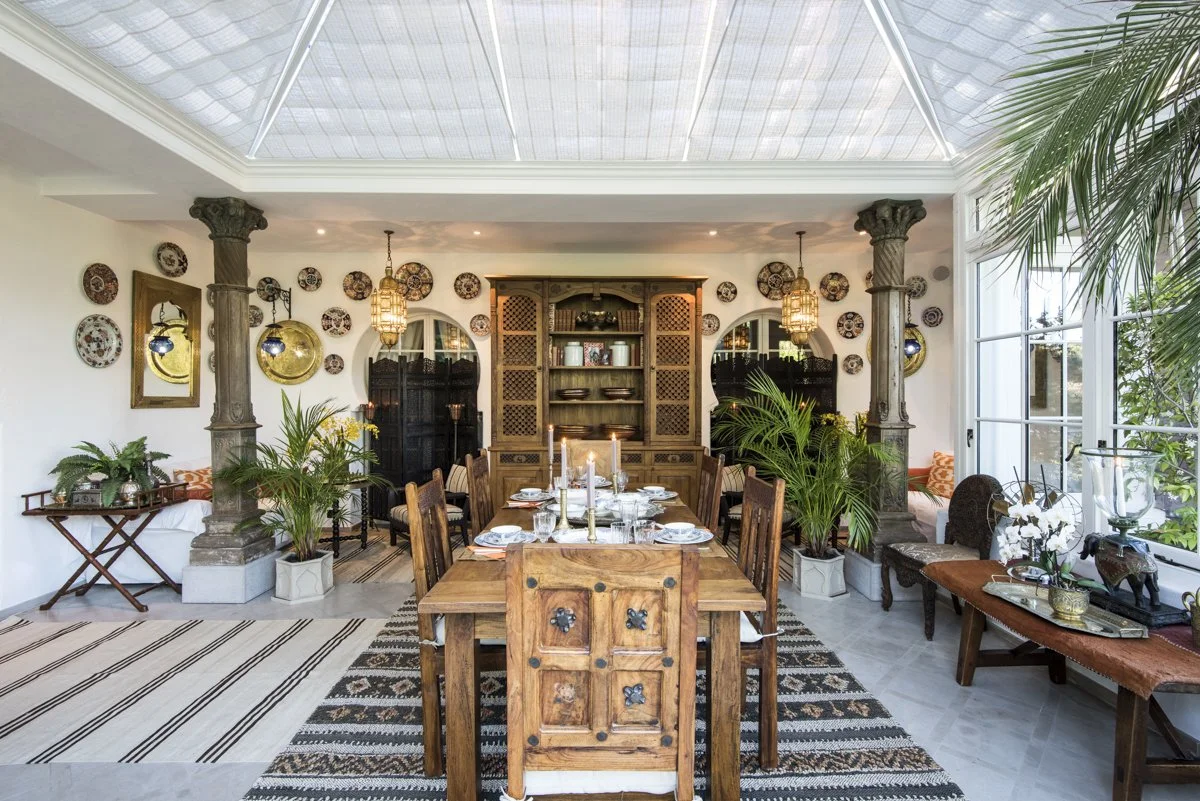
Sometimes the antique arrives and the room is built around it. In one project, two old Indian columns came up at auction. I raised them on stone bases I had cut to fit beneath, slid them under the glass roof of an orangery, and let them sit there as though they had been holding it up for two hundred years. The brief was a Moroccan courtyard. The columns were the brief. In an Alpine chalet, I worked the opposite direction: a piece of contemporary digital art set inside reclaimed timber panelling, the screen shifting slowly between abstract states, the timber bearing the marks of decades of weather. A coastal house took a third route again — bleached oak, dark stained beams, vintage rattan, sourced from three continents and made to look as though it had drifted onto the beach together.
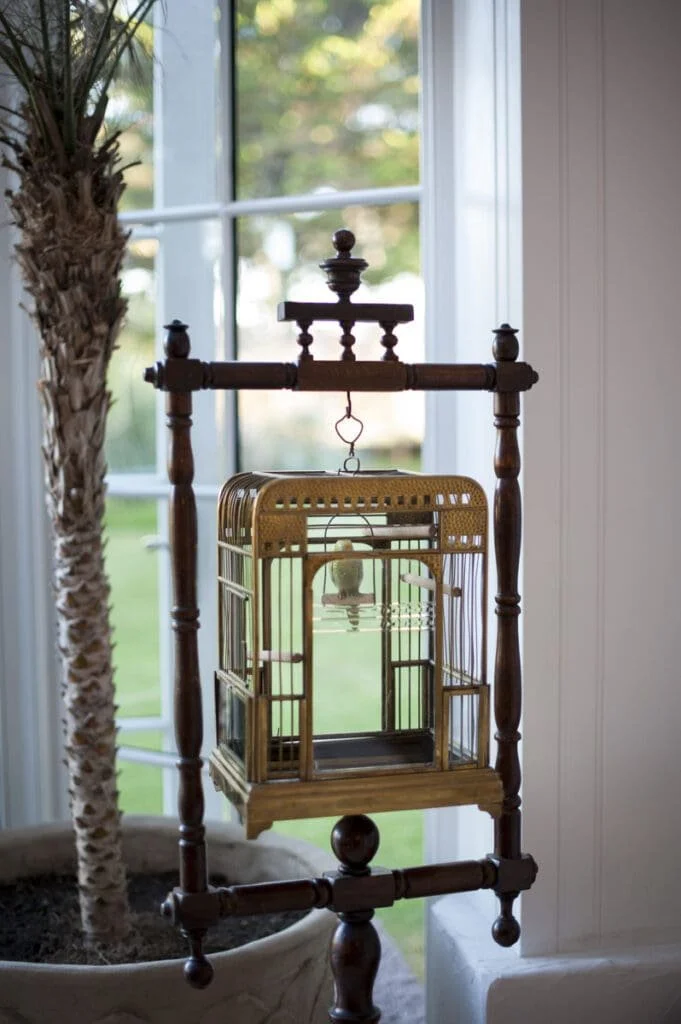
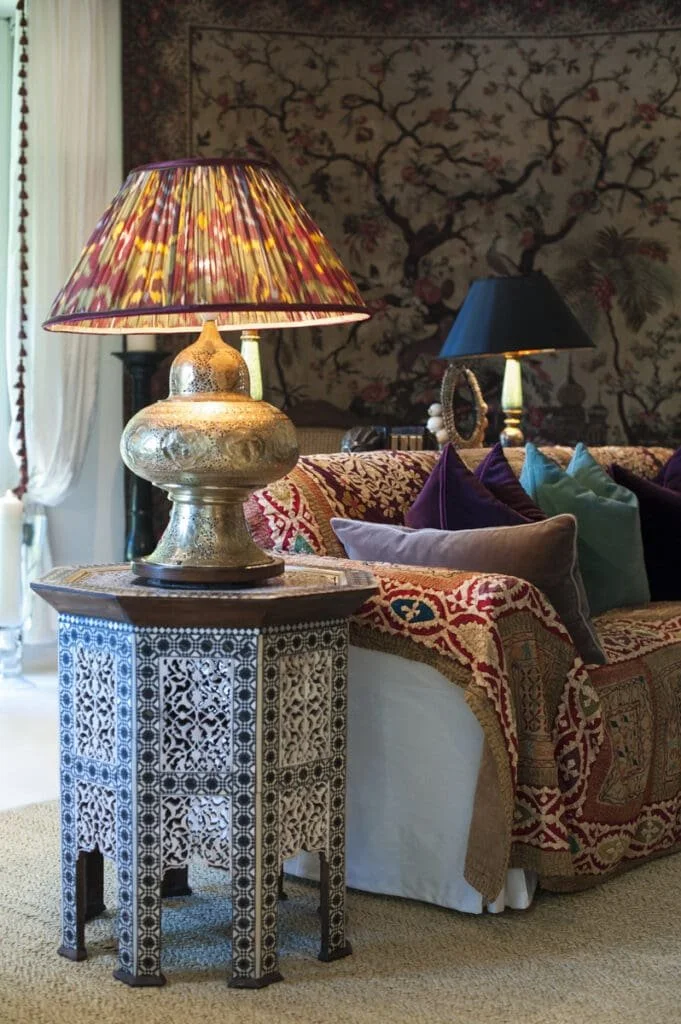
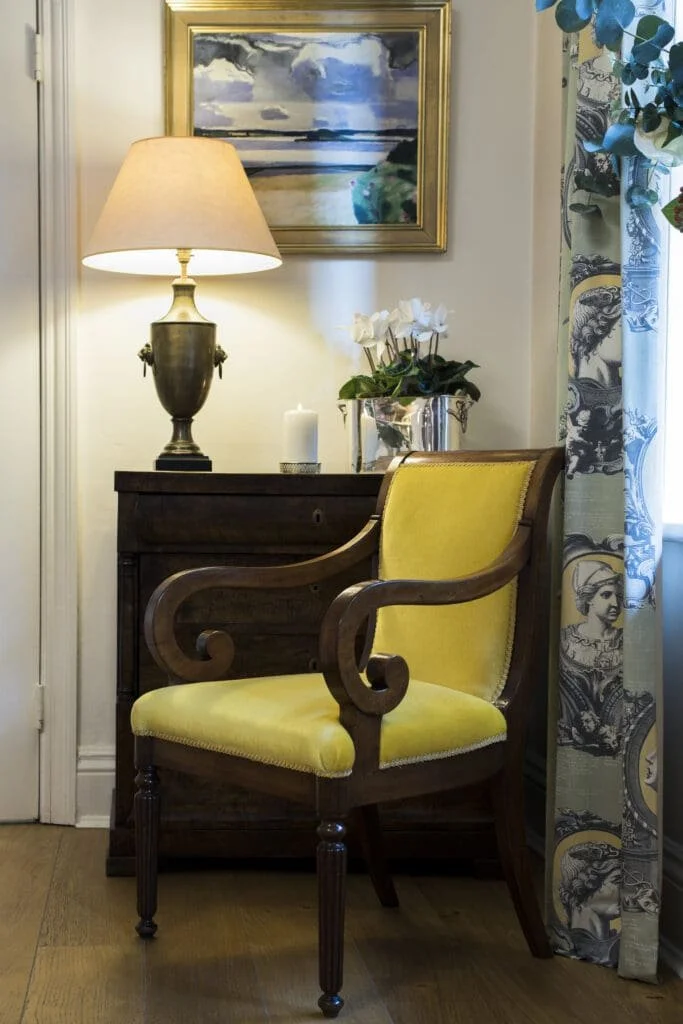
Across all three settings, the principle is the same. Antiques are most powerful when they are not asked to behave like antiques. A nineteenth-century French commode under a modern abstract painting holds a room better than the same commode under a period portrait. A vintage Persian rug beneath a low-slung modern sofa makes the sofa look considered; a contemporary kilim under a Victorian dining table makes the table look like it has chosen to stay. The friction is what works. The same logic governs how I use larger antique furniture — armoires, secretaires, chests, bookcases — as architectural anchors within otherwise modern schemes, with collections of glass, ceramics, books and travel-found objects arranged on and around them. Surrounded by modern artworks hung asymmetrically, an eighteenth-century cabinet stops feeling like a relic and starts feeling like a private gallery.
The fabric finds a new purpose
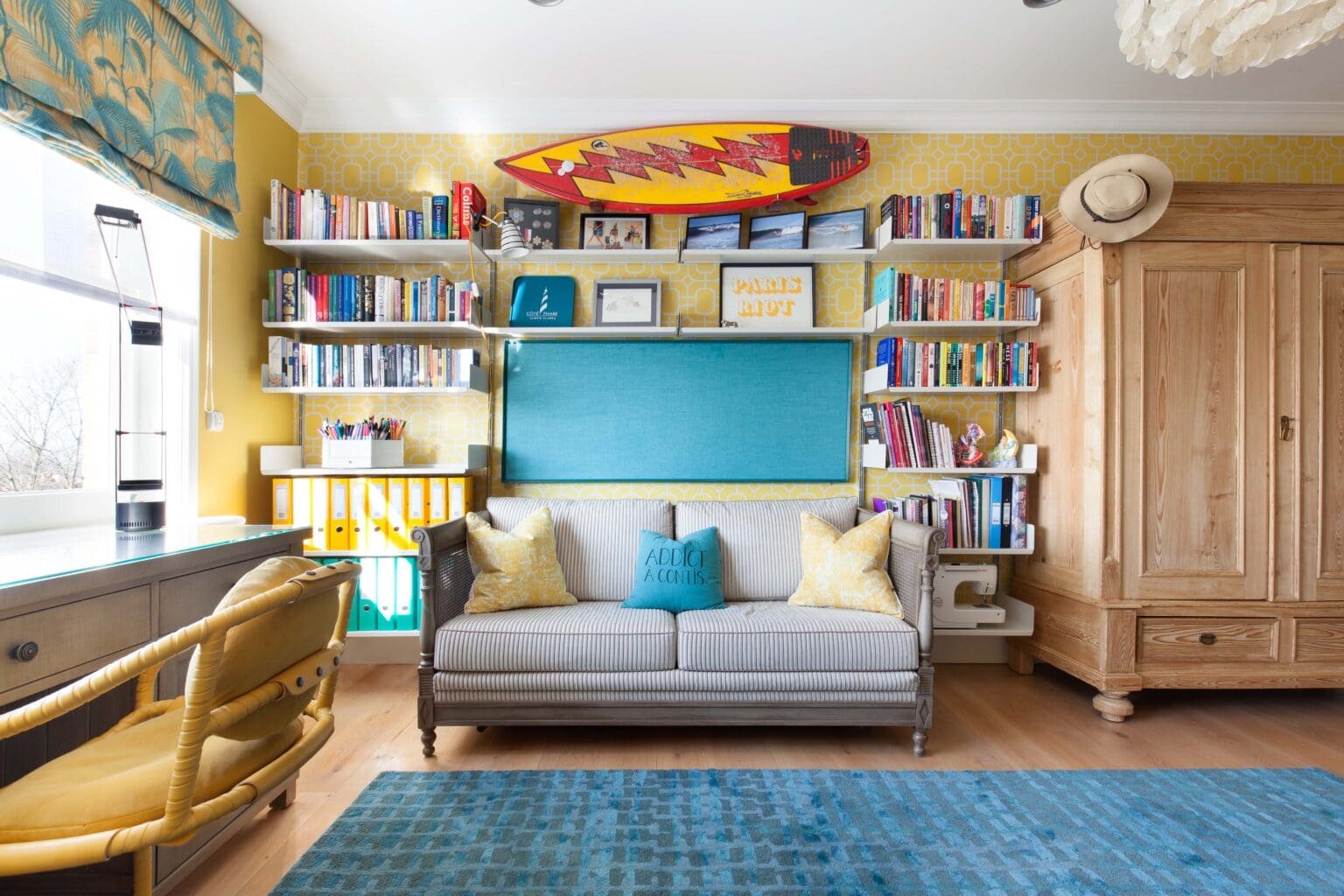
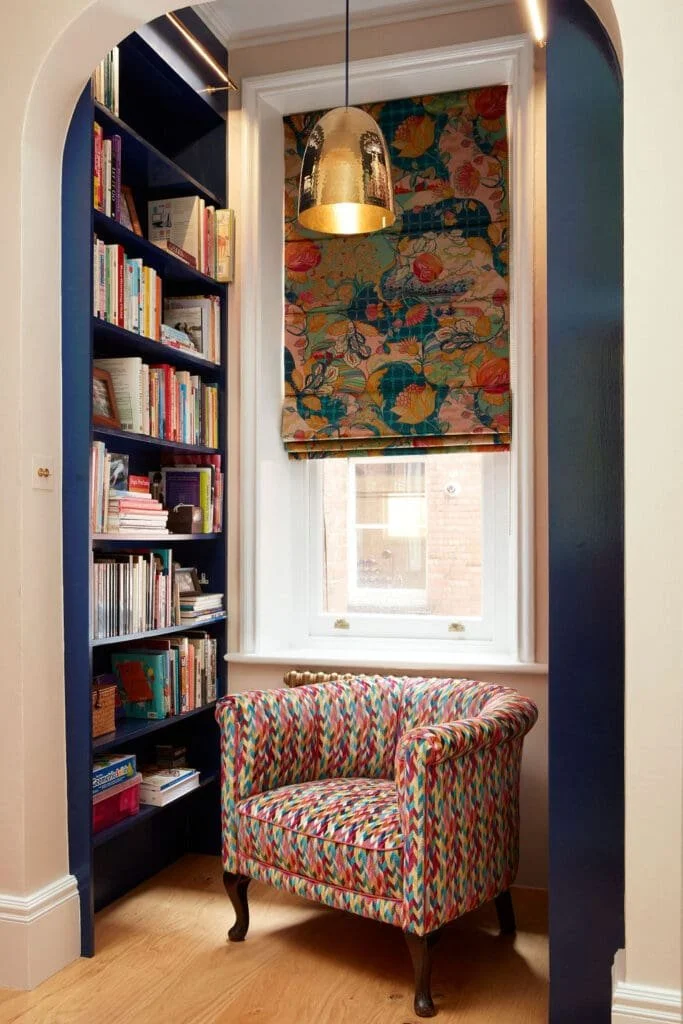
Textiles sit at the heart of this. I rarely use a vintage rug for the floor only. Flatweaves and kilims become upholstery, wall hangings, stair runners, table coverings; the pattern lives somewhere it does not always live. After a research trip to Japan, I brought back several vintage kimonos in heavy precious silk, and over the following years they have become cushions, framed artworks, and the panels of a set of internal doors in a London project. In a guest bedroom on another scheme, an eighteenth-century block-printed fabric became the wall hanging behind an antique bedframe — a single composition, two centuries old, tying the architecture of the bed into the architecture of the wall. Suzani embroideries make extraordinary bedspreads. Antique tapestries, used as panels rather than hung as pictures, soften modern rooms in a way that nothing else can. The fabric does not need to remember its original purpose. It needs to find a new one.
What restoration adds
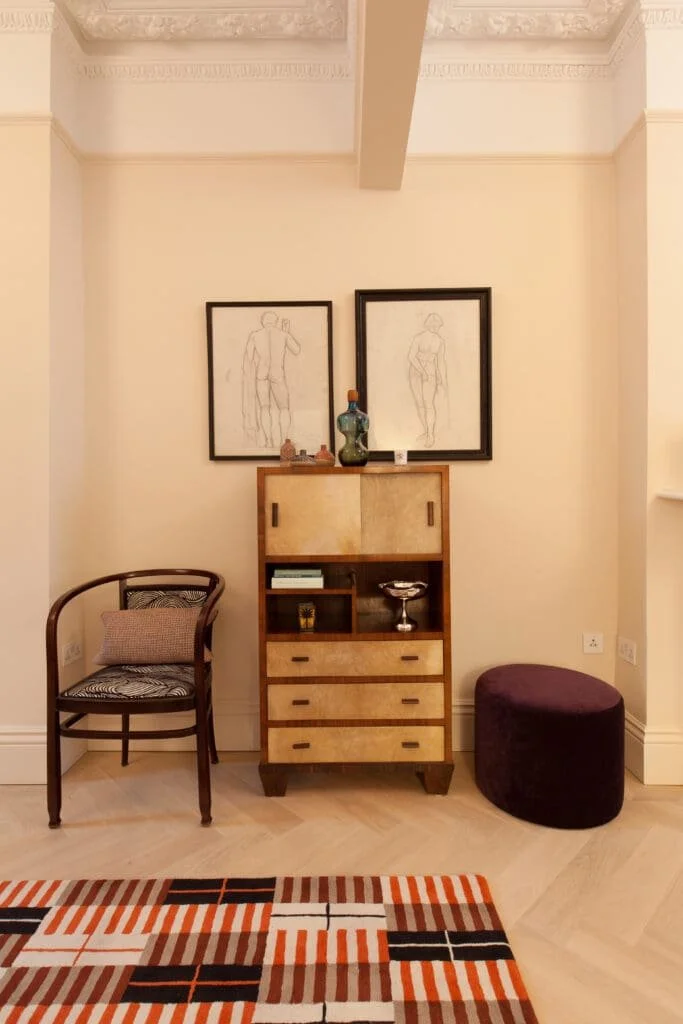
Restoration is the discipline that makes all of this possible. Almost nothing arrives in a house ready to be used. Lamps need rewiring. Hardware needs replating. Oil paintings need to be cleaned and the canvases behind them repaired. I send pieces directly from dealers to my workshops to be refinished, recovered, regilded — and I have learned to factor that work into the timeline of a project from the start. The most extreme example I have lived with was an eighteenth-century Italian Tree of Life hand-blocked print, restored by specialists at the V&A by threading the canvas back together with silk yarn, a process that took longer than most kitchens take to install. The hours invested far outstripped the financial value of the piece. But the energy a properly restored object brings into a room is, in my experience, beyond calculation. Clients tell their friends the story of how it arrived. Visitors stand in front of it. The object earns its place by the time it has already lasted, and by the care taken to ensure it lasts longer.
I am currently attempting to repair a small mid-century vase using kintsugi — the Japanese practice of joining broken ceramics with gold-laced lacquer, so that the breakage becomes part of the object’s history rather than a flaw to be hidden. I do not know yet whether I will succeed. The principle interests me more than the result. Antiques, like the houses they sit in, gain rather than lose by the marks of having been lived with.
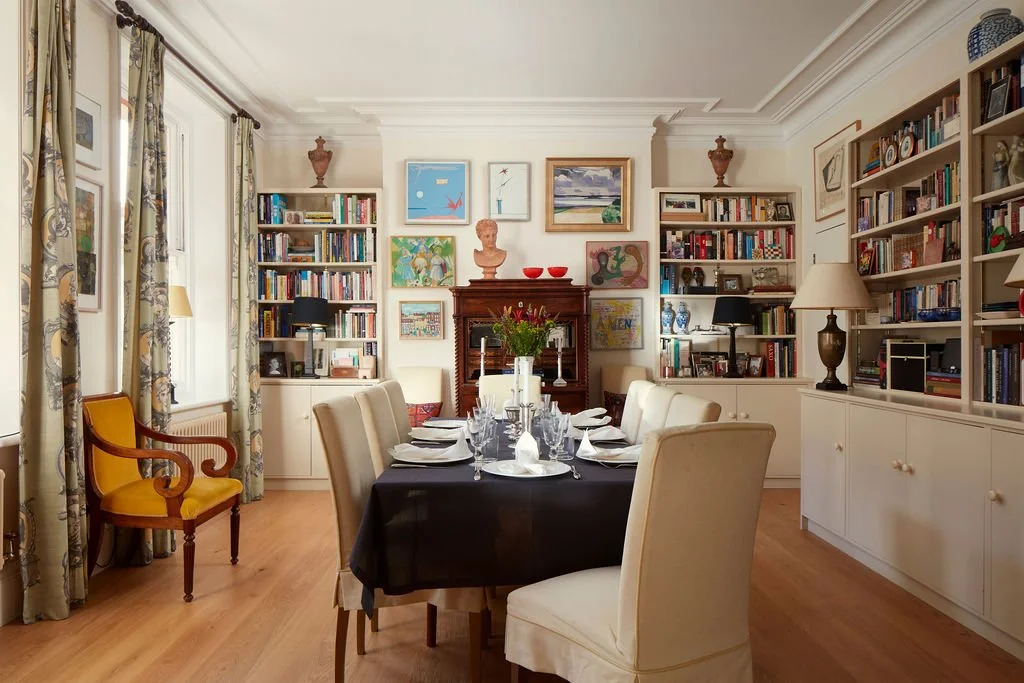
The rooms I find most enduring are not the ones where every piece arrived together. They are the ones where the dialogue between centuries has been allowed to happen — where modern art hangs above an antique commode, where a glass table is paired with chairs older than the building, where an heirloom passed down three generations sits next to something bought yesterday and neither feels out of place. I collect this way myself, and always have — vases, plates, pictures, silver, bought because I like them, with no particular place in mind. The home assembles itself around the objects, slowly, over years. It becomes a record of a life rather than a snapshot of a moment.
Do you have a project in mind or require help with choosing the right antiques for your home?
