
Why Small Rooms Should Be Richly Layered
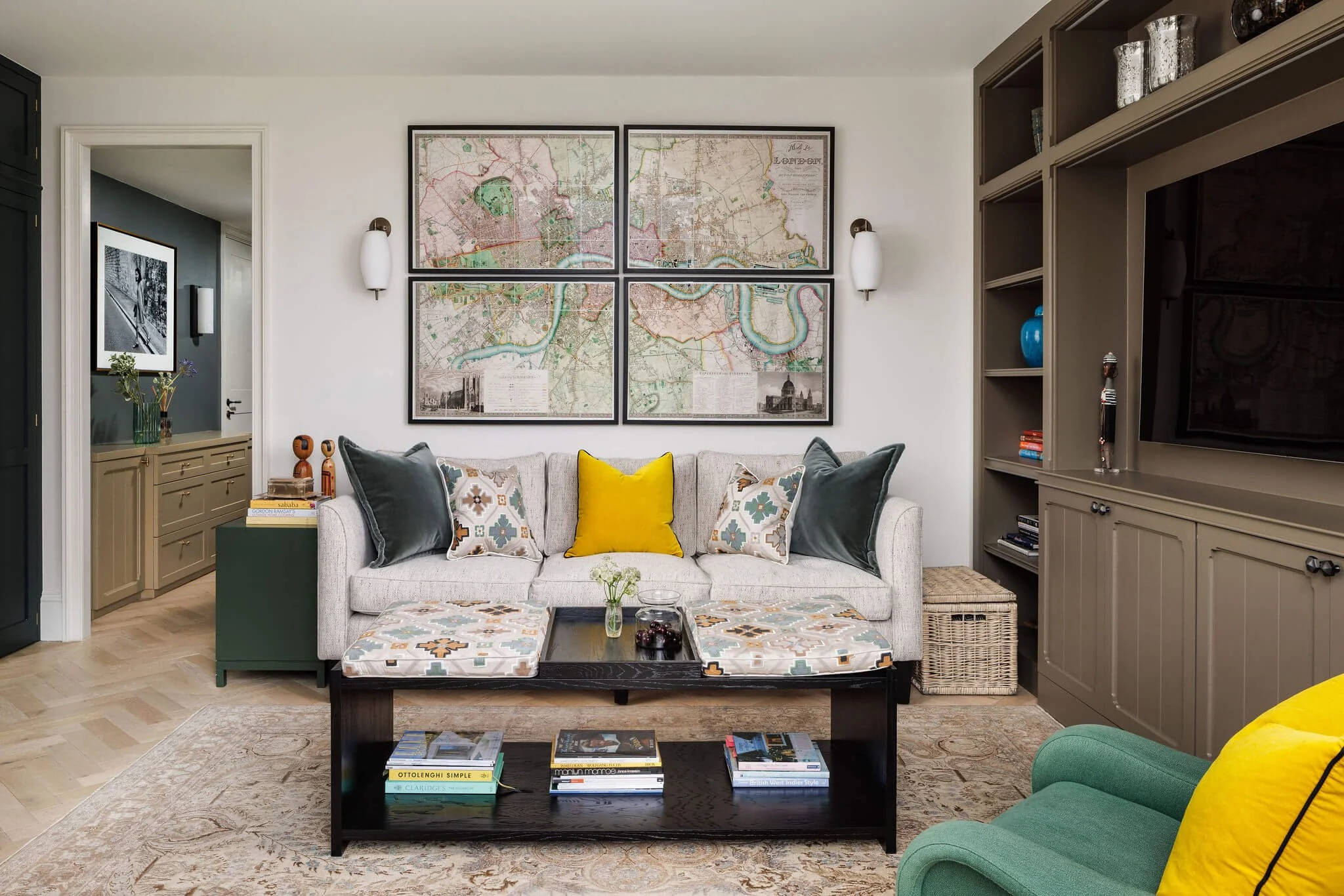
A jewel-box, not a box
A small room stripped back will always feel small. This is the counter-intuitive lesson I have learned across two decades of designing compact spaces — that minimalism, when misapplied to a room with limited proportions, emphasises its limitations rather than disguising them. A small white room with pale wood and a single sofa does not feel calm. It feels apologetic. It looks like a room hoping you will not notice how small it is.
A small room richly layered — with texture, pattern, colour, and thoughtful detail — does the opposite. It feels intimate, immersive, and utterly extraordinary. It stops being a small room and becomes a jewel-box. The principle is that compact spaces benefit from confidence, not restraint. The smaller the room, the more it has to declare itself, because there is less square footage to do the declaring.
This was the conversation we had recently with a client who wanted "a small but beautiful cocoon" for meditation in her London home. The room was just large enough for a cushion, a bench, a single piece of art. The instinct, on receiving such a brief, would have been to paint it white and let it disappear. We did the opposite. We drenched the entire space in a warm terracotta — walls, ceiling, trims, the joinery around the doorway, everything in a single saturated tone. The effect was grounding, enveloping, and quietly transformative. The room became more like itself, not less.

Lean into the shadow
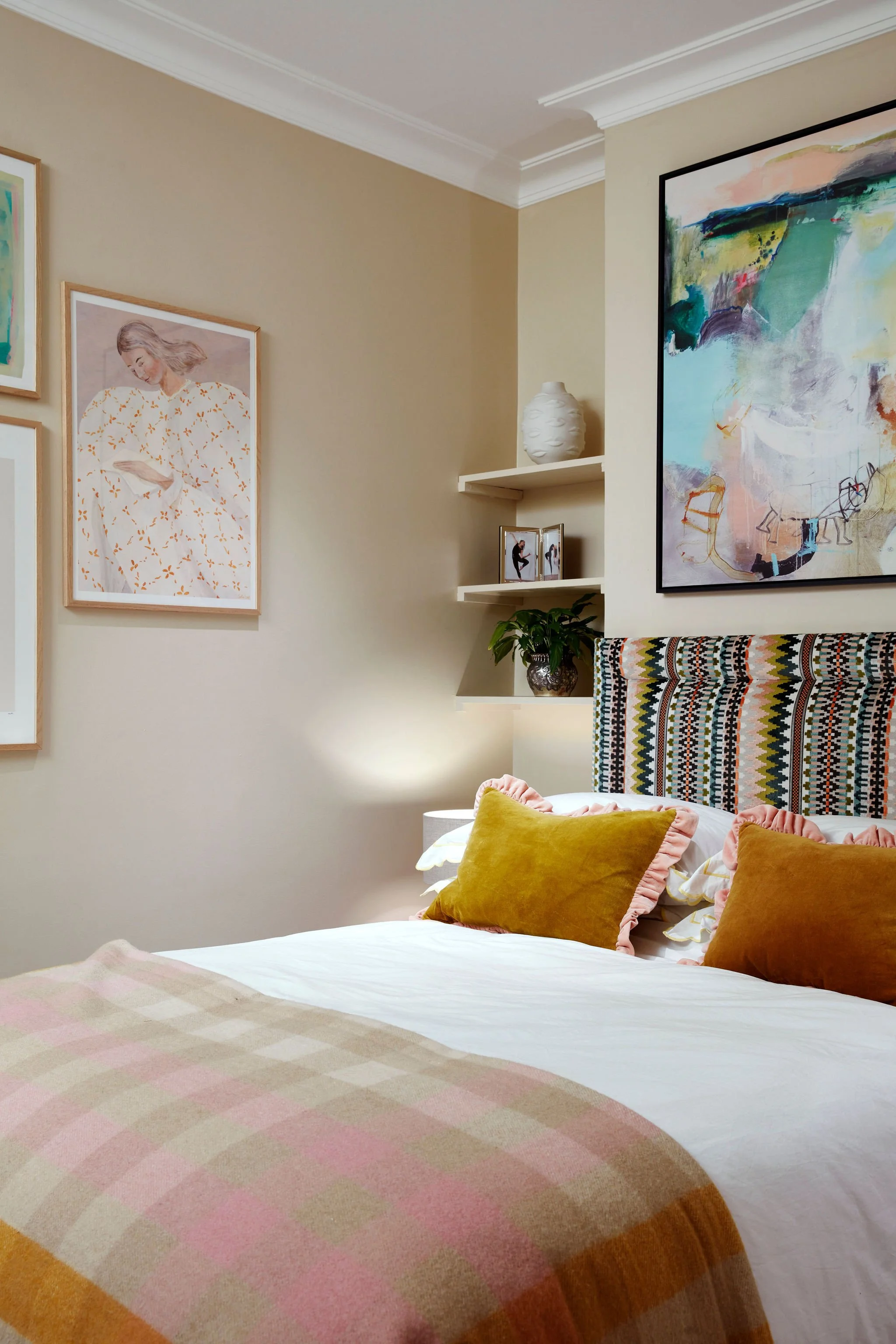
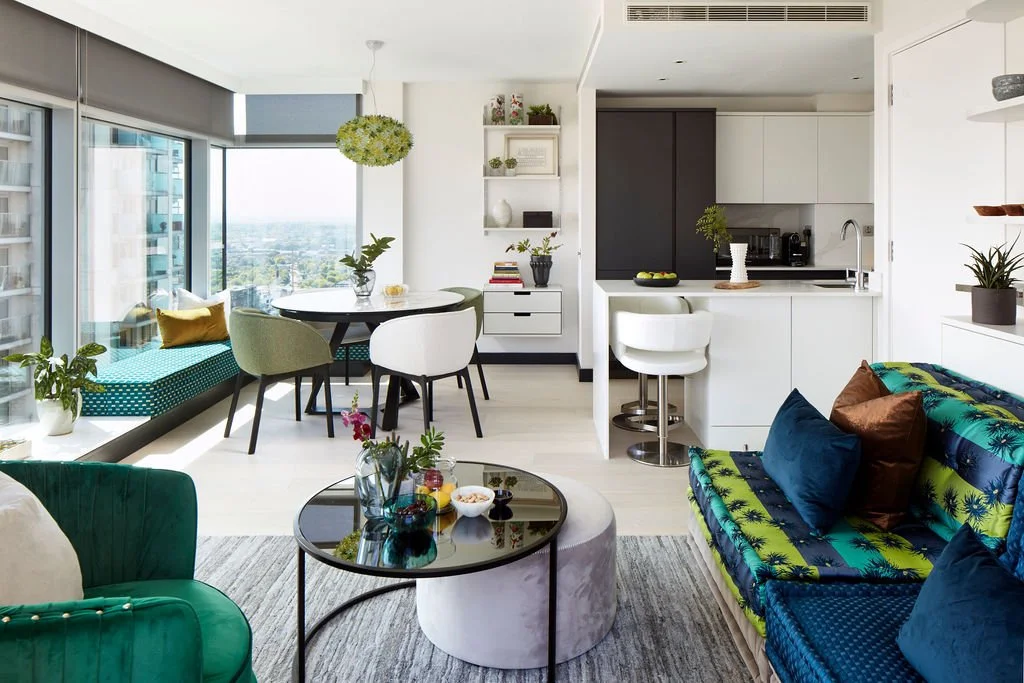
When natural light is scarce in a small room, I resist the instinct to brighten it artificially. Most designers, faced with a dim small bedroom or a north-facing snug, will reach for white walls, pale curtains, and bright bulbs to compensate for the missing light. The result is almost always disappointing — a room that feels neither bright nor atmospheric, just bleached.
The better answer, almost without exception, is to lean into the darkness. Deep reds, midnight blues, rich chocolate, tobacco, forest green — these saturated tones turn a low-light room into a sanctuary. The light becomes softer and more atmospheric. The room begins to envelop you rather than apologise for its proportions. Where most rooms benefit from being read clearly, a small dark room benefits from being read intimately — the eye finding tonal variation rather than scanning a flat surface.
In one mountain chalet project, we had to deal with a narrow TV snug with only a single north-facing window. The room felt perpetually dim regardless of what lighting we tried. Rather than fighting the darkness, we layered the lighting deliberately — soft ambient wall washers behind the sofa, a concealed LED strip along the ceiling beam, and a pair of reading lamps tucked into the corners. We chose a saturated wall colour deep enough to read as shadow. The result is a cocoon-like retreat the clients now describe as their evening sanctuary — the room they head to first when they arrive at the chalet and the room they leave last.
The case for bold wallpaper
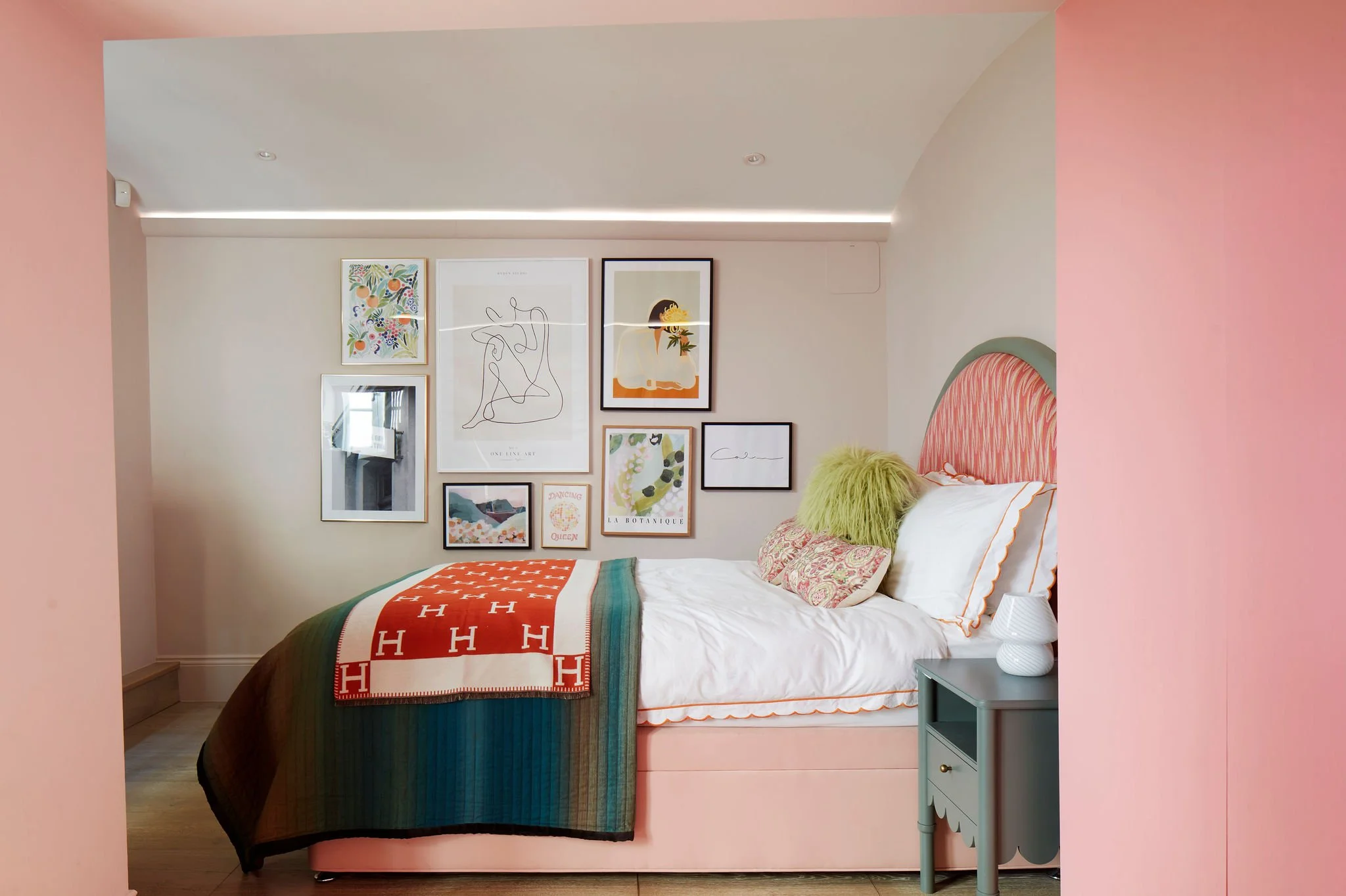
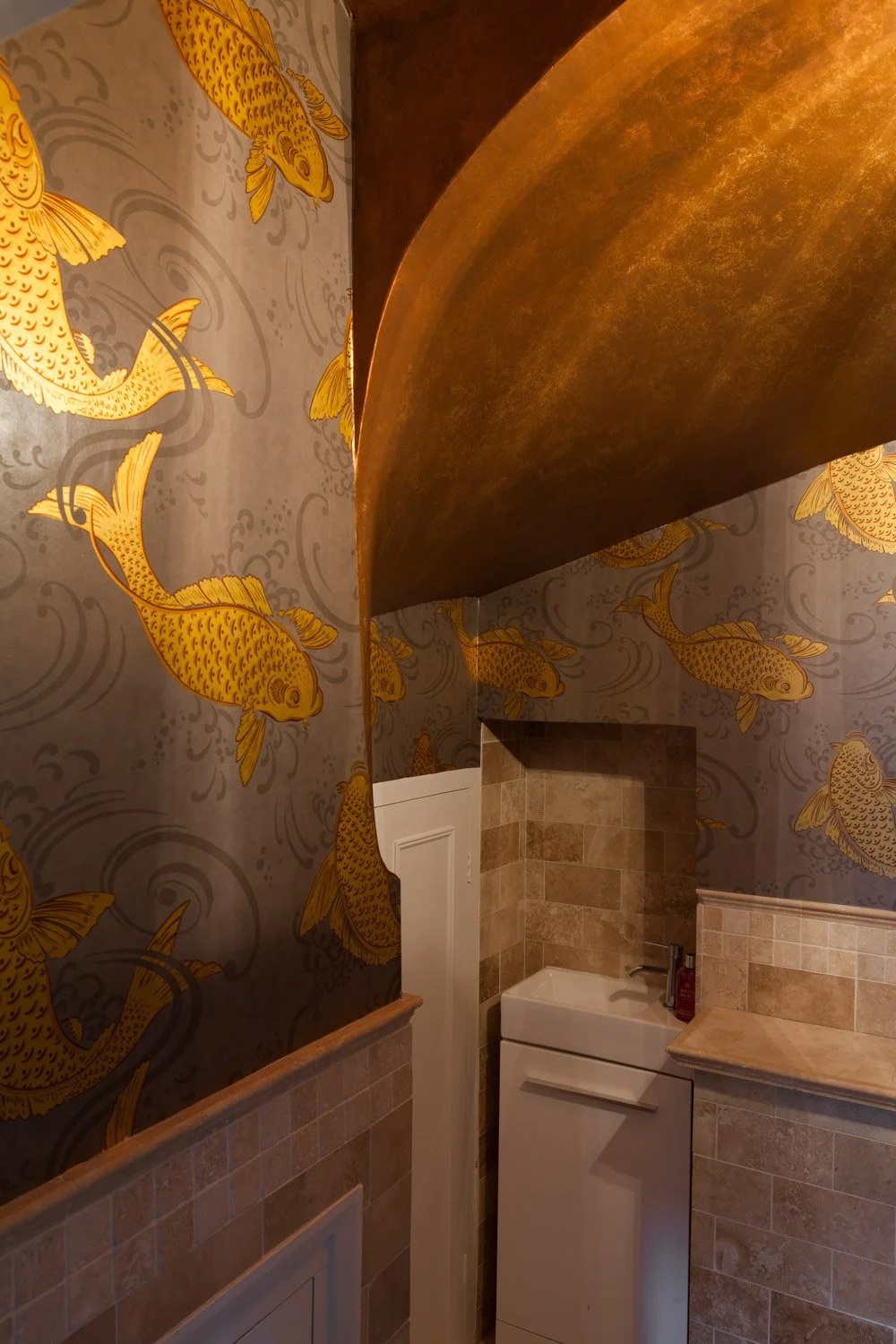
Wallpaper does something to a small room that paint cannot. It introduces an atmosphere — a sense that the room belongs to a particular world, with its own rules of light, shadow, and pattern. The right paper turns a small bedroom into a jewel-box.
We used a deep emerald chinoiserie print in a narrow chalet bedroom that had previously felt cramped to its occupants. The moment the paper went up, the room shifted from tight to enchanted. Guests at the chalet now report it as their favourite room in the house — it feels like a hidden world within the wider building, a kind of contained discovery. The print itself is what makes the room feel larger, not smaller. The eye stops registering the boundaries of the wall and starts following the pattern instead. This is the trick that bold wallpaper performs in any compact space. It distracts the eye from the proportions and gives it something more interesting to follow.
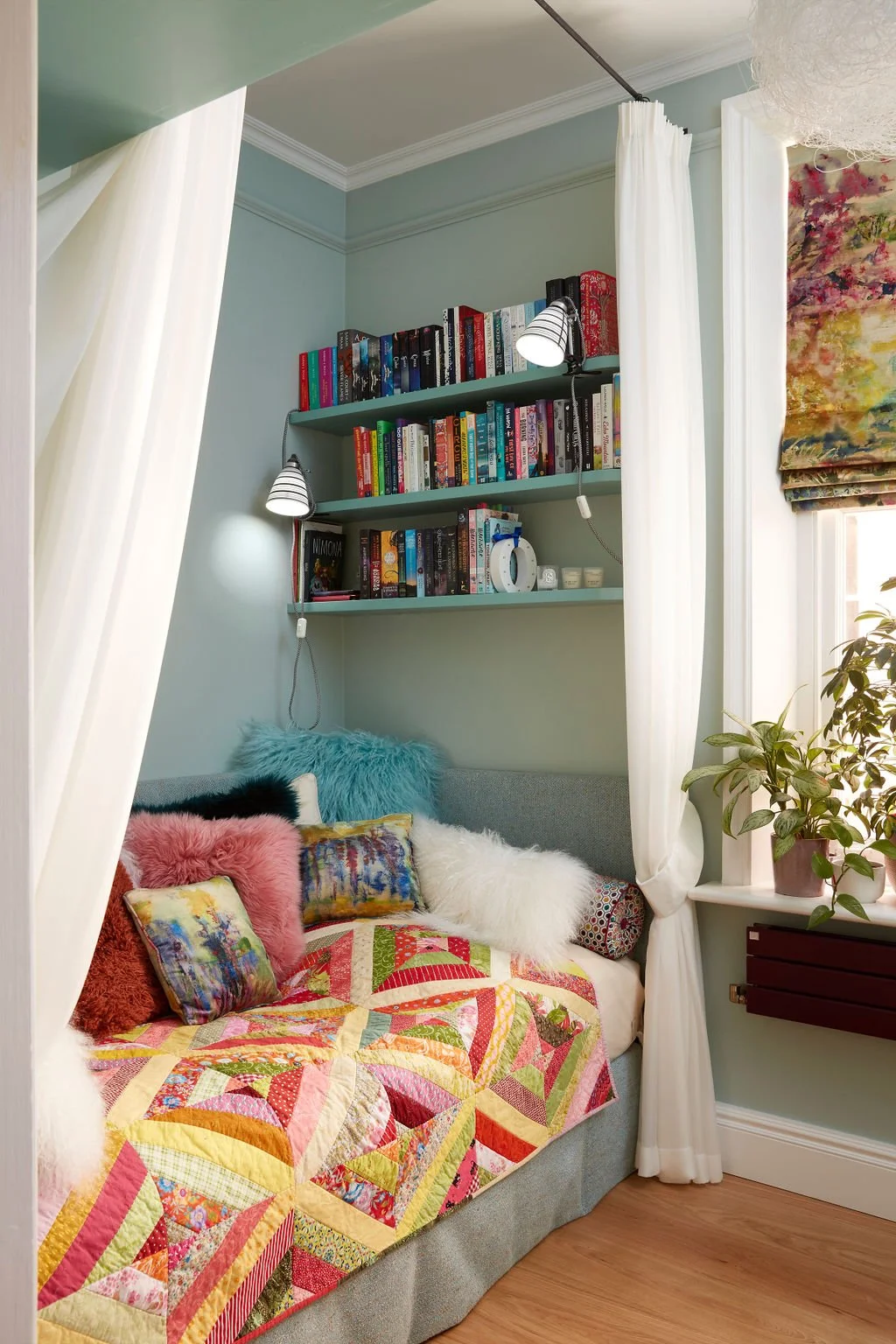
The same logic applies to coastal homes where I often use textured grasscloth or woven natural fibres in small guest suites. The texture adds quiet luxury and softens acoustics, making even a tiny reading nook feel cocoon-like and serene. The walls themselves become part of the atmosphere rather than a backdrop to it.
What the ceiling can do
The ceiling is the fifth wall in any room, and in small rooms it is the wall with the most untapped potential. Most ceilings are painted flat white and ignored. In a small space, that is a wasted opportunity.
Lacquered ceilings — high-gloss or subtly polished — bring an unexpected glamour to compact rooms. A gloss-painted navy ceiling in one London dressing room reflected light like still water, making the room shimmer rather than shrink. The room reads as larger because the ceiling appears to recede into reflection, the eye drawn upward and outward rather than checking the walls for their limits.
In another project, a small family lounge, we commissioned a paint artist to apply layers of gold paint to the ceiling and then age the surface with a vintage glaze. The effect is rich, enveloping, and glowing — the gold catches lamplight and firelight differently at different times of day, behaving almost as a slowly shifting surface above your head. It does what art does in a smaller room: it gives the eye somewhere to go that is not the wall.

Colour drenching
Colour drenching — the technique of painting walls, ceiling, trim, and even built-in furniture in a single hue — is one of the most quietly transformative things you can do in a small room. It removes the visual interruptions that usually break up a space (the contrast between wall and skirting, between architrave and door, between ceiling and cornicing) and gives the eye a single, continuous surface to register. The room reads as a unified atmosphere rather than an assembly of parts.
The terracotta meditation cocoon was a colour-drench project. So was a family den we designed where the entire space — walls, ceiling, joinery, and the large sofas themselves — is in a single petrol blue. The effect is enveloping and slightly cinematic, like sitting inside a single confident decision. The room cannot be misread as anything other than what it is. It does not feel small or large; it feels resolved.
The colour matters enormously, of course. Drenching a room in a difficult colour is worse than not drenching at all. But a tone with depth — petrol blue, terracotta, deep forest green, oxblood, charcoal — drenched across every surface, will transform a small room more decisively than almost any other intervention.


Texture, panelling, and a single bold object
Texture works the same way pattern and colour do, by giving the eye somewhere to rest other than the boundaries of the room. Slatted timber panelling is one of the most effective tools I have for this in compact spaces. In one of our beach surf-style projects, the bedrooms each have vertical timber slats running floor-to-ceiling as panelling. The rooms feel taller, calmer, more intentional. The slats are also remarkably durable and practical as a wall finish, which matters in coastal homes where humidity and salt take their toll on conventional paint and wallpaper.
The same architectural rhythm can be achieved with fluted plaster, fabric wall panels, or simple painted timber boarding. The principle is that a textured wall is doing two jobs at once. It is providing the surface of the room, and it is also acting as a slow-moving visual element that the eye can follow rather than scan.
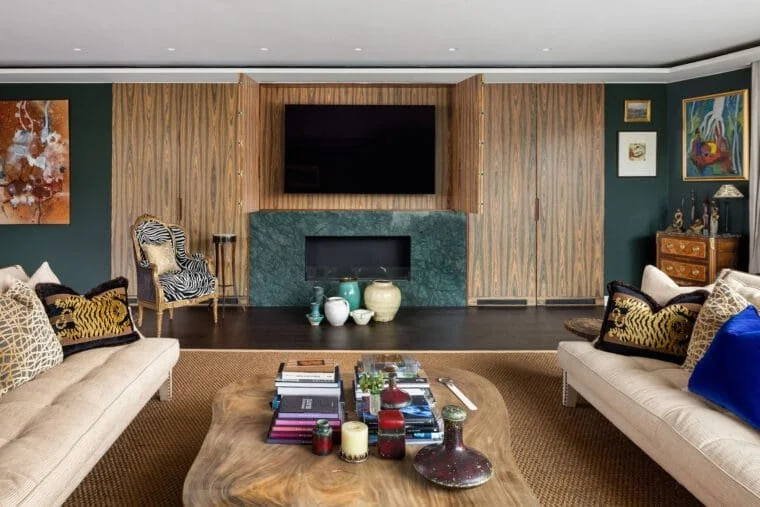
And then there is the question of what to hang on a textured or drenched or wallpapered wall. The instinct in a small room is to choose a small artwork to suit the space. The correct instinct is the opposite. Oversized art in a small room, almost always, is the right answer. A large piece of art asserts confidence. It tells the viewer that the room is not apologising for its size — it is celebrating its identity. A petite sofa beneath a single substantial painting will make a small sitting room feel curated and gallery-like, where the same sofa beneath three small framed prints will make it feel tentative.
Intentional, layered, memorable
Small rooms do not need to feel bigger. They need to feel intentional, layered, and memorable. This is the principle I return to every time I am asked to design a compact space — that the goal is not to disguise the limitation but to honour it, by giving the room a confidence and an atmosphere that a larger room is never required to develop.
The most successful small rooms I have designed share a few characteristics. They commit to a clear emotional register — cocooning, sanctuary, drama, intimacy, calm. They use colour, pattern, and texture richly rather than sparingly. They treat the ceiling as a surface in its own right. They have one or two bold gestures rather than many tentative ones. And they refuse to apologise for their proportions.
The secret of a beautiful small room is not in making it look larger. It is in making it look like itself. Once the room has been allowed to be what it is, in full, the question of size simply stops mattering.
