
Kitchen Renovation: A Designer's Guide to Layout, Materials and Storage

The Kitchen as the Plan Before the Room
A kitchen renovation tends to start in the wrong place: with a mood board, a colour, a cabinet finish. We prefer to start with movement. How someone actually cooks, where they stand while they do it, what happens to a room once six people are in it instead of one. The materials come later. The layout is the design.
kitchen layout
The old kitchen triangle, sink, stove and fridge positioned for short, efficient movement between them, still holds up as a starting principle, though few kitchens are built as pure triangles any more. Most resolve into a U, an L, or a shape organised around an island, and the choice tends to follow the room rather than a trend. An island earns its place when it genuinely extends the workspace, not simply because it anchors the room visually. We have used unusual island geometries, a T-shape with Davonport, a curved form with Artex Pro, where the shape solved a specific movement problem rather than for effect.


materials
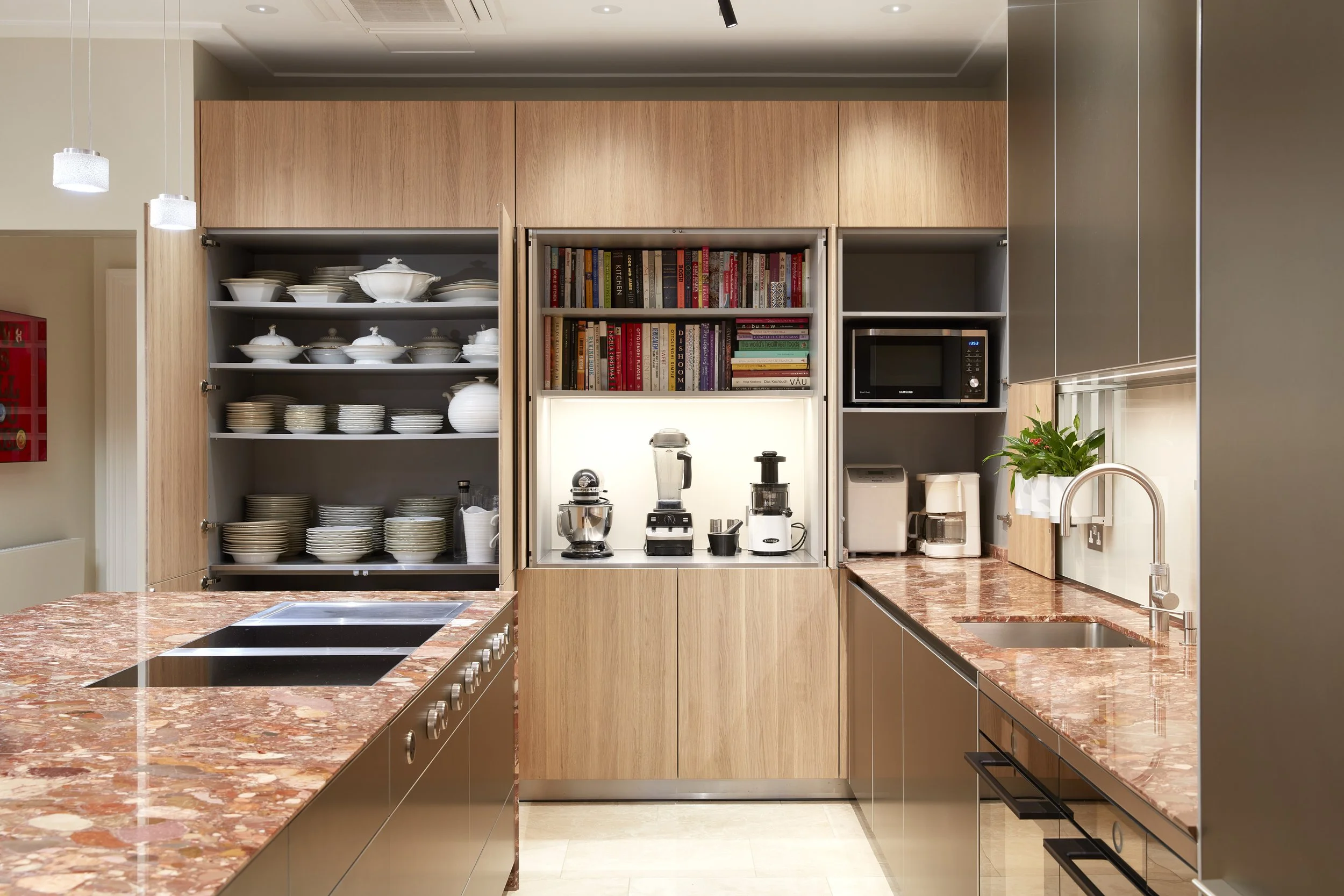
Quartz, granite and marble remain the reliable choices for a countertop that has to survive a working kitchen, largely because they ask so little of the person living with them. Zellige tiles are the less obvious option, capable of carrying a countertop or an entire island rather than just a splashback, with a texture that has more character than a flat stone surface.
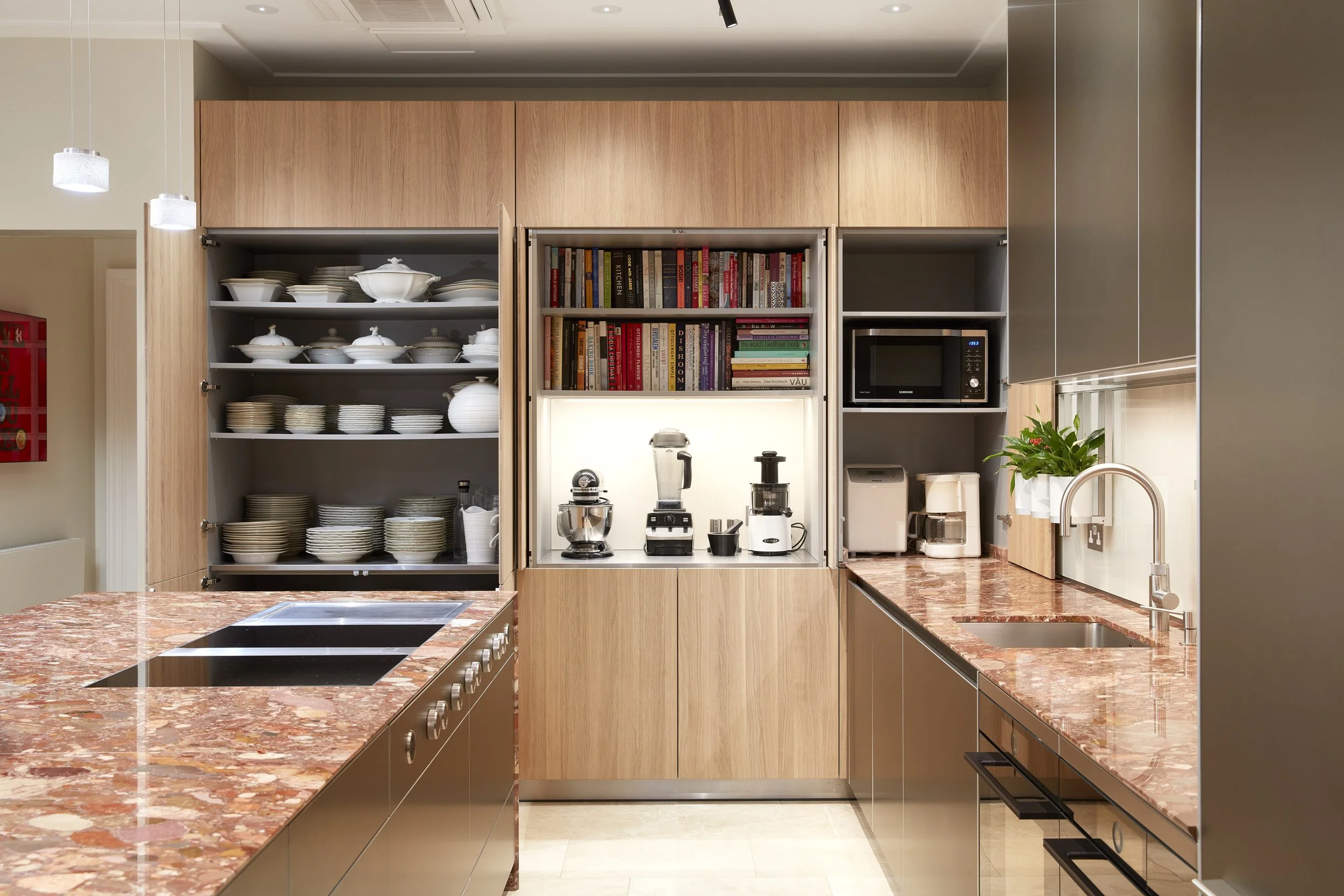
Cabinetry carries more weight than it's often given credit for. Eggersmann's custom work merges precisely engineered function with a level of craftsmanship that suits a bespoke kitchen; Tom Howley's use of colour inside a cabinet, invisible until the door opens, is a quieter way of adding character than doing it on the surface.


Appliances
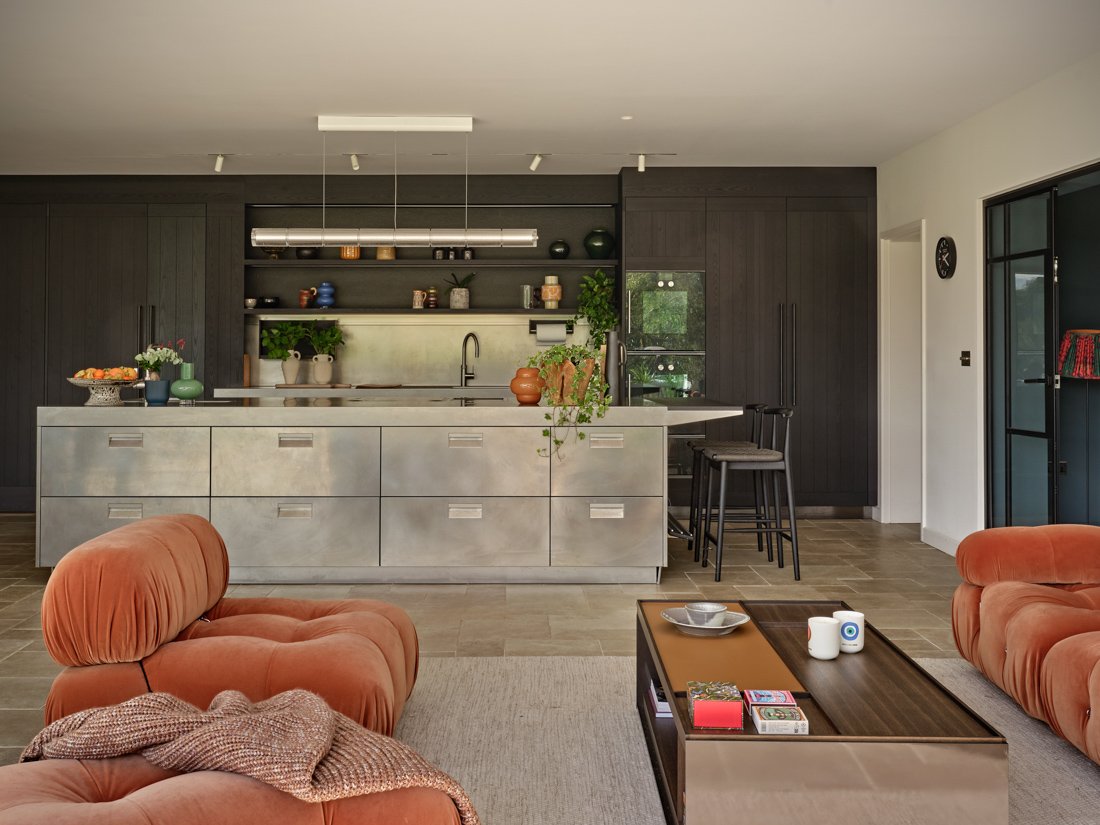
Integration matters more for how a kitchen feels day to day than most people expect. A fridge, oven or microwave built into cabinetry keeps a room visually calm, and a hidden cooking function extends that calm further. Energy efficiency is worth building in from the start rather than retrofitting; induction cooktops and dual-function ovens tend to earn their keep in both running cost and precision. An end-grain maple preparation surface with adjustable height is a small addition that changes how a kitchen is actually used, for prep as much as for presentation.
lIGHTING
Kitchen lighting works best layered rather than singular. Ambient light, recessed or pendant, sets the general mood of the room. Task light, typically under-cabinet, needs to be honest and unflattering enough to be useful while prepping food. Accent light, inside glazed cabinetry or along an architectural line, is where the room's character actually shows.
STORAGE
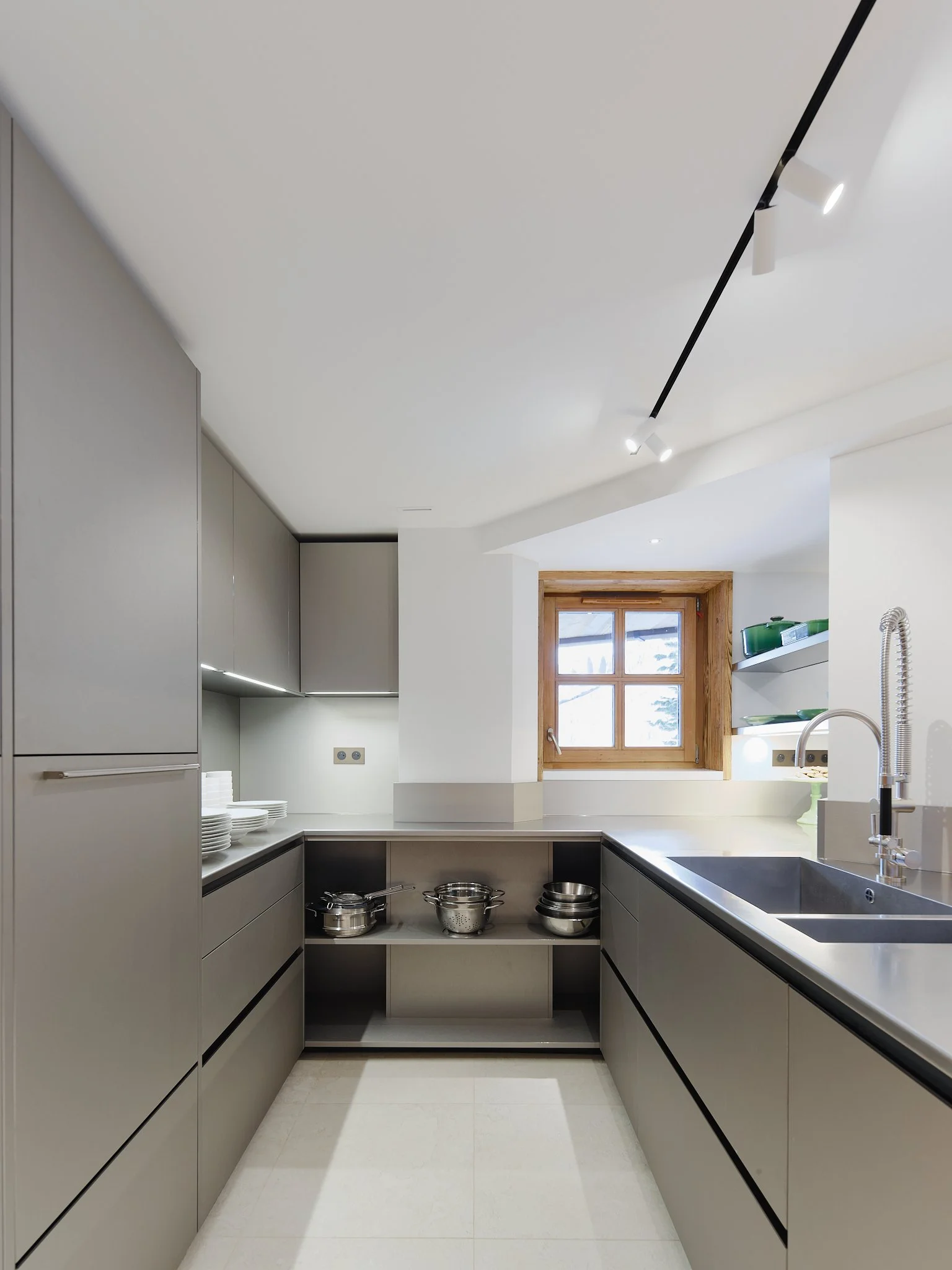
Storage is rarely solved by adding more of it. It is solved by placing it correctly. Pull-out shelves, corner carousels and deep drawers keep a kitchen organised without needing extra square footage; curved end units do the same while also softening the geometry of a run of cabinetry. Smaller additions, a built-in spice rack, a hidden utensil drawer, keep the counter clear without becoming invisible clutter elsewhere. A well-shaped breakfast bar earns its space when it genuinely draws people to stay in the room, not simply because an island has room for stools.


PALETTE
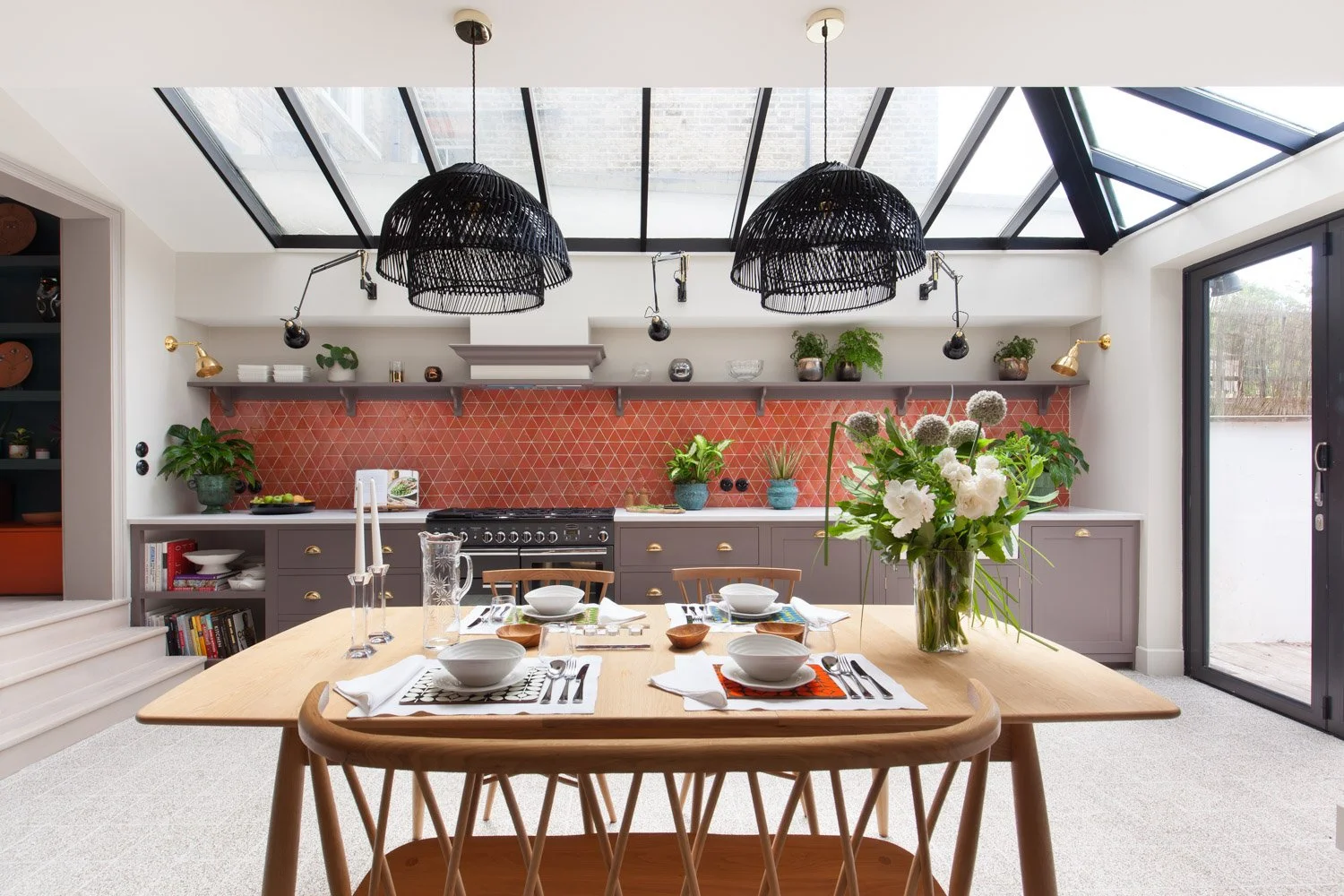
A kitchen's colour scheme has to survive longer than most other rooms in the house, since it's harder and more expensive to change. Neutral foundations, whites, greys, warm off-whites, tend to age the most gracefully, largely because they leave room to shift the accents around them over time. Contrast, dark countertop against light cabinetry or the reverse, adds depth without needing colour to do it. Where colour is introduced, a navy cabinet run or a patterned backsplash, it tends to work best as a considered exception rather than the starting point.
FLOORING & FINISHES
Hardwood, stone and porcelain each solve the same problem differently: how to survive daily wear without looking as though they're built to survive it. A backsplash is one of the few places in a kitchen where more expression is genuinely welcome, whether that's a classic subway tile or a bolder geometric pattern, provided the surface stays easy to keep clean.
Not every kitchen needs a full renovation to feel resolved. New floors, updated hardware, a change in lighting: smaller interventions can shift a room considerably without touching its structure. The scale of the work should match the scale of the problem, not the other way round.
Do you have a project in mind or require help with kitchen renovation for your home?