
Why the Fireplace Anchors a Home

A stove from Vienna in a London kitchen
A few years ago we worked on a townhouse in Fulham for a family whose roots are in Austria. The renovation was extensive, the brief unusually clear: the new kitchen and family living space should not feel like a London kitchen. It should feel like home — in the deeper sense of the word, the home a family carries with them across borders and generations.
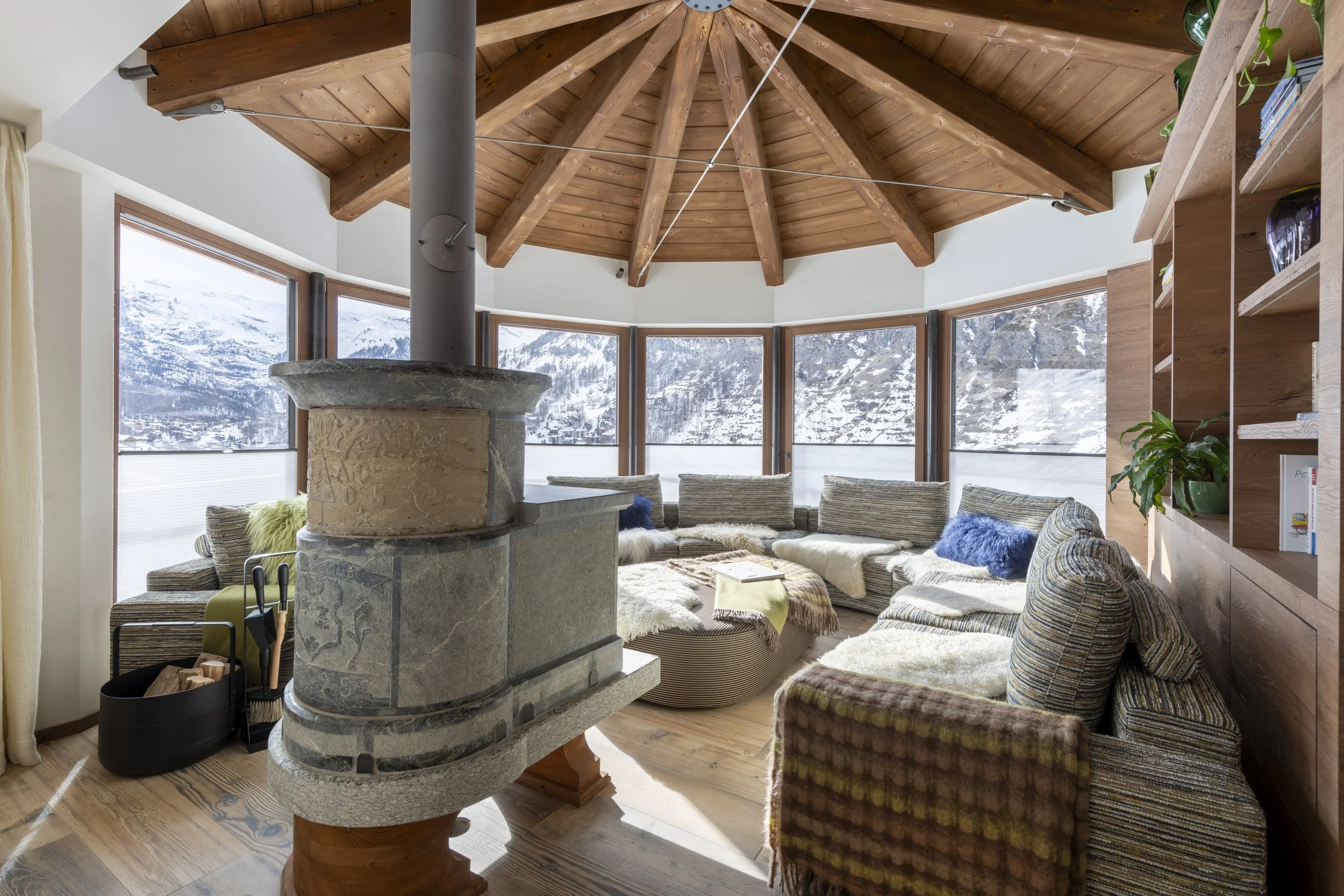
The clients sourced the answer themselves, from Vienna. A vintage Kachelofen — a traditional Austrian tiled stove of the kind that has stood in central European homes for centuries. It came in pieces, brightly glazed ceramic tiles in the traditional Austrian style — the kind that would have stood in family homes the clients knew as children. We installed it at the heart of the new kitchen, where it now sits as something between a fireplace, a piece of furniture, and a small architectural building. It radiates warmth, in both senses. When the children come home from school and sit beside it on a winter afternoon, they are sitting beside a piece of Austria.
A fireplace, when it is doing its work properly, is never only about heat. It is the gravitational centre of a home — the place where rooms organise themselves, where families gather, where ritual still lives in a way that almost nothing else in modern life manages to hold on to. The Kachelofen in Fulham crystallised something I had felt about fireplaces for years but had never articulated as clearly. They are the most emotionally significant element in a house. Worth designing accordingly.
The gravitational centre
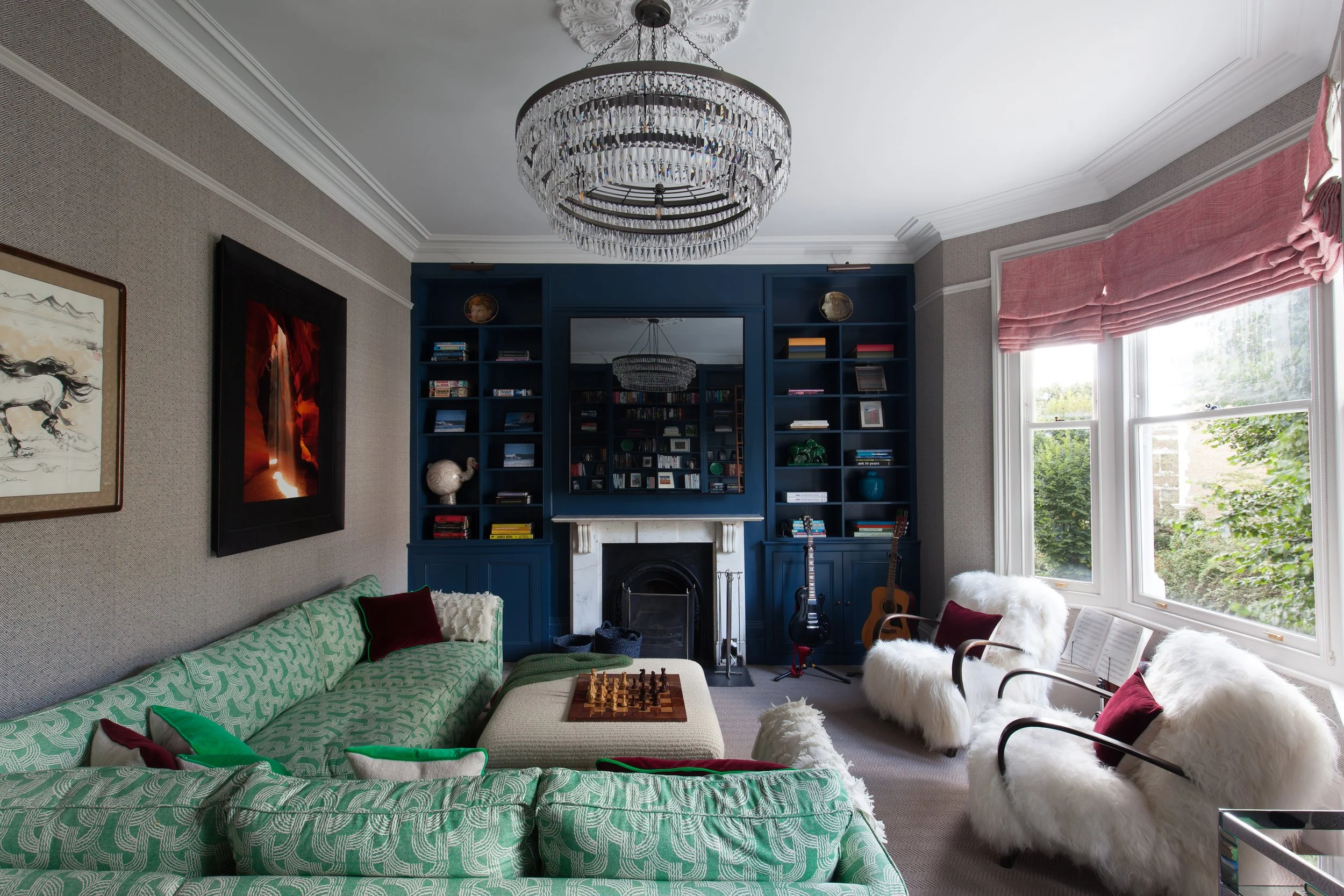
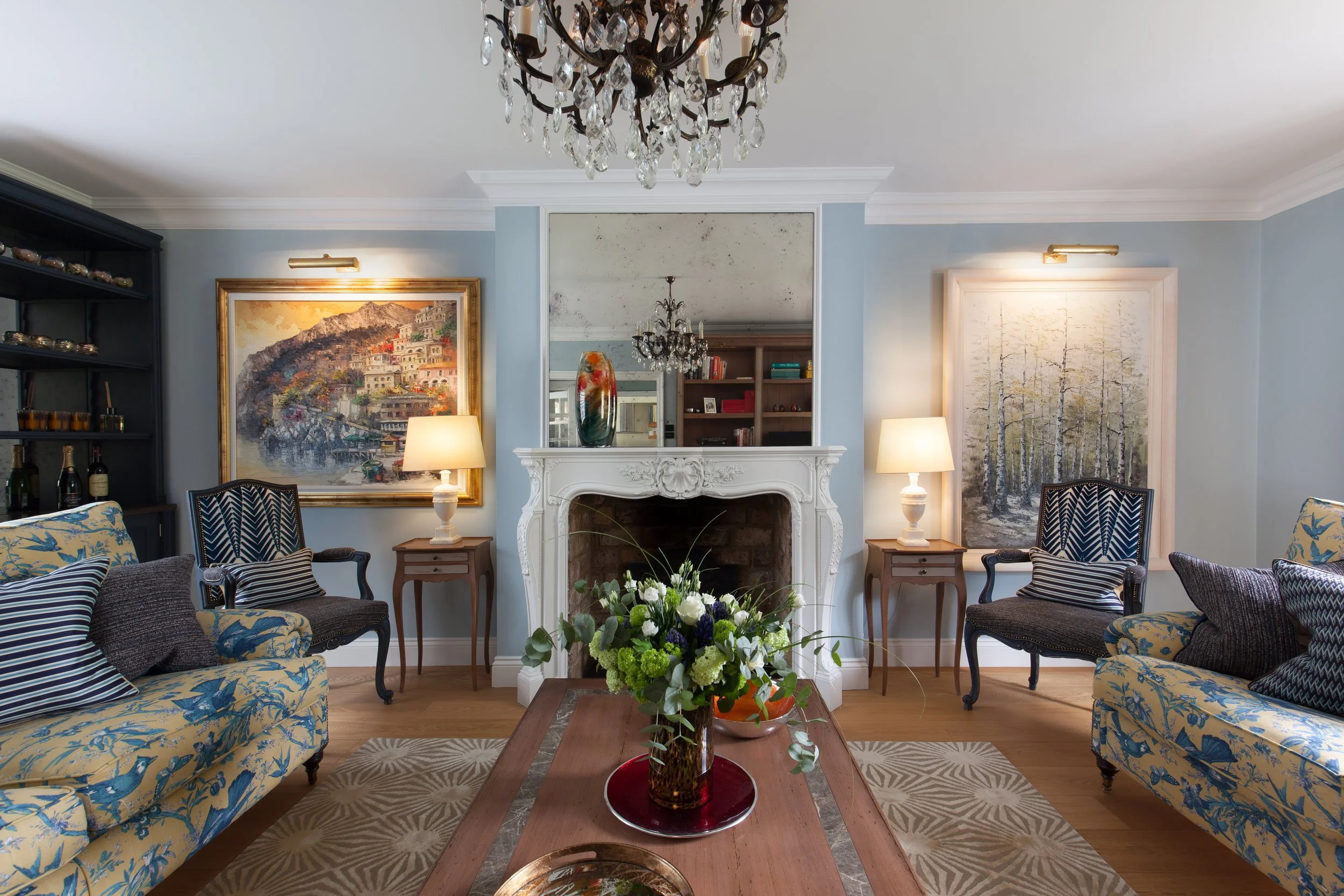
When I plan a room, I always begin by asking the same question. Where does the eye rest when you enter? The answer, almost always, is the fireplace. From there, everything else organises itself — sofa placement, lighting, artwork, the lines of circulation through the room. The fire is the gravitational centre, and the rest of the room orbits around it.
Architecturally, the fireplace has to be aligned with the rhythm of the room. Centring it on a main wall or between windows reinforces symmetry; placing it off-centre can introduce a more dynamic, contemporary feel. Either choice is legitimate. What is not legitimate is treating the fireplace as an afterthought, as though it were one decision among many. It is not. It is the decision around which most of the others will be made.
Scale matters as much as placement. In a grand reception room, a tall chimney breast or wide mantel feels grounded and generous; in a smaller living room or bedroom, a more delicate design in stone, plaster, or metal ensures balance. Where existing fireplaces feel undersized, I extend their visual presence by adding architectural panelling or built-in joinery around them. In my own London house I replaced all five mantle surrounds with reclaimed stone, resized the hearth plates with black granite, and bought antique grates and inserts to complete them. Dressing a fireplace properly can change the entire character of a room, even when nothing else moves.
In open-plan layouts the fireplace takes on a different kind of work — defining zones without walls. A double-sided or see-through fire can separate dining and living areas while preserving visual continuity. Two armchairs angled gently toward the hearth create an intimate nook within a larger space, perfect for reading or conversation. The fire becomes the architecture of the room in places where there are no walls left to do the job.
What the material holds
The materials of a fireplace shape the entire atmosphere of the room around it. Texture, tone, and finish change how firelight reflects, how the space feels in daylight and at night, how the fireplace integrates with the bones of the building. The choice should sit in dialogue with the architecture rather than fight it.
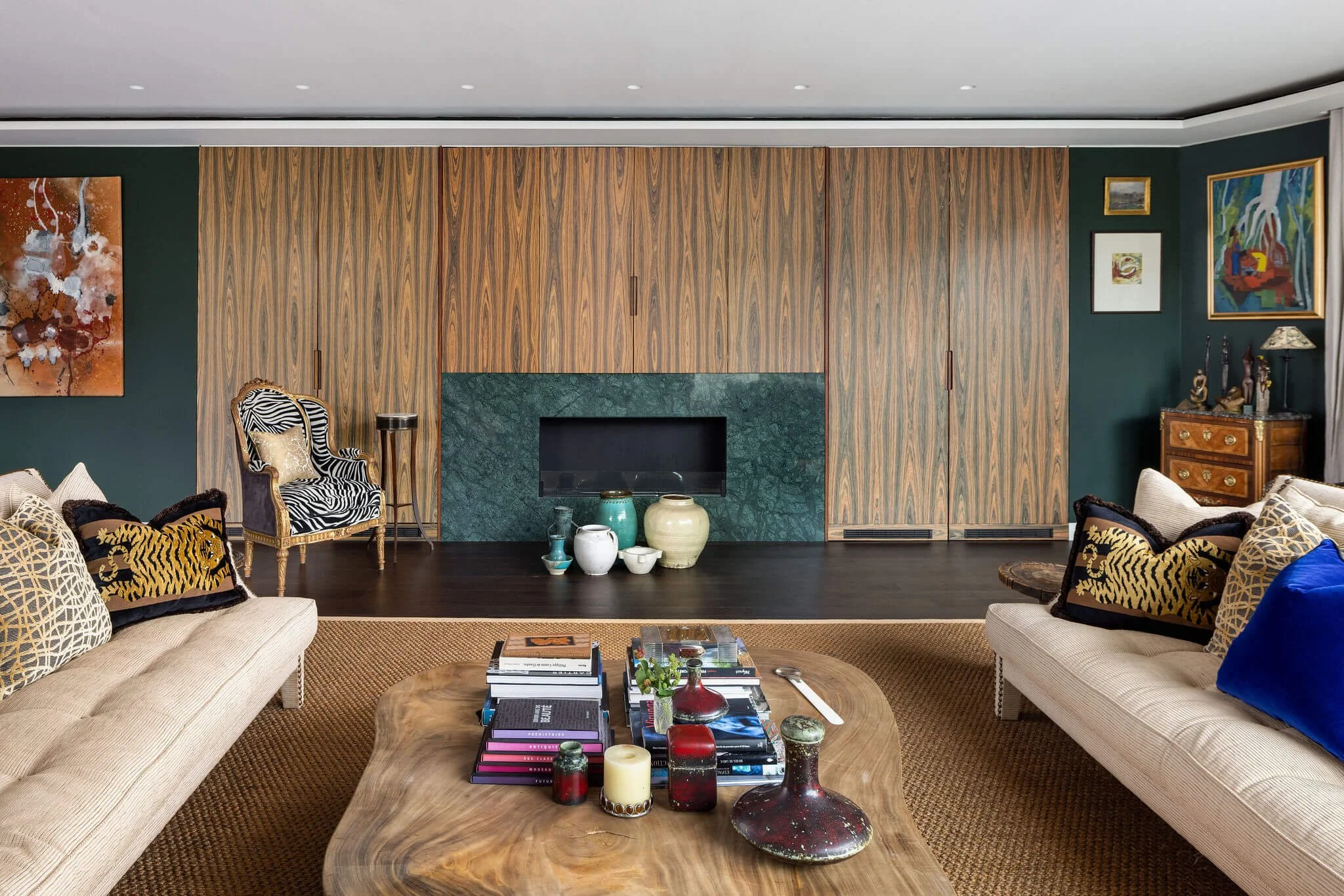
In period properties, natural stone, carved marble, or timber surrounds preserve heritage and craftsmanship in a way contemporary materials rarely can. Marble remains the quintessential luxurious choice — Calacatta or Arabescato for drama and reflection, honed or leathered finishes for something softer and more tactile. In one project we extended the marble beyond the surround, wrapping it into the hearth and carrying it up the chimney breast for a monolithic effect that felt entirely architectural.
In rougher, more grounded settings, limestone, sandstone, and travertine bring texture and earth tones that work beautifully with exposed beams, linen upholstery, and natural flooring. In our chalet projects we use chiselled rough granite, new or reclaimed, its hand-finished surface revealing the marks of the maker and giving the room the sense that the fireplace has always belonged to the landscape. In my own Hampstead entrance hall I have a brushed reclaimed chateau limestone surround which sits between the travertine floor and the oak beyond, its rough rustic texture grounding what is otherwise a quite minimal architectural space.
For our large new build in Cornwall, I sourced bespoke handmade tiles from Belgium — a mesmerising, reflective bronze finish that clads the monolithic central fireplace, casting a warm shifting glow and catching the cliff light from every angle as it moves through the day. In contemporary spaces, micro-cement, polished plaster, and tadelakt create a sculptural calm — surfaces that allow the fireplace to dissolve into the wall, the flame becoming the feature rather than the surround.
There is no formula for any of this. The discipline is to keep the material of the fireplace in conversation with the rest of the interior palette — echoing stone in a kitchen counter, repeating a marble tone in a bathroom vanity, matching metals across lighting and furniture. The fireplace is not a decoration sitting in a room. It is the centre of a system of materials.
Adding a hearth where there wasn't one
In contemporary or new-build properties, introducing a fireplace where none originally existed can entirely redefine how a room feels and functions. The intervention adds not just warmth, but structure, character, and focus — a single architectural decision that organises everything around it.
Without the constraints of existing chimneys or flues, you have an unusual freedom of placement. Bioethanol and electric models can sit in the middle of a room, hang from a ceiling, or move across walls. In a new build holiday home, we placed a modern log fireplace from Focus against the central wall, where it now anchors the open-plan living space. In our summer house project in Denmark, a contemporary log-burning stove became the visual counterpoint to large rustic timber façades — the flicker of the flame adding intimacy and rhythm to a space otherwise defined by openness and light. In a French beach estate, we recovered an existing stone surround with a bespoke shaped design and finished it in polished plaster, giving it the theatrical, sculpted quality the room needed without losing the original bones.
A fireplace added well to a new build should feel as though it has always belonged. Position it on the natural lines of the space — where the eye travels when you enter, where the furniture wants to orient itself, where light moves through the day. Done properly, no one will guess it is the newest thing in the room.
Reimagining a redundant hearth
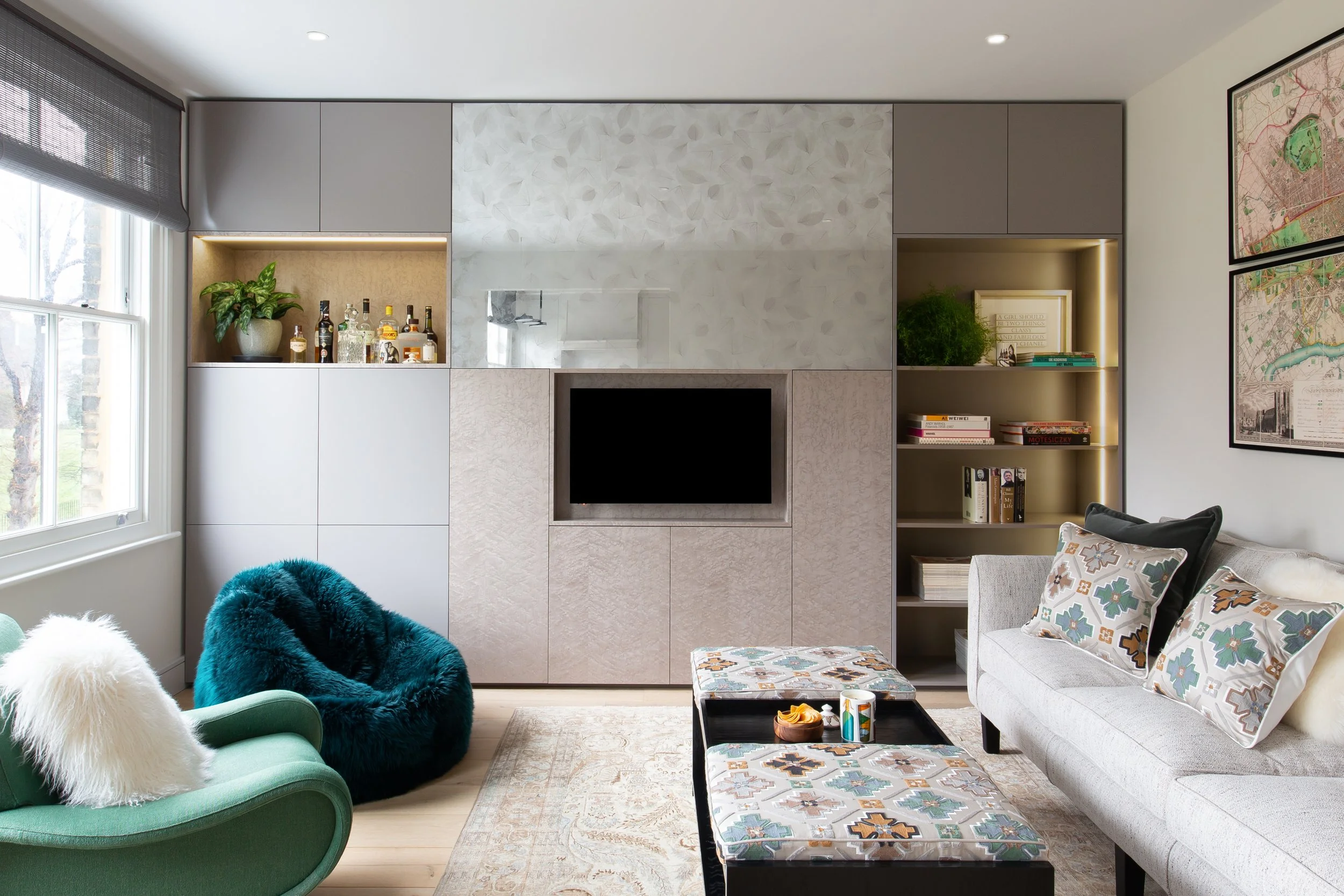
In many period properties, particularly in London, layouts are reconfigured for modern living and a fireplace ends up in the wrong place, or with no useful function in the room it now sits in. The temptation is to remove it. That is occasionally the right answer — although the structural cost is significant — but more often the right answer is to reimagine it. A redundant fireplace is a design opportunity, not a problem.
In a Kensington apartment, we filled a sealed fireplace with stacked travertine slabs and placed a bronze sculpture in front of them. The combination of material and art read as a deliberate installation, the fireplace's original form preserved but its purpose entirely rewritten. In a Highgate townhouse, we concealed a defunct fireplace within bespoke panelling that also housed hidden storage and integrated lighting; the result was architectural, elegant, a quiet nod to the past reinterpreted for modern living. In another Highgate project we went further, applying bespoke veneered panelling that made the fireplace visually disappear into the surrounding walls, with the option to restore it later if a future family wanted it back.
The most rewarding versions of this work, though, are the ones where the fireplace is kept and the new architecture is built around it. In a Hampstead kitchen project we retained two traditional fireplaces in a space that had been entirely reconfigured for modern living. Rather than removing them, we designed the Bulthaup cabinetry to float gracefully around their niches — modern life framed by history, the new and the old reaching a quiet agreement.

What the hearth holds
There is something stubbornly enduring about the fire. Central heating has long since made it unnecessary; modern lighting has replaced its illumination; entertainment now lives on screens rather than in flame. And yet families still gather around it, still light it on the first cold evening of autumn, still bring guests to it before they bring them anywhere else. The fire still organises the rhythm of an evening in a way that nothing else manages to.
The hearth holds memory more reliably than almost any other element in a house. It is where families have gathered for hundreds of years and where they continue to gather now. It is where children are read to, where adults pause at the end of a difficult day, where friends sit late into the night. A fireplace is the only piece of architecture in a contemporary home that still asks something of you — to lay the wood, to strike the match, to wait while the kindling catches, to keep watch as it settles. The ritual has not changed in any meaningful way for a thousand years.
This, I think, is why the Kachelofen in Fulham has the effect it does. The family chose it not for warmth — central heating long since had that covered — but for what the object would do in the room. It would carry Vienna into a London kitchen. It would gather the children at the end of the day. It would still be there, holding the centre of the room, when those children were grown and bringing their own children to sit beside it. A well-designed fireplace is not an architectural feature. It is a place where the life of a family is gathered, decade after decade, and held.
When I am asked what makes a home feel like a home, I find myself returning to fireplaces more often than to almost anything else. Where the hearth is, the home is. The rest of the design is, in some quiet way, an arrangement of rooms around it.


Do you have a project in mind?
