
Designing a Dining Room for the Way You Live
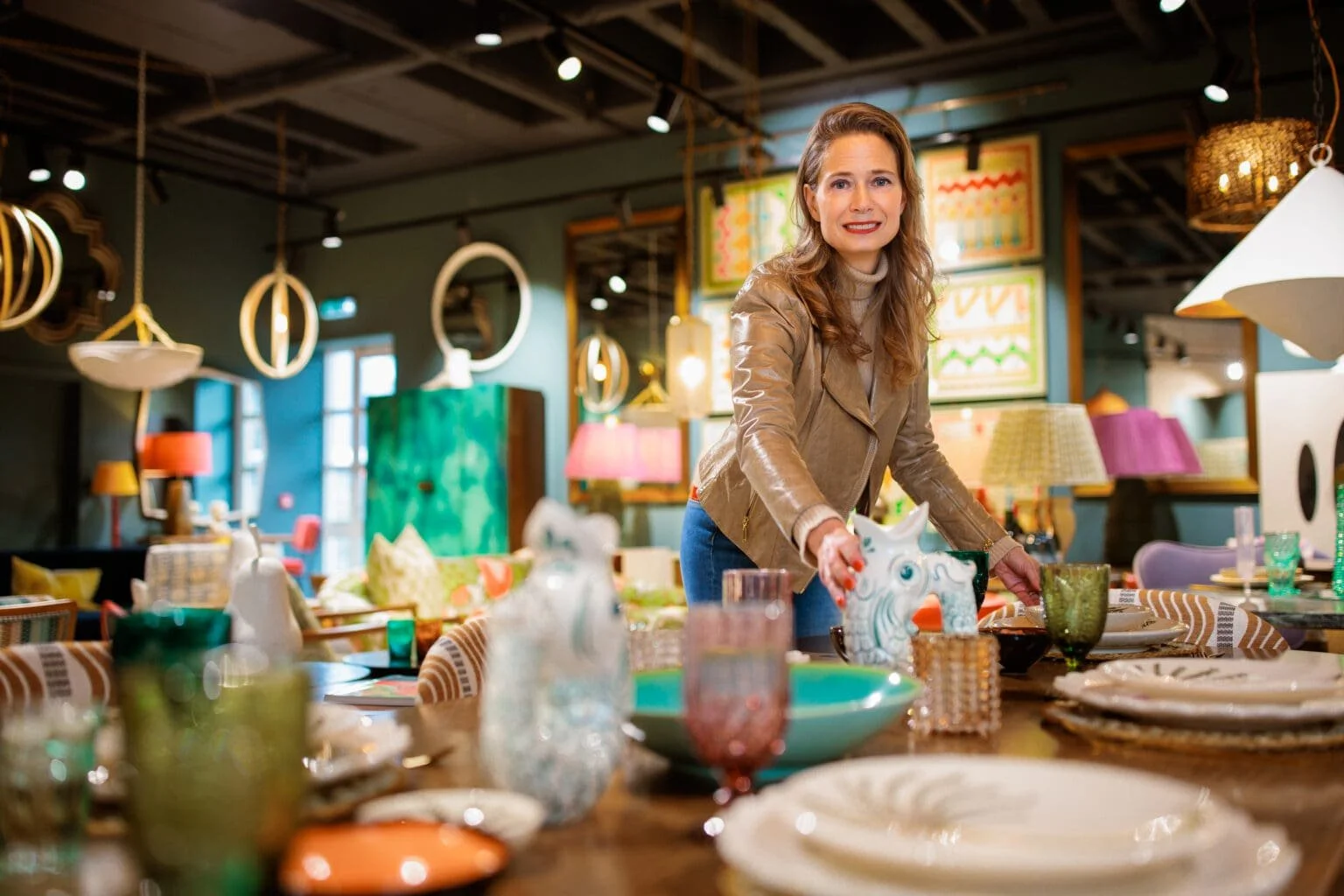
The most used surface in a home
The dining table is the longest-serving piece of furniture in most houses. Sofas come and go. Beds are replaced. Wardrobes change shape across decades. But the dining table — once chosen — tends to stay. It survives moves, refurbishments, children growing up, parents growing older. It accumulates marks, takes on patina, becomes a record of the household around it. Some of the tables I specified for clients twenty years ago are still in the same families, with the same patina, the same chips, the same shallow cup-rings from a particular spot where someone always sits.
That is partly because good dining tables are made well and built to last. It is also because the table itself, more than almost any other piece of furniture in a home, becomes attached to a life. The breakfast cups, the homework spread across one corner, the laptop in the afternoon, the candles in the evening, the children's friends staying late. The dining table is where most of the small rituals of a household happen — the ones that, looking back, turn out to be the most important.
Which is why choosing the wrong one is one of the more consequential mistakes in a renovation. A dining table that does not fit the life of its household will not be enjoyed, will not be used, and will quietly create friction in the room around it. Almost every conversation I have with a client about dining tables starts with the same question: how do you actually use the table? Not how you would like to. Not how you imagine you might. How you actually do.
What the table does in a room
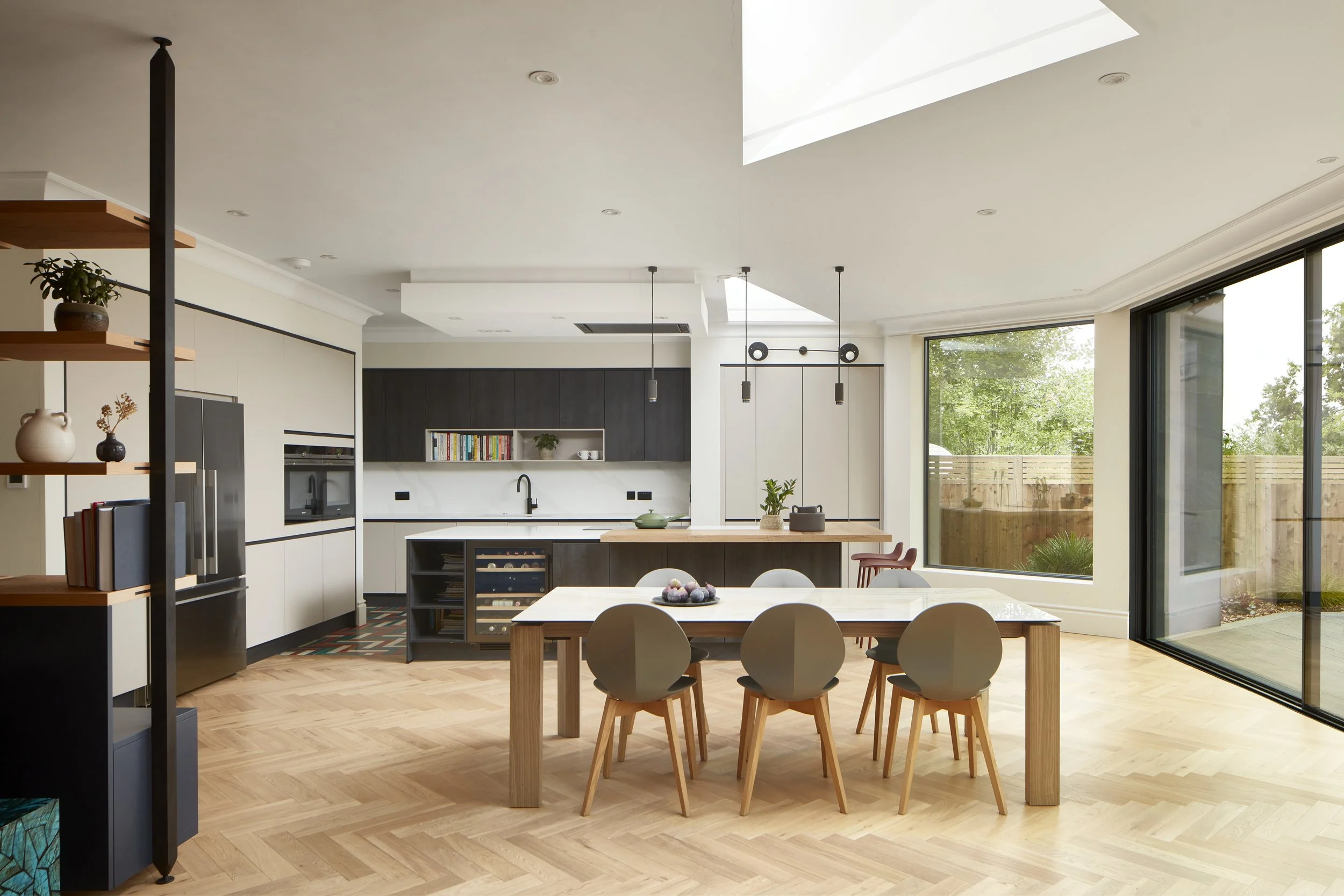
A dining table organises a room. In open-plan layouts it does the work that walls would otherwise do — defining a zone, anchoring sightlines, declaring which corner is for cooking and which for gathering. In closed dining rooms it acts as the room's gravitational centre, with everything else (sideboards, art, lighting) arranged in relation to it.
For all of that to work, the table has to fit. I always insist on a minimum of 90 centimetres of clearance around the perimeter — enough for chairs to slide back and for someone to walk behind a seated guest without making them lean forward. Anything tighter and the room is stressful to use; tighter still and people stop using the dining room altogether. The shape of the room itself should guide the shape of the table — rectangular rooms suit rectangular or oval tables, square or compact rooms tend to suit round or square ones.
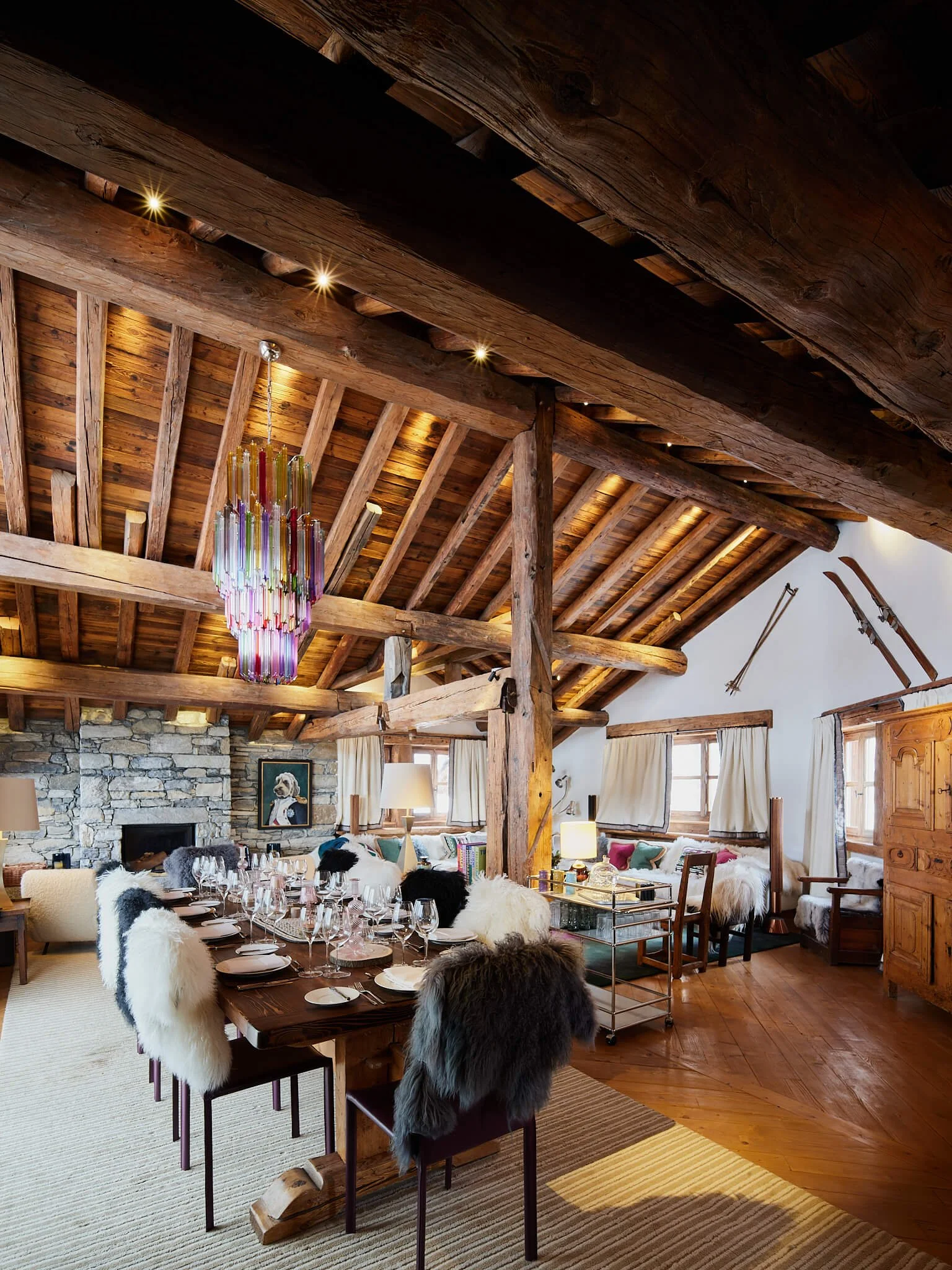
Architectural cues — a pendant light, a ceiling beam, an area rug — define the dining zone without requiring walls. In an open-plan chalet we designed, a substantial chandelier marks the dining area from the kitchen and living space around it, the light hanging just low enough to make the table feel like a contained room within a larger one. In another chalet, the breakfast corner is a built-in banquette upholstered against the wall — a deliberate carving-out of an intimate space within an otherwise vast open plan. The banquette works in a way a free-standing table never would: it is anchored, it is permanent, and it gathers the family in a way that mimics the booth at a favourite restaurant. People stay longer at banquettes than at tables. Some of the most successful dining moments in any house are built around them.
The body of the table
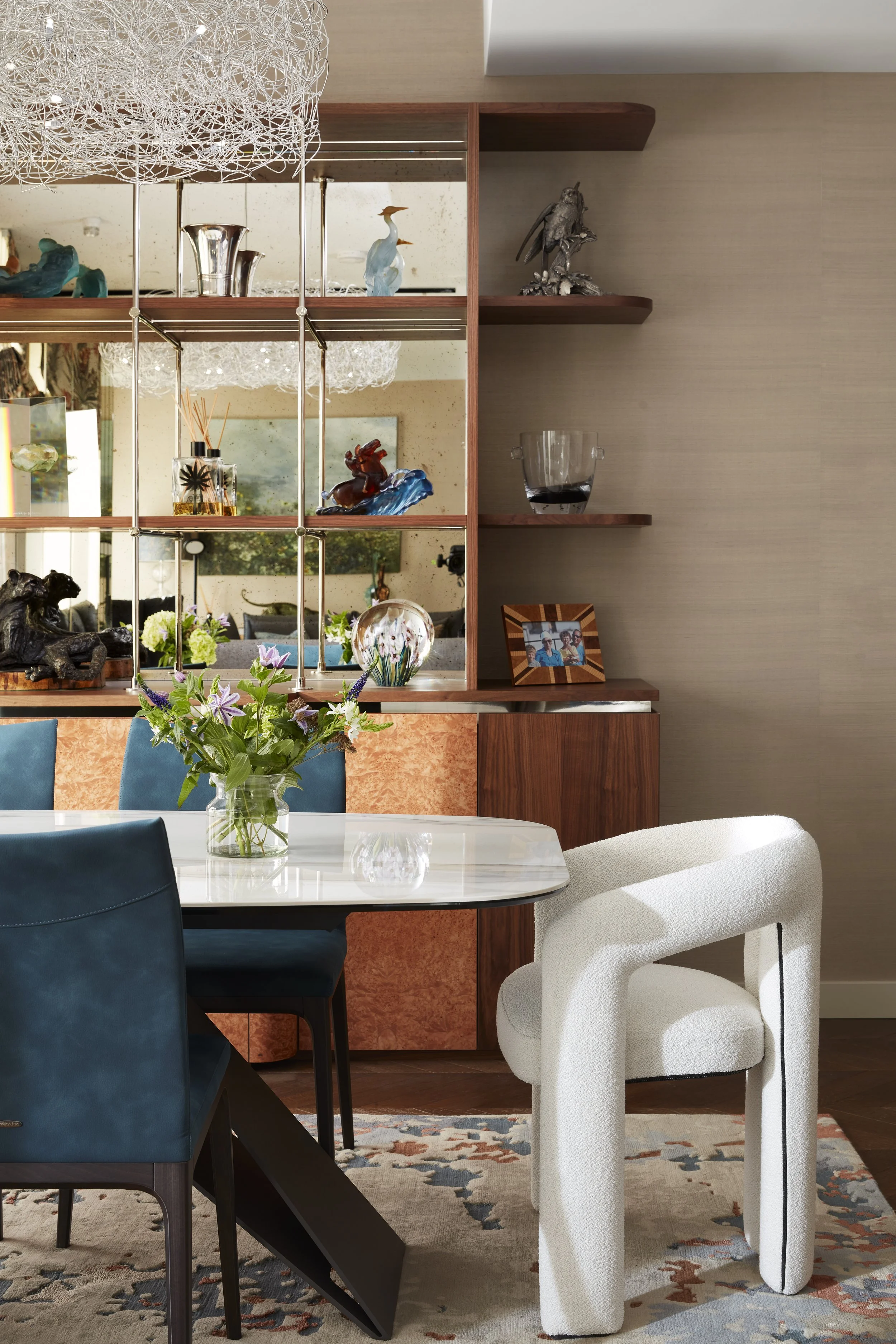
The material of a dining table matters more than almost any other decision about it, because the material is what you will touch every day for the next two or three decades.
Solid wood is, almost always, the right answer. Oak, walnut, ash, teak — these timbers age into something better than they began as. I have specified solid oak tables for young families who use them for homework as often as for dinner, and a decade later the wine spills, finger paints, and burnished corners have not detracted from the table; they have made it. The table has become the visible record of the family living around it. Walnut, for clients wanting something more formal, has a deeper tone and a more refined grain that takes upholstered chairs and softer lighting beautifully. Ash and birch sit well in contemporary spaces. Whichever you choose, oiled or matte-lacquer finishes are far more forgiving than high-gloss, and easier to touch up when they need it.
Stone is a commitment. Marble is the showstopper — Carrara or Calacatta veining catches firelight and lamplight in a way no other surface manages — but marble is porous, and it stains. Red wine, citrus, oil. One client of mine loved her marble table but came to dislike its upkeep, and eventually we moved it to her conservatory for occasional use and replaced the main dining table with a porcelain top that read as marble but didn't ask to be sealed twice a year. Porcelain or sintered stone is the diplomatic compromise — it replicates the look without the fragility, and because it can be cut slim, it allows extending mechanisms that solid stone tops never permit. In two of our projects — one in Battersea, one at Pan Peninsula — porcelain tops with a Carrara figure now extend to seat the full family at Christmas and contract back to four for a Tuesday night.
Glass deserves its own thought. In a narrow London townhouse kitchen, I installed a frosted-glass dining table on a slim metal base and the room appeared to double in size — the light moved through the table rather than stopping at it. Glass is unforgiving of fingerprints and scratches, which is why it works better for couples and entertainers than for families with small children, but in the right room it is the lightest and most architectural option available. I am currently waiting for the delivery of a Cassina LC6 — Corbusier's glass table — for my own home. I have been admiring it for years.
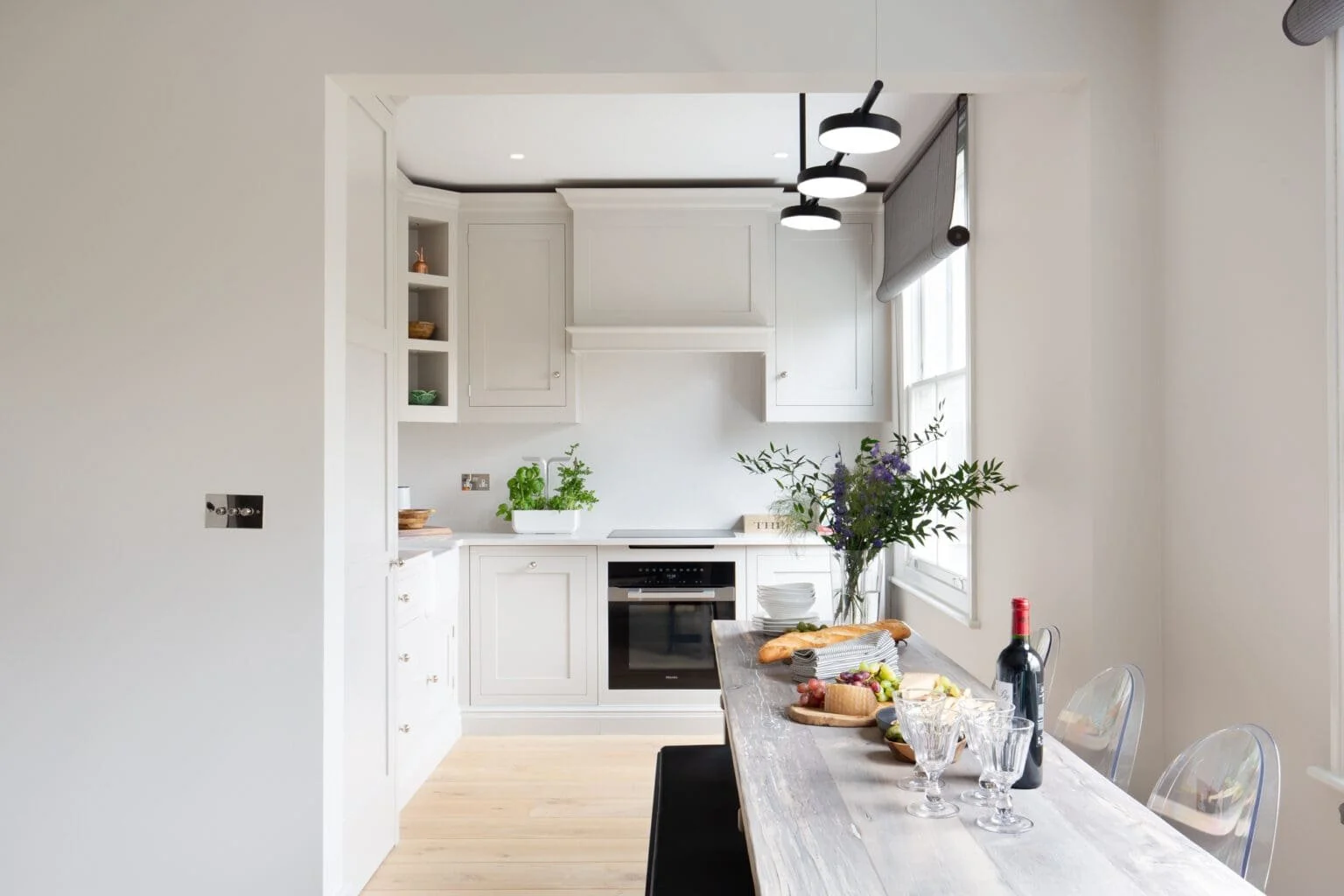
The base matters as much as the surface. Pedestals and trestles seat more people comfortably than four legs do, because there are no legs at the corners to dictate where chairs may sit. Where four legs are unavoidable, "pushed-in" leg designs free up the corners and let an extra two chairs slip in for larger gatherings. For one Highgate apartment with very tight proportions, we commissioned our workshop to make a slim reclaimed-timber top finished in white oil — the table runs along a wall, seats six, and looks as though it has always lived in the room.
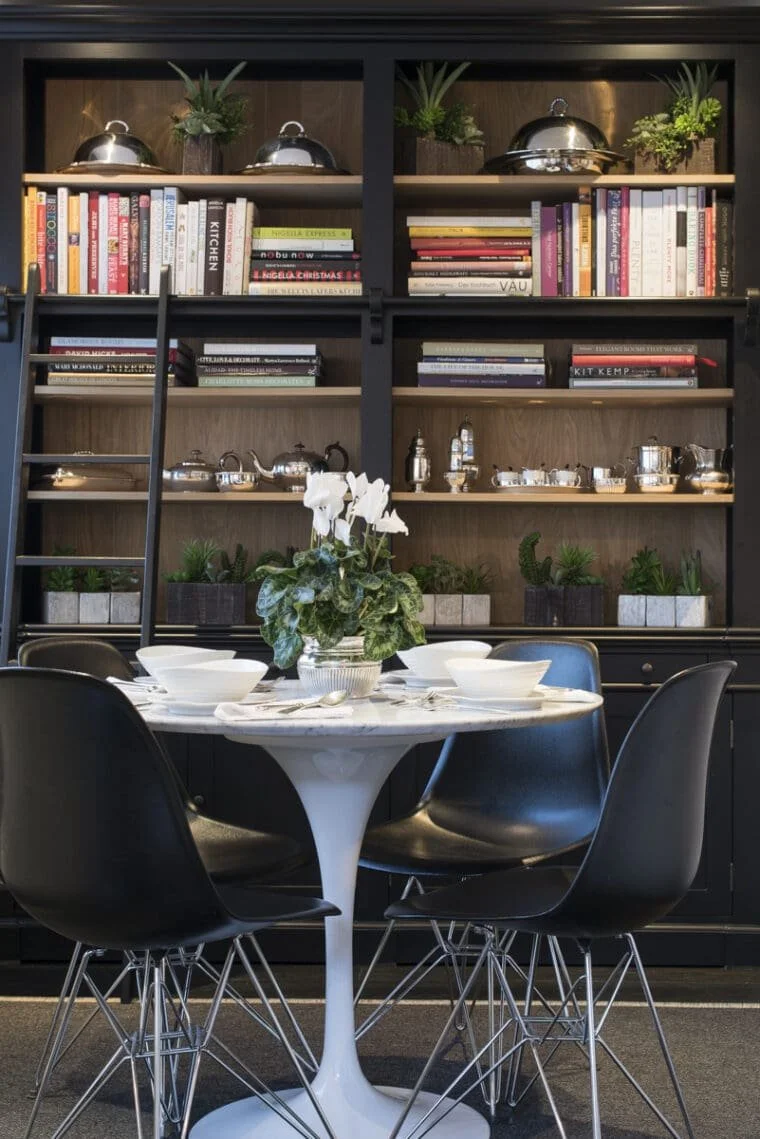
The round table that becomes a room for ten
One dining table I designed some years ago has, ever since, served as the test case I return to when clients ask whether their table will work for them.
It is a round table, painted, sitting in the centre of a kitchen-dining room that opens onto a garden. For most of the year it seats four to six — couples, a midweek family supper, a friend stopping by for coffee, and it does so comfortably, intimately, with no sense of empty surface around the diners. The room feels right at that scale, because the table feels right.
What the table also does and this is the reason it became a favourite of mine, is extend. Two leaves are stored discreetly nearby. When the family hosts at Christmas or for a birthday, the table comes apart, the leaves are fitted, and a round table for six becomes a long oval table for ten. The garden doors slide open onto a second outdoor table, and the two together can seat sixteen for a summer lunch. The household never feels constrained by its own dining room, and never feels rattled around in it either.
This is what a well-chosen table can do. It can be intimate and expansive, depending on what the day asks of it. It can stay the same physical object across an entire decade of family life — from the toddler in a high chair pulled up to its edge, to the teenager sitting with friends, to the empty-nest dinner for two — and it can adapt to all of that without ever needing to be replaced.
Most clients overestimate the size of table they need, because they imagine the dinner party they host once a year rather than the breakfast they eat every day. The result is a cold, oversized table for fifty weeks out of fifty-two. Extendable tables — pedestals with leaves, round tables that elongate, the drop-leaf and gate-leg designs you find on vintage pieces — solve this in a way oversized tables simply cannot. Choose for the life you actually have, with the option to scale up when the occasion demands.
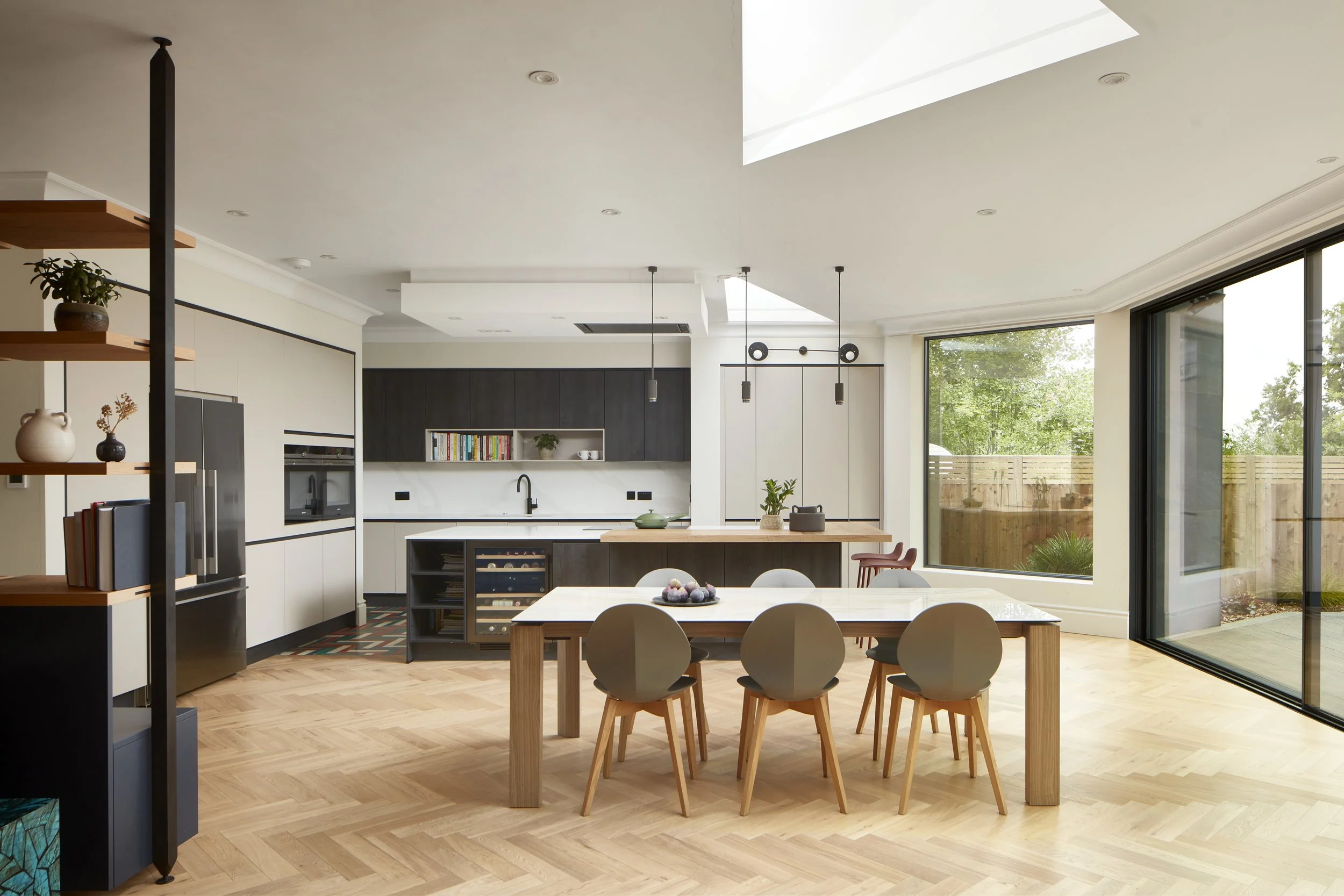
The chairs people stay in
A beautiful dining table undermined by uncomfortable chairs is a failure. I cannot say this strongly enough. The chairs are the place where the body meets the room, and a chair that someone cannot sit in for two hours is a chair that will, eventually, empty the dining room.
Seat heights should sit at 45 to 48 centimetres, with 25 to 30 centimetres of clearance between the seat and the underside of the table. Armchairs need 60 centimetres of width and enough elbow room to push back without striking the chair beside them. These are not aesthetic decisions. They are ergonomic ones, and they matter more than the look of the chair, although the look obviously matters too.
The good news is that dining chairs are easy to refurbish. I recently bought a set of six vintage Art Deco chairs at a fraction of the cost of buying new and had them recovered in two Nobilis fabrics — one for the seats, another for the rear backs. All six together cost less than two new chairs would have, and they were more beautiful, more durable, and more interesting than anything I could have bought off the floor. The principle holds across most dining-chair decisions: buy quality once, then keep them for thirty years, recovering as fabrics tire and tastes evolve.
Mixing matters too. A clean-lined contemporary table can take sculptural or vintage chairs around it; mixing metal, timber, velvet, and leather across a set creates depth that a matched set cannot. Just ensure the forms complement rather than compete.

Style for yourself, not for Pinterest
Most clients arrive at a dining-room project with an image of what they want it to look like. The image is almost always slightly wrong — not because the image is bad, but because it has been built for an imagined version of the household rather than the real one. A dining room designed for the dinner parties someone thinks they should be having will be unused. A dining room designed for the life someone actually leads will be lived in.
This is the principle that runs underneath every dining-table conversation I have. Be truthful about how you gather. Be truthful about how often. Be truthful about who eats at the table on a Monday morning at seven, and who is around on a Saturday night at ten. Design for the dinners you will remember in ten years, not for the dinners you imagine yourself hosting in a magazine.
Some of the most beautiful dining tables I have ever specified or owned have not been grand. A reclaimed elm table by a window, with two chairs and nothing else. A vintage table in a sunlit conservatory set for one — a place to read, eat, and watch the light move through a garden. The tables that organise a home most successfully are the ones designed for the life that is actually being lived around them. Everything else is a stage set.
A folded linen napkin, the glint of glassware, the faint scent of a candle in the air — these are the small details that turn a table into a room and a meal into a memory. They are also, almost always, easier than people make them. Choose the right table. Choose the right chairs. Then trust the rituals of your own household to do the rest.
Do you have a project in mind?
