
What Makes a Light Fitting Right
A fitting isn't equipment
Most people specify light fittings the way they specify a doorknob — choose the function, choose the finish, move on. The result is a house where every fitting has been picked from the same showroom in the same afternoon, and the lighting reads as a set of utilities rather than a set of considered choices. The fittings themselves do not contribute anything to the rooms they sit in beyond illumination.
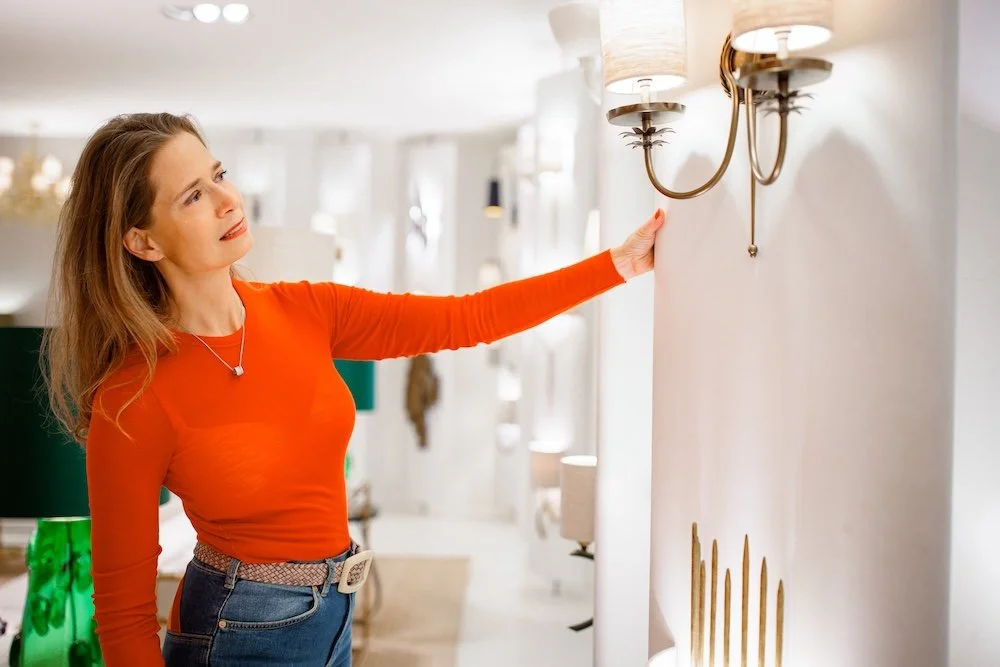
A light fitting, when it is chosen well, is something quite different. It is a small piece of decorative architecture. It sits in the room for years, often decades. It is the first thing the eye registers on entering a room, particularly after dark. It carries character into the space the way a piece of art or a vintage chair carries character. The act of choosing a fitting is closer to acquiring an object than to procuring equipment, and the homes I find most beautifully lit are the ones where every fitting was chosen with that distinction in mind.
I talk to lighting manufacturers regularly — at trade fairs, in showrooms, sometimes directly via email when I find a gap in what's commercially available. I encourage them to develop pieces the market is missing. Recently this includes IP-rated decorative bathroom fittings, taller portable lamps that don't look like phone chargers, and — surprisingly — interior pool wall lights, where the options remain depressingly few. The point is that choosing fittings is the part of lighting design that demands the most curatorial attention. The scheme — the layers, the circuits, the temperatures — is the technical exercise. The fittings are the editorial one.
The fitting and the room
Every fitting has a right room and a wrong one. The variables that determine which is which are scale, ceiling height, the architecture around the fitting, the furniture beneath it, and the way the room is lived in. Get those right and the fitting becomes part of the architecture. Get them wrong and the fitting becomes the room's most prominent flaw.
Scale is the single most common mistake. A useful rule of thumb for a ceiling fitting: add the room's dimensions in feet, and convert the total to inches for the fitting's ideal diameter. A twelve-by-fourteen-foot room calls for a fitting roughly twenty-six inches across. The figure is approximate but it sets a useful baseline. Most rooms benefit from a fitting on the generous side of this calculation; very few rooms benefit from a fitting on the small side. An undersized chandelier or pendant in a substantial room looks tentative, as though the room is apologising for itself. The same fitting, sized correctly, organises the room.
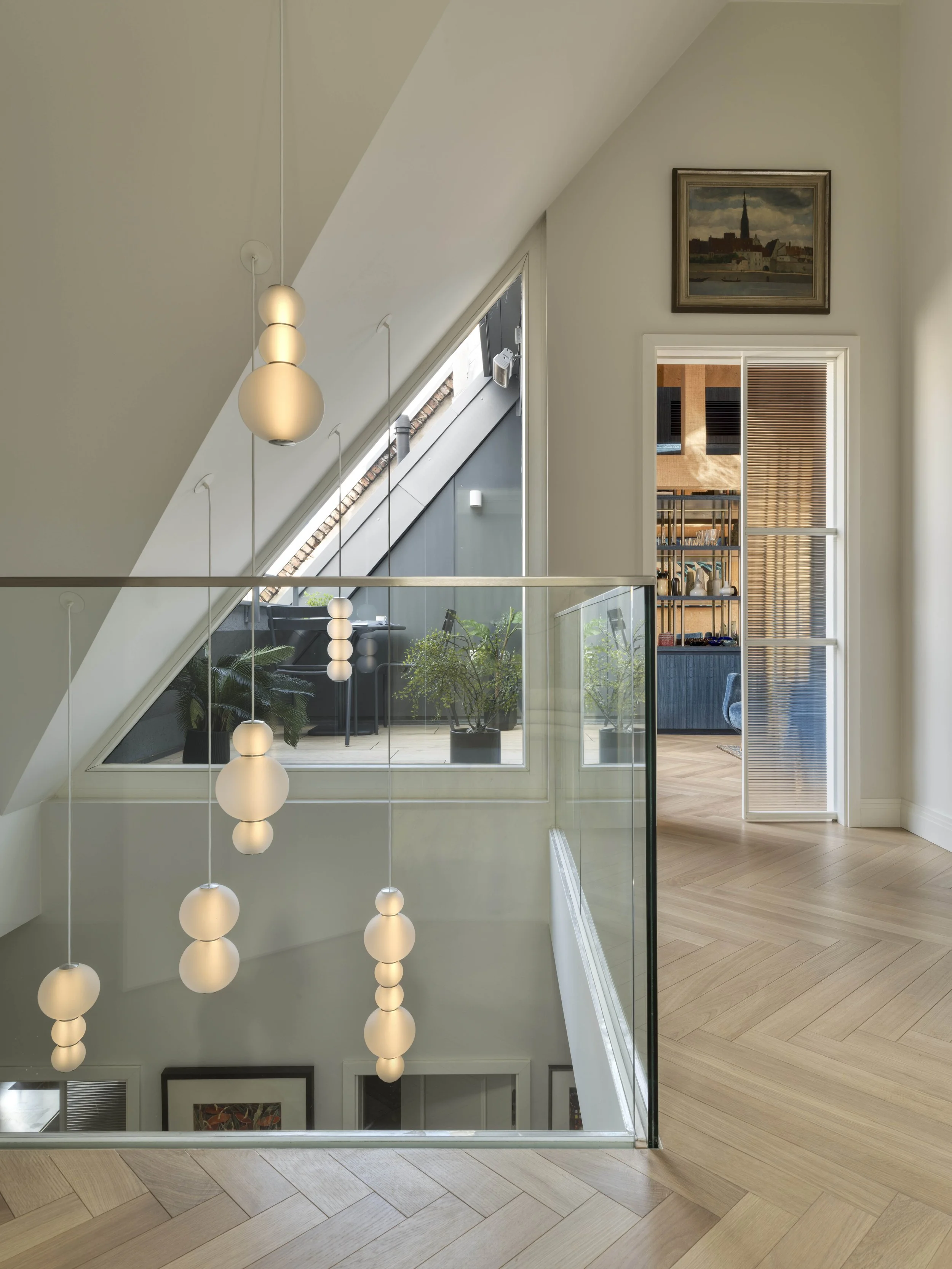
Placement matters as much as size. A pendant should be aligned with what the room is built around — the dining table, the kitchen island, the bed, the centre of the rug. In open-plan layouts, the fittings have to be choreographed so they don't compete with each other. A statement chandelier over the dining table earns the centre of the room; the lounge and reception zones around it should be quieter, lit by table lamps, floor lamps, integrated joinery LEDs, and a small number of carefully placed downlights rather than another statement pendant. Two statement fittings in the same open-plan room will fight each other every time.
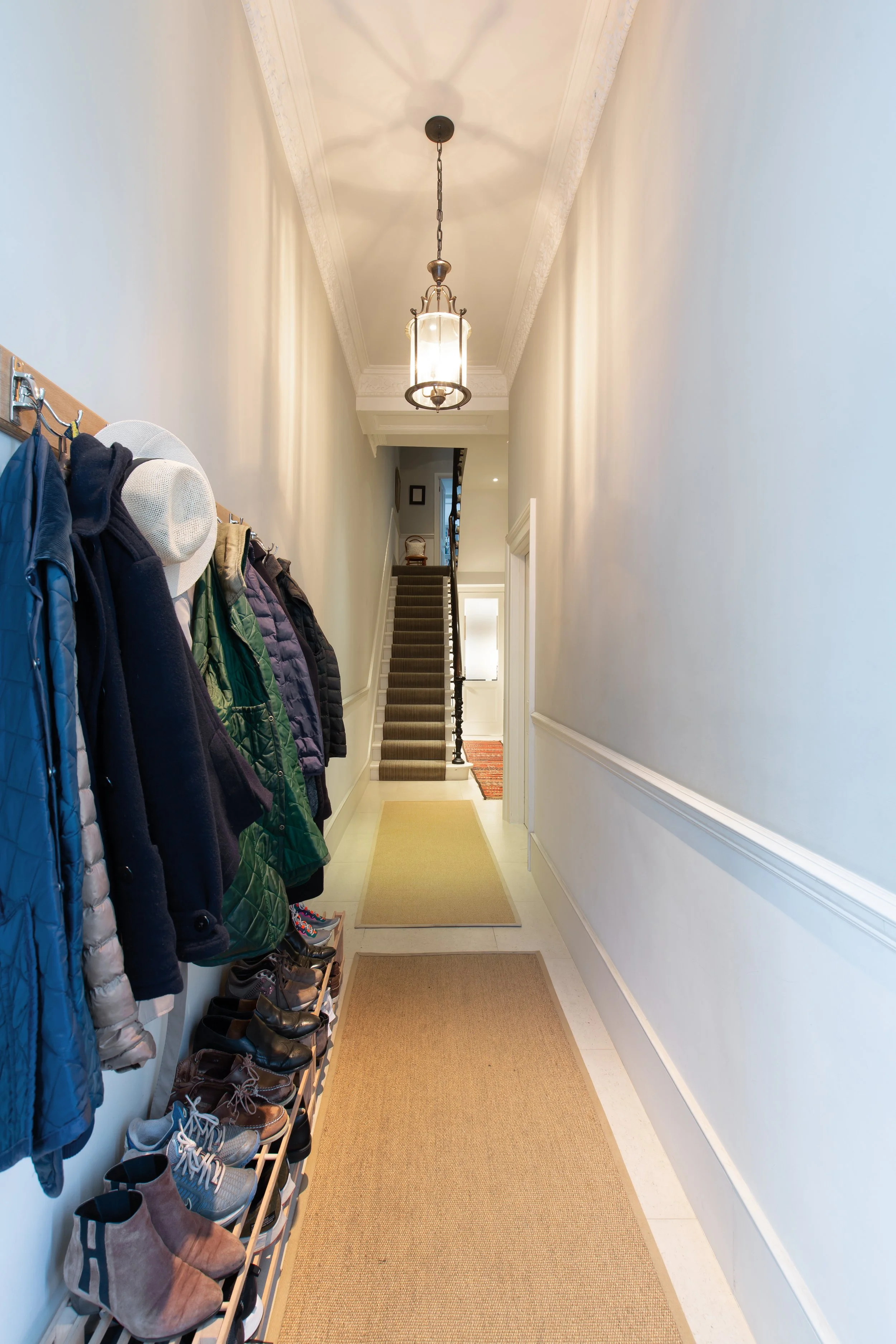
Architectural detail also dictates fitting choice. A period property with high ceilings and original cornicing wants a fitting that converses with that architecture — a chandelier or lantern hung at the right drop, allowing the cornicing to read, not hidden by an oversized contemporary shade. A contemporary room with crisp plaster and minimal detail wants a different language altogether: sculptural, often architectural, often single-material. The fitting and the room should be in dialogue, not in argument.
I always visualise a fitting in its room before committing. Mock-ups, scaled paper cut-outs hung temporarily, augmented-reality apps where the technology is good enough — anything that gives a sense of the fitting at scale, in place, in the room. It is the simplest way to avoid the most expensive mistake in lighting, which is to install the wrong fitting and have to live with it.
Style and the right register
Beyond size and placement, the question of style is the most personal in lighting design. The fittings should align with the home's overall register — but also be confident enough to add something to it.
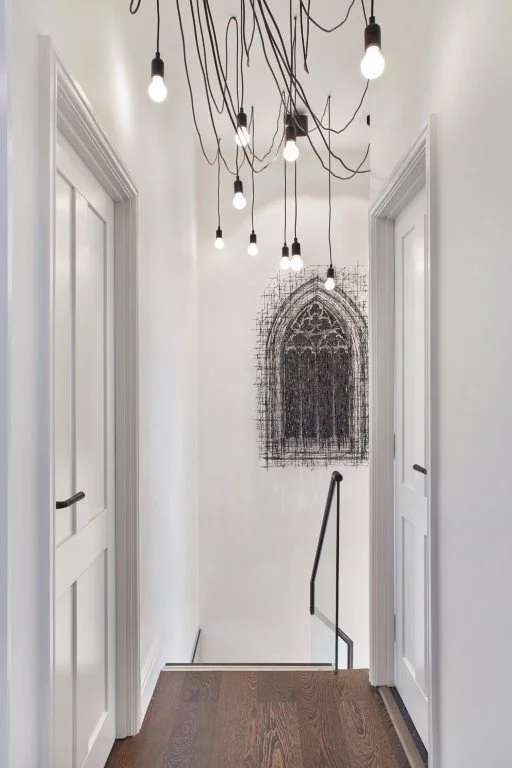
Modern interiors generally take architectural and sculptural fittings well: geometric forms in chrome, steel, bronze, blackened metal, glass, or stone. The fitting reads as architecture or as object, sometimes both. Traditional properties accept classical chandeliers, lantern-inspired pendants, textured fabric shades, wood and rattan structures, and gold or brass metalwork that carries the period vocabulary forward without parody.
The most rewarding work, though, is in eclectic rooms — where modern fittings sit in classical buildings, or where vintage chandeliers anchor minimalist new builds. This is the harder register to pull off, because the burden falls on each individual fitting to earn its place. The fittings in eclectic schemes have to be genuinely well made and genuinely characterful, because they are doing more than complementing the architecture; they are creating tension with it. The result is rooms with a confidence and a depth that single-register schemes rarely achieve.
The discipline, regardless of style, is that the fitting must add something the room would not have without it. A neutral fitting in a room that needed character is a wasted opportunity. A loud fitting in a room that needed restraint is worse. The fitting and the room have to need each other.
The pitfalls
Some of the more expensive mistakes in lighting are technical rather than aesthetic, and worth flagging because they are easy to avoid once known.
Drop height is the most common error. Pendants and chandeliers hung too low obstruct sightlines and force people to walk around them; hung too high they look flimsy and underwhelming. The right drop varies with ceiling height and table height. For a pendant over a dining table, the rule of thumb is for the bottom of the fitting to sit between seventy-five and ninety centimetres above the tabletop. Most other rooms want the bottom of the fitting at least two and a quarter metres clear of the floor, and higher in spaces where people walk beneath it.
Chandelier weight is the second pitfall, and the one most likely to cause a building problem. Heavy chandeliers — particularly Murano glass or substantial metal frames — require additional ceiling support beyond what the average ceiling rose was built to bear. Check the structural capacity before specifying. A reinforced fixing during the renovation is far cheaper than rectifying a torn-out ceiling later.
Bulb and dimmer compatibility is the third. Not every LED bulb dims, and not every dimmer module is compatible with every driver. The result, when these are mismatched, is flickering, humming, or fittings that refuse to dim past fifty per cent. A good electrician will check this at specification stage. If you are buying fittings yourself, ask the manufacturer for the recommended dimmer modules and stick to them.
IP ratings in bathrooms are non-negotiable. Different parts of a bathroom — the shower zone, the area immediately adjacent, the rest of the room — require different ratings, and using non-IP-rated fittings in moisture-prone zones is both a code violation and a genuine safety risk.
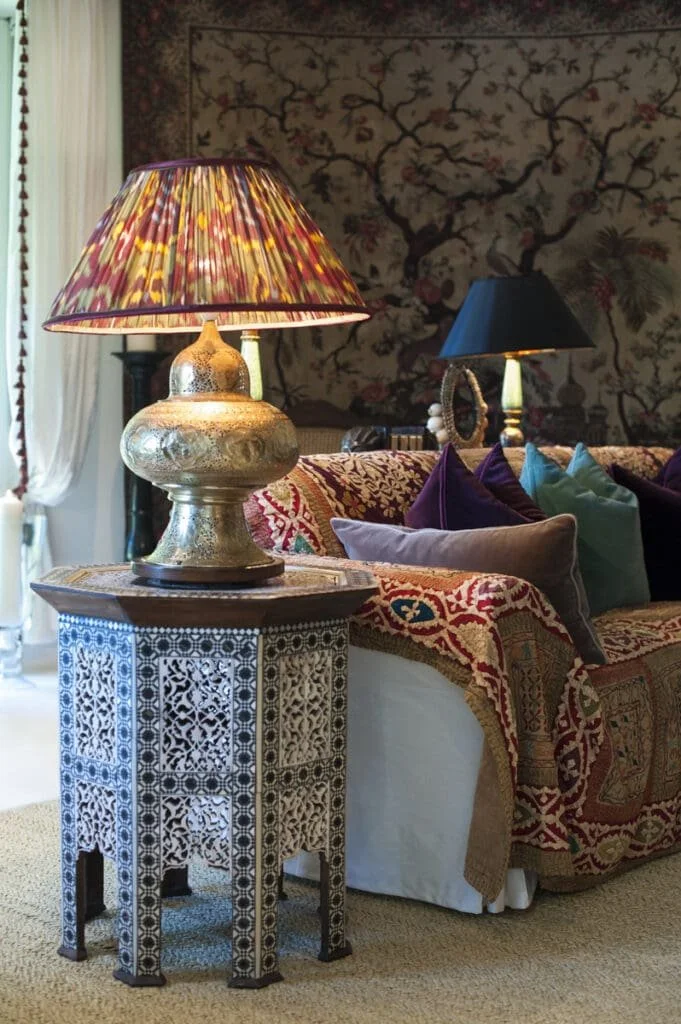
Lampshade linings change the quality of light more than people realise. Metallic linings in gold, silver, or copper create a reflective glow that warms the room. Fabric linings diffuse light softly, creating a more ambient effect. Plain white linings produce the most uniform downward illumination. None of these is universally correct; the lining should be chosen with the same care as the shade itself.
Two further small principles. Where you can, specify fittings that adjust directionally — particularly useful for picture lights, desk lamps, vanity lighting, and any fitting whose work is to illuminate a specific surface. And consider unconventional placement: wall washers at low level, uplights set into the floor or skirting boards, strip lighting in window reveals or stair risers. These are some of the most effective interventions in a rewire, and they are the moments most often forgotten in conventional schemes.
A final note on LED bulbs. Replacing one bulb in a set with a different brand or temperature will give you visibly different output across the same fitting — which looks cheap, even when the rest of the fitting is expensive. Buy bulbs in matched sets and keep a stash of spares of each type in a drawer, so a single failure doesn't require a rushed purchase that ruins the consistency of the room.


Where lights come from
The sourcing of fittings is its own discipline. There is no single right place to buy lighting; the right approach is to know which type of fitting suits which type of source.
Architectural and recessed fittings — the technical workhorses of the scheme — benefit from being bought from specialist manufacturers rather than from generalist showrooms. Orluna is the brand I source from most often for downlights, tracks, and small architectural fittings designed to integrate into joinery and ceilings. They combine high CRI with adjustable colour temperature, and the engineering quality is what separates a beautifully lit room from an adequately lit one.
For decorative fittings, the right source depends on what register the project needs. Porta Romana, whose showroom at the Chelsea Harbour Design Centre is worth a visit even when you are not buying, produces sculptural pendants and chandeliers that read as art objects and suit a wide variety of interiors. The Urban Electric Company offers exceptional made-to-order pieces for projects that warrant bespoke work. For portable lamps — increasingly a category I rely on, given the flexibility they bring to evening lighting — Santa Cole, Pooky, and Zafferano all produce pieces I have used regularly. Hudson Valley Lighting fills a small but valuable gap: portable lamps tall enough to read as proper table lamps rather than desk accessories.
For vintage, the choice is between platforms and dealers. The platforms — 1stdibs, Vinterior, Pamono — offer enormous range and the ability to filter by period and style, useful for finding something specific, less useful for serendipity. Dealers and markets offer the serendipity but require time and trust. One of my favourite vintage and Murano dealers is Glustin in Paris, who sells genuine vintage pieces and also produces bespoke Murano commissions that fit into contemporary projects.
Bathroom lighting is its own category, with its own technical demands. CVL and Astro are the two brands I return to most often — both offer IP-rated fittings that look good enough to belong in a bedroom, which is the real test of decorative bathroom lighting.
Testing, and living with the choice
The final discipline in choosing fittings is testing them before they are permanently installed. A fitting that looked striking in a showroom may look entirely wrong in a particular room. A bulb that seemed warm enough on the box may read cool in the context of the actual paint colour beside it.
Wherever possible, test fittings in situ before final commitment. Mock up an installation height with a temporary fixture. Test bulbs in the fitting before the electrician finishes the install. Pay attention to the shadows the fitting casts, not only the light it produces; some of the most beautiful fittings are valuable because of the shadows they throw across walls and ceilings, and these are impossible to assess on a showroom floor.
Wired table and floor lamps allow for the most experimentation, because the shades can be changed without changing the base. The same lamp can be transformed over the course of a project by trying three different shade sizes, fabrics, or linings — an entire essay could be written on lampshades alone, and probably will be. Portable lamps are the newest tool in the kit, allowing instantaneous mood changes around a house: a lamp moved from a sitting room to a terrace in the evening makes both rooms work differently.
For very large or complex homes, smart lighting integration earns its place. The ability to control brightness, colour temperature, and pre-set scenes from a phone or wall keypad makes large open-plan spaces, where ten or more circuits need to be balanced, far easier to live with. I have installed it in parts of my own home and recommend it for particular contexts. It is not, however, a precondition for a beautifully lit room. A well-designed scheme with a careful selection of fittings and a coherent set of dimmer circuits does most of the work elegantly enough.
The deeper truth about choosing fittings is that the best ones tend to reveal themselves over time. The hunt is part of the pleasure. The fitting found in the wrong showroom on the right afternoon, or stumbled on in a market, or arrived at after three different trial mock-ups, is almost always the one that ends up belonging in the room. Lighting picked off a shelf in the same afternoon as everything else looks like lighting picked off a shelf in the same afternoon as everything else. Lighting chosen carefully, over time, with intention, looks like architecture.


Do you have a project in mind or require help with choosing the right lighting for your home?
