
How a designer approaches the most decorative and most used piece of furniture in a room, from proportion and construction to fabric and the makers who build it.

Only two people share a sofa
One of the most memorable lessons from my training at Inchbald was disarmingly simple: really, only two people like to share a sofa. It has shaped how I plan every living room since. A sofa is the piece of furniture with the greatest decorative power in a room, and after the bed and the dining chairs, the one a family uses most. It is sat on, slept on, lounged across and touched every day. Getting it right means thinking far beyond its silhouette.
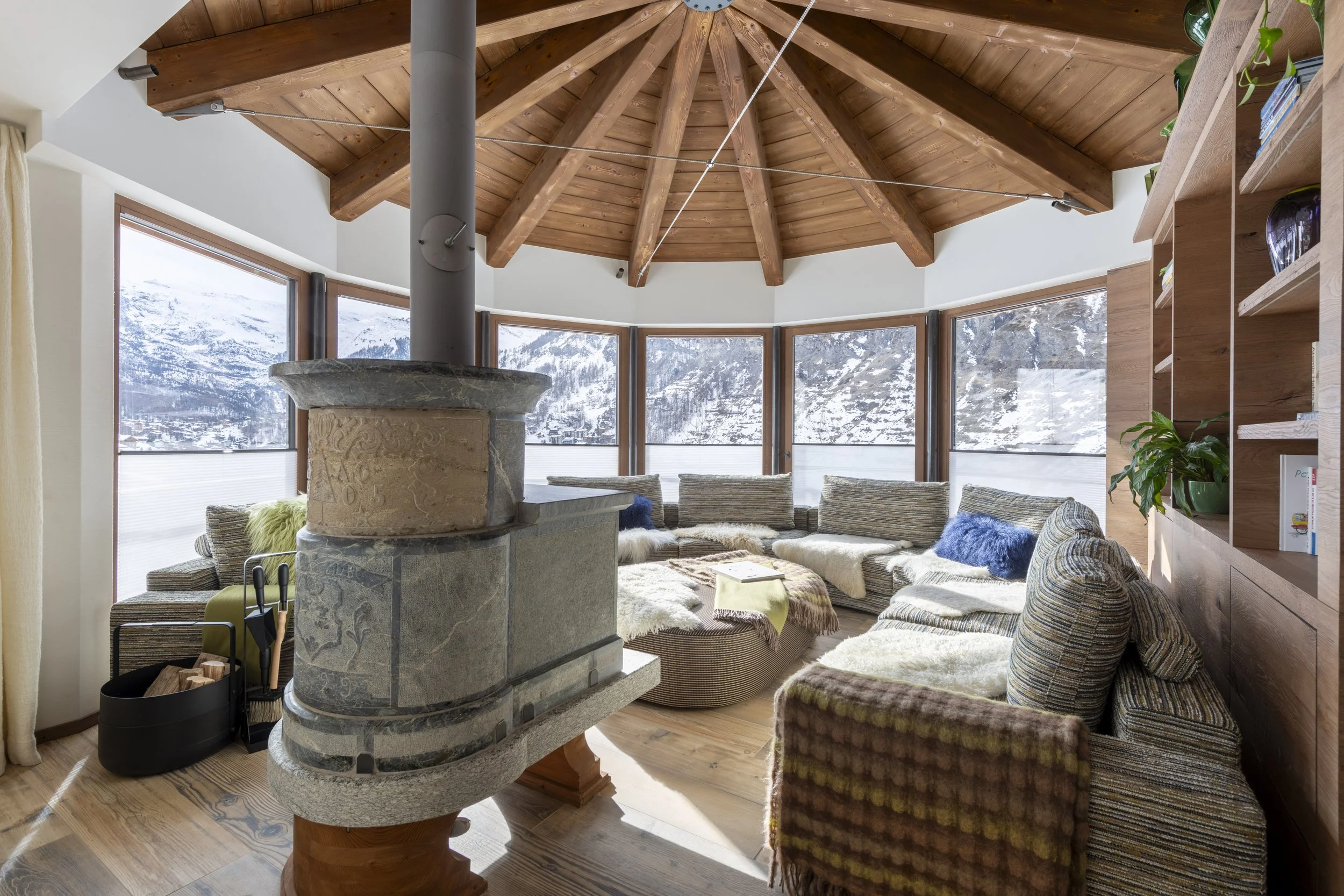
In one Alpine chalet we created a vast landscape of white corner seating in an open-plan space, scattered with colourful cushions — a beautiful, rather risky strategy that we tempered by layering natural white skins in different textures. In a cinema room, we used Togo sofas. Every room asks a different question, and the sofa is usually the answer to it.
Proportion before preference
We begin with a precise floor plan, every piece of furniture drawn at its true size. The most common problem we find in existing homes is a sofa simply too large for its room, leaving no space for the side tables, armchairs and lamps that make a room comfortable. In a new-build apartment in Battersea, the proportions demanded careful calibration of every sofa and armchair against the next.
Then the question of purpose. Is this a room for formal entertaining, for a family watching films, or for both? A large corner sofa or a corner with a chaise is wonderfully comfortable in the right room, but it should never be the only seating. Traffic flow and sightlines matter as much: walking into a room to be confronted by the backs of sofas is rarely the right first impression. In another chalet, a Living Divani corner sofa sits at the back of the room, with armchairs and a pouf in the foreground as you enter.
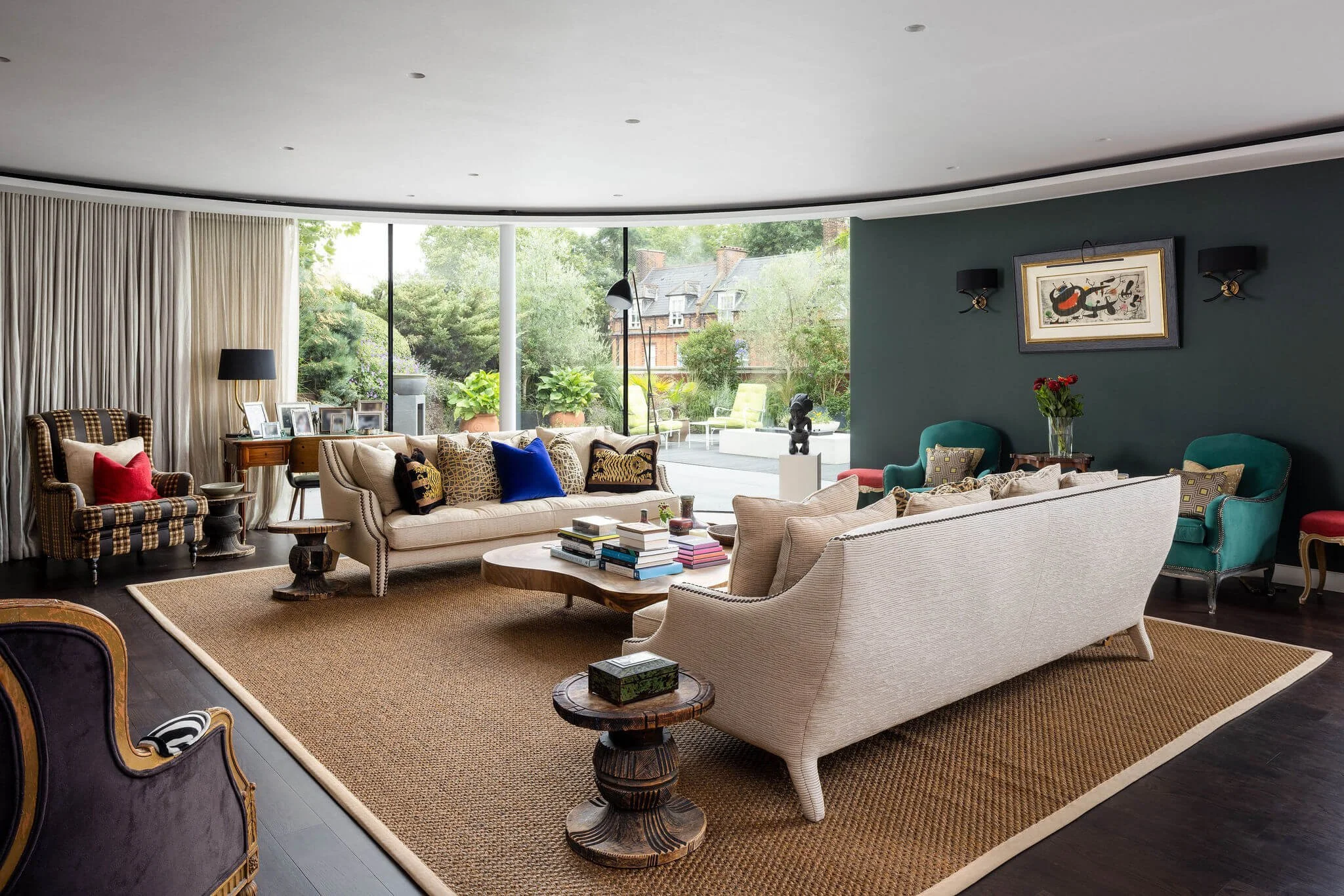
We rarely buy a sofa as it comes. More often we choose a style and work with our preferred workshops to adapt everything — width, seat depth, back height, arms — so it fits both the family and the room. That flexibility is one reason we often favour bespoke makers over some of the modern factory brands, whose dimensions are fixed. And we always check access. Many houses have narrow doors and tight stairs, and a sofa built to come apart has to be planned for from the start; we learned that one the hard way.

The anatomy of comfort
The details decide how a sofa sits and how it looks. Whether it rests on the floor with a skirt, or rises on timber or steel legs. Whether its arms are high or low, thick or slim, straight or sloping — high enough, perhaps, to lean against sideways and use the sofa as a long chaise. Whether the back is high or low, fixed or cushioned. Above all, the seat depth, which changes both comfort and proportion more than anything else, and whether the seat is a single piece or divided into sections.
Then there is how it is made. A traditionally built sofa has a frame of kiln-dried hardwood such as beech or birch, its joints dowelled, glued, screwed and corner-blocked so it never moves or creaks. Coil springs tied by hand in eight directions remain the benchmark for resilience and even support. Jute webbing and hessian support the back; stuffing is horsehair, coir or crimped wool. Wherever possible, I prefer natural fibres throughout.
Most modern shapes depend on foam, which is faster and cheaper to work with and makes many contemporary silhouettes possible at all. Fire-retardant foams are standard in the UK. In searching for genuinely all-natural sofas, we have found a few makers moving in that direction; SCP is notable for designs built entirely from natural materials, using natural latex that is sustainable, durable and breathable, with a different quality of comfort from conventional foam.
Choosing the makers
We work with a broad range of makers, chosen for their ability to adapt their designs to a particular brief. British houses such as David Seyfried, Dudgeon, Sedilia, Stuart Scott, Kingcombe, George Smith and Whitehead for traditional and tailored work; Italian and German names such as Knoll, Vitra, Poliform, Living Divani and Rolf Benz for more modern forms. One corner sofa with a storage ottoman, made by Dudgeon in a Fermoie fabric, is a good example of what that collaboration makes possible.
Life stages matter too. My own summer house was furnished with inexpensive sofas for toddlers to jump on, dressed with beautiful throws from OKA. They served their purpose for years. They are now being replaced with a bespoke curved sofa made for the exact shape of the room, to carry me through the next decades. The principle is to make conscious choices: if a piece is to last, it should be made to last, and at the very least it deserves a fabric worth looking at.


The icons
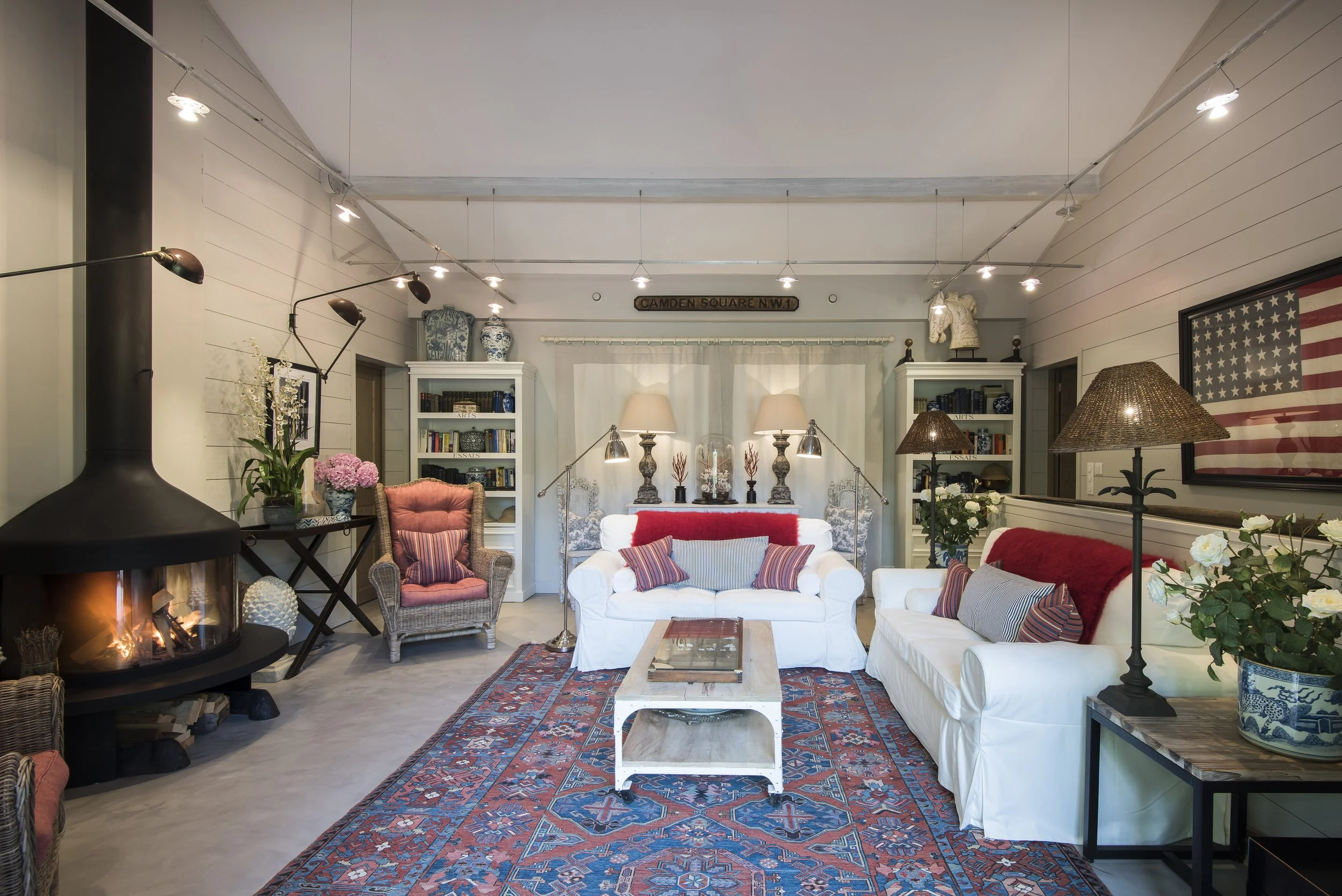
Some sofas have reached the status of design classics, and their shape alone brings an immediate authority to a room. We have placed many of them in interiors: the LC3 by Le Corbusier, Pierre Jeanneret and Charlotte Perriand for Cassina; Vladimir Kagan's Serpentine; Michel Ducaroy's Togo for Ligne Roset; Mies van der Rohe's Barcelona for Knoll; Mario Bellini's Camaleonda; Hans Hopfer's Mah Jong for Roche Bobois, which we once ordered in unusually colourful Kenzo fabrics; Vico Magistretti's Maralunga for Cassina, which looks right in any setting, a chalet included; and de Sede's DS600. Size and comfort still need testing, but the design question is already answered.
History in the upholstery
The sofa has a long lineage. The reclining couches of Ancient Egypt and Greece inspired Renaissance and Rococo revivals; the cushioned benches and floor platforms of the Islamic world still inform deep, layered seating today — in one summer residence we built raised platform seating with generous cushions in outdoor fabrics. Each European aristocracy refined its own settee through carving, gilding and upholstery, often in pieces far smaller and shallower than modern bodies expect. In my own reception room, I designed carved and gilded sofas in the Rococo spirit, made to generous modern dimensions with feather-down seats, as the centre of the room. The twentieth century then brought corner sofas, serpentines and every imaginable shape, and leather, rarely used before then, became widespread.
Restoration can be as rewarding as commissioning. We have fully rebuilt a family heirloom — springs, webbing and stuffing — and recovered it in a durable baby mohair that will last well over a decade.
Fabric: where a sofa finds its voice
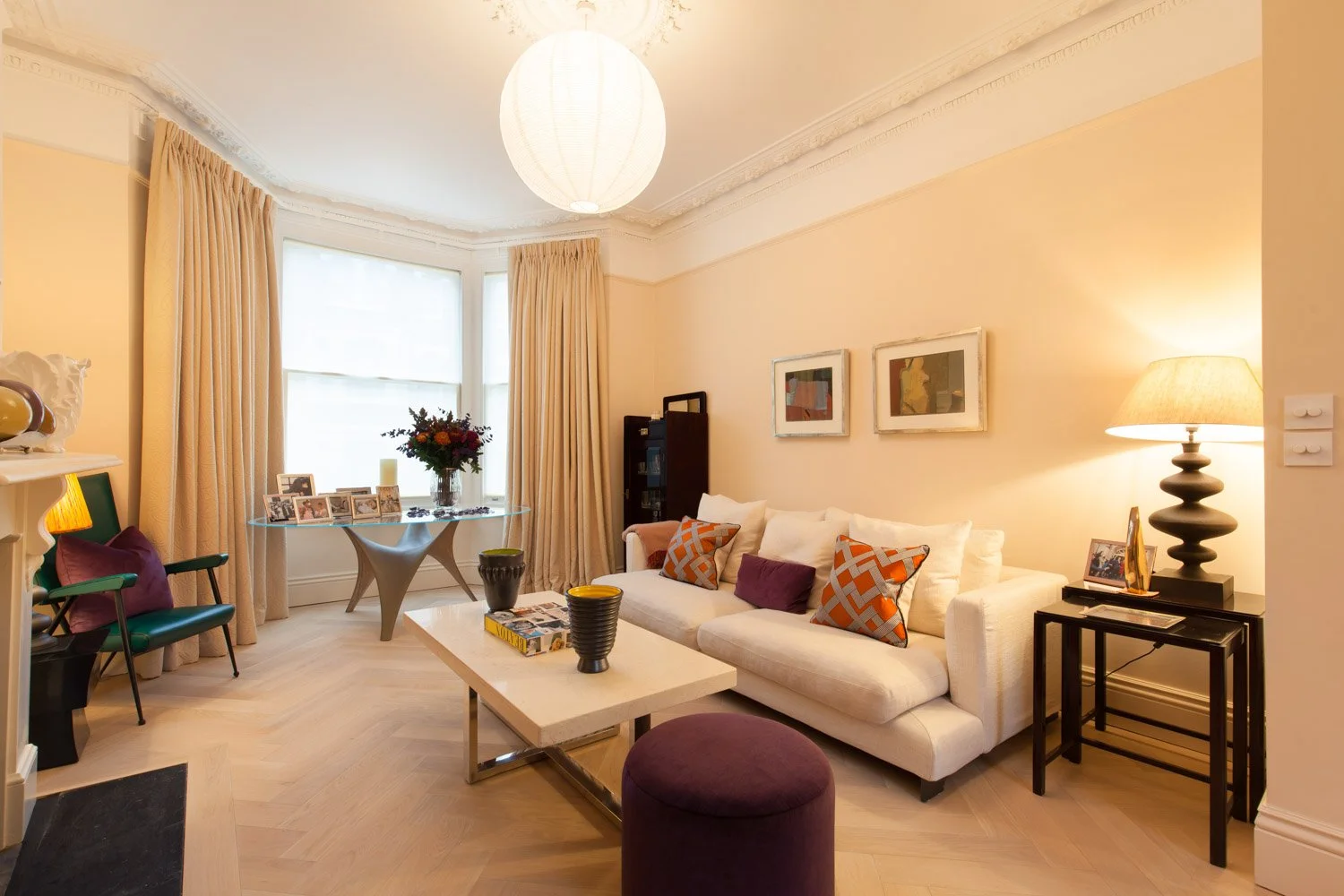
Fabric is where the sofa reveals its character. I favour heavily textured cloths, particularly in plain colours, or a confident pattern; flat, bland, single-colour fabrics on a cheaply made sofa are the least interesting thing a room can contain. Many modern brands do not accept a client's own fabric, which narrows the choice considerably; elsewhere, every material is discussed with the maker, because some shapes need stretch and some patterns, checks and stripes in particular, do not sit well on curves.
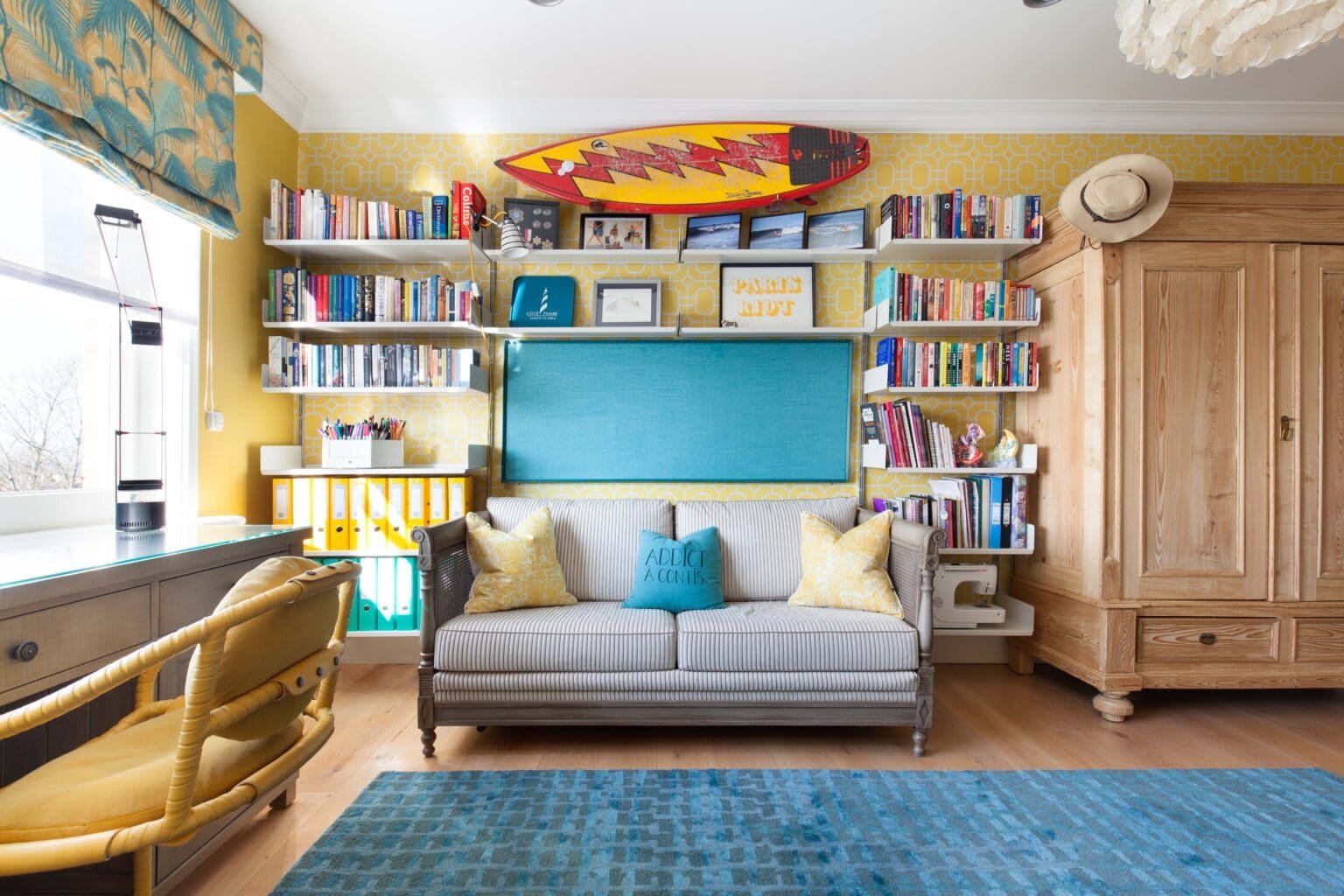
Durability matters as much as beauty. Velvet is luxurious but can crush and mark; some woven blends and performance linens offer the look with far more resilience, and stain-treated and indoor-outdoor fabrics have made pale, textured sofas possible in homes with young children and dogs. In one kitchen family nook we recovered high-street sofas in loose covers of heavily textured, stain-proof outdoor fabric. For a pied-à-terre, we adjusted the sofa's size and chose a textured, stain-treated weave. Mohair, plain but extraordinarily hard-wearing, always looks right. I rarely allow a grey sofa, though in one young family's home with a dog it works precisely because everything around it was made bold enough to carry it.
Bold fabrics do not necessarily date. A vibrant cloth on a classic shape, surrounded by antiques and art, can age beautifully; I love sitting at 5 Hertford Street and admiring how generously fabric, pattern and art are layered there. We have made patchwork sofas many times, and the most elaborate of all is a collage of ten different Pierre Frey fabrics — genuinely a work of art. On a vintage sofa we combined a velvet stripe on the back and frame with mohair on the seat; elsewhere a printed cotton-linen corner sofa sits with a cream bouclé ottoman. For a Gothic Revival house, we recovered a worn B&B Italia sofa in a client's own unusual fabric, testing it carefully for suitability first.
The sofa bed, done properly
Nobody chooses to sleep on a sofa bed, yet almost every family needs one — for visiting parents, sleepovers, a spouse with a cold. I have three in my own house and we use them constantly. The answer is to make them as comfortable as possible: a well-engineered mechanism, a properly tested mattress and, somewhere nearby, a spare topper for the nights when it matters.
The decision that sets the room
A sofa is likely to dominate whatever room it sits in. Its shape, size, colour, texture and pattern have to be balanced against everything else — walls, rugs, curtains, lighting and art — and a few clever cushions are no substitute for getting the sofa itself right. Chosen with this level of care, it becomes the piece around which the life of the room naturally gathers.
Do you have a project in mind?