
Designing the modern chalet
A personal reflection on why the mountains matter to Claudia, and why chalet design so often gets reduced to a list of objects. She argues for ritual over decoration and materials chosen to age well, in a home built to last generations.

Claudia Dorsch, chalet designer and founder of Claudia Dorsch Interiors
I have always loved the quality time that mountains give you. Coming in from the cold to a fire already lit. A long lunch that stretches into the afternoon because no one has anywhere else to be. Friends staying long after the plates have been cleared. Some of my clearest memories of family and friendship were made in chalets. They give people permission to gather properly.
That is also why the usual idea of chalet design misses the point. Ask most people what a chalet looks like and the answer arrives fast: reclaimed timber, an antler chandelier, a fur throw slung over the arm of a sofa. The image is so fixed that a chalet tends to get described in objects, rather than in the feeling of being inside one.
The mistake sits in the premise. A chalet was never built to look a particular way. It evolved out of necessity: local stone, local timber, a roof pitched to shed snow, a plan arranged around a single fire because for centuries that fire was the only heat in the house. Style came afterwards, as decoration. And decoration is the part that dates.
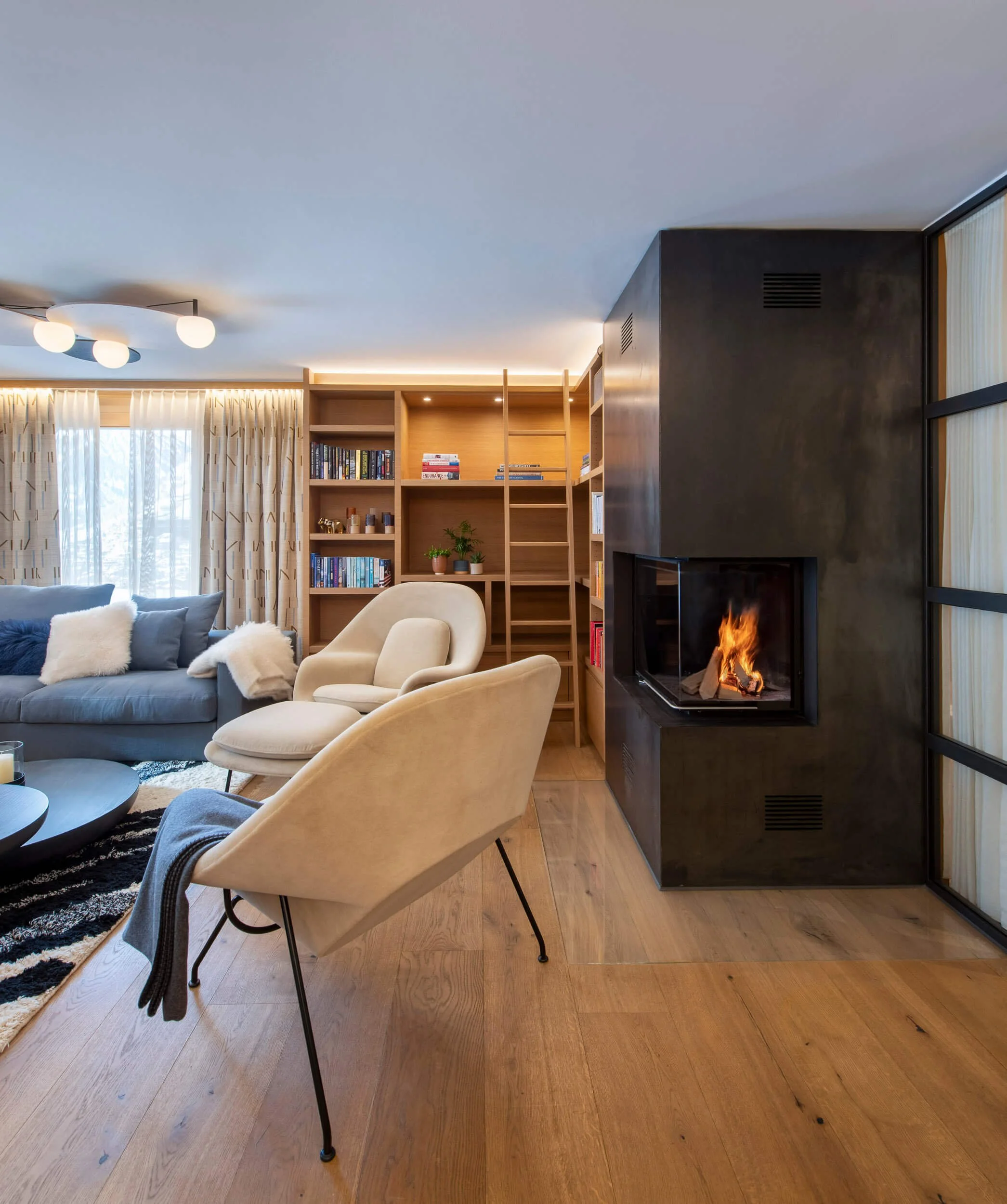
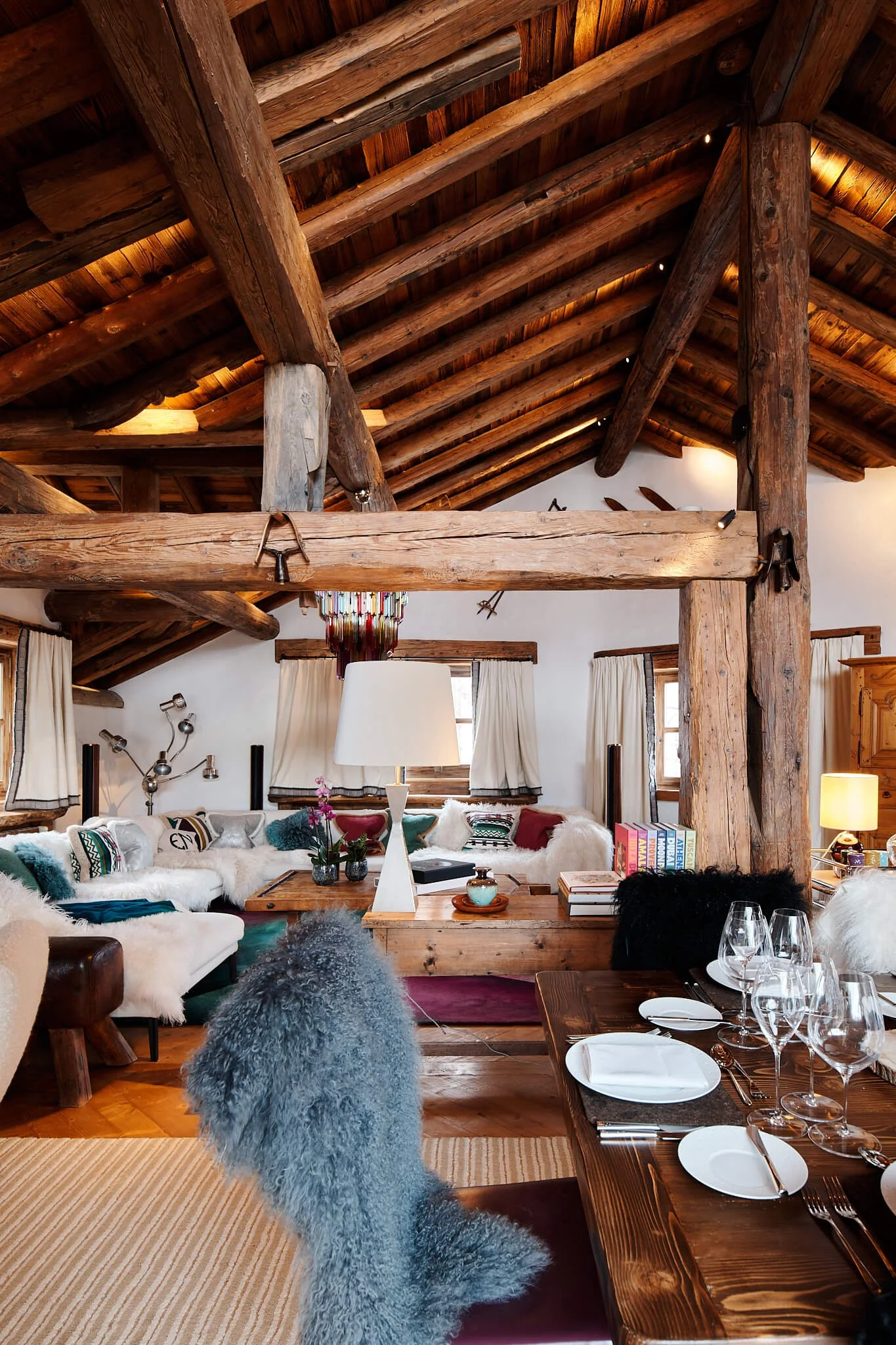
A roaring fire in the living area of a contemporary modern chalet design
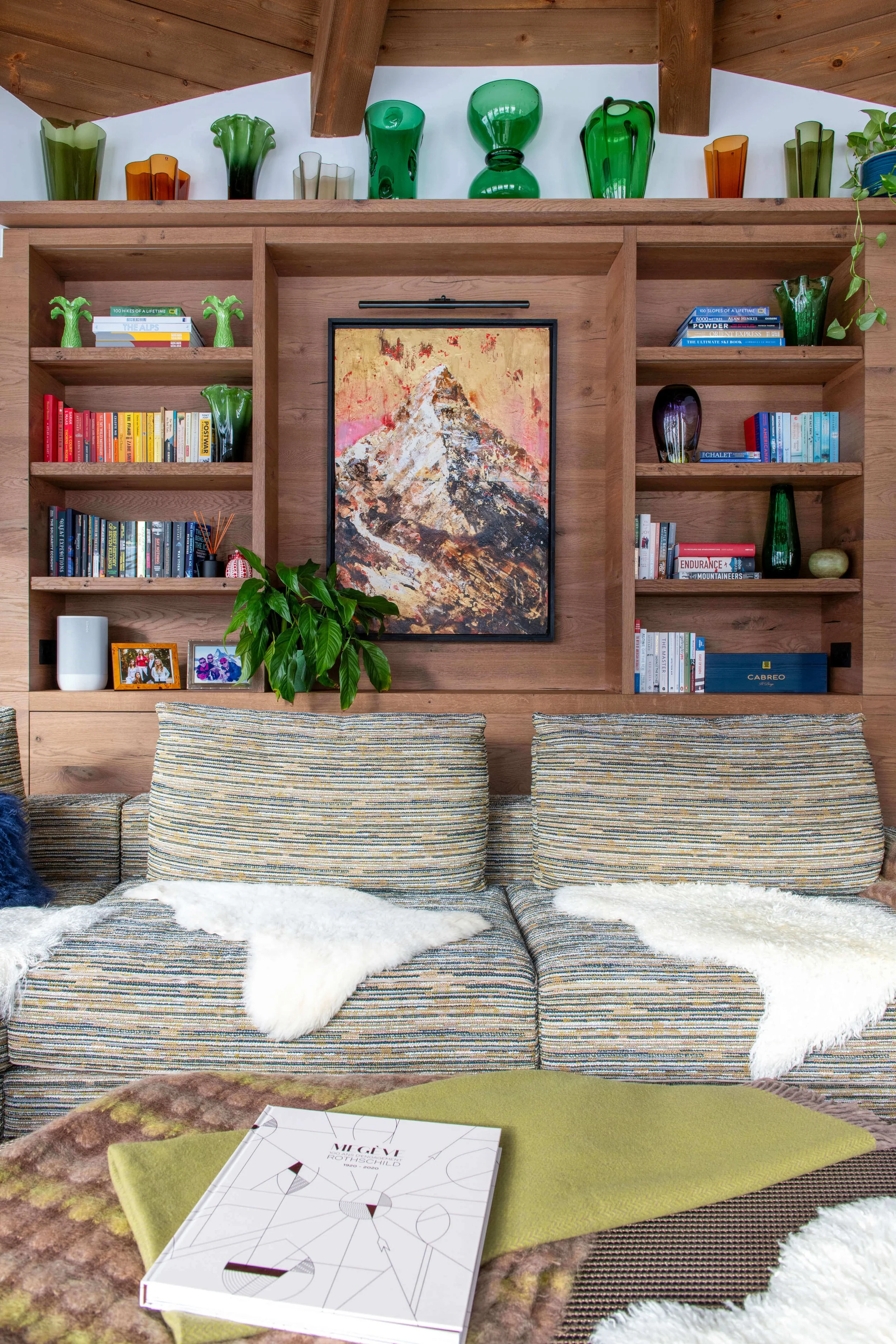
The finishing touches in a family chalet design adding warmth
What has never dated is the ritual. Boots left by the door. A fire that draws people into a circle rather than a row. A kitchen that empties by nine and fills again for a long lunch the next day. These are the reasons families keep returning to the mountains long after the skiing itself has become optional. A chalet earns its place across decades, not seasons.
This is why, when I begin a chalet project, I try not to start by asking what a chalet should contain: which materials, which colours, which pieces read as alpine. I find it far more useful to ask how the household actually moves through a day there. Where the first coffee is taken. Where the children scatter to after lunch. Which chair someone reaches for without thinking, at the end of an afternoon outside. Furniture and finish follow from that. Not the other way round.
I choose materials for the same reason. Timber that darkens with handling, rather than a finish sealed to stay new. Stone worn smooth at a threshold. Leather that softens exactly where a hand rests. None of it is chosen for how it will photograph on the first day. It is chosen for the fortieth winter, when the marks in it have become a kind of record.
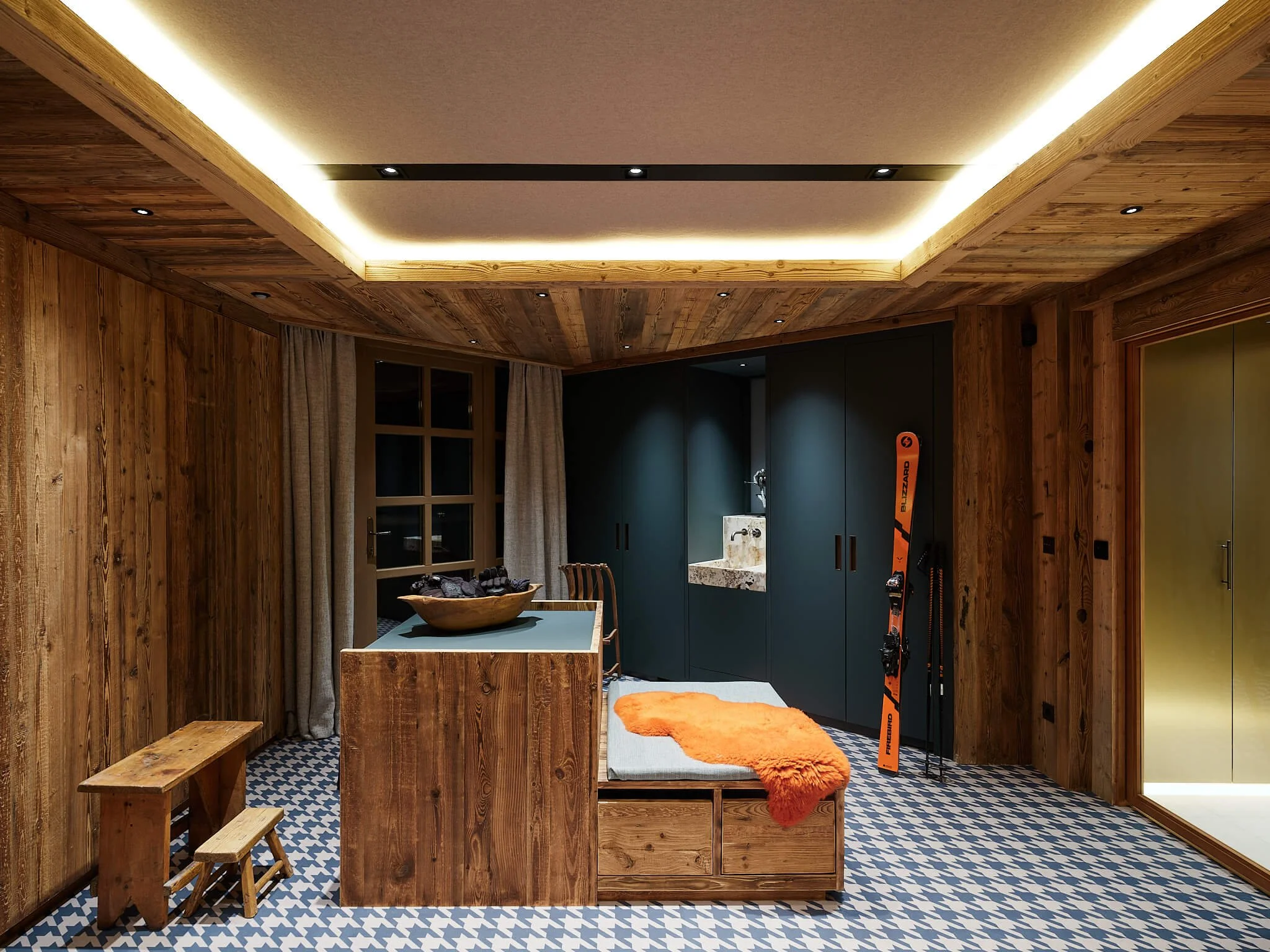
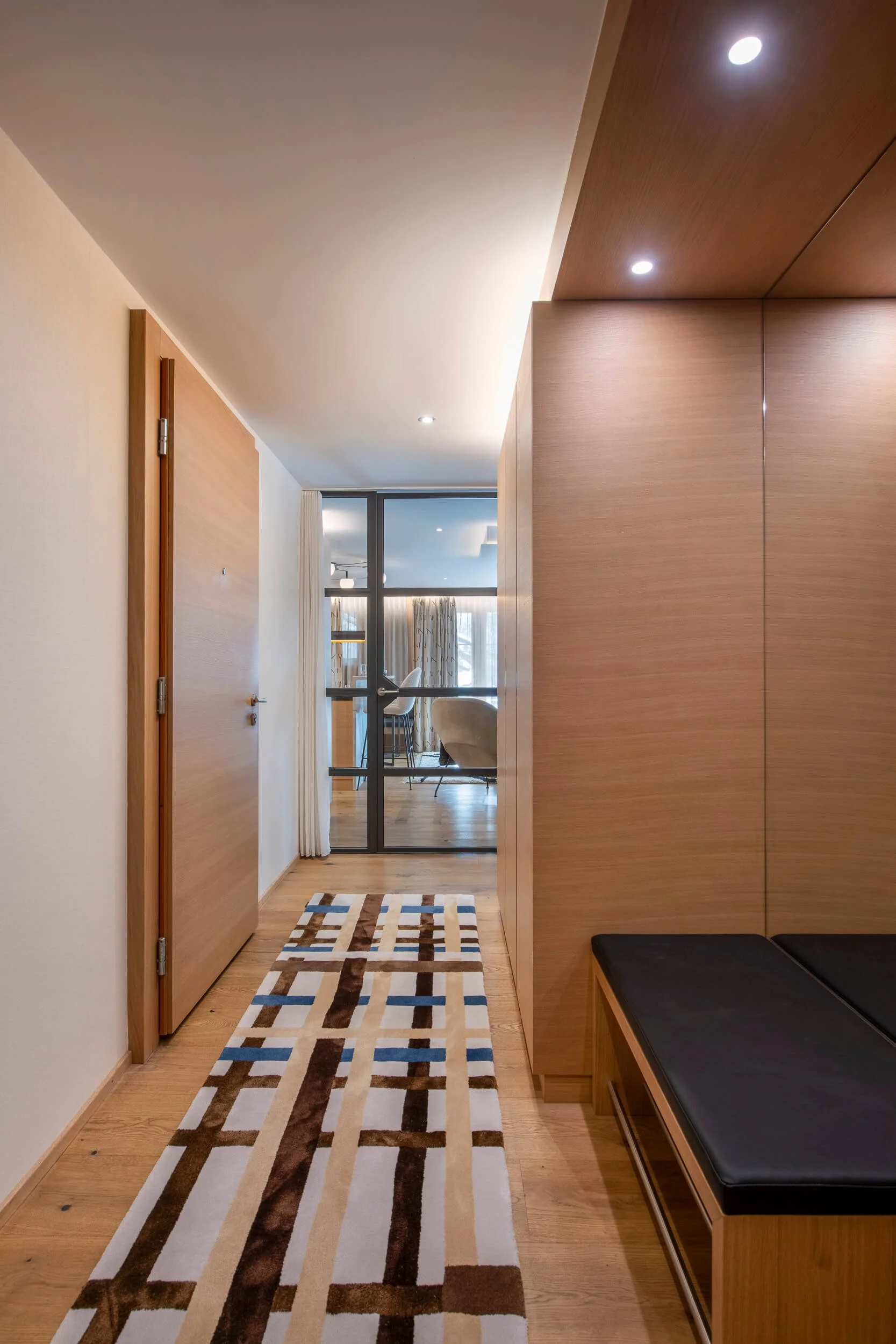
Chalet boot room in Val-d’Isère ready for a day of skiing
There is a second trap I try just as hard to avoid, less obvious than pastiche: recreating the chalet as a museum piece, every detail historically correct, nothing allowed to move on. That approach mistakes preservation for meaning. A chalet that never changes becomes a monument to one generation rather than a home for the next. I find the more interesting position sits between the two: understanding why the original building worked, and letting that understanding evolve rather than repeat.
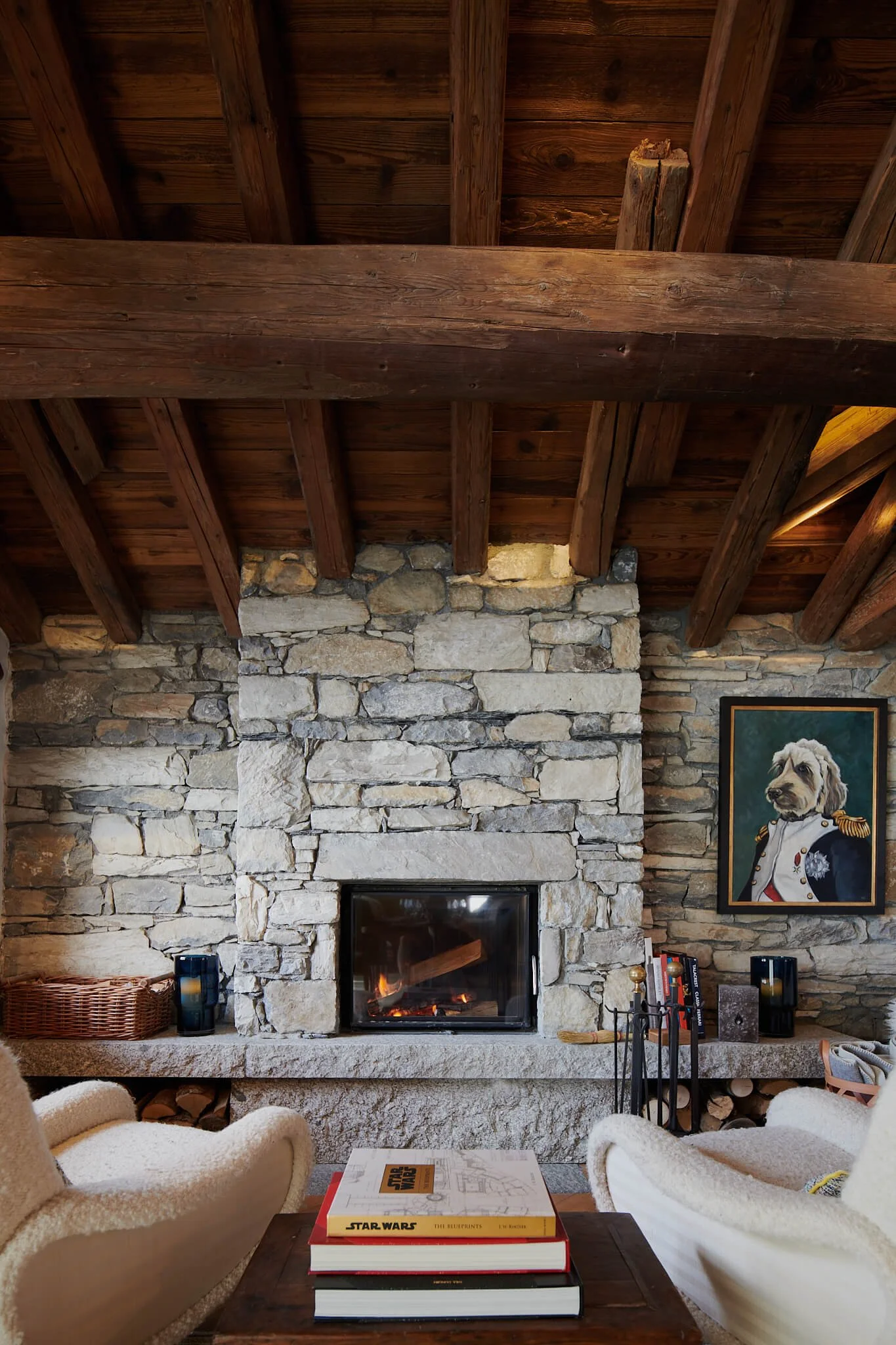
Handled this way, a mountain home stops being a seasonal retreat and becomes something closer to an inheritance. Not because of what it cost, but because of what it has absorbed. The same fire. The same view. A different generation gathered in front of it, each time.
A chalet designed to be admired rarely gets lived in. A chalet designed to be lived in is the one that always gets remembered.
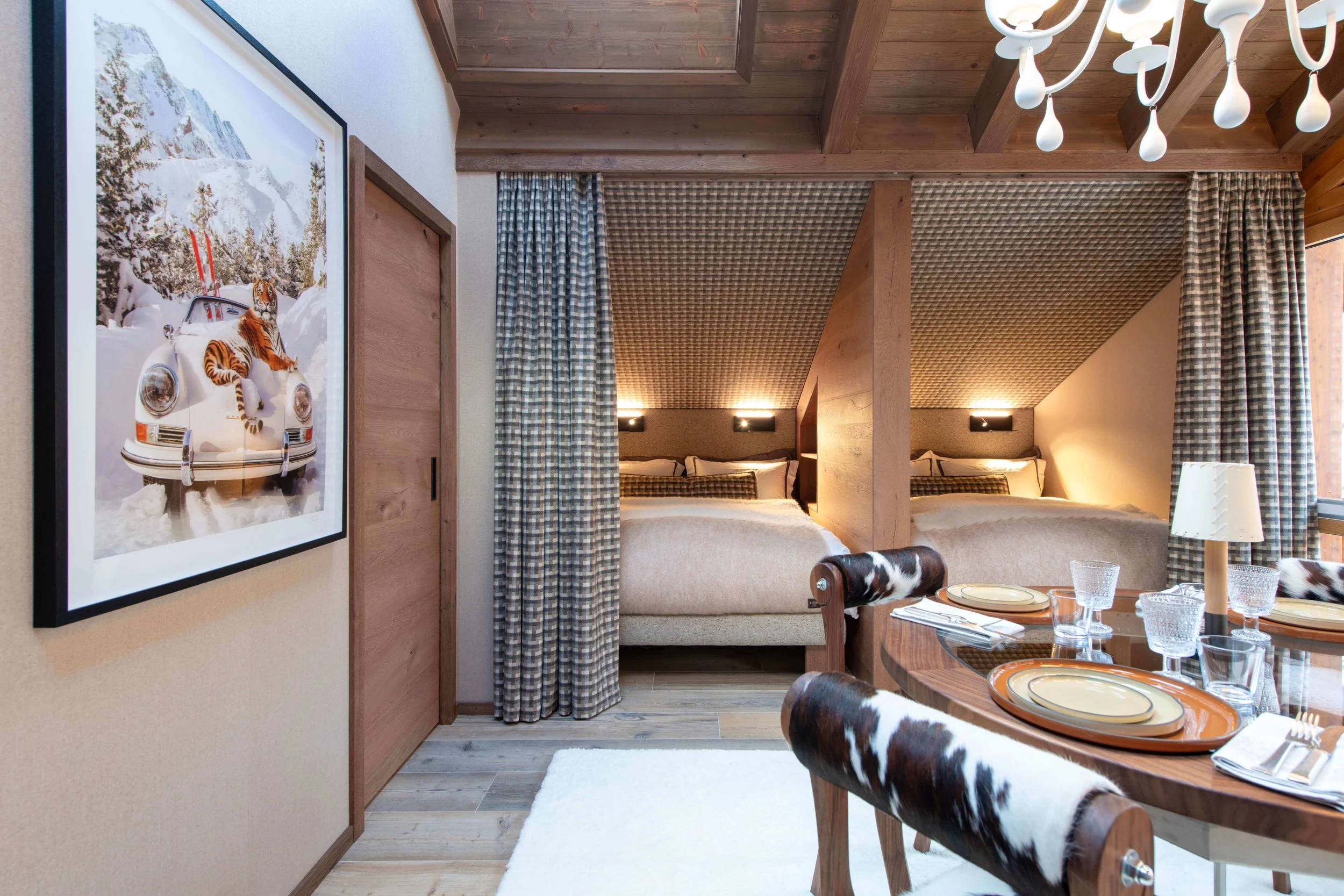
This year, claudia’s chalet design comes to Decorex
Claudia is putting her 20+ years experience of designing to use as the lead designer of the 2026 Decorex VIP Lounge. This year’s lounge will be reimagined as a chalet, nestled in the heart of Kensington Olympia. The show is on from the 11th-14th October 2026.