
Soho Base
Interior architecture
City | Soho, London

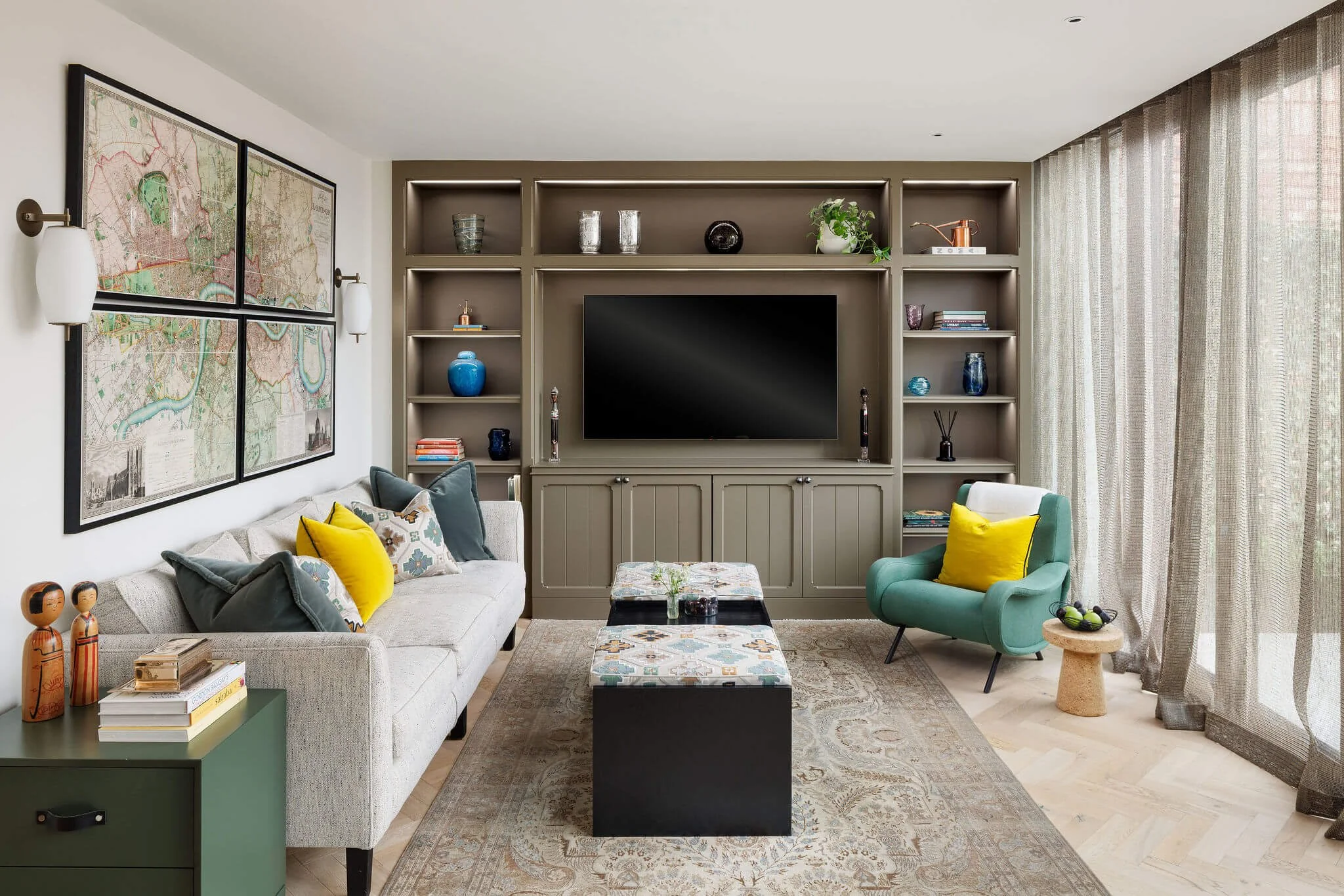
A one-bedroom Soho apartment with the depth and character of a London townhouse, designed while the client lived remotely.
LOCATION: Soho, London
PROJECT TYPE: Full interior design and furnishing
SCOPE: Interior Design · Full Furnishing · Bespoke Joinery · Lighting Design · Window Treatments · Material Specification · Art Curation · Styling · Full Remote Project Management
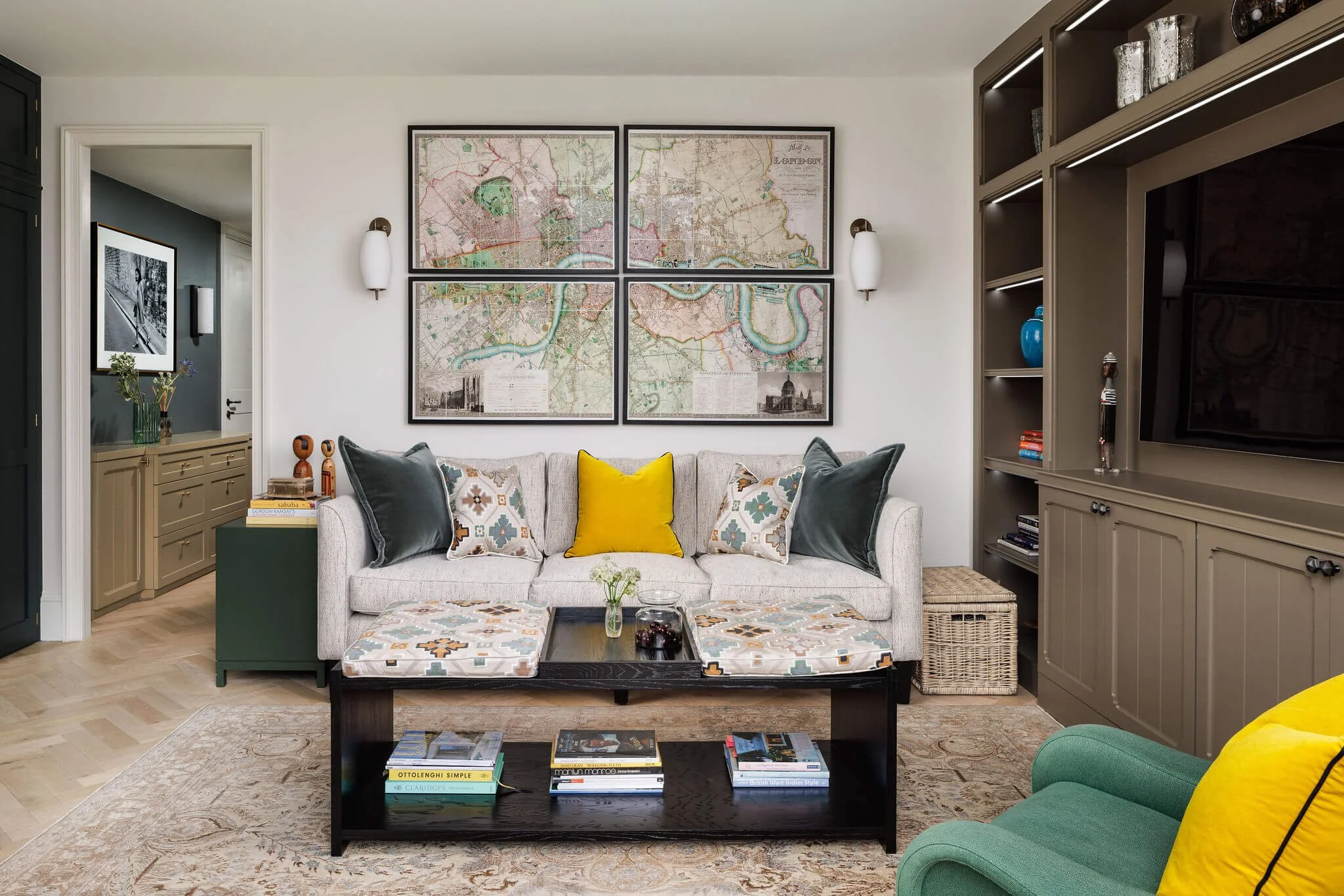
Our American clients had trusted us before. We had designed a previous Highgate home — a full and complex project — and that experience had built the kind of relationship where the second commission requires very little explanation. They knew how we work. We knew how they live. When they purchased a top-floor apartment in a historic Soho mews as their London base for regular city visits, they handed us the keys on exchange and asked us to deliver it complete.
The entire project was designed and managed remotely. Every decision was made over Zoom — mood boards, material samples, joinery drawings, fabric options — all resolved without a single in-person meeting at the property. We collected the keys, managed every trade, signed off every detail, and handed the apartment back finished. The clients arrived for the first time to find it ready.
This is what a long-term client relationship actually looks like in practice. Not just the design, but the trust — the confidence to hand over a London property to someone working from Hampstead while you are in New York, and to arrive to something that exceeds what you imagined. That trust is not assumed. It is earned, project by project, over years.
The Brief
A city base with the character of a London townhouse.
The brief was precise and the clients taste was already known to us. This was not an exploratory project — it was the continuation of a relationship. The apartment needed to feel like a proper London home rather than a serviced space: classic in its elegance, rich in its materials, with a sense of occasion that its footprint would not suggest. A one-bedroom flat in the heart of Soho that would hold its own against the city outside without competing with it.
The challenge was architectural as much as decorative. The top-floor apartment has the particular character of a historic mews building — asymmetric in places, intimate in scale, with a large terrace that floods the open-plan living space with London light. The brief asked us to work with that character: maximise the light, resolve the storage, and create a sense of spaciousness that belies the square footage. Rich, earthy colours and materials were the deliberate choice — the counter-intuitive move that makes a small space feel settled and grand rather than careful and diminished.
The Palette
Anchored in marble. Layered in depth.
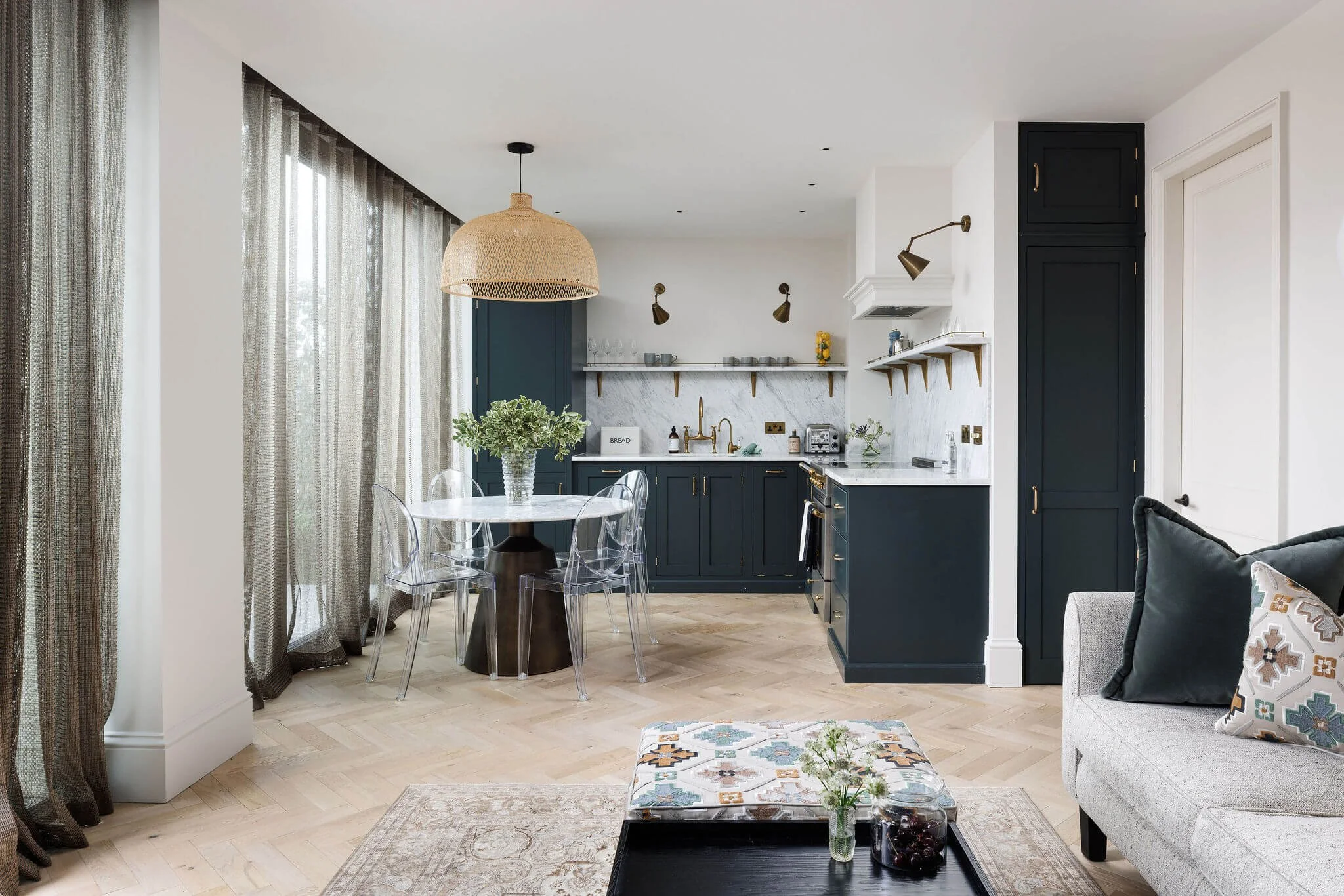
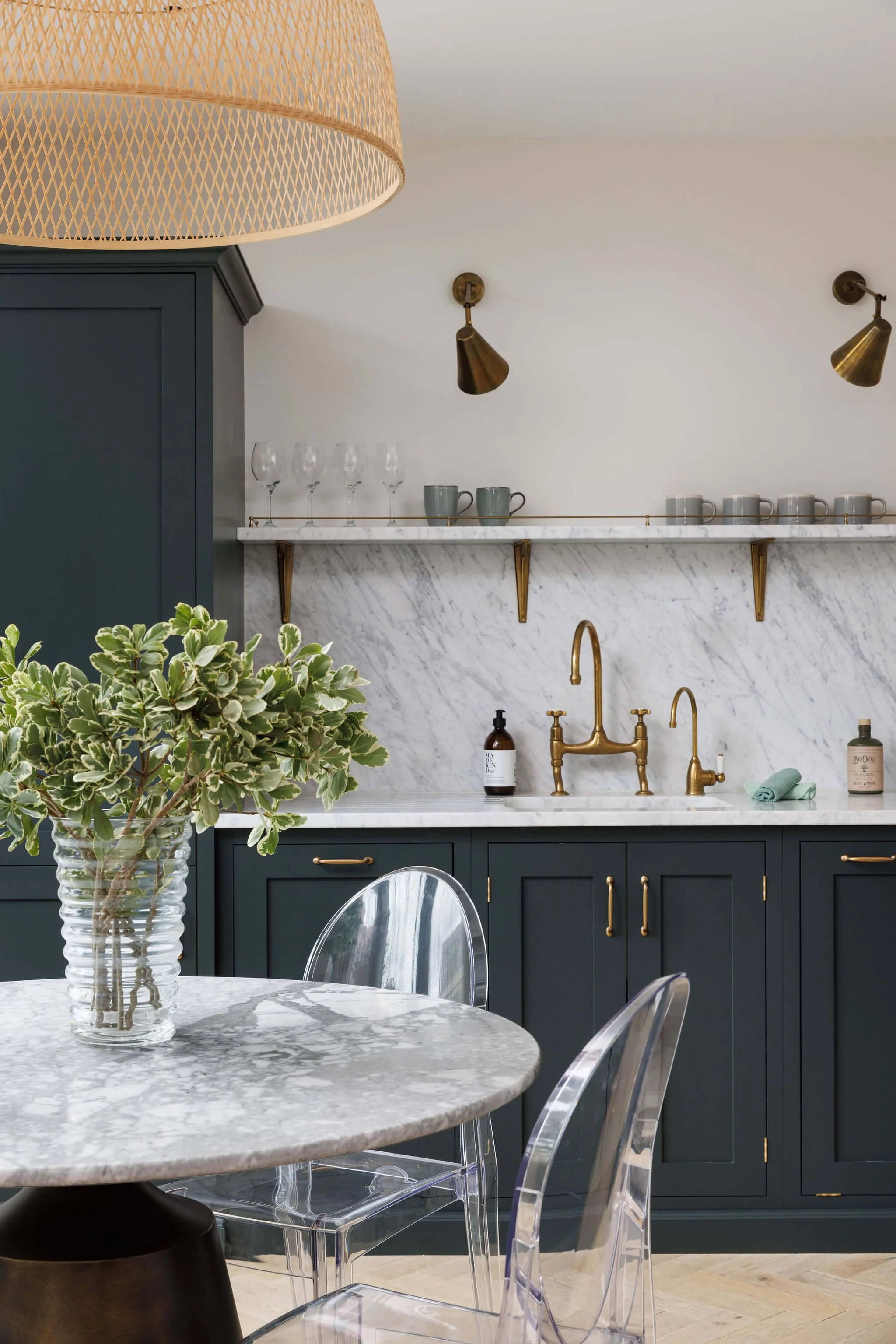
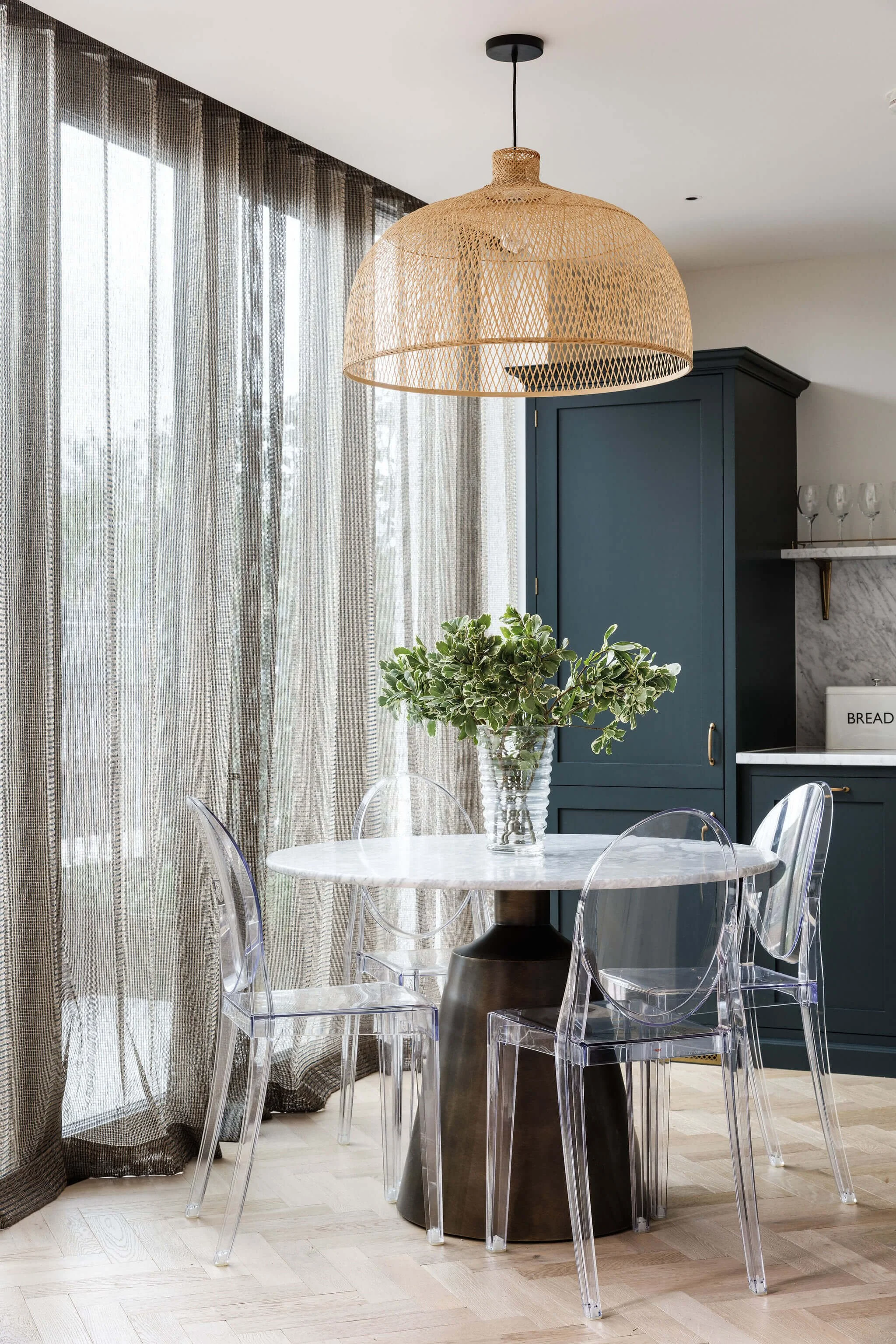
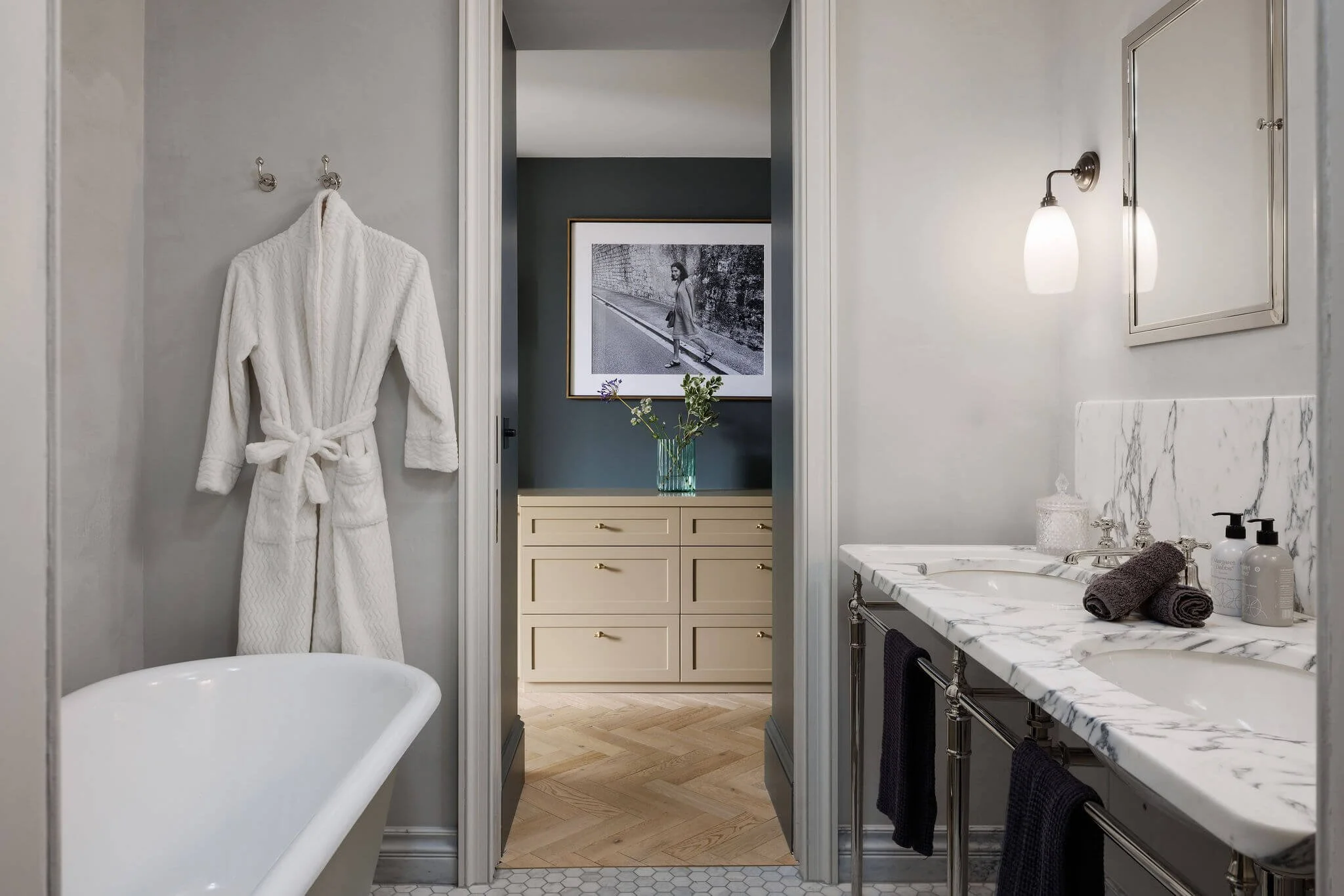
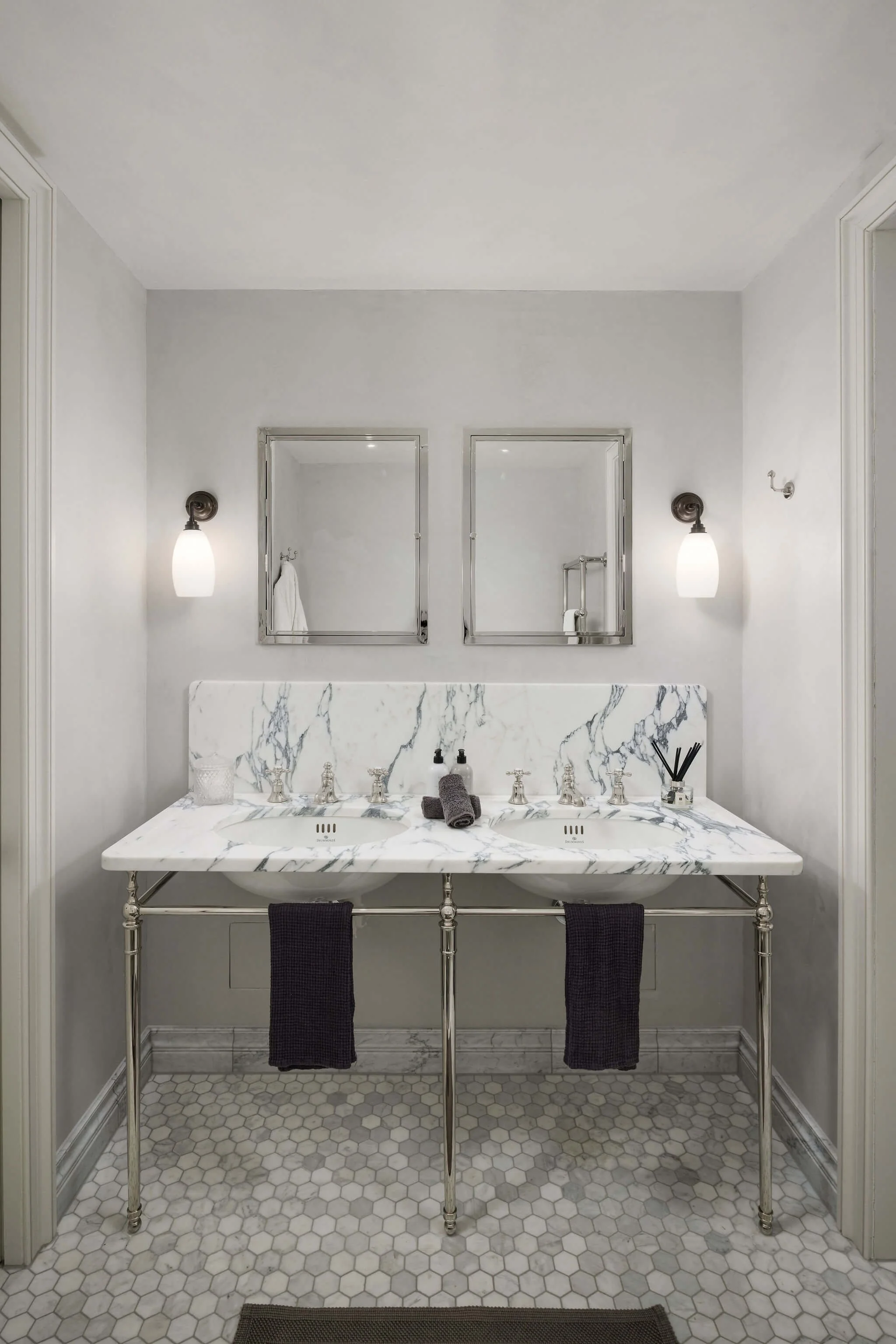
The palette was built from two anchors chosen early and held firm throughout: the classic veined Statuario marble specified for the kitchen and bathroom, and a Cole and Son wallpaper whose botanical depth set the tonal direction for every decision that followed. From these two fixed points, the scheme evolved: PPL Slate and Little Greenes Between Dog and Wolf providing the deeper, quieter notes, Sharkskin and Opus offering counterpoints, the whole animated by greens, warm orange and brass that run through the apartment like a colour story told in chapters.
This is a palette that would overwhelm a larger, more conventional space and that works with complete conviction here. The proportions of the top-floor apartment — intimate, with high ceilings and light arriving from two directions — allow the depth of colour to do what it does best: make a room feel settled, inhabited and complete. Not decorated. Arrived at.
The Joinery
Architecture in paint and timber.
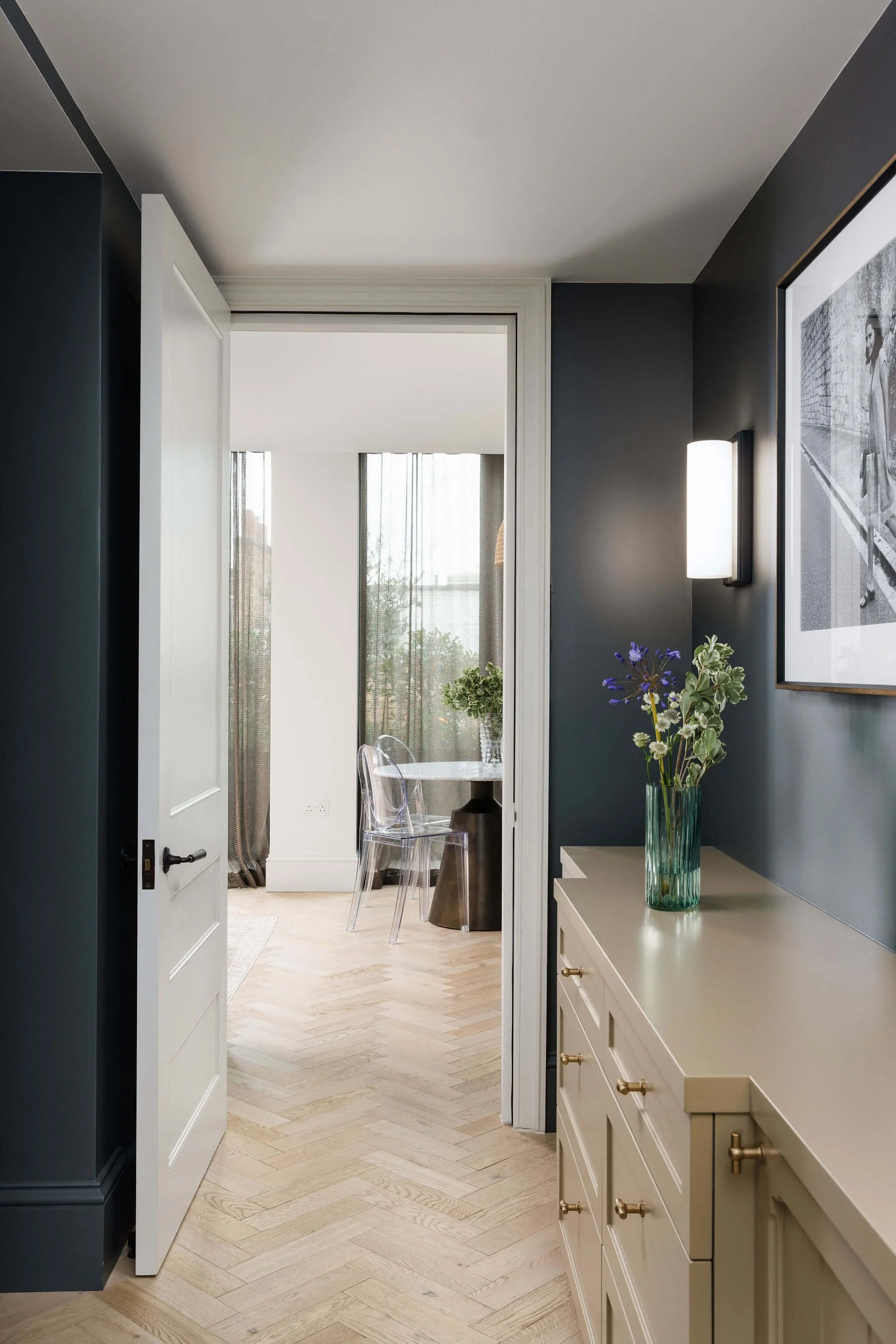
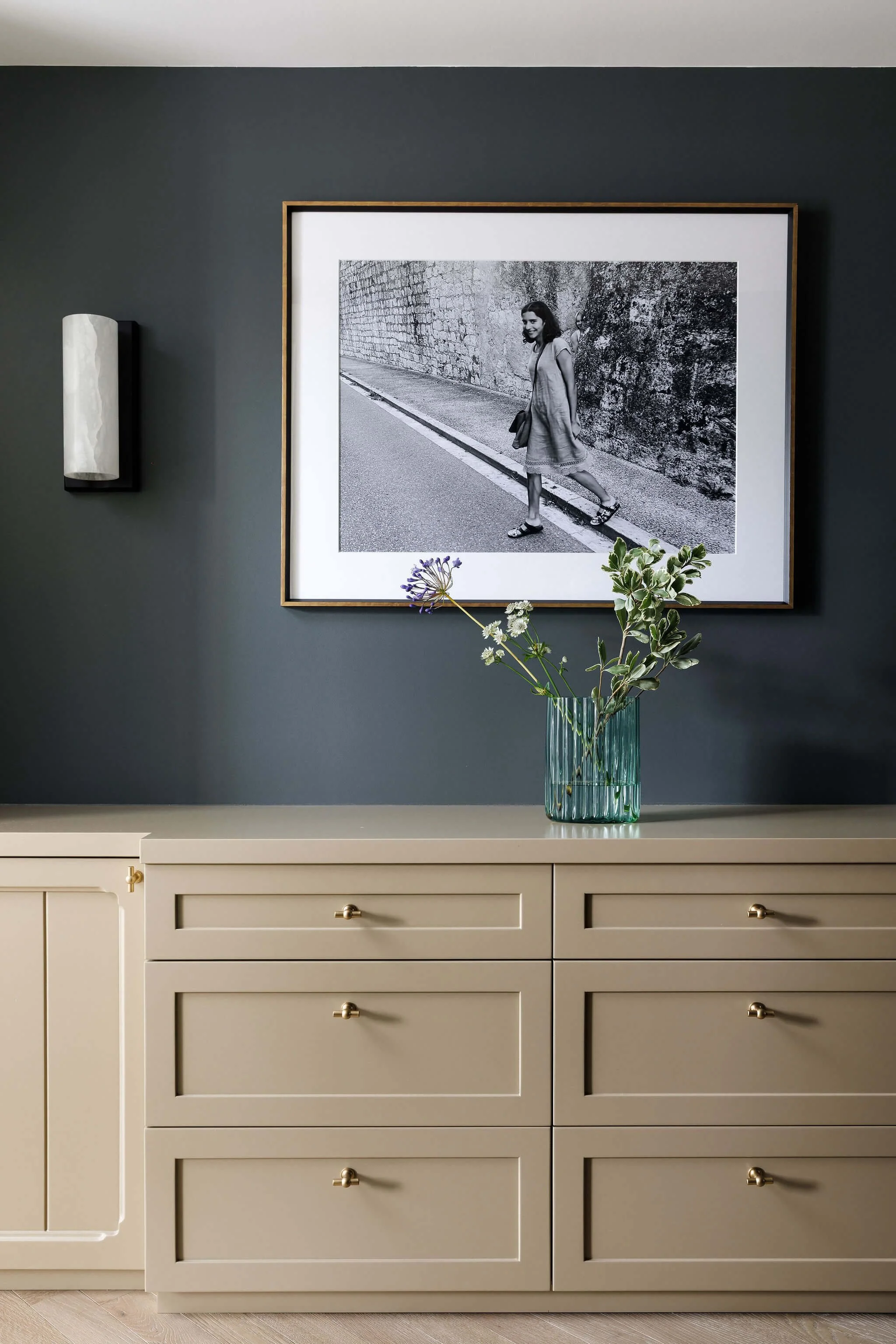
Bespoke joinery is how a small apartment becomes a generous one. Every fitted piece was designed in a curvy shaker profile — simple, with enough character to read as designed without announcing itself as such. Paint shades were calibrated to complement both the Statuario marble and the Cole & Son leafy key wallpaper, so that the joinery reads as part of the palette rather than a separate decision imposed upon it. Brass hardware throughout connects back to the warm accent running through the scheme.
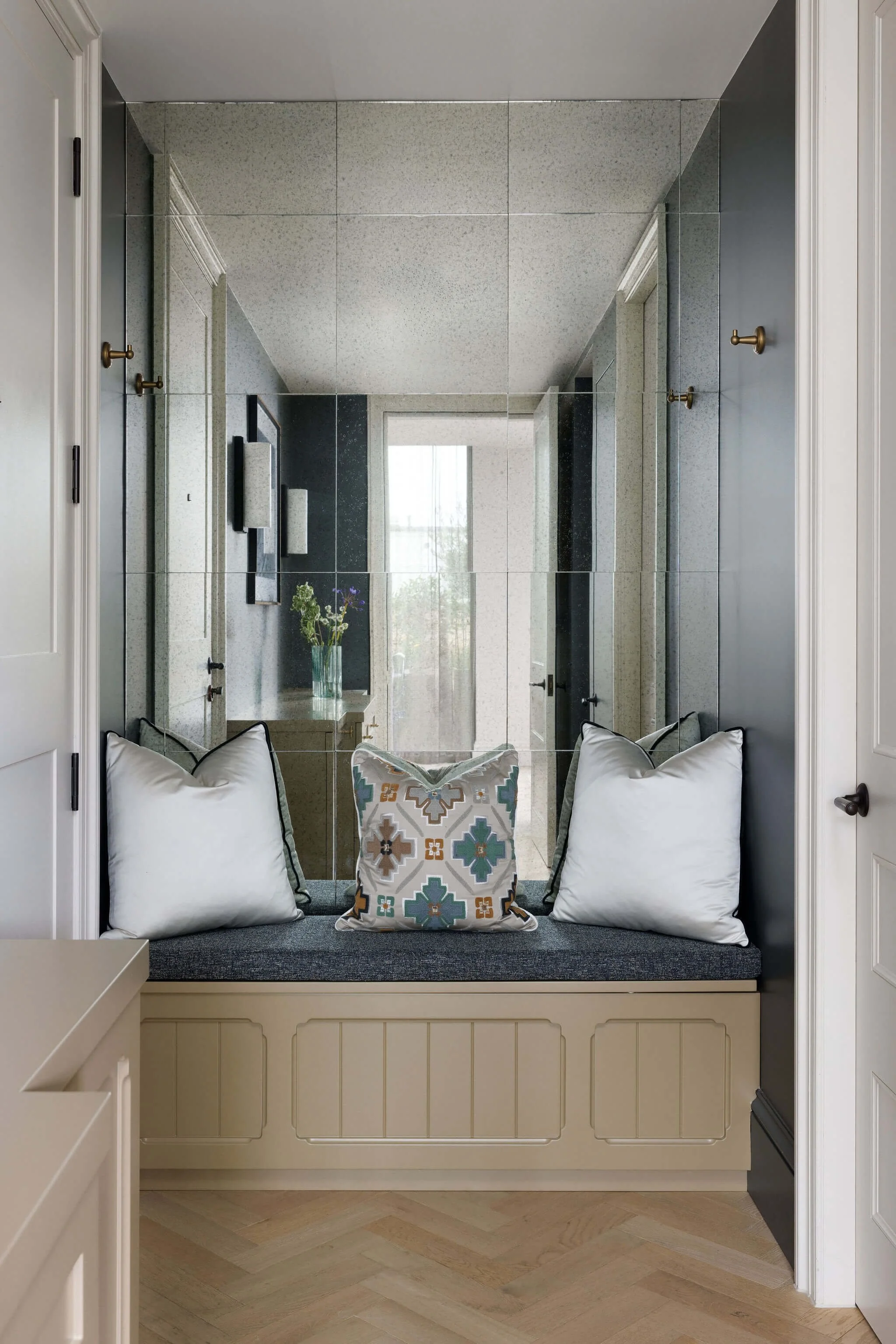
The hallway — generous in proportion for an apartment of this scale, and significantly underutilised when we first encountered it — was treated as an additional room rather than a corridor. Bow-fronted fitted joinery lines one wall, providing substantial concealed storage and a built-in seat. The end wall was clad entirely in antique mirror tiles: a single move that bounces light from the terrace deep into the heart of the apartment, doubles the apparent depth of the space, and gives arrivals a quality of occasion that sets the tone for everything beyond it. Guests notice it immediately. They do not always know what they are noticing.
“The hallway was the last space anyone would have invested in. It became the first thing everyone remarks upon.”
The bedroom
Making the geometry work.
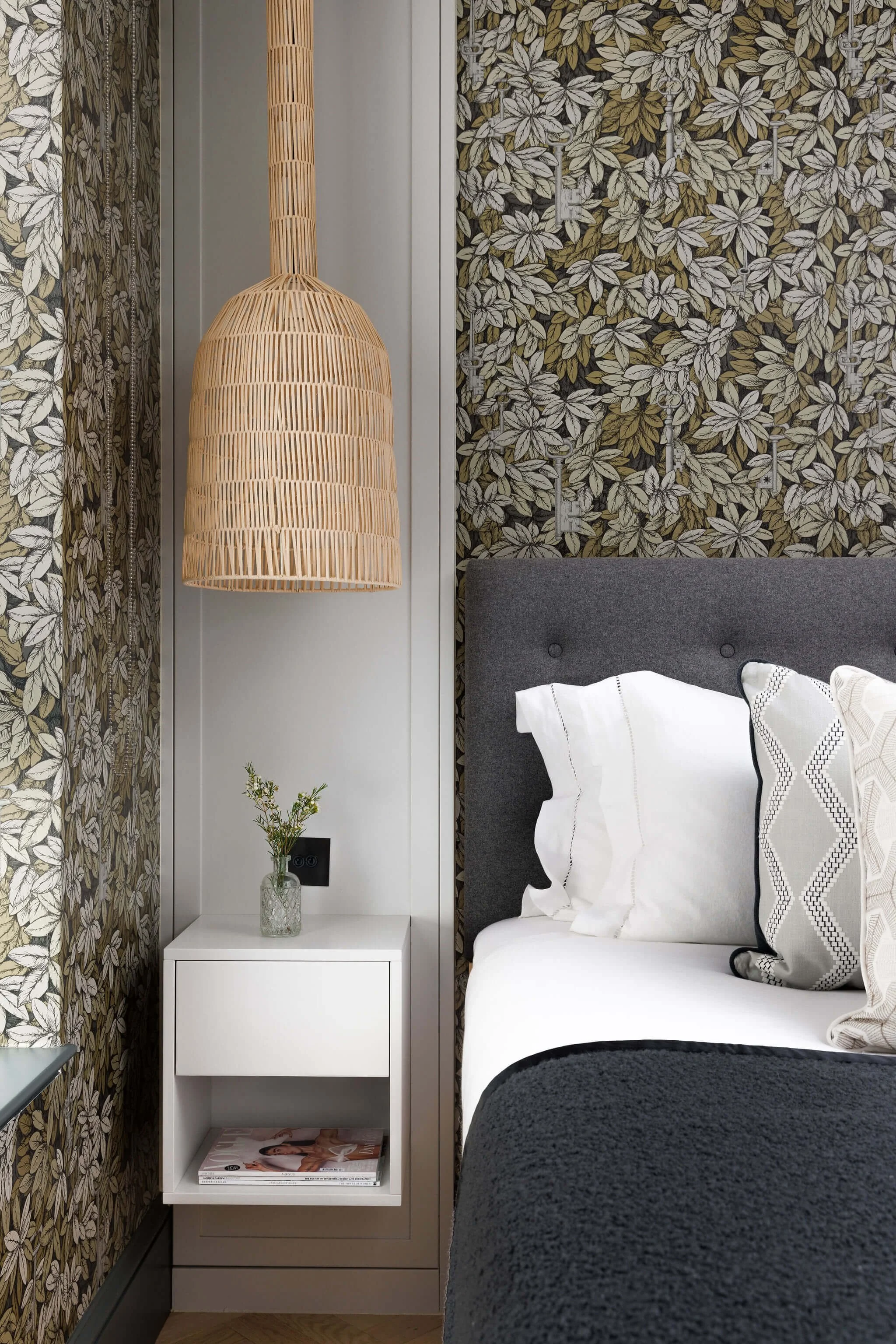
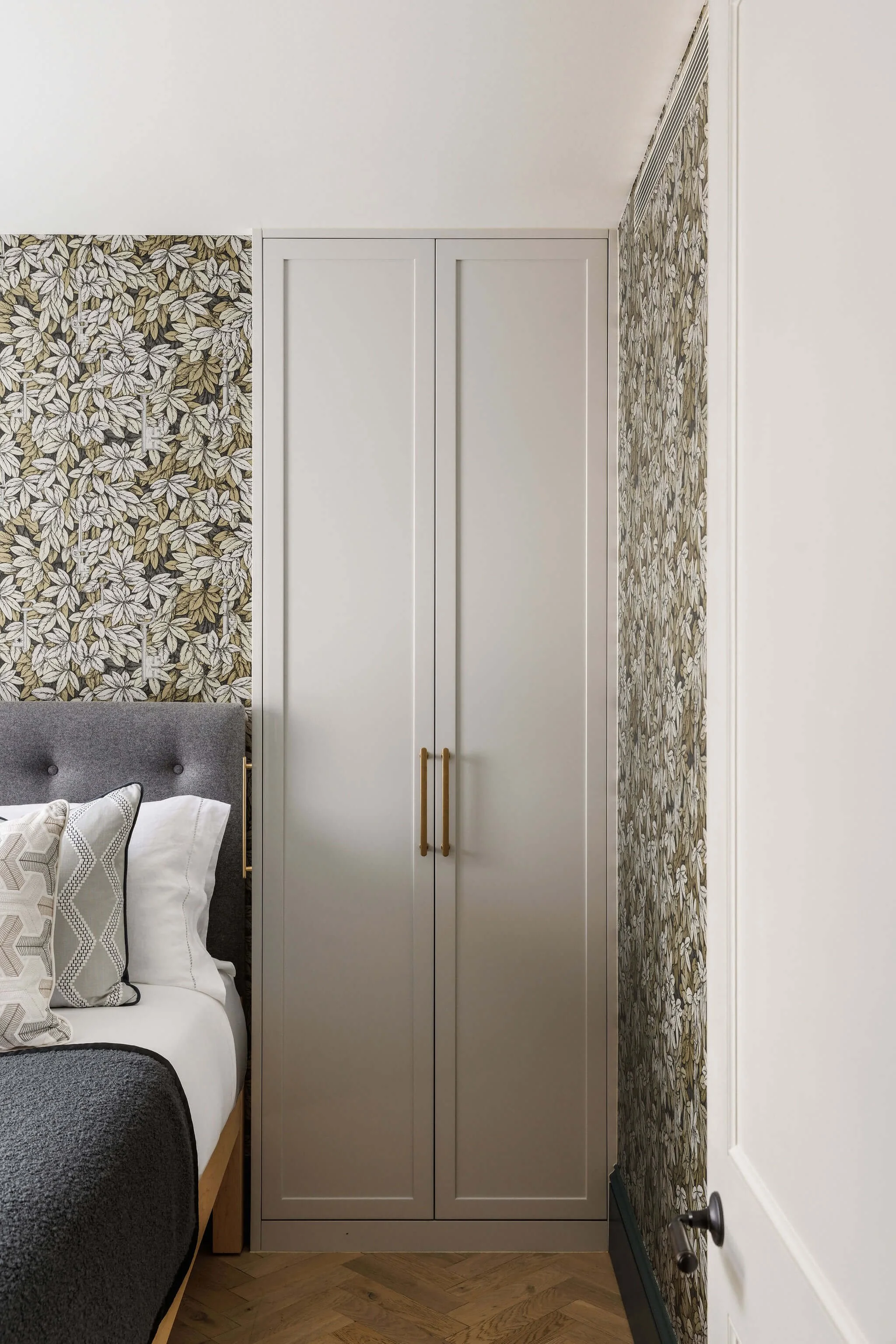
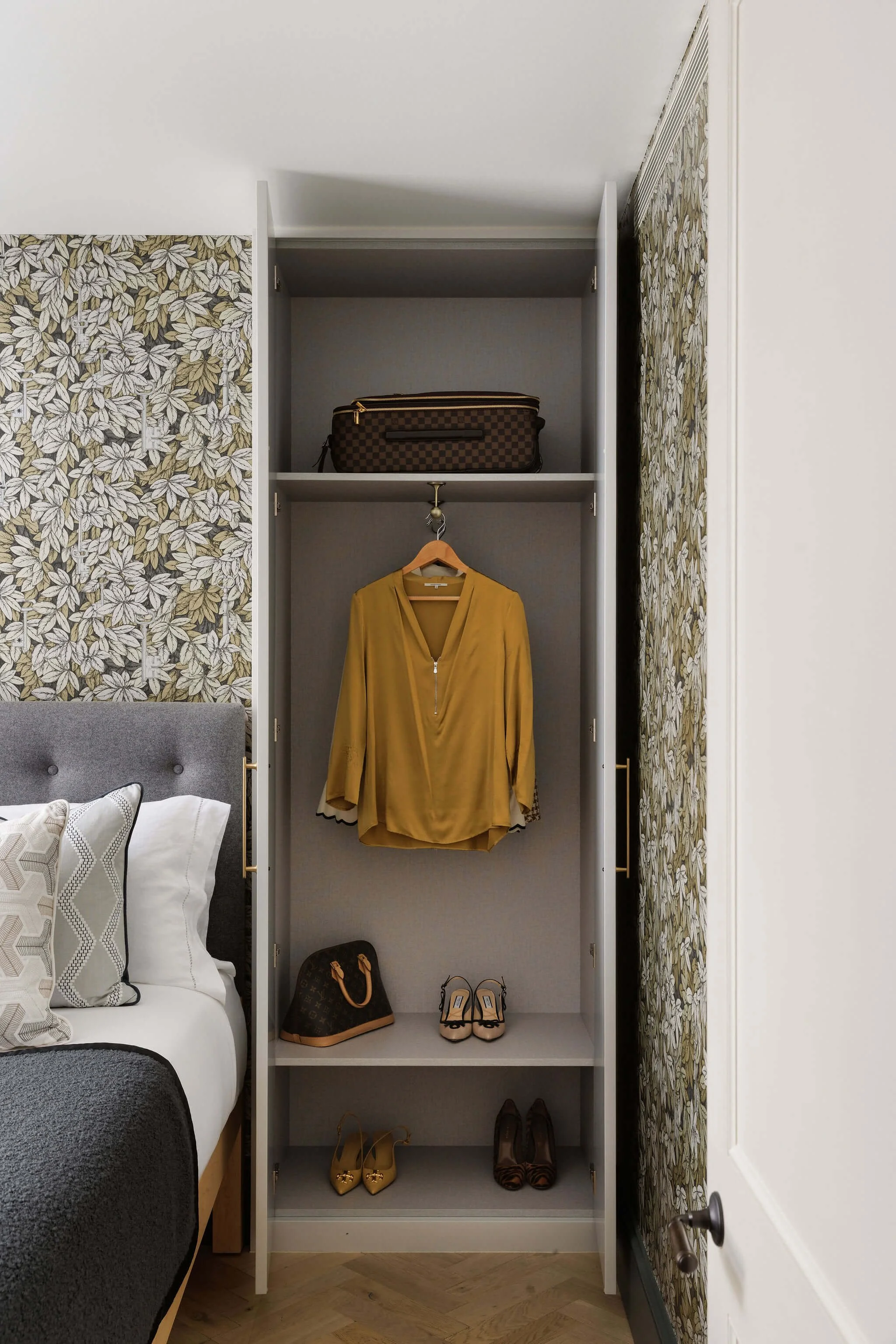
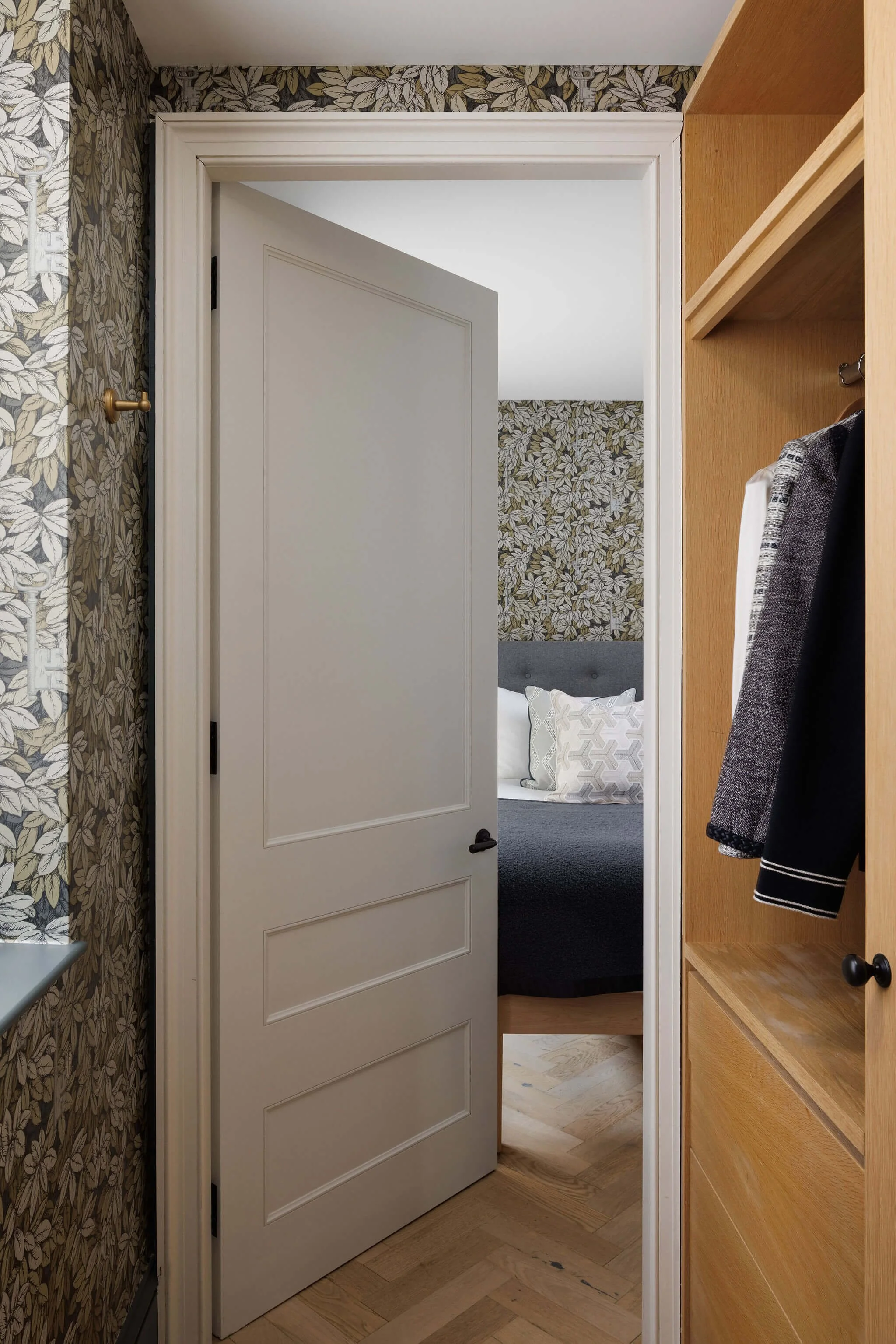
The bedroom and ensuite dressing room presented the most specific spatial challenge. The architecture is asymmetric , a footprint that challenged conventional furniture placement. The solution was to design around the irregularity rather than against it: bespoke joinery fitted precisely to the actual geometry of each wall, wallpaper wrapping the room to create continuity across the planes that the architecture otherwise interrupts.
A floating bedside table was designed for one side of the bed, suspended from the wall with a pendant above — practical, considered, and liberating for the floor plan. A deep fitted wardrobe into the opposite niche wall, providing the storage that a city base genuinely requires. The ensuite dressing room, compact but meticulously planned, uses every centimetre with joinery that feels resolved rather than improvised. In rooms of this scale, the difference between the two is everything.
The Process
Designed on Zoom. Delivered complete.
The clients were based on the American East Coast. The apartment was in Soho. We held the keys from exchange to handover and managed every element — trades, deliveries, installations, sign-offs, the small problems that arise on every project and require a decision at the right moment — without a single site visit from the clients during the entire duration. Every design decision was made remotely: samples couriered, joinery drawings reviewed on screen, fabric and paint selections approved over video call, the palette built and refined across sessions held across time zones.
This is a way of working that demands absolute clarity of communication, total confidence in the people managing the project on the ground, and a client relationship strong enough to function without the reassurance of physical presence. We had all three. The relationship built on the Highgate project meant the clients knew precisely how we work — how we communicate when something changes, how we hold the vision of the finished apartment in mind across months of practical management.
When the project was complete, the clients flew to London. We handed over the keys to a finished home. For clients who live across multiple locations — who move between cities, countries and time zones and need a designer who can work with equal effectiveness whether they are in the same room or on another continent — this kind of remote capability is not a convenience. It is the whole point.

CITY
Urban Sophistication

Surf
Coastal Serenity

Ski
Alpine Craft
Every home begins with a conversation.
Every project begins with a conversation.
If you are considering a home and would like to talk through your ideas, we would be glad to hear from you.