
COUNTRY
MODERN
Interior architecture
City | Surrey Hills

A country house set within two hectares of mature parkland, reconfigured entirely to bring the landscape back into the heart of the interior.
LOCATION: Surrey Hills, UK
PROJECT TYPE: Full interior architecture
SCOPE: Spatial planning · Kitchen design · Bedrooms & bathrooms · Joinery · Lighting
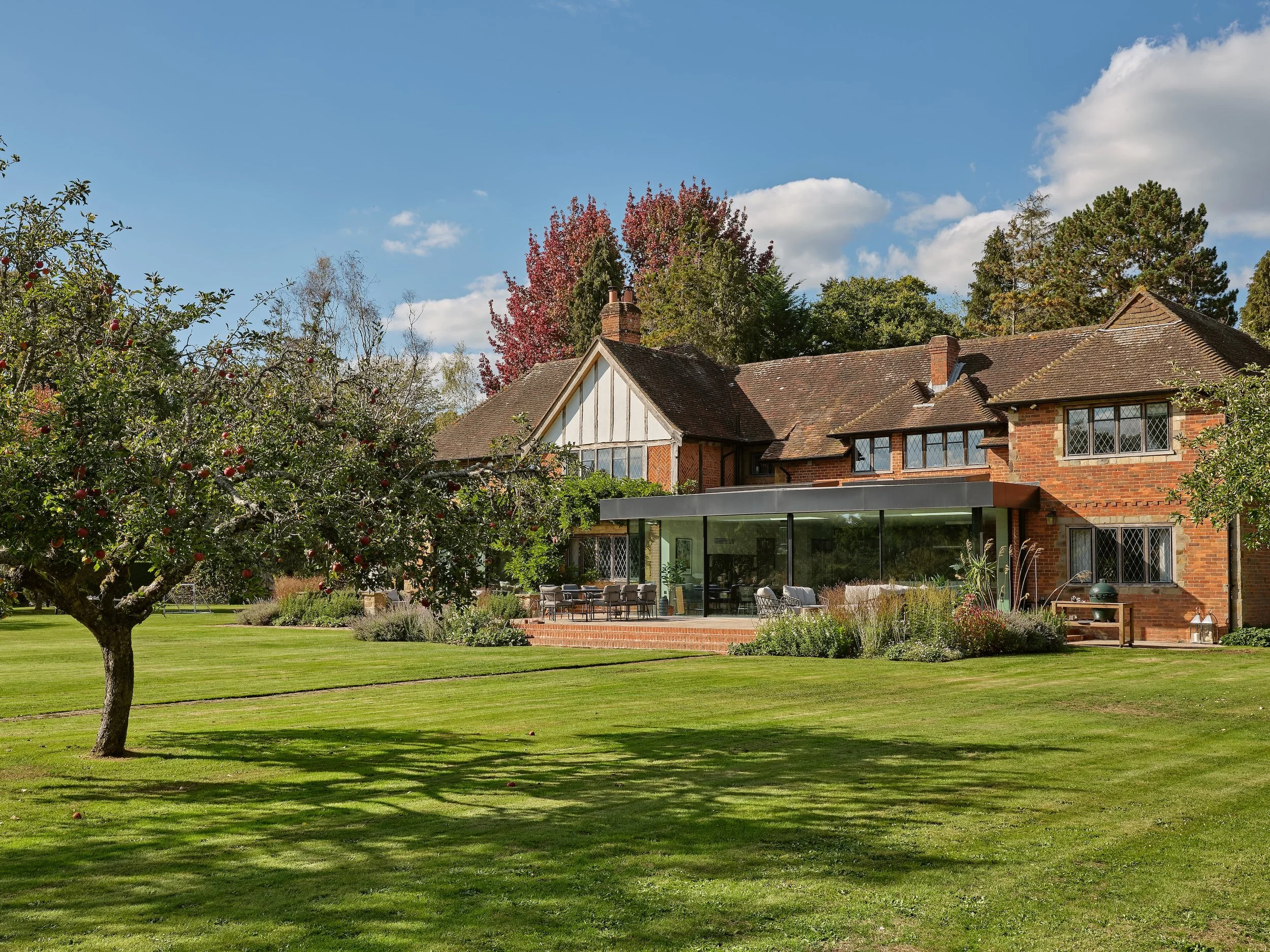
The property sits within two hectares of mature parkland, the surviving fragment of a 17th-century deer estate. An extraordinary piece of land, and a house that had almost entirely stopped acknowledging it. Small windows. Low ceilings. A compartmentalised ground floor of rooms that faced inward rather than out. The interior had turned its back on the setting that should have defined it.
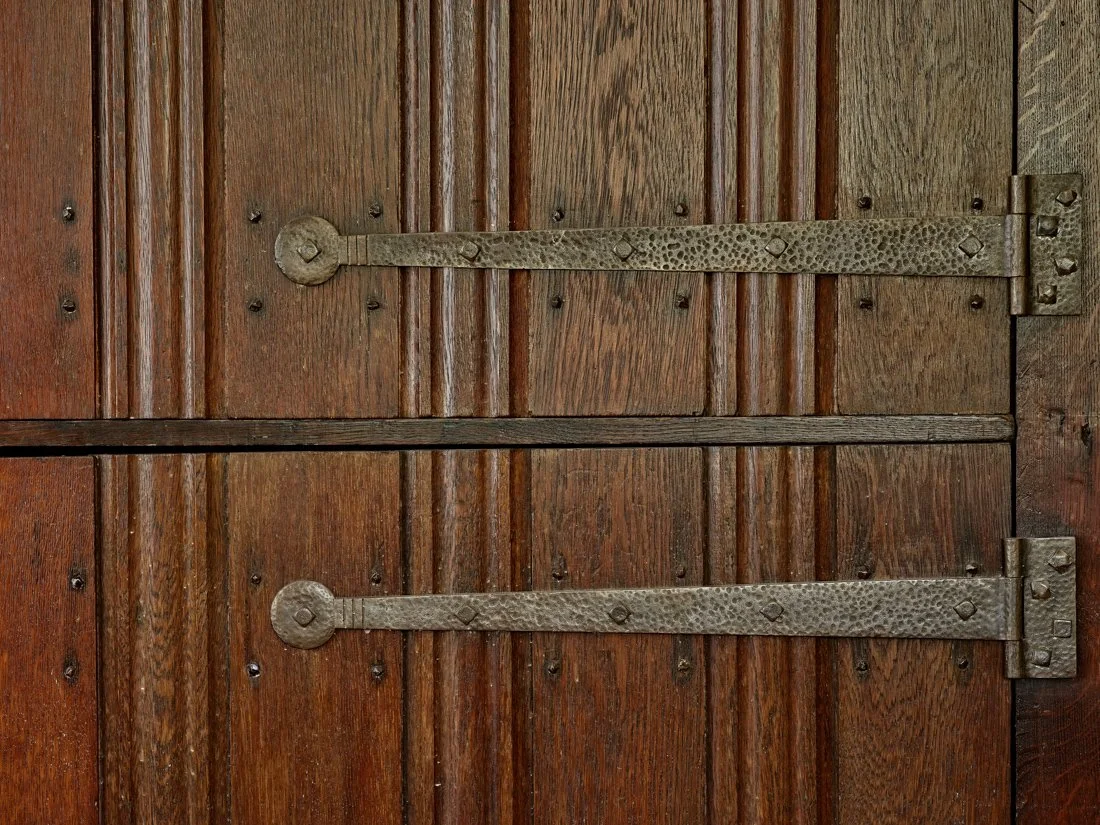
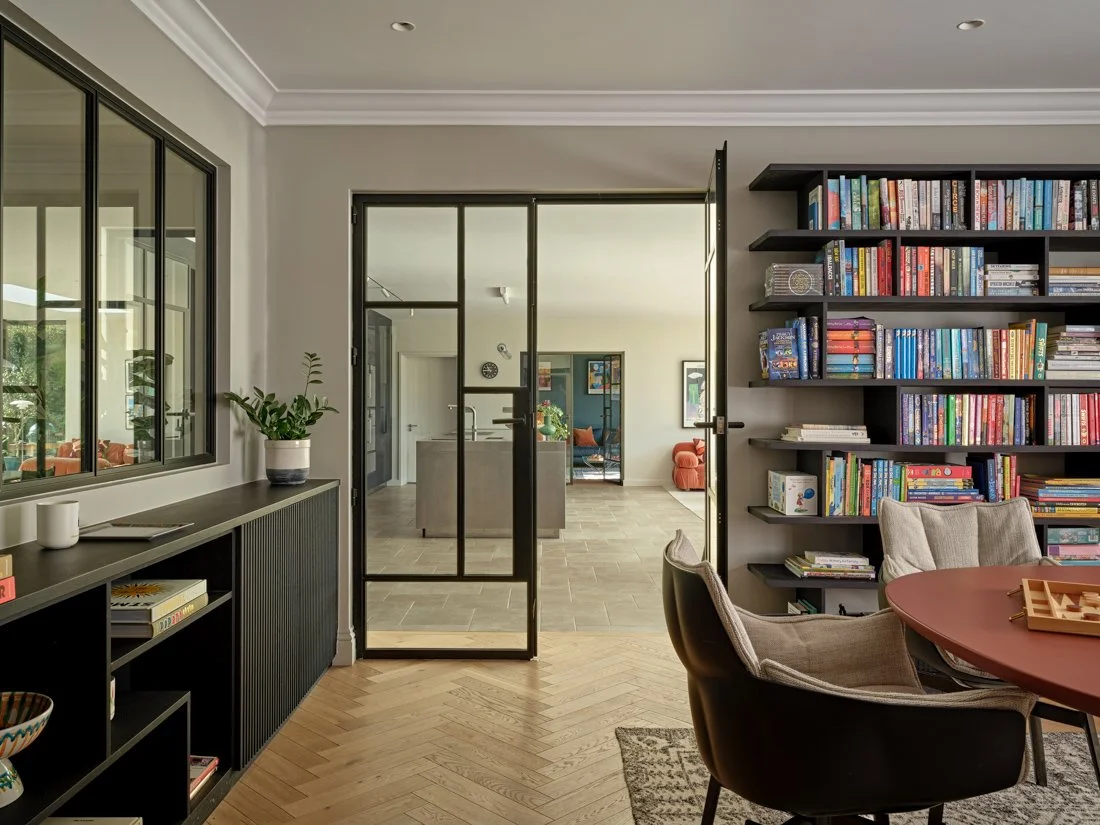
The brief was to reverse that. To open the house up, bring the light in, and let the rooms feel as generous as the parkland outside. This was not a cosmetic project. The ground floor was reconfigured from the plan upwards: ceilings raised, internal walls removed, a new extension stitched into the existing fabric to create a single open heart at the centre of the house. Every door - save the original front door and the study - was replaced with glass.
What emerged is a home that holds the landscape in view from every turn. The parkland is no longer something seen through a window on the way past. It is the thing the house is organised around.




"Our brief was to modernise the interior and open it to the parkland and lake, while respecting the heritage of the house. Claudia brought a wealth of creative ideas, considered joinery and thoughtful bathroom design, and, crucially, the willingness to offer a clear opinion when we needed one. The house wouldn't be the same without her.”
—Country Modern Client
The Brief
An interior turned back towards the land.
The land did almost everything. Two hectares of mature parkland surrounding the house, the surviving trace of an estate laid out in the 17th century. What the house did not do was respond to it. The ground floor was compartmentalised into small rooms with small windows. The landscape was barely felt from inside.
The brief was straightforward in intention and demanding in execution: transform that relationship. Rework the ground floor entirely. Open the interior to the land. Introduce an architectural language that could hold its own against the parkland without ever competing with it. The rooms should feel as generous as the setting and the setting, from every room, should feel present.
The Architecture
Glass where walls used to be.
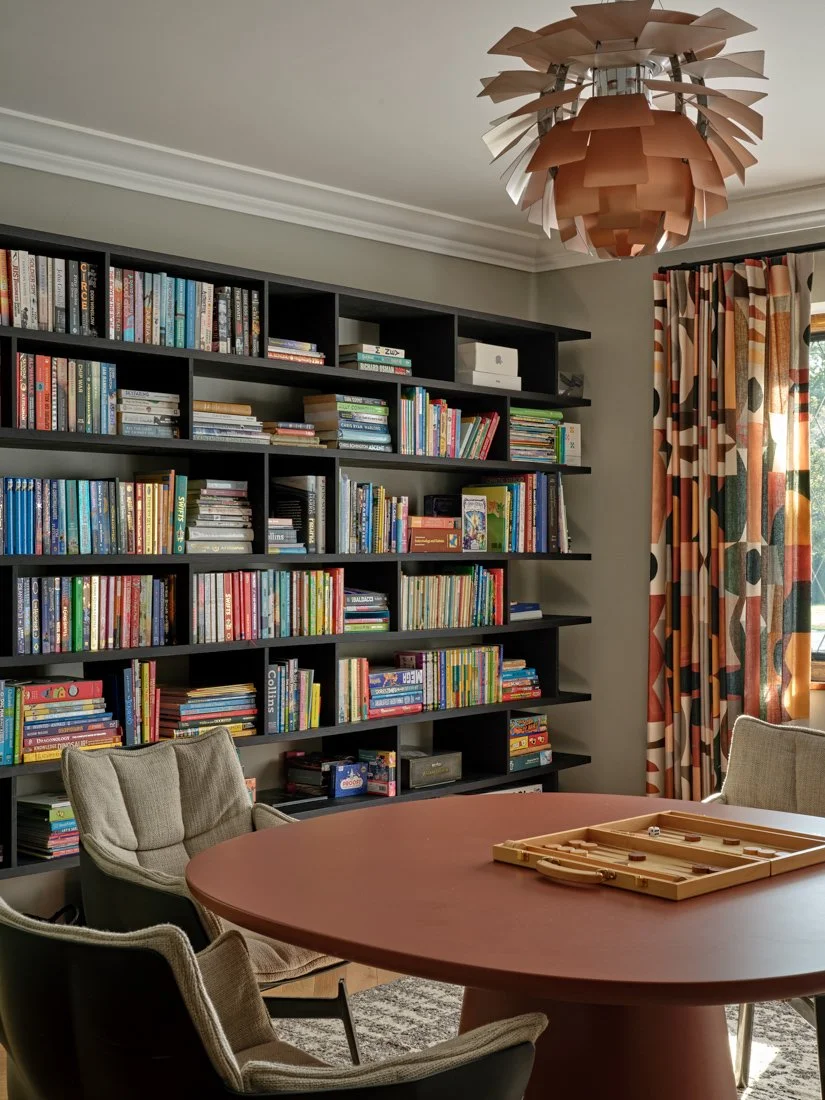
The architectural interventions were numerous and consequential. Ceiling heights were raised. Internal walls were removed. A new extension with skylights and ultra-slim sliding glass doors now connects the main house to the annexe, creating a single open-plan kitchen, dining and family living space at the heart of the ground floor. Leading off either side: a library and a cinema snug, each accessed through paired Crittall doors.
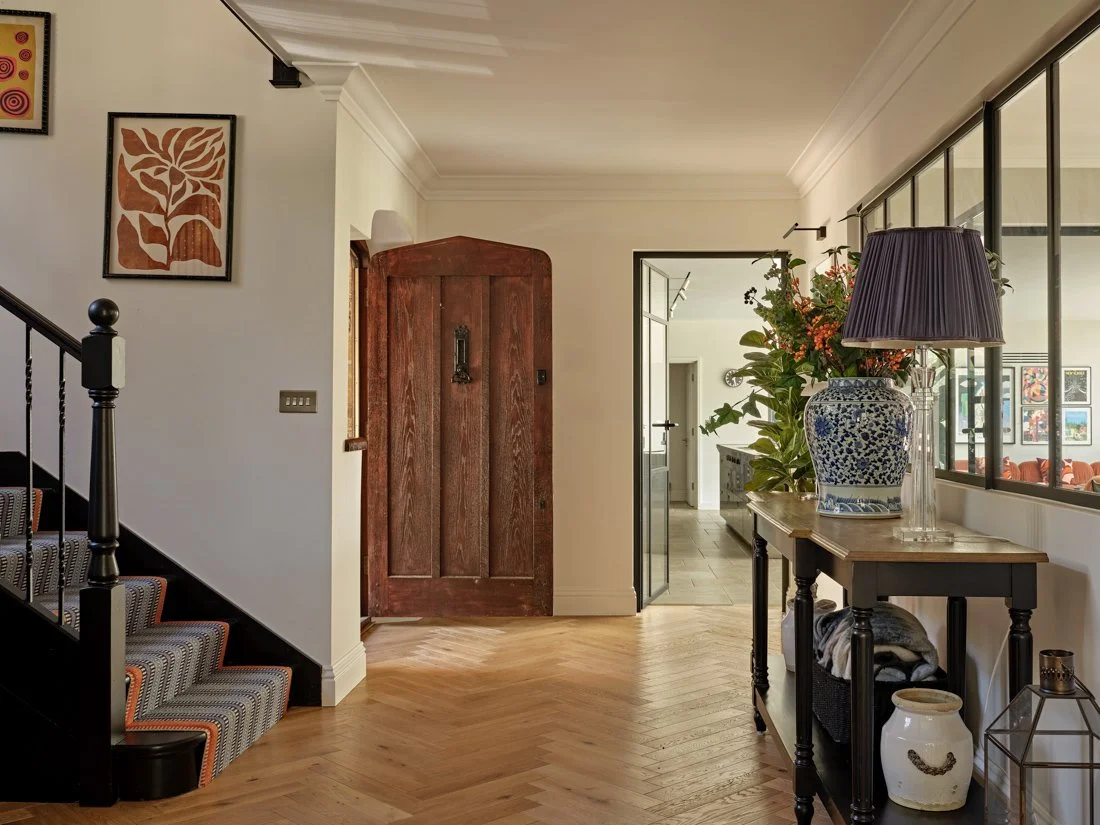
The Crittall detailing is the organising grammar of the scheme. A Bauhaus-inspired grid of squares and rectangles that introduces rhythm and balance across the new plan, and that links the interior, structurally and visually, to the slim-framed glazing connecting the house to the garden. Symmetry became the quiet principle throughout. The staircase was opened up with slender metal spindles echoing the Crittall grid. A former storage cupboard became a bespoke glazed wine room. Light engineered oak flooring, finished with a subtly whitened oil, runs uninterrupted through every space. Light now moves through the house in a way it never could before.
The Kitchen
A working heart, calmly kept.
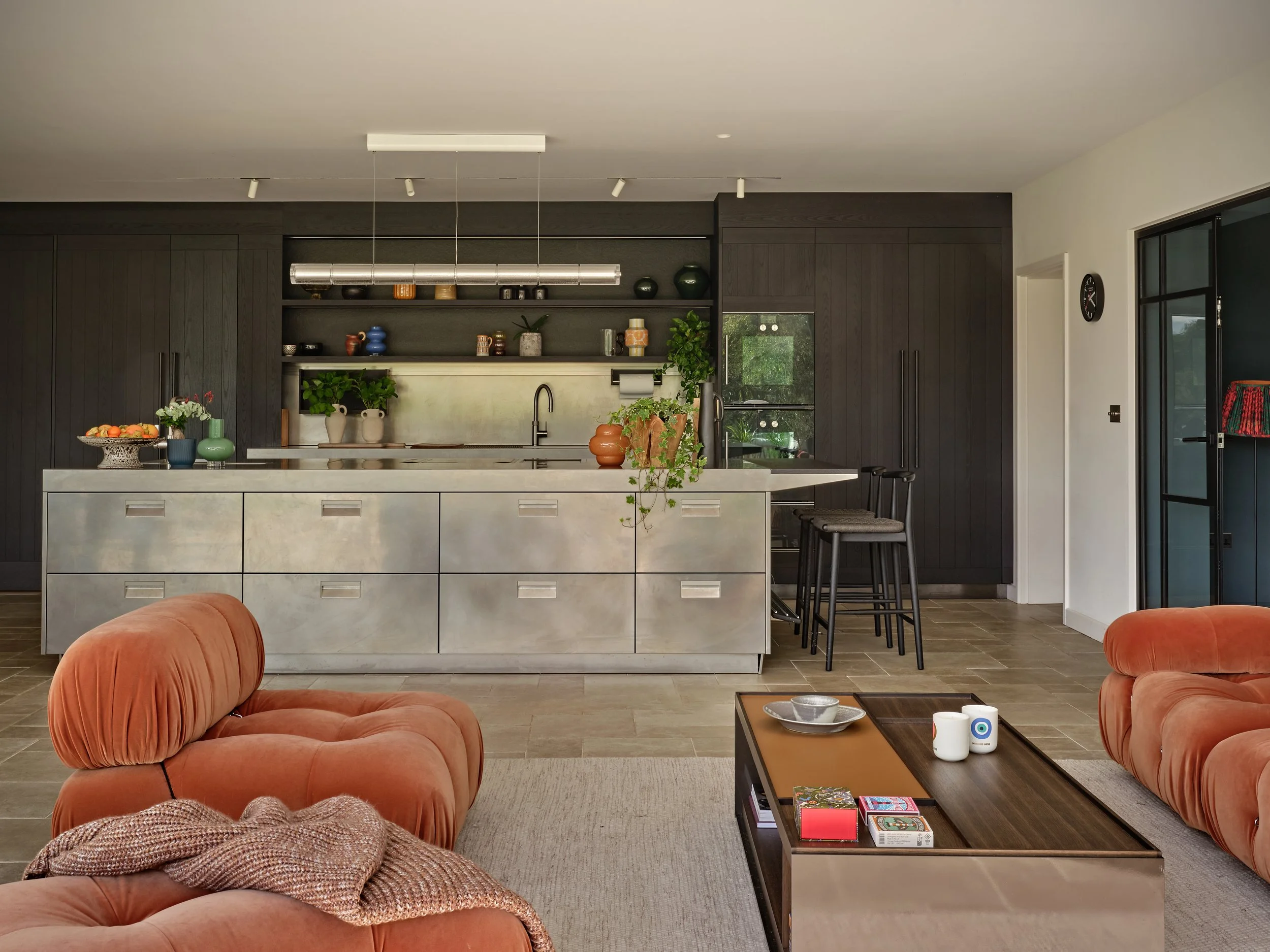
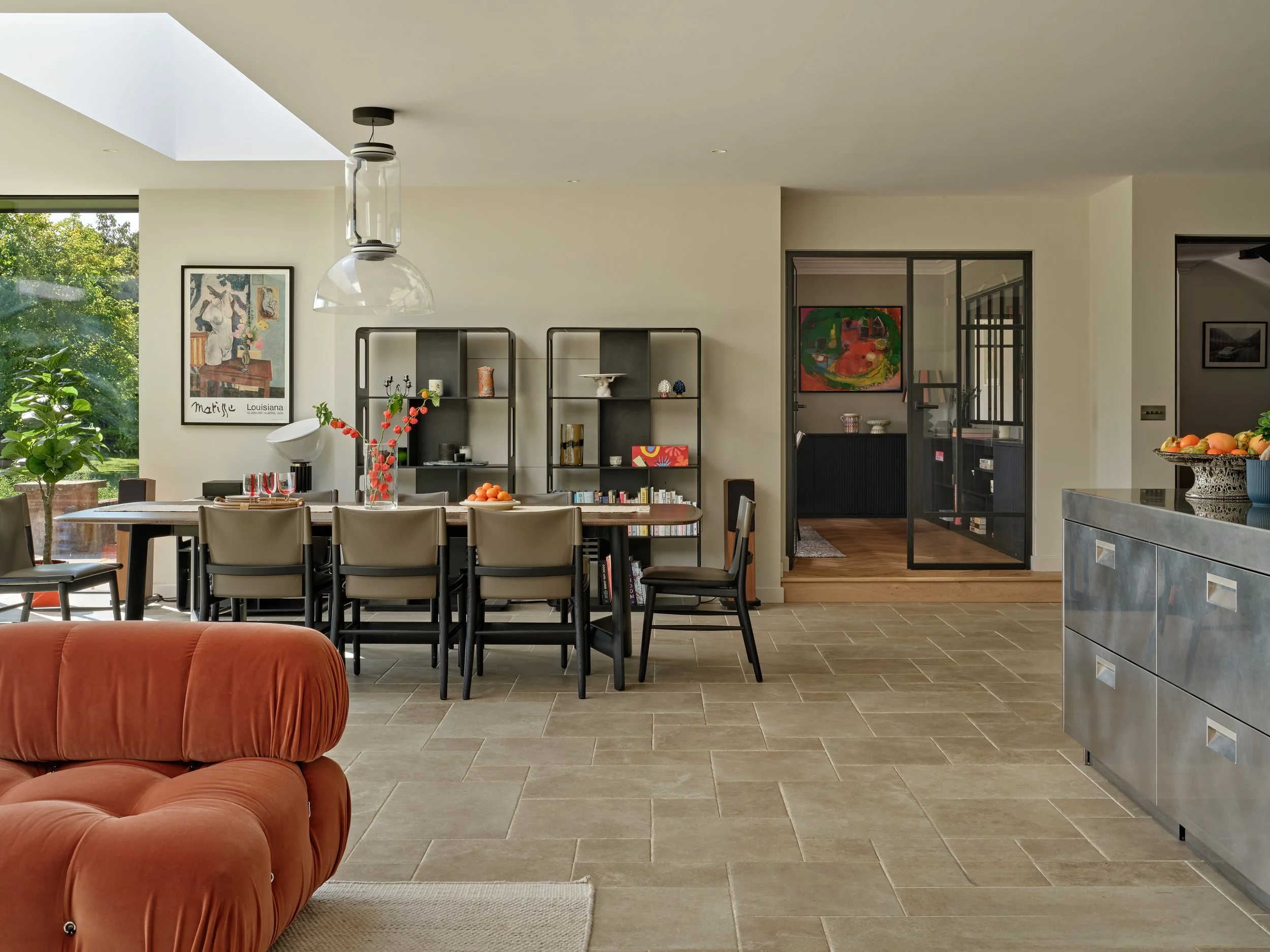
The kitchen was designed around Arclinea cabinetry, specified and developed closely with the client over the course of the project. A large central island anchors the space. A walk-in butler's pantry absorbs the harder-working preparation and storage, leaving the main kitchen uncluttered — a room that reads as a living space first and a kitchen second.
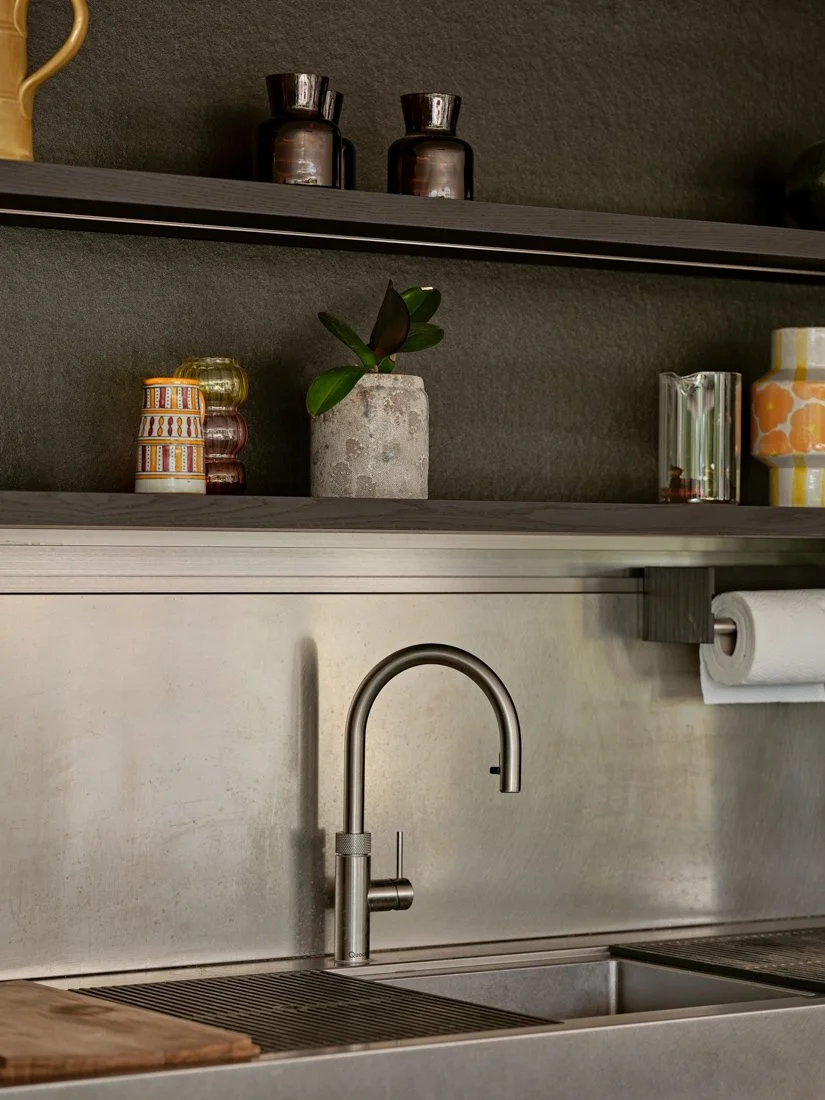
The material palette was both deliberately bold and restrained in number. Black rough-sawn oak. Leathered lava stone. Polished stainless steel. Sand-coloured flagstone-effect flooring. Strong contrasts, few elements.
“A palette of this conviction only works when the architecture is strong enough to hold it.”

The Bedrooms and Bathrooms
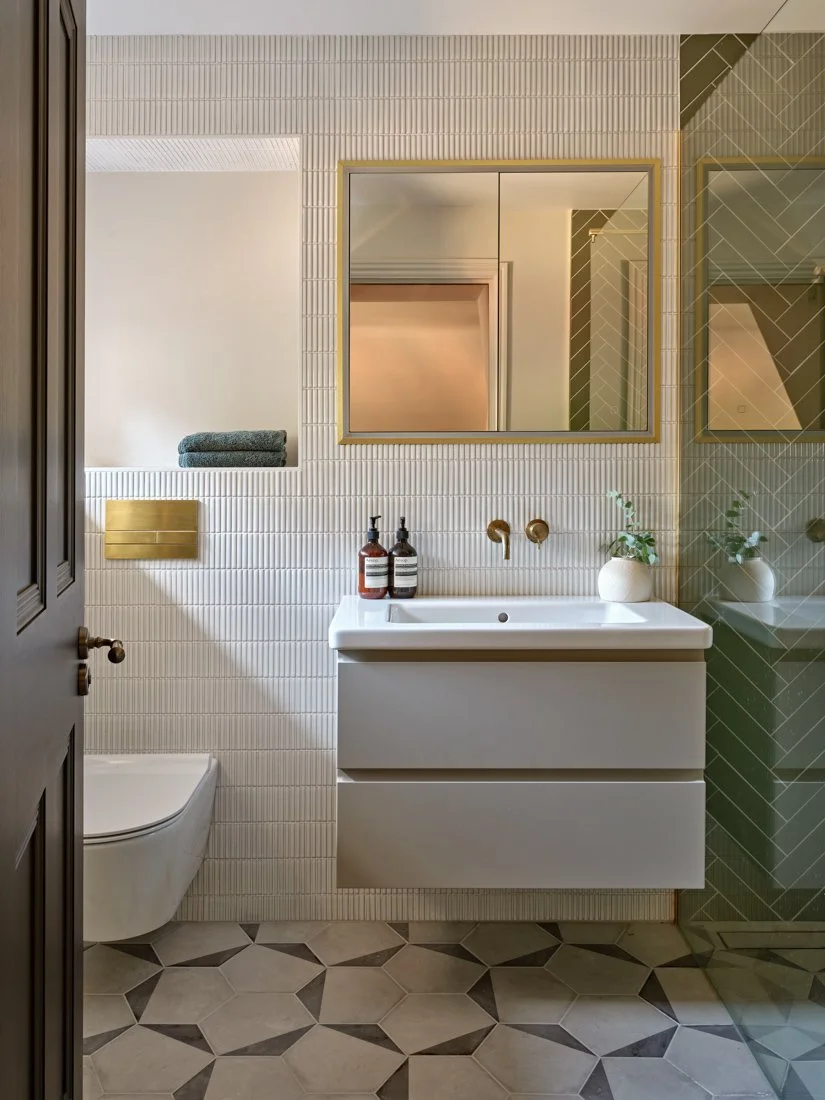
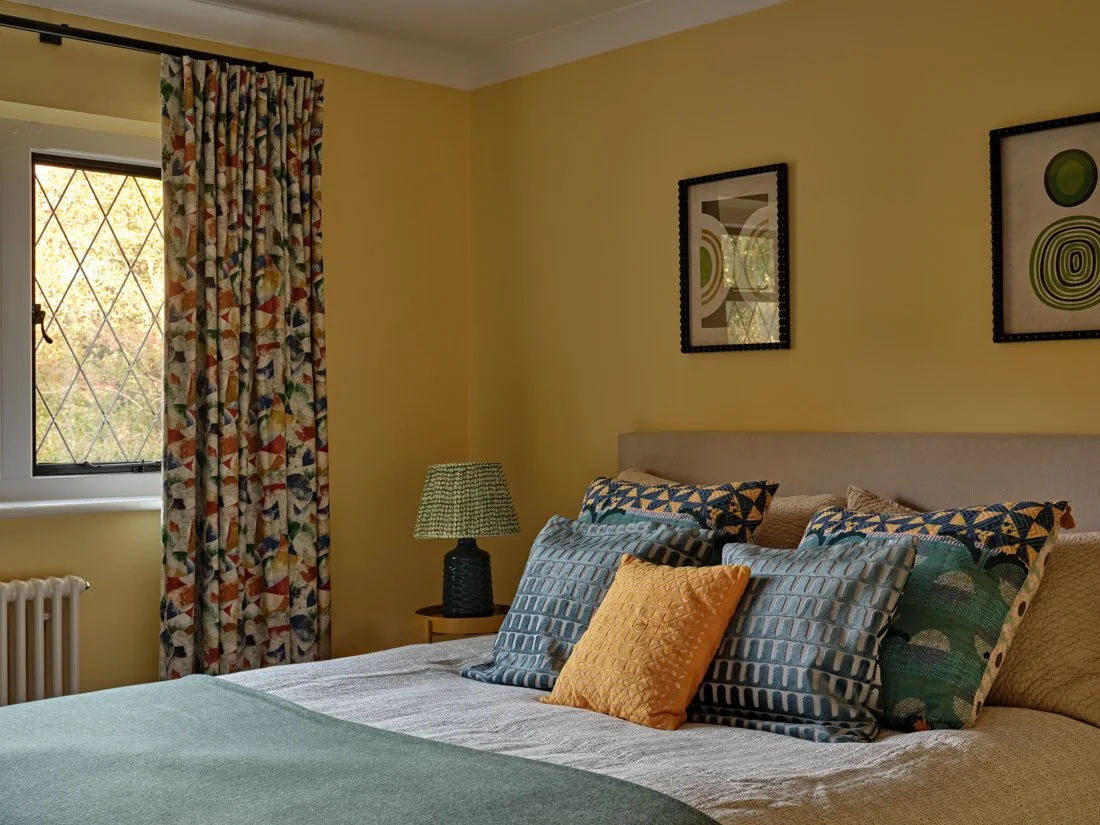
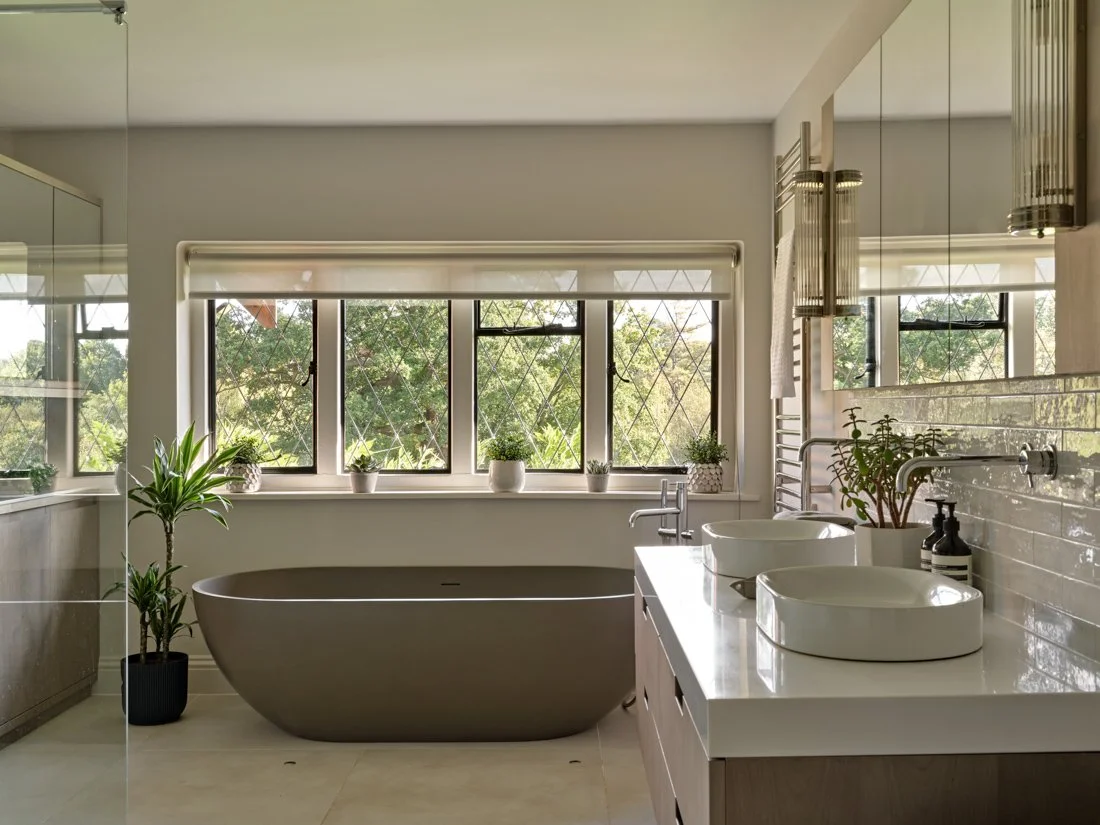
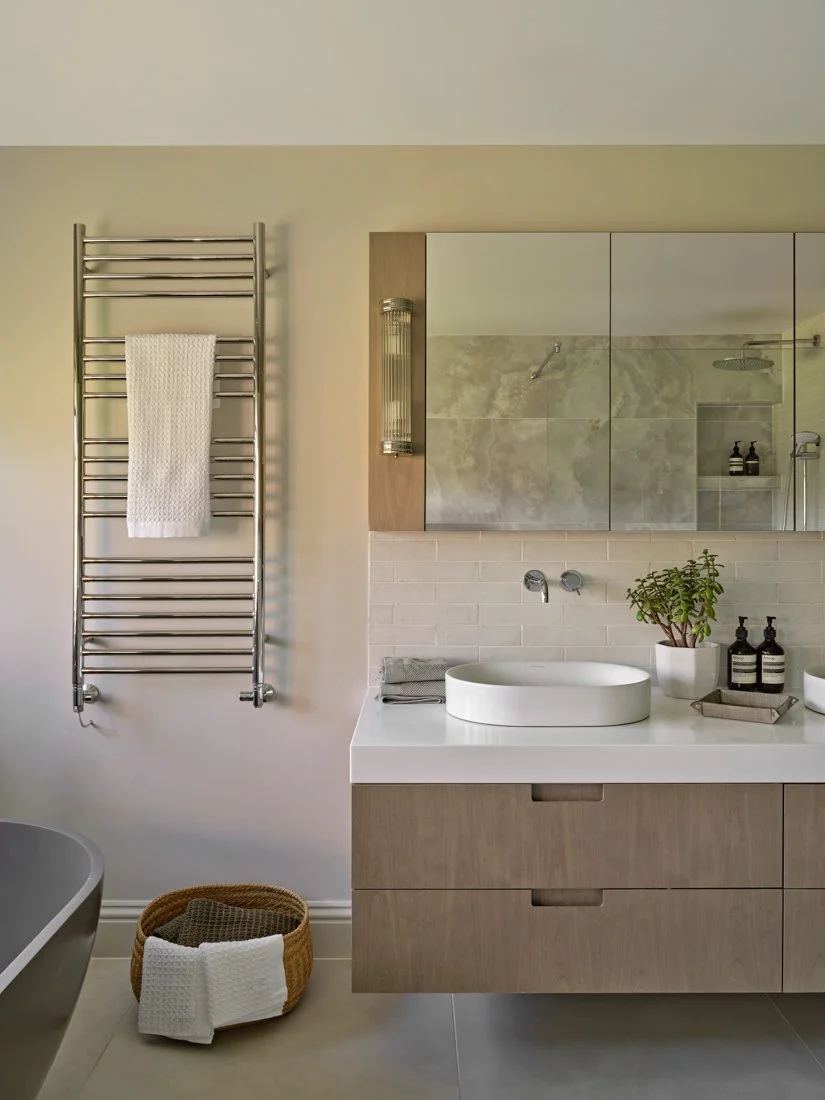
Seven bathrooms. One language.
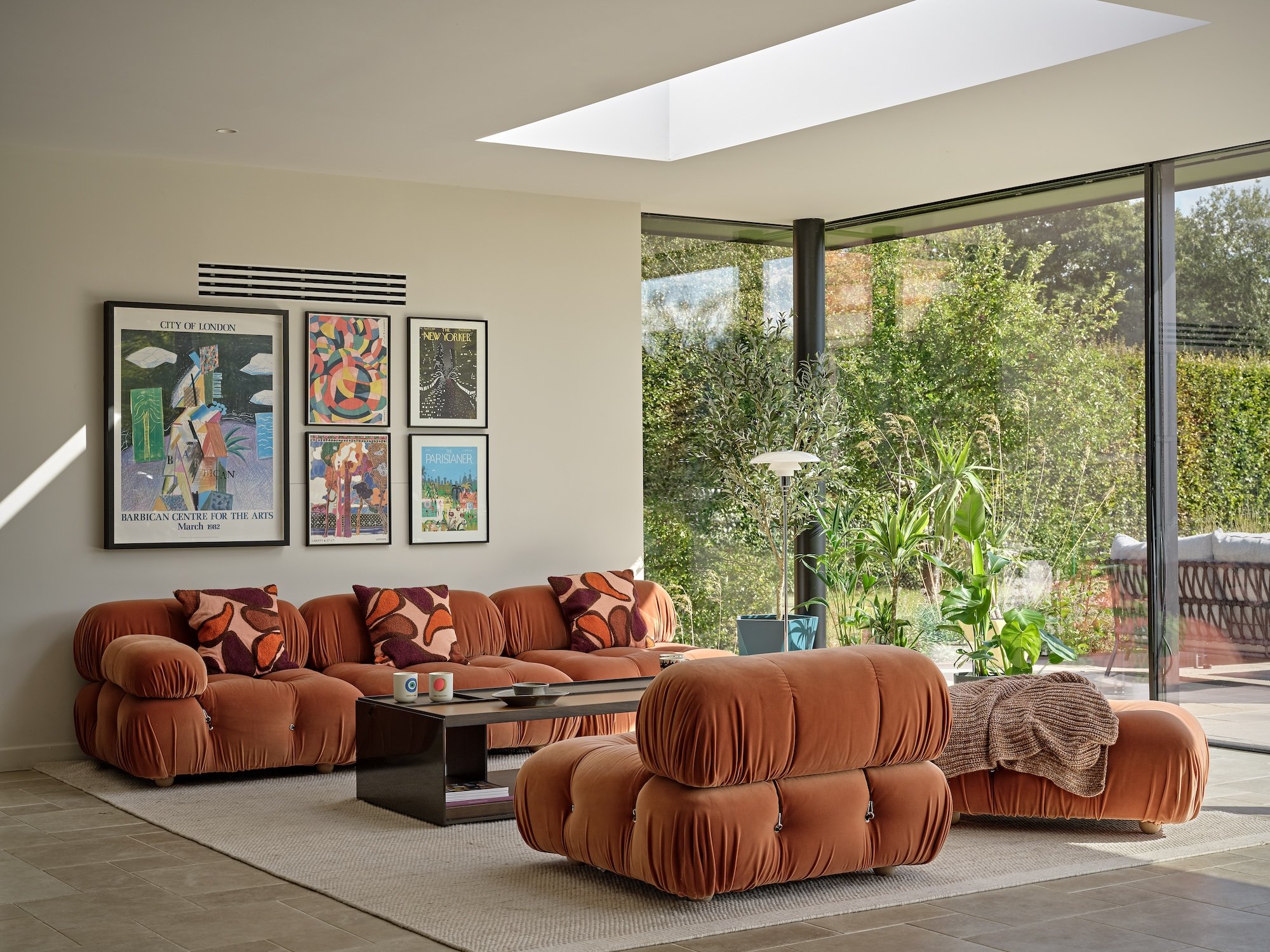
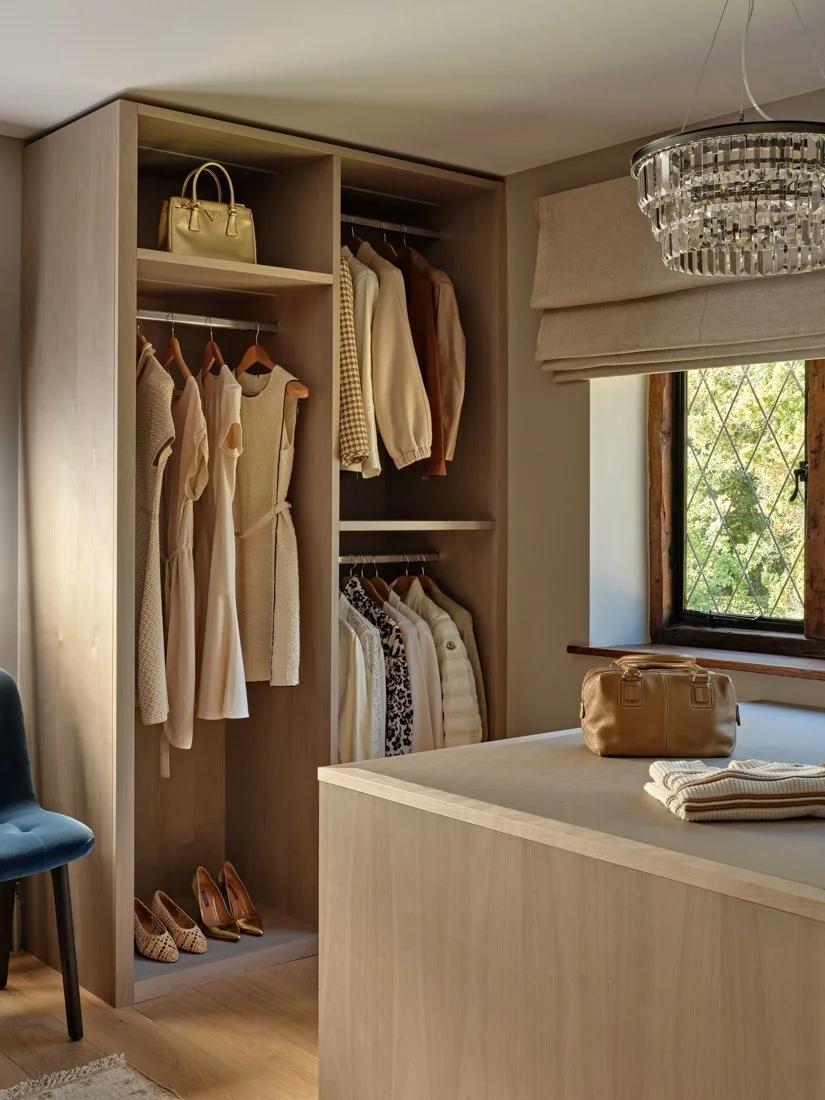
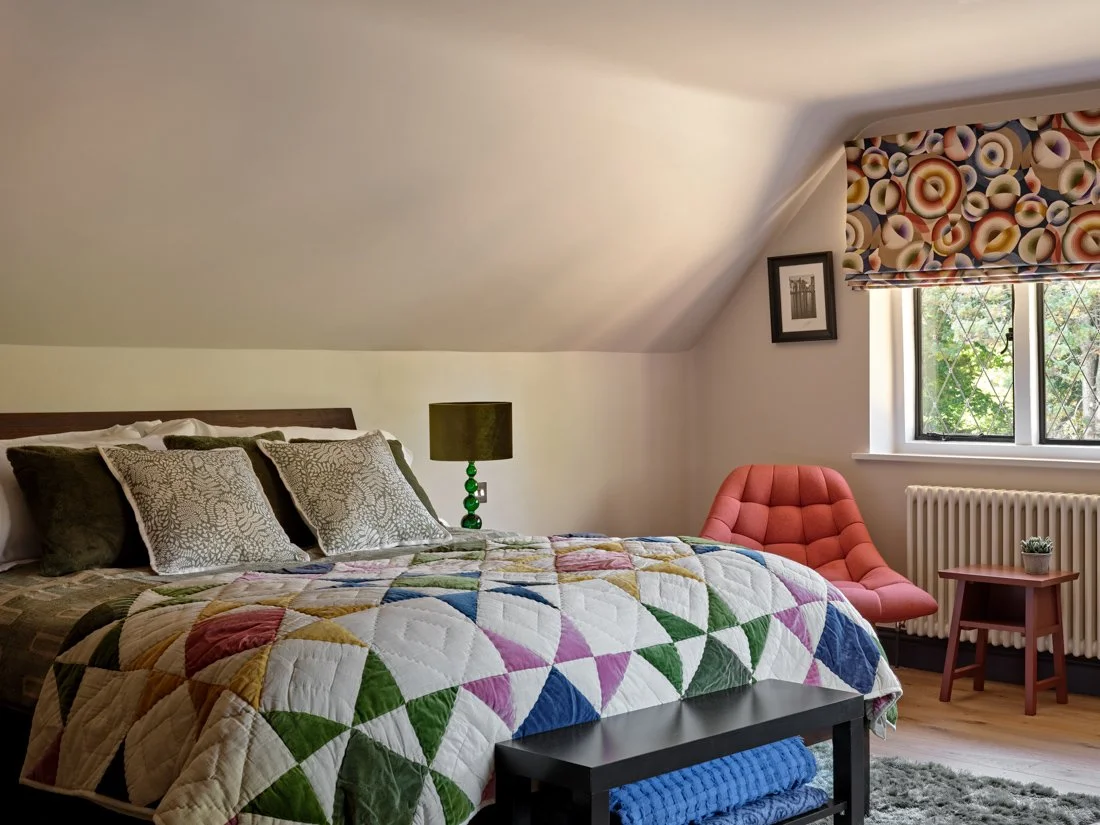
The first floor holds five ensuite bedrooms, each with its own bathroom and its own distinct material palette. Across the house, seven bathroom designs were developed in total, drawing on real and imitation marble, onyx, natural stone, zellige tiles and printed porcelain. Soft greens, blues and pinks layer through the bedrooms above, complementing rather than matching their respective bathrooms.
The brief for the upstairs was for rooms that felt modern and textured — colour-led, but harmonious across the house. The discipline was in the edit: individual enough to give each room its own character, restrained enough that the whole first floor reads as a single scheme.





The Living Room
Designed to hold the garden.
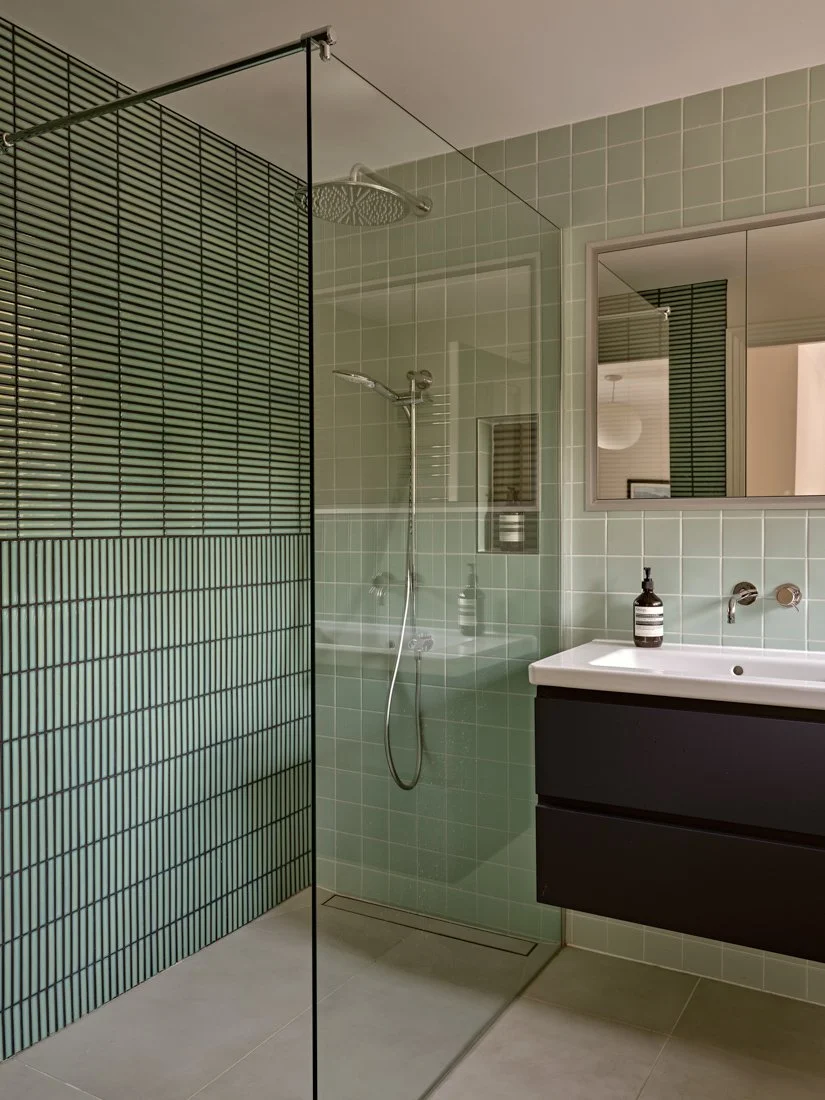
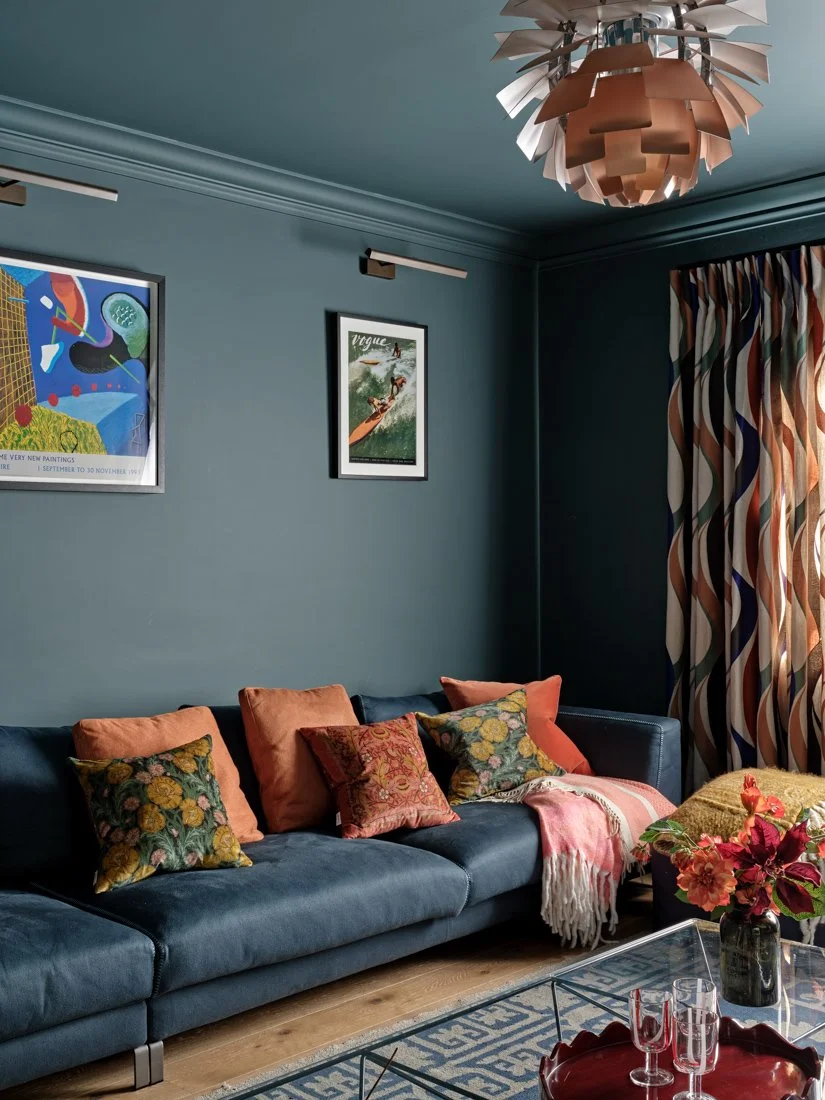
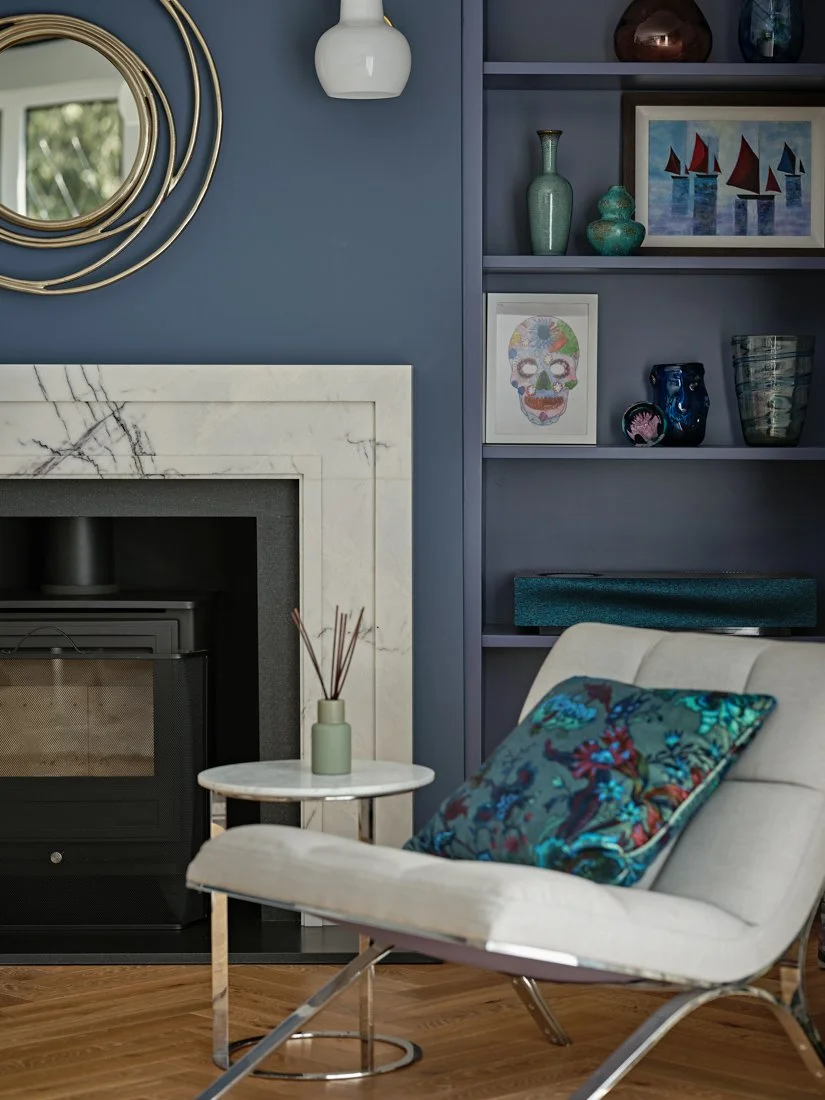
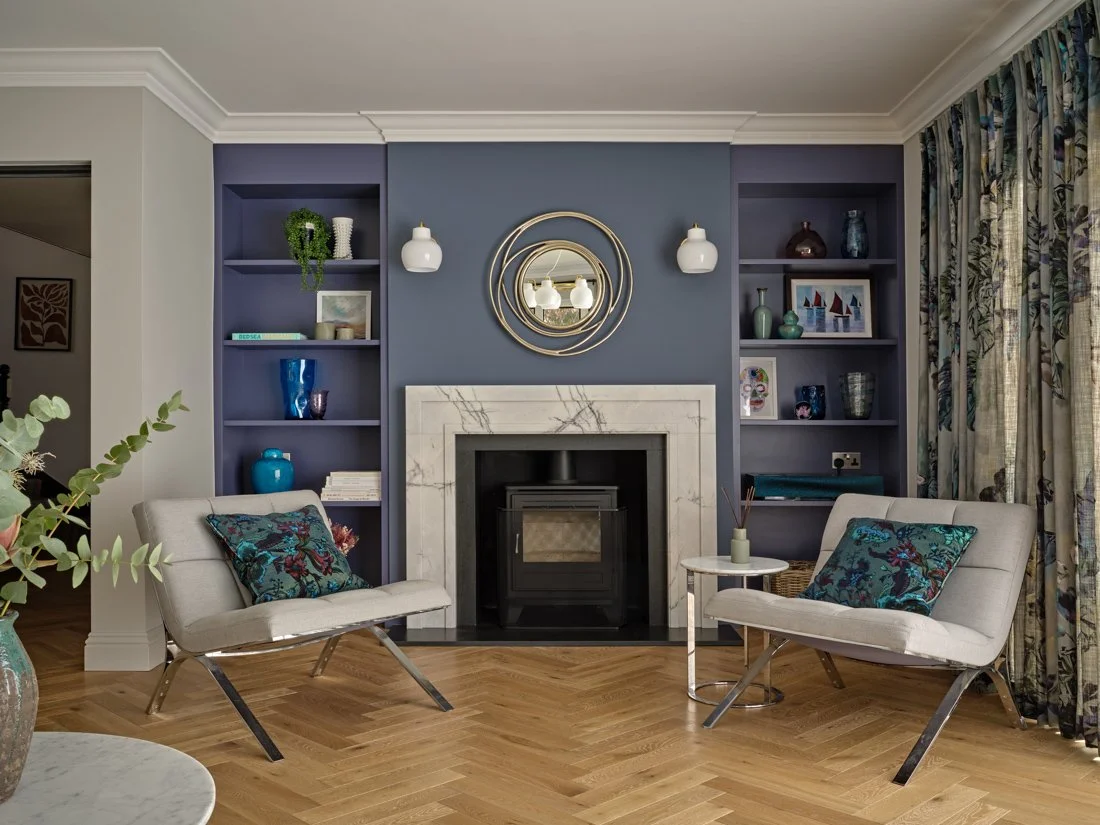
The living room was conceived as a space to sit with the landscape rather than alongside it. A Chesneys Calacatta Vagli marble fireplace replaced a heavy, mismatched alcove arrangement; a pair of bespoke bookcases, painted to pick up the violet veining in the marble, flank it in symmetry. The original French doors were replaced with sliding glass, opening the room directly into the parkland.
Furnishing was held to a minimum: a large B&B Italia corner sofa, low armchairs, a slowly growing wall of art. Nothing competes with the view. The room is not asked to perform beyond what it already has.




The Lighting
Treated as architecture.
Lighting was approached as a structural element of the scheme rather than something added at the end. The entrance hall — rewired entirely — now runs on six separate circuits. Table lamps on a 5-amp circuit. Floor spots integrated into the herringbone parquet. LED strips behind the glazed wine room. Picture lights. Bold sconces on the curved staircase wall. A statement Flos chandelier overhead. LED washers set above the skirting on every third stair cast a soft glow up the runner.
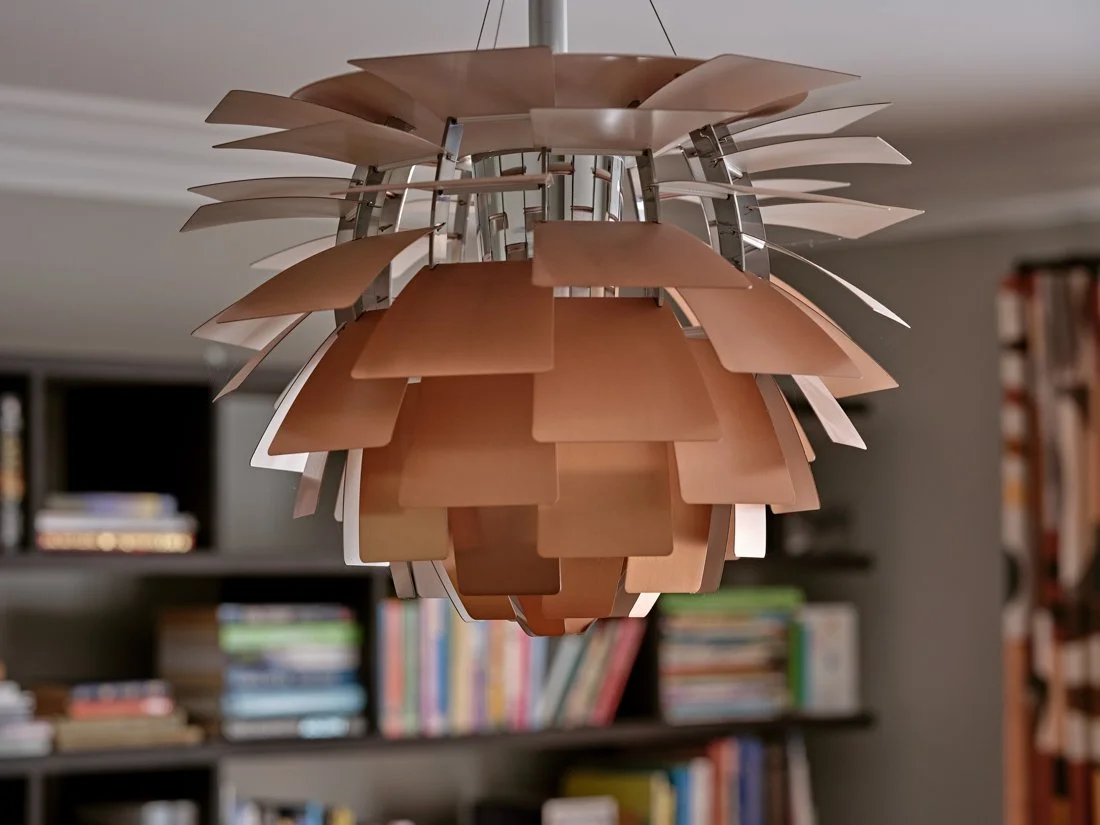
Pendants and wall lights throughout the rest of the house were sourced from Italian makers, chosen to sit lightly against the traditional architecture outside. Lighting does not announce itself here. But it is doing a great deal of the work.


CITY
Urban Sophistication

Surf
Coastal Serenity

Ski
Alpine Craft
Every home begins with a conversation.
Every project begins with a conversation.
If you are considering a home and would like to talk through your ideas, we would be glad to hear from you.